


Committee Chairman
MLB Strikeout Props: 4 Pitchers Who Could Define Their October Legacy

October baseball often turns individual pitching performances into lasting postseason memories. Strikeout totals measure that impact, showing how effectively starters handle pressure against increasingly demanding lineups.
This postseason presents four contrasting cases, from record-breaking velocity to precise command and carefully managed workloads. Jacob Misiorowski, Gavin Williams, Yoshinobu Yamamoto and Drew Rasmussen each approach October differently. Their performances could shape both their developing postseason reputations and expectations for individual strikeout totals throughout this year's playoffs.
1. Misiorowski's Velocity Meets a Contact Problem
Milwaukee Brewers
2026 Strikeouts: 252
Jacob Misiorowski enters October with exceptional strikeout credentials. Across 30 regular-season starts, he posted a 16-5 record, a 1.80 ERA and an MLB-leading 252 strikeouts in 174⅔ innings. His 12.985 strikeouts per nine innings underline the challenge facing opposing hitters. Those numbers also make him a compelling player when examining MLB strikeout props during the postseason.
His playoff opener against San Diego immediately demonstrated that potential. Misiorowski unleashed a 104.8 mph pitch to Fernando Tatis Jr., establishing a postseason pitch-tracking record. He struck out two batters during a scoreless first inning, suggesting his overwhelming regular-season form could translate directly into October dominance.
However, San Diego exposed a different challenge. Misiorowski pitched four innings, allowing two runs while striking out six. Padres hitters repeatedly fouled off his fastball, producing only four swinging misses across 28 swings against the pitch. Their 30 foul balls through the first four innings were the most by any team over that span in a postseason game since pitch tracking began in 2008.
Strikeout totals depend partly on innings pitched. Longer at-bats increase pitch counts and can shorten outings, even when a pitcher strikes out often. Misiorowski's October legacy may therefore depend on converting extraordinary velocity into sustained dominance against disciplined lineups.
2. Williams Turns Survival Into a Strikeout Showcase
Cleveland Guardians
2026 Strikeouts: 248
Gavin Williams has already shown how workload and strikeout production can reinforce each other. His postseason performances have combined exceptional individual numbers with the demands of consecutive elimination situations, creating a distinctive chapter in Cleveland's playoff history.
Williams recorded 12 strikeouts in a crucial Saturday appearance, matching Charles Nagy's franchise postseason record. That performance also tied Cam Schlittler for the second-highest strikeout total in a winner-take-all postseason game. Across the series, Williams accumulated 24 strikeouts, trailing only Gerrit Cole's 25 during Houston's 2019 American League Division Series.
His workload makes those figures particularly remarkable. Williams became just the third pitcher in postseason history to record a game's final out before starting the following contest, with elimination threatening his team in both appearances. Hank Borowy and Mordecai Brown previously achieved that demanding sequence.
Unlike those predecessors, Williams led his team to a win in the second game. That distinction strengthens his developing October reputation while raising questions about his workload going forward. His ALCS strikeout totals will depend on his ability to stay effective after unusually demanding appearances, especially as opponents adjust to his approach and Cleveland weighs how deep he can go.
3. Yamamoto Builds a Postseason Strikeout Resume
LA Dodgers
2026 Strikeouts: 182
Williams has produced at an extraordinary level under elimination pressure. Yoshinobu Yamamoto offers a contrasting model, building his postseason reputation on command, consistency, and sustained efficiency. Rather than relying primarily on overpowering velocity, the Dodgers starter combines effective sequencing with an ability to generate strikeouts without surrendering control of an outing.
His performance against Atlanta illustrated those qualities.The latest MLB game insights show that Yamamoto set a postseason career high with 10 strikeouts in seven innings, allowing one run in a 3-1 win. He retired 12 of his first 14 opponents, using his signature splitter to disrupt timing and keep hitters uncomfortable throughout the early innings.
The broader postseason record supports that performance. Yamamoto owns an 8-1 playoff record with a 2.14 ERA. Across his five most recent postseason appearances, spanning Game 2 of the 2025 NLCS through his Game 3 start against Atlanta in this year's NLDS, Yamamoto allowed four runs in 33⅔ innings while recording 32 strikeouts against four walks.
Los Angeles has also won 10 of his 11 postseason appearances. For strikeout projections, his ability to limit walks and eat innings sets him apart from pitchers whose effectiveness depends heavily on velocity. His developing legacy rests on repeated performances rather than isolated displays of dominance.
4. Rasmussen's Efficiency Faces a Volume Test
Tampa Bay Rays
2026 Strikeouts: 174
Yamamoto's command creates opportunities to rack up strikeouts over longer outings. Drew Rasmussen approaches the same challenge differently. The Tampa Bay starter relies on deception, sequencing, and efficient execution, making his postseason strikeout potential especially sensitive to how his innings are managed.
Rasmussen's 2026 regular-season strikeout rate sat below Misiorowski and Williams, but workload can change his ceiling considerably. He demonstrated that in the ALDS by striking out 10 across eight scoreless innings against New York. For his strikeout props, projected innings may therefore matter as much as his underlying strikeout rate.
Pitch counts matter most when evaluating Rasmussen's October potential. An efficient five-inning appearance may help Tampa Bay remain competitive while still producing fewer strikeouts than a longer outing. Conversely, reaching the sixth or seventh inning creates more opportunities to rack up punchouts, provided he remains effective against hitters who face him repeatedly.
Bullpen availability and postseason scheduling introduce further complications. Tampa Bay may adjust Rasmussen's workload based on matchups, recovery periods, and immediate game circumstances. His October legacy could therefore emerge through dependable performances rather than spectacular individual totals.
Among these four pitchers, Rasmussen presents perhaps the clearest example of why strikeout projections must account for managerial decisions alongside pitching ability.
Four Different Paths to October Recognition
October reputations are built on performances that withstand increasing pressure. Misiorowski brings extraordinary velocity but faces questions about extended at-bats. Williams has already produced historic strikeout totals under elimination pressure, while Yamamoto offers consistency through command and sustained effectiveness. Rasmussen introduces another dimension, with workload decisions influencing his statistical ceiling.
Together, these pitchers show why you can't judge postseason strikeout totals by raw ability alone. Opposing lineups, pitch counts and innings pitched will help determine which performances become lasting October memories for baseball fans.
Content reflects information available as of 2026/10/13; subject to change.
What Prediction Markets Reveal About How Sharp Sports Fans Really Think

For decades, the sports debate ran on gut feeling. Barstool arguments, call-in radio and comment sections were full of confident takes, but almost nobody kept score on who was actually right. That is changing. Prediction markets such as Kalshi and Polymarket now let thousands of people put real money behind their views on NFL games, MLB playoff series, Champions League nights and even esports finals. The prices on those markets move every few seconds, and the people trading them leave a public record of every call they make.
That record turns out to be one of the most interesting data sets in sports today. When you can see which traders have consistently read games well over hundreds of matches, you stop listening to the loudest voice and start paying attention to the most accurate one.
Why market prices beat hot takes
A betting line is set by a bookmaker who wants balanced action. A prediction market price is different: it is the crowd's live estimate of a probability. If a team is trading at 62 cents to win, the market collectively thinks it wins about 62 percent of the time. When an injury report drops or a starting pitcher is scratched, that number moves within minutes. Watching a market chart during a game is a little like watching the crowd's confidence rise and fall in real time.
This makes prediction markets a useful lens even for fans who never place a trade. A sudden swing tells you that something meaningful happened, often before the broadcast crew catches up. A price that refuses to move despite a lot of noise on social media tells you the public panic may be overdone.
Following the people who are actually good
The more interesting question is not what the market thinks, but who inside the market keeps getting it right. Most traders are roughly break-even over time. A small group consistently finds value, especially in less crowded leagues and in esports, where public information is thinner and specialists have a real edge.
Tracking those traders used to require digging through raw transaction histories. Free tools now do that work. Sites like Tips pull public trading activity from Kalshi and Polymarket, filter out the noise, and show which predictors have a strong record league by league. You can see what a proven trader picked tonight, how much they put behind it and how their record looks over the last 30 days. For esports in particular, the site collects live picks and post-match fan reaction for leagues like the LoL World Championship, VCT and CS2 majors, which is useful if you follow those scenes but do not have time to watch every map. You can browse those esports predictions here.
A healthier way to argue about sports
None of this replaces the fun of having your own opinion. What it does is add accountability. When the debate is "who was right last month," a public track record settles it quickly. It also pushes fans to think in probabilities instead of certainties. A 60/40 game is not a lock, and the best traders are comfortable being wrong four times out of ten as long as their reads are priced correctly.
For readers of a site that celebrates careers built over many seasons, that idea should feel familiar. Greatness in sports is measured over a long body of work, not a single highlight. The same is true for predictions: one lucky call means very little, but a strong record over hundreds of games tells you something real.
Prediction markets are still young, and regulation varies by country, so it is worth checking the rules where you live before trading. But as a source of information, the data they produce is already changing how informed fans read a matchup. Next time a big game is coming up, look at what the market is saying and who the consistently accurate traders are backing. You may find it sharpens your own take more than another round of hot takes ever could.
From Pro Circuit to Private Coaching in Prague
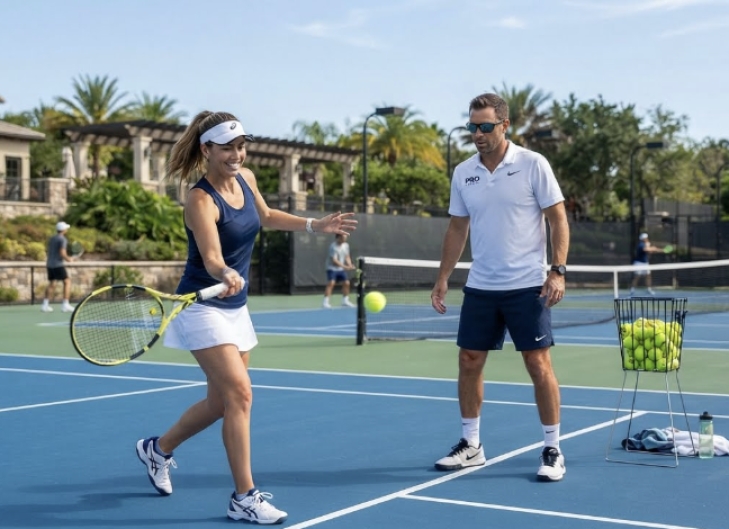
Introduction to Private Adult Tennis Camps in Prague
Adult club players increasingly plan tennis travel around performance work instead of leisure. Rather than joining a mixed-ability group at a holiday resort, they book structured private sessions built around specific questions. Prague suits that approach, with several serious clubs operating within one compact city.
The format is assessment-led and one-to-one from the first minute on court. Players arrive able to sustain rallies, name the areas they want examined, and dig into diagnostic detail. Social programming is secondary; documented instruction that travels home is the real product.
This guide covers the format, the fit, the venues, and the fee structure in full. It also states the boundaries plainly, because a private camp does not suit every adult player. The sections below follow the order most players raise during an enquiry.
Why a Short Private Camp in Prague Works for International Visitors
Coaching is available in English, Czech, and Ukrainian, so American players lose nothing in translation. A player can describe how a stroke feels and hear technical feedback without a language gap. For adults who analyze their own mechanics, that precision outweighs a packed activity list.
Session times are set around confirmed travel dates and goals agreed before arrival. A solo traveller does not need a playing partner, since all court work is delivered one-to-one. The coach feeds, drills, and plays points exactly as the training plan requires.
Courts operate across Prague 3, 4, and 7, which gives visitors options on different sides of the city. A short training block fits neatly inside a longer European itinerary. Players can keep evenings free for ordinary travel plans.
Comparing Generic Resort Tennis Camps with Private Assessment-Led Camps
The two models look similar on a booking page and differ sharply once play begins. The table below sets out the structural differences that matter most to adult players.
|
Factor |
Typical adult group camp |
Private assessment-led camp in Prague |
|
Structure |
Shared court time across a mixed group |
One-to-one sessions with a single coach |
|
Starting point |
General drills at group level |
90-minute diagnostic assessment |
|
Content |
Set curriculum for the week |
Priorities built from the player's goals |
|
Schedule |
Fixed group timetable |
Built around confirmed travel dates |
|
Partner needed |
Often matched or expected |
Not required |
|
Progress record |
Verbal feedback at the end |
Written plan for home practice |
|
Suited to |
Mixed abilities and social players |
Players who can already rally |
Who the Camp Suits (and Who It Does Not)
The program is built for American club and USTA league players at roughly NTRP 3.5 to 4.5. Returning players after time away and solo travellers in the same range fit comfortably. These adults usually know their strokes and want analysis rather than an introduction.
League players often arrive with a specific match problem, such as a second serve breaking down under pressure. Returning players may need footwork patterns rebuilt carefully after a long break. Solo travellers value a format that never depends on finding a partner.
The honest boundaries matter as much as the fit. This work suits players who can already rally, and it is not designed for complete beginners. It is coaching rather than a packaged resort holiday, so meals, accommodation, and sightseeing sit outside the program.
Anyone uncertain about level can describe current match experience and goals in an enquiry. That conversation happens before any schedule or budget is settled.
The Assessment-Led Format and Training Process
Every new court client starts with a 90-minute Performance Assessment priced at 3,800 CZK, roughly EUR 155. The coach observes strokes, movement, and decision-making during rally and point play. Those observations set the priorities for everything that follows.
The camp then moves into focused private sessions on the agreed priorities. Changes are introduced, repeated under controlled conditions, and finally tested in live points. That sequence shows which adjustments hold when score pressure enters the picture.
The same coach follows the full progression, with no rotation between instructors mid-block. Continuity makes it easier to judge whether a technical change is settling or drifting.
The visit closes with a written plan of priorities to continue practising at home. Players keep a record of what was examined, what was changed, and what needs repetition. If a player continues into a program, the assessment fee is credited to the first program period.
Technical and Tactical Focus Areas for Adult Players
Assessment findings set the agenda, so no two training blocks look identical. Common areas include contact point, swing path, footwork patterns, and recovery position after each shot.
Tactical work can cover serve patterns, return positioning, rally direction changes, and point construction under pressure. Adults with analytical habits usually enjoy the measurement side of this process.
Movement sessions may address first-step timing, balance through contact, and spacing on court. Video review, where used, documents positions at contact and helps explain the coaching point.
Every player responds differently to technical change, so outcomes stay framed as possibilities rather than promises. The written plan provides structure, and the player supplies the repetition afterward.
Sample Three-Day Training Schedule
Camps start from three days, and a week or a longer visit gives more time to test changes. The exact plan, hours, and venue are agreed before booking.
|
Day |
Focus |
Typical work |
|
Day 1 |
Assessment and priorities |
90-minute assessment, observation of strokes and movement, written priorities |
|
Day 2 |
Technical change and repetition |
Focused private sessions, controlled drills, repetition of the agreed adjustments |
|
Day 3 |
Match application and plan |
Live points, testing changes under pressure, written take-home plan |
This sample is illustrative, and a longer stay expands the same progression. Practice volume depends on the hours confirmed in advance rather than a fixed daily template.
The Coach: Leonard Stakhovsky
The practice is led by Leonard Stakhovsky, a former professional player on the ATP tour. He also competed as an NCAA Division I athlete before moving into private coaching. Those two environments shape a training method built on measurable assessment.
Adult players seeking high-level European instruction often review options like https://stakhovskytennis.com/best-adult-tennis-camps-europe when choosing qualified private coaching.
Stakhovsky Tennis operates as a private adult coaching practice in Prague centered on one-to-one instruction. The coach works directly with each player across the full block, from assessment to written plan. That continuity lets the same eyes track whether a change holds over several days.
Training Venues Across Prague
Training takes place on courts at TK Spoje, Hodkovicky, and CLTK across Prague 3, 4, and 7. Court access and surfaces are confirmed for specific dates before the schedule is fixed.
Venue choice can follow where a visitor is staying, since the clubs sit in different districts. Court hire is billed separately unless a specific arrangement confirms otherwise. Confirming surfaces early also helps players prepare the right footwear.
Planning Your Trip from Abroad
Most international visitors arrive by air at Prague Václav Havel Airport and continue into the city. From there, the trip is straightforward to organize once training dates are settled.
Dates, session hours, and venues should be agreed before flights are booked. That order prevents schedule conflicts and keeps the training block aligned with the wider trip.
Flights, accommodation, and meals are arranged and paid separately by the player. Court hire is an additional cost unless a confirmed arrangement covers it. Travel insurance and medical cover remain the player's own responsibility.
Pricing Structure and Fee Breakdown
Pricing is clear at the component level and quoted in full at the package level. There is no fixed total camp price; the figure follows the agreed goals, dates, and hours.
|
Item |
Fee |
Notes |
|
Performance Assessment |
3,800 CZK (approx. EUR 155) |
90 minutes; new court clients; plus court hire |
|
Private coaching |
From 1,600 CZK (approx. EUR 65) per hour |
Plus court hire |
|
Assessment credit |
Credited to the first program period |
Applies if the player continues |
|
Full camp package |
Written quote |
Issued after goals, dates, and hours are agreed |
|
Court hire |
Billed separately |
Unless confirmed otherwise |
Hourly rates are stated in Czech crowns, with euro figures offered as a practical reference. Payment terms and confirmation steps are outlined when the written quote is issued.
How to Book Your Camp
- Send an enquiry through the Stakhovsky Tennis website, including current level, goals, and travel window.
- Discuss and agree dates, session hours, venue, and the priorities to work on.
- Receive a written quote covering the assessment, private hours, and the full camp block.
- Confirm the schedule, then book flights and accommodation around the agreed training dates.
- Follow the payment terms set out in the quote and arrive prepared for court work.
An enquiry requires no payment and does not automatically reserve court time. Reservation follows once dates, hours, and venues are confirmed in writing.
Frequently Asked Questions
Is this program suitable for complete beginners?
No. The camp is designed for players who can already sustain rallies and want structured technical analysis. Complete beginners need a different foundation built over a longer period, usually starting with basic stroke mechanics and court movement. Players unsure of their level should describe their current match experience in an enquiry.
Do I need a playing partner to attend?
No partner is required. All instruction is delivered one-to-one, so the coach handles feeding, drilling, and point play as the plan demands. Solo travellers can book and train on exactly the same basis as anyone else, without arranging additional players for the sessions.
How long should a camp last?
Camps start from three days. That allows time for an assessment, focused technical work, and a session applying changes in points. A week or longer offers more practice time to test whether adjustments hold up, which matters when a change affects timing, spacing, or movement patterns.
What does it cost?
The initial 90-minute Performance Assessment costs 3,800 CZK, roughly EUR 155, plus court hire. Private coaching starts from 1,600 CZK, roughly EUR 65 per hour, plus court hire. Full camp pricing is issued as a written quote once goals, dates, and hours are agreed.
Are flights and hotels included?
No. Flights, accommodation, and meals are organized and paid separately by the player. Court hire is also an additional cost unless a specific arrangement confirms otherwise. Keeping these items separate lets each traveller choose the comfort level and budget that suit the wider trip.
Can training be conducted in English?
Yes. Coaching is available in English, Czech, and Ukrainian. American players can work entirely in English, from the first assessment conversation through to the written plan. Technical feedback is delivered in the language the player understands best, which keeps detail precise and practical.
Is the format group or private?
Private. Sessions are one-to-one with Leonard Stakhovsky, and there is no rotation between group coaches. That format gives the coach full visibility of each player's progress across the visit and keeps training priorities consistent from the first session through to the final one.
When should I book?
Start with an enquiry before booking flights, since dates, hours, and venues need to be agreed first. An enquiry requires no payment and does not automatically reserve court time. Once the schedule is confirmed in writing, travel and accommodation can be arranged around it.
Summary and Next Steps
Private coaching in Prague rewards players who arrive with questions and leave with a plan. Start by reviewing the three areas of your game you most want examined. Then send an enquiry describing your level, goals, and travel window, and the details can be settled from there. The written plan that ends the visit keeps the work going long after the flight home.
49. Foyesade Oluokun

Entering the league as a sixth-round flyer out of Yale in the 2018 NFL Draft, Foyesade Oluokun spent his initial four professional campaigns in Atlanta morphing from an Ivy League-converted safety into one of the most prolific tackling engines in professional football. When he hit open market waters in 2022, Jacksonville pounced on the free agent to instantly install him as the nerve center of their second level.
Oluokun made an immediate imprint during his 2022 debut campaign in North Florida. Wearing the green dot as the defensive play-caller, he piled up a league-leading 128 solo tackles (184 total), directing an opportunistic front seven that surged from the cellar to capture the AFC South crown and complete an historic 27-point wild-card comeback victory over the Chargers.
His relentless sideline-to-sideline pursuit proved to be anything but a single-season anomaly. Oluokun backed up his opening act by again leading the entire NFL in solo tackles (111) in 2023, while demonstrating refined instinct in pass coverage—highlighted by a 24-yard pick-six against New Orleans. He remained the heartbeat of the defense through the 2024 and 2025 campaigns, continuing to rack up triple-digit tackle counts while serving as an immovable locker-room captain.
Heading into the 2026 campaign, the veteran linebacker remains the operational anchor for the franchise, holding down the middle of the field with remarkable structural stability. He currently has 608 combined tackles for the Jags.
