
Committee Chairman
24. Bob Johnson
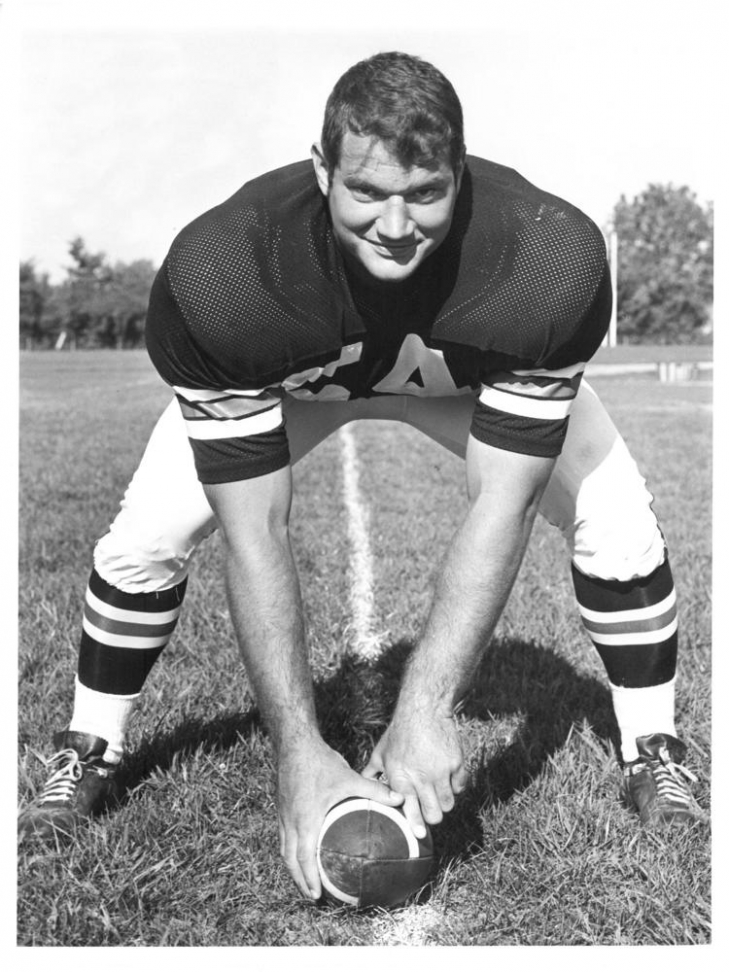
Selected second overall in the 1968 AFL/NFL Draft out of Tennessee, Bob Johnson holds a unique place in Cincinnati Bengals lore as the very first draft pick in franchise history. Head coach Paul Brown coveted a brainy, dependable pivot to set the baseline for his expansion offense, and Johnson answered the call by locking down the starting center job from the team's inaugural drive onward.
Johnson brought exceptional line-calling insight, precise snapping, and relentless technique to the pivot. In an era of heavy interior collisions, he anchored Paul Brown's front five by recognizing blitz patterns and keeping a clean pocket for early Bengals quarterbacks such as Greg Cook and Virgil Carter. Johnson stepped directly into the starting lineup as a rookie in 1968, starting all 14 games and earning an AFL All-Star selection in his debut campaign.
Consistency defined Johnson’s run at center. Across his first ten seasons (1968–1977), he started every single one of the 136 regular-season games he appeared in. He helped lead Cincinnati to its first two division titles in 1970 and 1973, serving as the team's offensive captain and primary interior pass blocker.
As the franchise transitioned into the late 1970s, Johnson stepped into a veteran backup and reserve snapper role for his final two campaigns. He retired following the 1979 season as the last remaining member of the original 1968 inaugural squad.
Johnson played in 154 regular-season games (136 starts) along with three postseason appearances. Shortly after his career ended, the Bengals retired his No. 54 jersey.
26. Carlos Dunlap
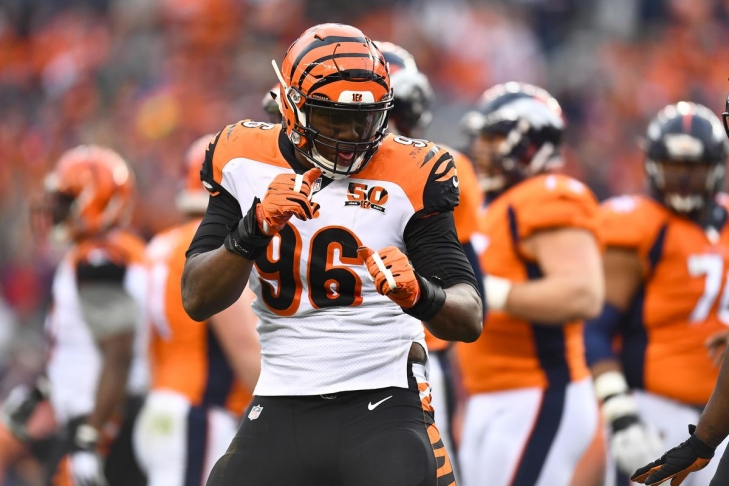
Carlos Dunlap arrived in Cincinnati as a second-round pick fresh off earning Defensive MVP honors in the 2009 BCS National Championship Game. Possessing a massive 6-foot-6 frame, 34-inch arms, and rare length for an edge defender, Dunlap transformed from a pass-rush specialist into one of the most complete and durable defensive ends in franchise history.
During his initial three seasons (2010–2012), defensive coordinator Mike Zimmer predominantly utilized Dunlap in passing situations to optimize his physical attributes. He made an immediate impact as a rookie, establishing a Bengals rookie record with 9.5 sacks in only 12 games. By 2013, Dunlap had secured a permanent starting position on the left side of Cincinnati's defensive line, where his reach enabled him to neutralize edge runs while consistently applying pressure on quarterbacks.
Dunlap reached his peak in the mid-2010s, anchoring the defensive line for a consistent playoff team. In 2015, he achieved a career-high 13.5 sacks, the second-most in team history, along with two forced fumbles and 16 tackles for loss, earning his first Pro Bowl. He was again selected in 2016, with 8.0 sacks and a standout ability to bat down 15 passes at the line, solidifying his status as one of the league's top pass-deflectors.
His more than ten-year tenure with the Bengals abruptly concluded during the 2020 season. Frustrated by a diminished role in Lou Anarumo's system and openly expressing his dissatisfaction, Dunlap asked for a trade. Cincinnati approved his request in the middle of the season, sending him to the Seattle Seahawks in October 2020.
Across 11 seasons with the Bengals (2010–2020), Dunlap played in 155 regular-season games (115 starts) and six postseason contests. He generated 82.5 sacks, 103 tackles for loss, 227 quarterback hits, and 20 forced fumbles.
The Naismith Basketball HOF announces their 2021 Nominees
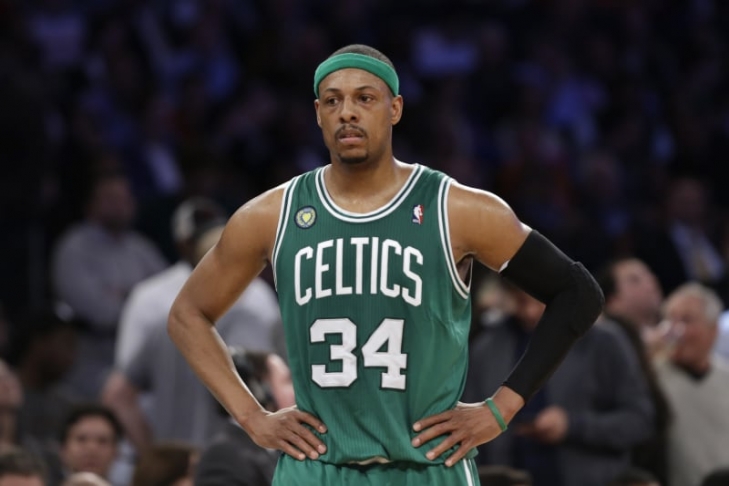
The Naismith Basketball Hall of Fame has announced their Nominees for the Class of 2021.
As usual, it is a gigantic list, so we will not be doing brief resumes of each candidate, and will do so when they become a Finalist.
Finalists from the North American and Women’s Committee will be announced All-Star Weekend, with the full Class of 2021 announced during the Final Four.
At present, the 2021 Enshrinement Ceremony will take place in September. The 2020 Ceremony, which was postponed due to COVID-19 is scheduled for May 13-15.
The Nominees are: (*indicates a First-Time Nominee)
North American Committee Nominees:
Rick Adelman (Coach)
Ken Anderson (Coach)*
Fletcher Aritt (Player)
Johnny Bach (Coach)
Gene Bess (Coach)
Chauncey Billups (Player)
Chris Bosh (Player)
Rick Byrd (Coach)
Muggsy Bogues (Player)
Irv Brown (Referee)
Jim Burch (Referee)
Marcus Camby (Player)
Michael Cooper (Player)*
Jack Curran (Coach)
Mark Eaton (Player)
Cliff Ellis (Coach)
Dale Ellis (Player)
Hugh Evans (Referee)
Michael Finley (Player)
Steve Fisher (Coach)
Cotton Fitzsimmons (Coach)
Leonard Hamilton (Coach)*
Tim Hardaway (Player)
Lou Henson (Coach)*
Ed Hightower (Referee)
Bob Huggins (Coach)
Mark Jackson (Player)
Herman Johnson (Player)
George Karl (Coach)
Gene Keady (Coach)
Ken Kern (Coach)
Shawn Marion (Player)
Rollie Massimino (Coach)
Bob McKillop (Coach)
Danny Miles (Coach)
Steve Moore (Coach)
Speedy Morris (Coach)
Dick Motta (Coach)
Jake O’Donnell (Referee)
Jim Phelan (Coach)
Digger Phelps (Coach)
Paul Pierce (Player)*
Jere Quinn (Coach)
Lamont Robinson (Player)
Bo Ryan (Coach)
Bob Saulsbury (Coach)
Norm Sloan (Coach)
Ben Wallace (Player)
Chris Webber (Player)
Willie West (Coach)
Buck Williams (Player)
Jay Wright (Coach)
Paul Westhead (Coach)*
Women’s Committee Nominations:
Leta Andrews (Coach)
Jennifer Azzi (Player)
Swin Cash (Player)
Yolanda Griffith (Player)*
Becky Hammon (Player)
Lauren Jackson (Player)*
Suzie McConnell (Player)
Debbie Miller-Palmore (Player)
Kim Mulkey (Player)
Marianne Stanley (Coach)
Valerie Still (Player)
Marian Washington (Coach)
Contributor Committee Nominations (Direct-Elect Category):
Val Ackerman*
Marv Albert
Dick Baumgartner
Bill Bertka
Henry Bibby
Marty Blake
Vic Bubas
Doug Collins*
Wayne Duke
Lou Dunbar
Bill Foster
Howard Garfinkel*
Harry Glickman
Marty Glickman
Simon Gourdine
Curt Gowdy
Tim Grgurich
Del Harris
Greg Heineman
Robert Indiana
Johnny “Red” Kerr
Bill King
John Kline
Red Klotz
Tom Konchalski*
Bobby Lewis
Herbert Livsey
Jack McCloskey
Jerry McHale
Johnny Most
Dennis Murphy
Joe O’Toole
Billy Packer
Jack Powers
Dee Rowe
Sam Schulman*
Zelda Spoelstra
Jim Valvano
Donnie Walsh
Jerome Williams
Early African-American Pioneers Committee Nominations (Direct-Elect Category):
Clarence “Puggy” Bell
Sonny Boswell
Bill Garrett
Inman Jackson
Clarence “Fats” Jenkins
Harry “Bucky” Lew
Davage “Dave” Minor
Hudson Oliver
Al “Runt” Pullins
James “Pappy” Ricks
Paul Robeson
Eyre Saitch
William “Wee Willie” Smith
International Committee Nominations (Direct-Elect Category):
Tal Brody
Jacky Chazalon
Alphonso Ford
Giuseppe Giergia
Dusan Ivkovic*
Semen Khalipski
Vladimir Kondrashin
Toni Kukoc
Eduardo Lamas
Marcos Leite
Shimon Mizrahi
Aldo Ossola
Amaury Pasos
Dan Peterson
Manuel Sainz
Togo Soares
Ranko Zeravica
Veterans Committee Nominations (Direct-Elect Category):
1936 U.S. Olympic Team (Team)
1964 State Department Basketball Ambassadors (Team)
1965 World University Games Team (Team)
Tom Blackburn (Coach)
Ron Boone (Player)
Sid Borgia (Referee)
Frank Brian (Player)
Joe Caldwell (Player)
Mack Calvin (Player)
Darel Carrier (Player)
Jack Coleman (Player)
Bob Dandridge (Player)
Charles Eckman (Referee)
Leroy Edwards (Player)
Leo Ferris (Contributor)
Clarence “Bevo” Francis (Player)
Buck Freeman (Coach)
Donnie Freeman (Player)
Hy Gotkin (Player)*
Travis Grant (Player)
Bob Grody (Player)
Robert Harrison (Player)
Flo Harvey (Player)
Dick Hemric (Player)
Cam Henderson (Coach)
Robert Hopkins (Player)
Lou Hudson (Player)
Warren Jabali (Player)
Jimmy Jones (Player)
Charles Keinath (Player)
Kentucky Wesleyan 1966, 1968 & 1969 (Team)
Freddie Lewis (Player)
Jim Loscutoff (Player)
Loyola of Chicago (Team)
Ed McCluskey (Coach)
Ray Mears (Coach)
Francis Meehan (Player)
Lucias Mitchell (Coach)*
Donald “Dudley” Moore (Coach)
Willie Naulls (Player)
North Catholic High School JV (Philadelphia, PA) (Team)*
Philadelphia SPHAS (Team)
Mel Riebe (Player)
Glenn Roberts (Player)
Holcombe Rucker (Contributor)
Kenny Sailors (Player)
Fred Schaus (Contributor)
Sam Schulman (Contributor)*
Kenny Sears (Player)
Frank Selvy (Player)
George Senesky (Player)
Paul Seymour (Player)
Charles Siler (Contributor)
Talvin Skinner (Player)
Elmore Smith (Player)*
Ken Suesens (Player)
Dick Van Arsdale (Player)
Tom Van Arsdale (Player)
Perry Wallace (Player)
Frank Walsh (Contributor)
Willie Wise (Player)
Max Zaslofsky (Player)
Women’s Veterans Committee Nominations (Direct-Elect Category):
Alline Banks Sprouse (Player)
Edmonton Commercial Grads (Team)
John Head (Coach)
Pearl Moore (Player)
Nashville Business College (Team)
Lometa Odom (Player)
Harley Redin (Coach)
Theresa Shank (Player)
Hazel Walker (Player)
23. Bob Trumpy
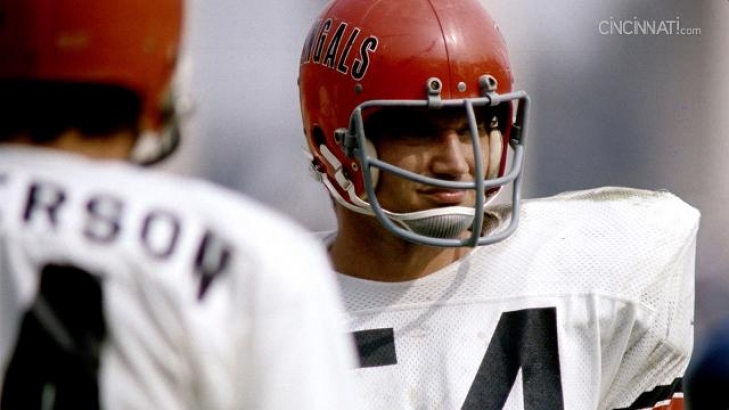
Selected in the twelfth round (301st overall) of the 1968 AFL Draft from Utah, Bob Trumpy established one of the most exceptional return-on-investment careers in the history of professional football. Trumpy dedicated his entire 10-season playing tenure with Cincinnati (1968–1977), evolving from a late-round prospect into a distinguished vertical-passing asset in Coach Paul Brown’s early offensive strategies.
Trumpy broke the traditional mold of the block-first tight end of his era. Boasting wide-receiver speed, fluid route-running, and soft hands, he was routinely deployed in motion or lined up away from the tackle box. His signature trait was his ability to stretch the field vertically, split double-coverage down the seam, and win contested catches in the intermediate and deep zones.
Trumpy made an immediate impact during Cincinnati’s inaugural 1968 season, securing 37 receptions for 639 yards and three touchdowns, which earned him a selection to the AFL All-Star team as a rookie. He elevated his performance to an elite level in his sophomore year in 1969, catching 37 passes for 835 yards and nine touchdowns. His 22.6 yards per reception that season remains one of the highest single-season averages by a tight end in professional football history, which earned him First-Team All-Pro honors as well as a second All-Star appearance.
When the AFL merged with the NFL, Trumpy continued his dominance. He earned a third consecutive Pro Bowl nod in 1970 after posting 37 receptions for 837 yards and three touchdowns, keying Cincinnati's run to its first-ever division title. Trumpy captured his fourth Pro Bowl selection in 1973, leading the Bengals with 609 receiving yards and three scores while helping guide the team back to the postseason.
As injuries began to take a toll and Virgil Carter and Ken Anderson favored a more short-to-intermediate passing game, Trumpy transitioned into a veteran leader and blocking contributor. His receiving volume decreased over his final three campaigns (1975–1977), where he backed up younger tight ends like Bruce Coslet and served as a goal-line target.
Following the 1977 season, after appearing in 12 games and recording seven receptions, Trumpy retired from the NFL at age 32. He seamlessly transitioned into sports broadcasting, becoming one of the most recognizable voices in network football coverage for decades. He finished his playing career with 298 receptions for 4,600 receiving yards and 35 touchdowns.
