

Committee Chairman
8. A.J. Green
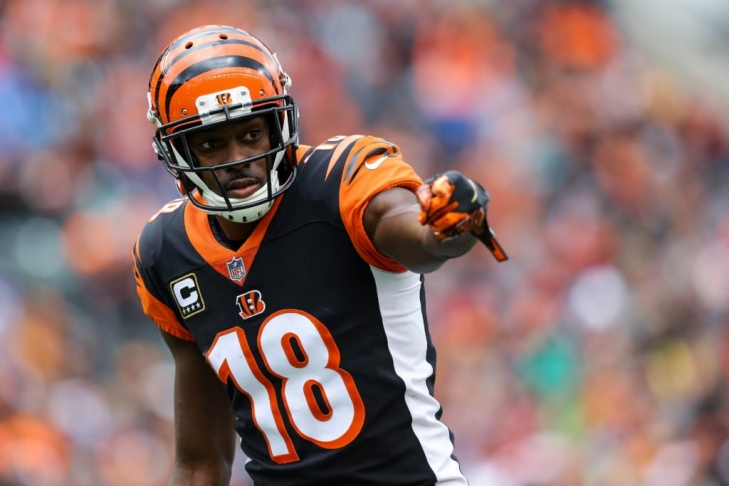
Selected fourth overall in the 2011 NFL Draft out of Georgia, A.J. Green arrived in Cincinnati as the highest-drafted receiver in the class and an immediate game-changer. Stepping onto the field alongside fellow rookie quarterback Andy Dalton, Green launched a decade-defining partnership that transformed the Bengals into a perennial playoff contender.
Green was the prototype for a smooth, boundary-dominating wide receiver. Combining fluid stride length with an acrobatic catch radius and elite spatial awareness, he possessed an extraordinary ability to win contested 50/50 balls in tight coverage. Whether climbing over cornerbacks on back-shoulder fades, tracking deep vertical throws, or gliding down the sideline, Green made the most difficult catches look completely effortless.
Green burst onto the pro scene in 2011, immediately proving that his elite college production translated to the NFL. He recorded 65 receptions for 1,057 yards and seven touchdowns, becoming the first rookie wide receiver to earn a Pro Bowl selection in eight years.
That debut sparked one of the most sustained runs of wide receiver dominance in league history, as Green earned a Pro Bowl selection in each of his first seven NFL seasons (2011–2017). In 2012, he recorded 97 catches for 1,350 yards and a career-high 11 touchdowns, earning his first Second-Team All-Pro selection. The following year, in 2013, he topped those numbers with a career-best 98 receptions for 1,426 yards and 11 touchdowns—a stretch highlighted by a franchise-record five consecutive 100-yard games—to capture his second Second-Team All-Pro honor.
Green kept his 1,000-yard streak alive over the next two years, hauling in 10 touchdowns in 2015 to help power Cincinnati to a 12–4 AFC North division title. Despite missing six games due to an ankle injury in 2016, he still racked up 964 yards in just 10 games. He bounced back in 2017 with 75 catches for 1,078 yards and eight scores.
Over his first seven years, Green surpassed 1,000 yards six times and reached double-digit touchdowns three times. He ranked in the top ten in receiving yards three times and in receiving touchdowns four times during that span, firmly establishing himself among the elite receivers of his generation.
Injuries eventually slowed his dominant run, culminating in a torn ankle ligament that cost him the entire 2019 campaign. He returned for one final season in Cincinnati in 2020 before spending two years with the Arizona Cardinals. In September 2023, Green returned to the franchise to sign a one-day contract and officially retire as a Cincinnati Bengal.
With Cincinnati, Green played 127 games, recording 659 receptions, 9,430 yards, and 65 touchdowns, including a franchise-record 33 games with 100+ yards.
6. Willie Anderson
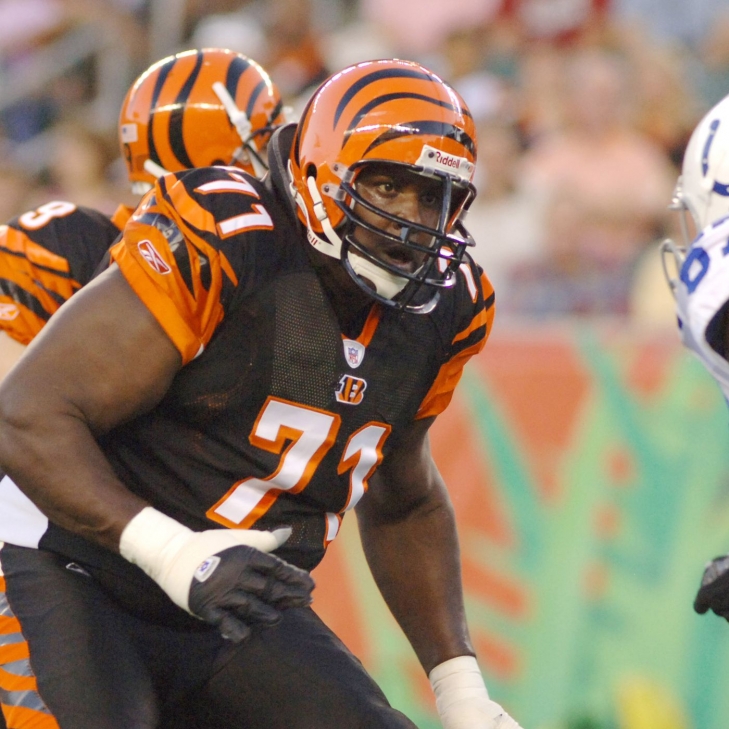
Willie Anderson, from Auburn, was selected 10th overall in the 1996 NFL Draft. Coming from Auburn, Anderson entered the NFL as a powerful presence, quickly securing a starting position at right tackle. Over the next decade or more, he served as the key pillar of the Bengals' offensive line.
At 6 feet 5 inches and over 340 pounds, Anderson possessed a rare blend of colossal raw power, long reach, and quick-setting footwork. In an era where pass rushers like Julius Peppers, Michael Strahan, and Reggie White often lined up over the right tackle, Anderson neutralized the league's elite edge rushers single-handedly. He brought a brutal, road-grading demeanor to the run game, creating massive lanes for backfield stars like Corey Dillon and Rudi Johnson.
Throughout the late 1990s and early 2000s, Anderson stood as a steady anchor on struggling Cincinnati rosters, routinely shutting down premier edge defenders every Sunday. He was the key blocker up front in 2000 when Corey Dillon famously set the then-NFL single-game rushing record with 278 yards against the Denver Broncos.
Under head coach Marvin Lewis, the franchise improved, and Anderson finally received the national recognition he had deserved for years. In 2003, he began a remarkable four-year period of dominance, earning his first Pro Bowl selection and Second-Team All-Pro honors. During this time, he also helped Rudi Johnson achieve a breakout season.
In 2004, he achieved his first First-Team All-Pro honor and participated in his second Pro Bowl, protecting Carson Palmer’s right side. The high standards continued in 2005, with another First-Team All-Pro recognition and a Pro Bowl selection, contributing to an 11–5 AFC North champion team with one of the NFL's most potent offenses. He wrapped up his four-year streak of elite accolades in 2006 with his third consecutive First-Team All-Pro and fourth straight Pro Bowl appearance, solidifying his reputation as the premier right tackle.
After leaving Cincinnati before the 2008 season, Anderson played his last NFL year with the Baltimore Ravens, a division rival. He started 11 games at right tackle, contributing to Baltimore's run to the AFC Championship Game before retiring. In 2021, the Bengals officially honored him by inducting Anderson into their Ring of Honor. He is considered one of the greatest offensive linemen in franchise history, second only to Hall of Famer Anthony Muñoz.
7. Chad Johnson
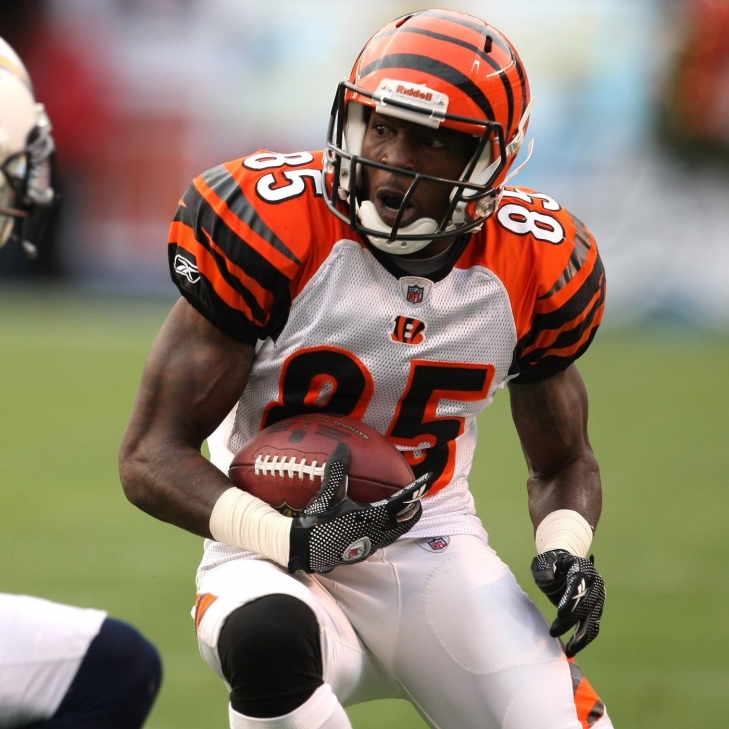
Whether you call him Chad Johnson or Chad OchoCinco, you are talking about one of the greatest offensive weapons in the history of the Cincinnati Bengals.
4. Ken Riley
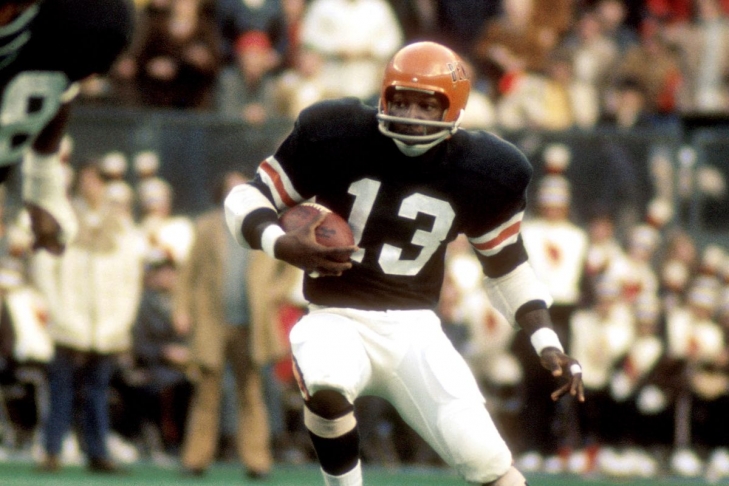
Drafted in the sixth round (135th overall) of the 1969 AFL Draft out of Florida A&M, Ken Riley arrived in Cincinnati as a star college quarterback. Like so many Black quarterbacks of his era, he was immediately transitioned to defense by head coach Paul Brown. Riley embraced the position switch, transforming into "The Rattler"—a technician at boundary corner whose 15-year career in Cincinnati stood as a masterclass in durability, film study, and ballhawking precision.
Riley was not a flashy cornerback who relied on trash talk or raw, unbridled size. Instead, his former quarterbacking eyes gave him a massive diagnostic advantage. He studied opposing route combinations obsessively, allowing him to jump passing lanes, bait quarterbacks into tight windows, and secure interceptions without giving up deep leverage. His footwork was exceptionally fluid, and his sure-handed tackling made him a complete, dependable defender on the edge.
Riley made an immediate impact in his 1969 rookie campaign, snagging four interceptions. He quickly secured a starting cornerback spot and launched a remarkable 15-year run of health and consistency, recording at least one interception in each of his 15 seasons.
In the mid-1970s, Riley established himself as a top cover man. He earned Second-Team All-Pro honors in 1975 after a five-interception season, and in 1976, he again received Second-Team All-Pro recognition following a career-high nine interceptions.
Despite his staggering takeaways and lockdown coverage, Riley was famously overlooked for the Pro Bowl throughout his career—a snub that baffled voters for decades. Yet his final season in 1983 served as the ultimate mic-drop moment. At 36, Riley started all 16 games, intercepted eight passes (returning two for touchdowns), and earned his long-overdue First-Team All-Pro selection.
He retired after the 1983 season, having played 207 regular-season games—all with the Bengals—and recorded 65 career interceptions, five touchdown returns, and 18 fumble recoveries. His 65 picks ranked fourth in NFL history at the time of his retirement and remain tied for fifth all-time.
When the franchise inaugurated the Cincinnati Bengals Ring of Honor in 2021, Riley was naturally enshrined as one of four charter members alongside Anthony Muñoz, Ken Anderson, and Paul Brown. His legacy received its final, righteous validation when he was posthumously elected to the Pro Football Hall of Fame as a member of the Class of 2023.
