


Committee Chairman
14. Nate Colbert
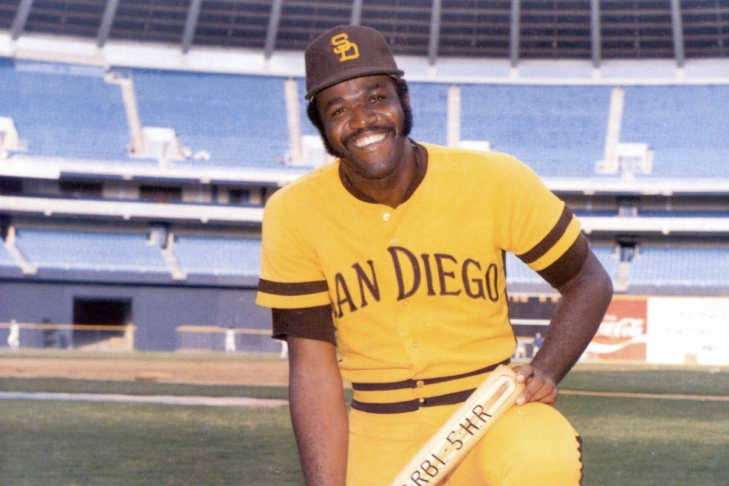
When a franchise enters league history for the first time, it relies on key pillars to build its identity from scratch. For the 1969 expansion San Diego Padres, that was Nate Colbert, a powerful hitter from the Houston Astros drafted in expansion. He not only led the struggling team's offense but became its first superstar. As starting first baseman, he brought immediate, impressive power to the field, giving fans a reason to visit San Diego Stadium.
Calling it as it is means recognizing that Colbert was never a refined contact hitter. Throughout his career, he struggled with frequent swing-and-miss issues, recording over 100 strikeouts in five seasons and maintaining a modest .243 batting average with the Padres. However, his lack of pure efficiency was compensated for by his high offensive volume and power in high-pressure situations.
During his first five summers in San Diego, Colbert aimed to hit 20 home runs daily, achieving this every year from 1969 to 1973. His most outstanding season was 1970 with 38 home runs, a feat he repeated in the exceptional 1972 season. That year is remembered as one of the most remarkable displays of individual run production in baseball history. Colbert was a starter in three consecutive All-Star games from 1971 to 1973, but his 1972 performance peaked on August 1st during a historic doubleheader against the Atlanta Braves.
Using a powerful and aggressive approach, Colbert delivered an outstanding performance by hitting five home runs and driving in 13 runs over two games—a record in major league history that still stands. His impressive skill and dominance that summer earned him eighth place in the National League MVP voting, even though he played for a team at the bottom of the standings.
Chronic back issues significantly damaged his physical abilities before the 1974 season, leading to a sudden decline in performance and the loss of his trademark bat speed. With reduced efficiency and the team planning a roster overhaul, the front office orchestrated a clear career exit by trading their original star to the Detroit Tigers in November 1974.
Colbert accumulated 163 taters with the Padres.
10. Ken Caminiti
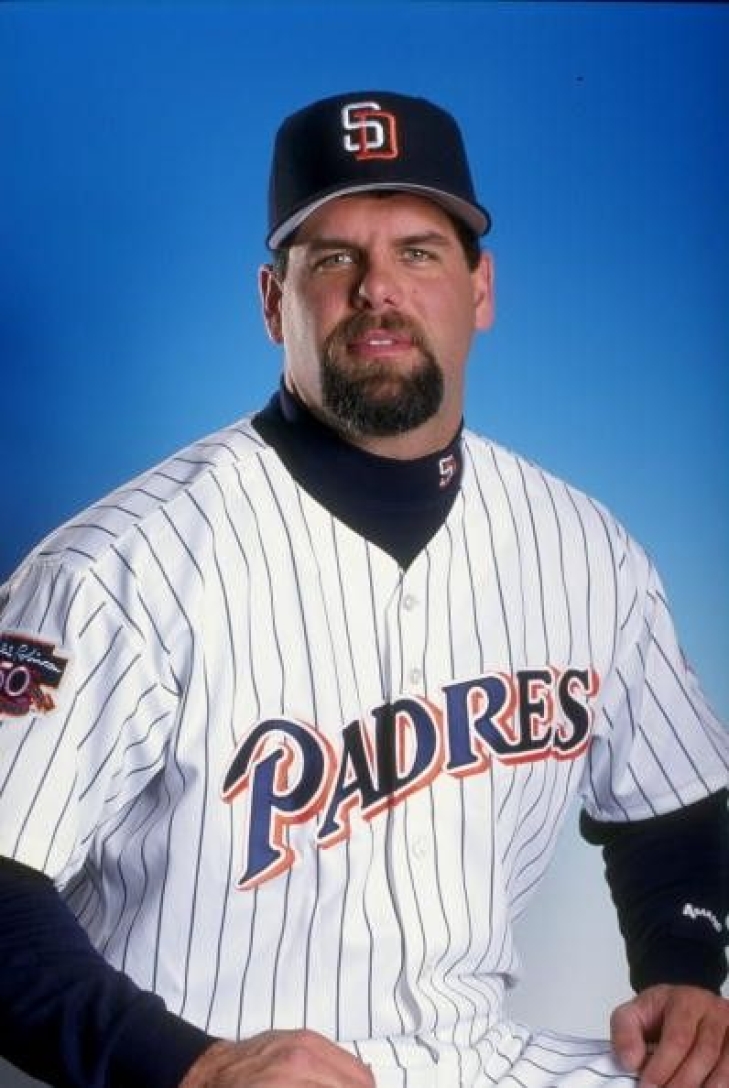
In evaluating the history of the San Diego Padres, certain periods are characterized by a remarkable surge in individual prowess that significantly influences the franchise's trajectory. The resurgence in Southern California during the mid-1990s was notably driven by the intense and aggressive playmaking of Ken Caminiti. Having spent his initial eight seasons in Major League Baseball with the Houston Astros—where he received a single All-Star selection during the strike-shortened 1994 season—the third baseman was subsequently traded westward as the pivotal figure in a transformative, twelve-player trade in December 1994. Upon his arrival in San Diego, armed with a fierce competitive spirit and a reputation for playing through severe physical pain, the switch-hitter experienced a distinguished peak marked by hardware accolades, transforming Jack Murphy Stadium into a veritable laboratory of offensive output.
His first year in a Padres uniform offered an immediate look at his evolving power profile. Caminiti systematically dismantled National League pitching staffs, lashing out a career-high 26 home runs and driving home 94 runs while eclipsing the coveted .300 batting average threshold for the first time in his career.
In 1996, Caminiti showcased exceptional offensive power, hitting a career-high 40 home runs and recording a franchise-record 130 RBIs. His impressive performance improved league efficiency metrics with a notable .326/.408/621 slash line, leading the Padres to win the National League West division. His outstanding play earned him unanimous recognition as the National League Most Valuable Player and a Silver Slugger Award.
Caminiti kept his power numbers strong over the next two years, with seasons of 26 and 29 Home Runs, respectively, while his arm earned him three straight Gold Gloves (1995-97).
He rejoined the Astros as a Free Agent in 1999, leaving the Padres after 121 home runs and a .295 batting average. While Caminiti would later admit to PED use, he had other demons, as he died of a drug overdose at the age of 41. The Padres would, however, immortalize Caminiti in their Hall of Fame in 2016.
11. Andy Benes
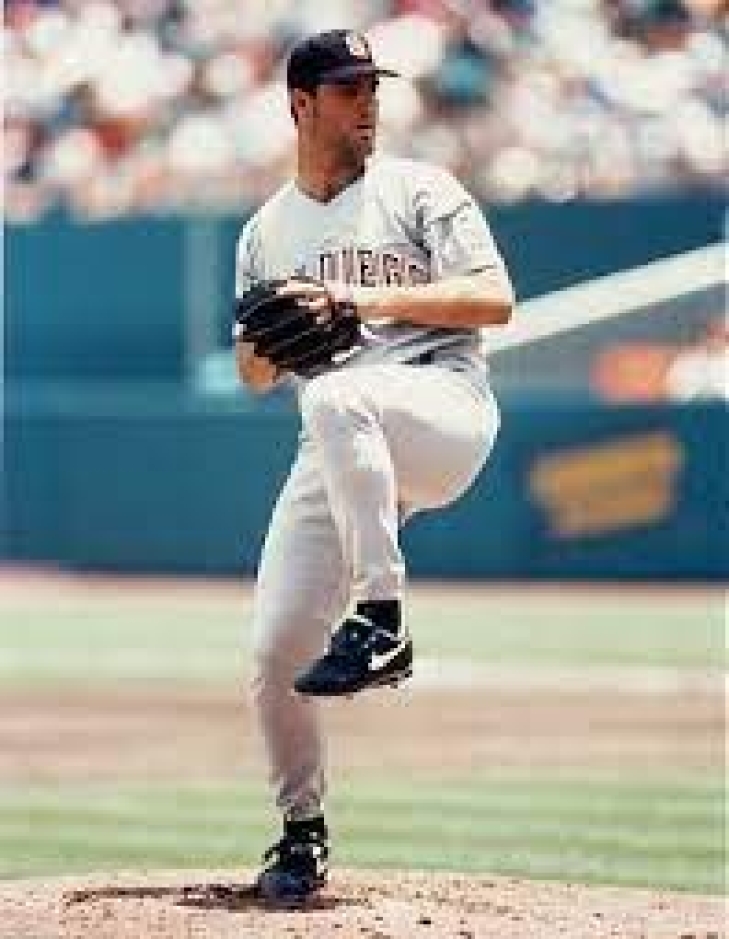
The San Diego Padres believed they found their foundational player when they picked Andy Benes at the top of the 1988 amateur draft. The talented right-hander quickly proved the front office correct, advancing rapidly through the minor leagues to make his major league debut by summer 1989. Jumping straight into the regular season, Benes delivered an impressive debut, posting a 6–3 record with a 3.51 ERA in 10 strong starts, finishing fifth in the National League Rookie of the Year voting. This promising start indicated a pitcher who would be a reliable, durable cornerstone of the San Diego pitching staff during the first half of the 1990s.
Over five summers, Benes was the clear staff ace during a challenging transitional period for the team. He combined a powerful, high-velocity fastball with excellent spatial awareness, making late-game durability a consistent expectation. In 1991, he delivered an outstanding season, leading the rotation with 15 wins and a solid 3.03 ERA, also surpassing 200 strikeouts for the first time in his career.
After achieving another consistent and productive season of frames in 1992, he regained his frontline dominance during the 1993 season's standout. Benes achieved 15 wins again and pitched a career-high 230.2 demanding innings, earning his first All-Star selection and boosting his national reputation.
His 1994 campaign vividly exemplified the challenging reality of being a key player on a struggling team. During that strike-shortened season, Benes showcased impressive high-volume performance and statistical setbacks; he dominated hitters to lead the National League with 189 strikeouts, yet a lack of run support caused him to top the league with 14 losses.
Tragically, that heavy burden caused a sharp performance drop, leading to a difficult first half of the 1995 season. As the small-market team prepared for a roster rebuild and looked to the future, the front office signaled his career end by trading him to the Seattle Mariners mid-season.
As a Padre, he had a 69-75 record with 1,036 strikeouts.
9. Adrian Gonzalez
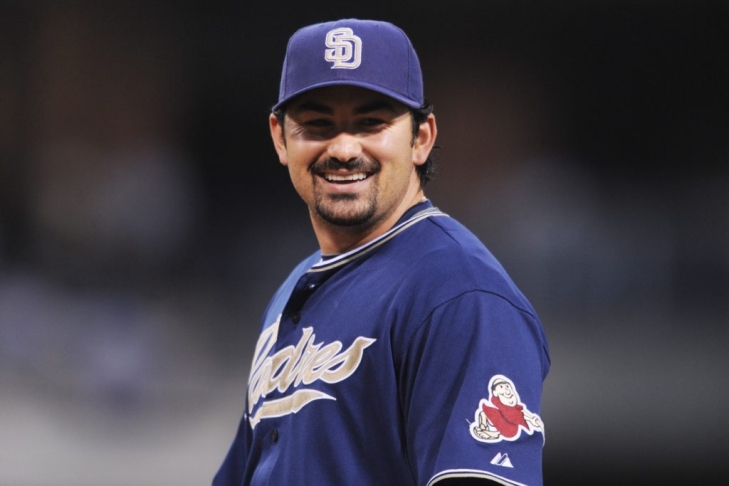
Evaluating a first overall draft pick involves significant organizational pressure, and the Florida Marlins made a critical error in their developmental patience with Adrián González. Picked at the top of the 2000 amateur draft, the left-handed first baseman injured his wrist in the minors, leading Florida scouts to prematurely doubt that his raw power would ever fully develop at the major league level. After being traded to Texas, he briefly made the team before the Rangers deemed him surplus and sent him to San Diego prior to the 2006 season. For González, this trade was like a homecoming, as he had moved to that area as a child and grown up watching the local field. Filling in for injured Ryan Klesko in the starting lineup, he quickly disproved previous evaluations of him, becoming a key contributor to run production under Southern California’s sun.
His summer debut in 2006 quickly showcased elite contact skills and smooth mechanics. González methodically dismantled National League pitching staffs, collecting 173 hits with a .304 batting average and 24 home runs, solidifying his strong presence at first base. His true power was confirmed in 2007, when he hit 30 home runs and brought in 100 RBIs.
This hardware-certified consistency flourished into an exceptional series of individual dominance over the following three summers. González achieved three consecutive All-Star selections from 2008 to 2010, combining his superior batting skills with impressive home run totals of 36, 40, and 31.
Far from a one-dimensional slugger, he was developing a telepathic batting eye to counter defensive positioning. This peaked during the 2009 season, where he systematically forced pitchers deep into counts, leading to a career-high 119 walks. This efficiency created high-leverage opportunities, earning him MVP consideration across all three All-Star campaigns, culminating in a fourth-place finish in 2010. He was also a two-time Gold Glove winner in San Diego (2008 & 2009)
At the conclusion of the 2010 Season, Gonzalez would be traded to the Red Sox for four players. Gonzalez blasted 856 hits, 161 home runs with a .514 slugging percentage as a Padre.
