

Committee Chairman
47. Al Leiter
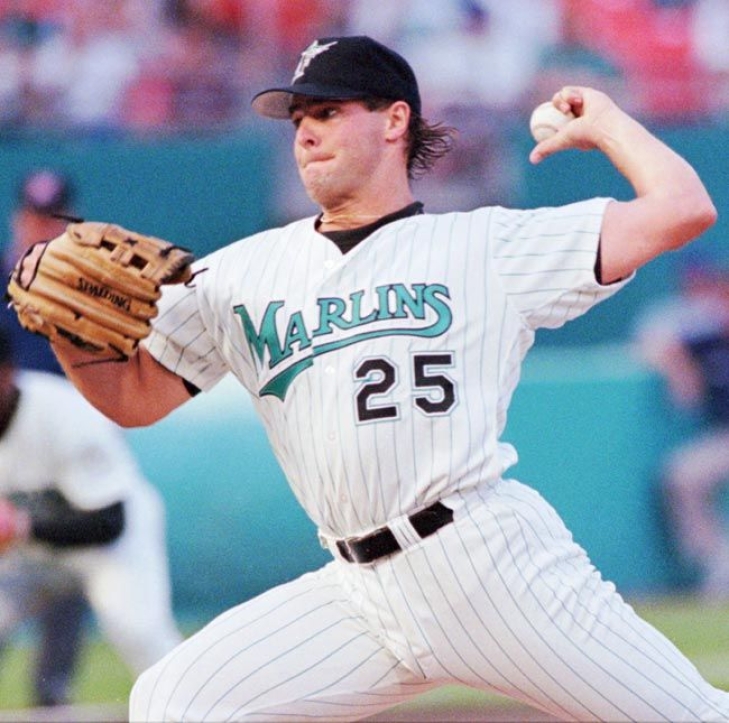
Oft-injured with the Toronto Blue Jays, Al Leiter bolted from the Jays as a Free Agent in 1996 for the sunnier skies of Florida. It was there that he was finally healthy and showed what he was capable of all along.
In 1996, he had his most successful year in professional baseball, posting 16 wins and a career-low ERA of 2.93. On May 11, he demonstrated exceptional command of the mound by pitching a no-hitter against the Rockies, a significant milestone for the young franchise. That summer, he achieved a historic milestone by earning his first All-Star selection, demonstrating that when in optimal health, his specialized "cutter" and high-velocity pitches were among the most effective in the senior circuit.
Leiter reached his peak in team success during the 1997 championship. His regular-season stats dipped, 11 wins and an ERA over 4.30, but he was a key part of Jim Leyland’s rotation. He became a postseason hero in the 1997 World Series, notably pitching six innings of two-run ball in Game 7 against Cleveland, helping the Marlins stay competitive for a late-inning rally.
Like so many 1997 Championship Marlins players, Leiter was part of the biggest baseball fire sale until the team did it again after their 2003 Title. He was traded to the Mets, though he returned as a Free Agent for an ineffective year in 2005.
With the Marlins, Leiter won 30 Games against 28 Losses with a 4.07 ERA.
46. Henderson Alvarez
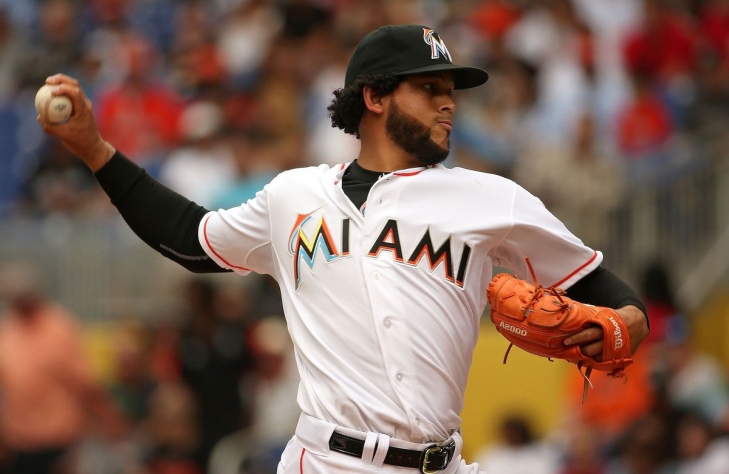
Henderson Alvarez arrived in Miami as a central piece of the massive 2012 trade with Toronto, a young right-hander with a heavy sinker and a flair for the dramatic. While his residency in South Florida was ultimately cut short by the recurring fragility of his shoulder, he operated with a specialized efficiency that made him, for a brief window, the most dominant arm in the rotation.
After missing the first half of 2013 due to shoulder inflammation, Alvarez achieved his peak performance on the season's last day. He delivered a masterful no-hitter against the Detroit Tigers, a remarkable feat that ended with him in the on-deck circle as the Marlins secured a 1-0 victory on a walk-off wild pitch. That afternoon, he demonstrated complete control over his sinker, requiring only 99 pitches to set a new record.
In 2014, Alvarez was an All-Star who finished with a 12-7 record and a 2.65 ERA. Known for efficiency, he led the National League with three shutouts and had an elite ability to induce ground balls. During his peak, he was a reliable starter, ranking sixth in NL ERA, showing he was more than a one-time success. He set a historic record by becoming the first MLB pitcher to throw three consecutive shutouts in interleague play.
After being named the 2015 Opening Day starter, the recurring shoulder problems ended his season after just four ineffective starts. The organization declined to offer him a contract for 2016, and while he reached a brief plateau of a comeback with the Phillies in 2017, his high-velocity era was effectively over. With the Marlins, Alvarez had an even record of 17-17 with a 3.28 ERA.
48. Antonio Alfonseca
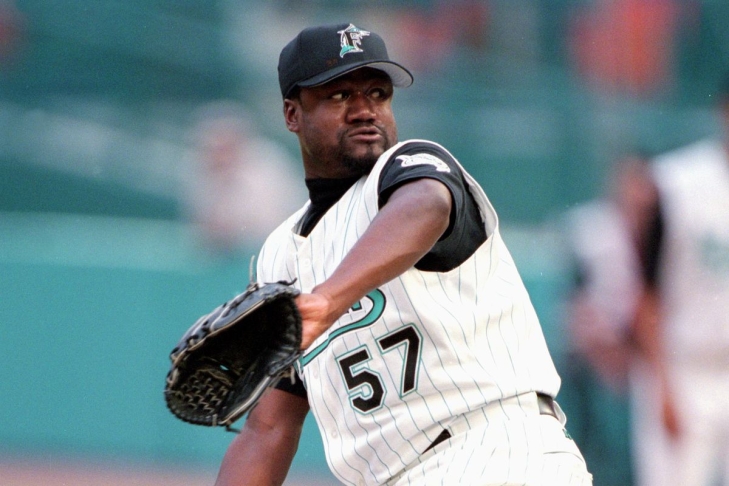
The Marlins plucked Antonio Alfonseca, a right-handed prospect plucked from the Montreal Expos organization in the minor league phase of the draft. While he was physically unique, possessing six fingers on each hand due to polydactyly, he operated on the mound with a heavy, specialized sinker that made him one of the most polarizing closers of his era.
In 1997, Alfonseca achieved team success as a rookie with 6.1 scoreless postseason innings, helping the Marlins win their first World Series. He demonstrated mastery of his sinker in subsequent years, reaching a career-high in 2000, with 45 saves that summer, earning the Rolaids Relief Man Award. Despite a rise in ERA (4.24) and WHIP (1.51), he was a high-leverage clutch pitcher, often escaping trouble to secure wins.
The following year, Alfonseca recorded 28 saves in 2001 despite back pain. In early 2002, the organization traded him to the Chicago Cubs in a six-player trade including Matt Clement and Dontrelle Willis. He would, however, return in 2005 for one final brief stint.
Alfonseca had 102 Saves for the Marlins and finished 193 Games.
37. Livan Hernandez
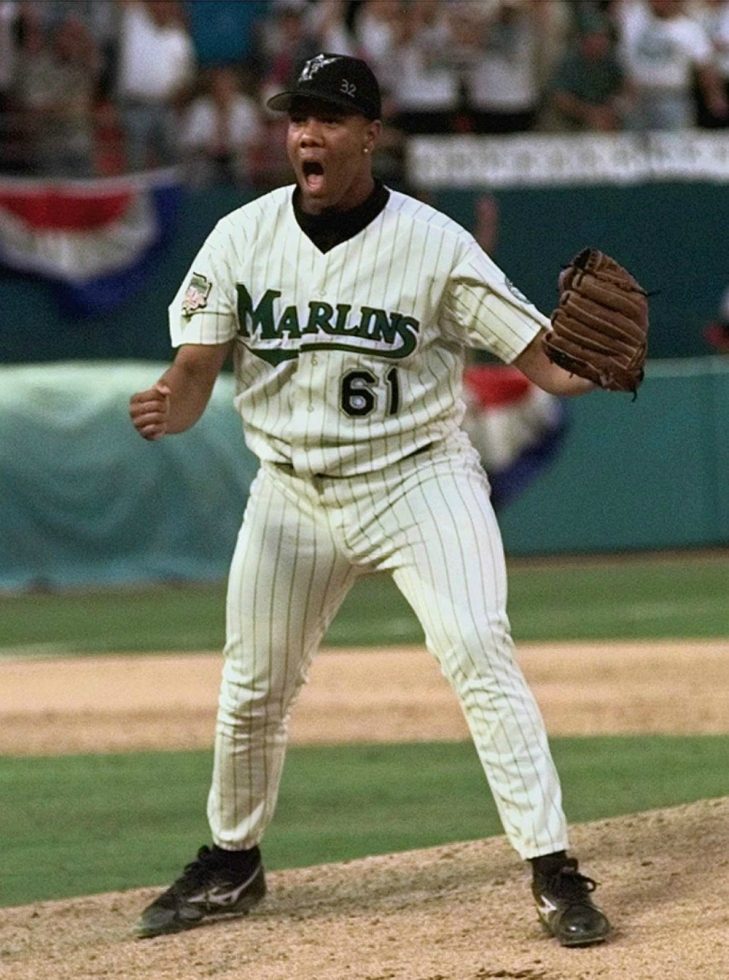
One of the most fascinating people to rank on a list of all-time Marlins is Liván Hernández, the star of the 1997 Playoffs.
Liván Hernández arrived in South Florida in 1996 as a figure of immense political and athletic intrigue, having defected from Cuba just a year earlier. While he possessed a high-velocity arm and a signature "slow" curveball, his residency in Miami was ultimately defined by a singular, lightning-strike October that transformed him from a rookie prospect into a postseason immortal.
After a solid 1997 regular season with a 9-3 record and a 3.18 ERA, Hernández reached a career highlight in the playoffs. He delivered one of the franchise's most memorable performances in Game 5 of the NLCS, striking out a record 15 Atlanta Braves in a complete-game performance. This achievement earned him the NLCS MVP award, but he continued to excel. Hernández demonstrated complete command during the Fall Classic, winning two additional games against Cleveland to secure the World Series MVP, becoming only the fourth player to earn both honors in the same season.
Following a grueling 1998 campaign in which he logged a career-high 234.1 innings, Hernández’s efficiency began to waver, and the organization finalized a trade sending him to the San Francisco Giants in July of 1999. Hernandez would have greater individual success with the Expos/Nationals, representing them in the All-Star Game twice. As a Marlin, Hernandez had a record of 24-24, with a 4.39 ERA and 333 Strikeouts. Notably, he was also an excellent defensive player and an above-average hitting Pitcher, accumulating 35 Hits with a .222 Batting Average for the team.
