

Committee Chairman
38. Kevin Pillar

Kevin Pillar set a historic 54-game hitting streak at California State University, Dominguez Hills. Despite this achievement, his Division II background caused him to be drafted only in the 32nd round of the 2011 draft, 979th overall. However, Pillar defied expectations by leveraging a relentless work ethic, quickly progressing through the minor leagues and reaching the major leagues within two years.
By the 2015 season, Pillar had solidified his position as the everyday center fielder at Rogers Centre, becoming known for his spectacular plays. He played aggressively, often risking his safety by leaping into the grass and crashing into the padded walls to make catches. His remarkable defensive skills earned him the nickname "Superman" and were officially honored when he received the Wilson Defensive Player of the Year Award along with a Platinum Glove for being the best overall defender in the American League.
Pillar’s elite defense was a vital cornerstone during the franchise's thrilling return to prominence. He posted a.278 batting average with 163 hits in 2015, providing a critical late-innings spark and high-leverage defensive stability that helped push Toronto into the ALCS. He backed that up with another 144-hit campaign in 2016, helping carry the Blue Jays directly back to a second consecutive ALCS appearance.
Although his aggressive, relentless approach at the plate kept his walk rates low and his on-base percentage below the league average, his durability and contact skills ensured he remained highly effective. He posted two more solid seasons with double-digit home runs in 2017 and 2018, frequently pitching extensive innings.
With the organization pivoting toward a complete youth movement and rebuilding phase, the front office traded the veteran outfielder to the San Francisco Giants just five games into the 2019 schedule. With the Jays, Pillar had 641 hits, 150 doubles, 55 home runs, 231 RBIs, and 69 stolen bases. While his .260/.297/.396 slash line reflected his free-swinging tendencies, his spectacular technical range in center field generated an outstanding 8.7 defensive bWAR.
36. Shawn Green
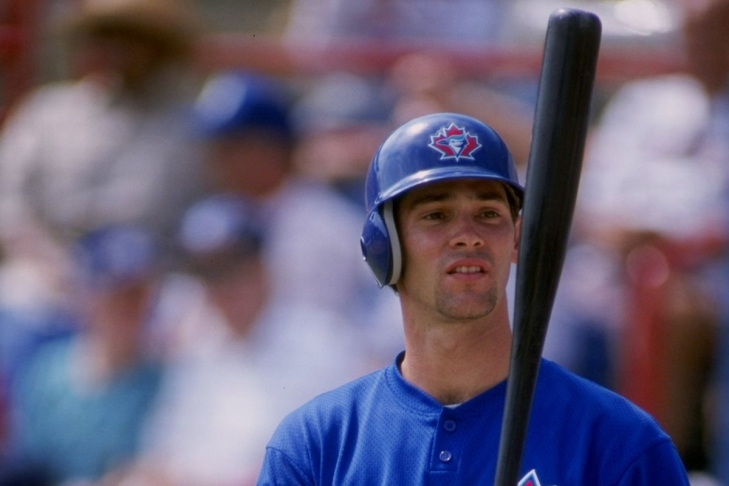
A 1991 First Round Pick in 1991, Shawn Green first made it to the Majors as a September call-up in the 1993 World Series winning season. Green did not play in the post-season and was in the minors for most of 1994, but he was the starting Rightfielder going into 1995, a position he would keep for the rest of the decades.
Green was a middle-of-the-road starter at RF for the Blue Jays for a few years but had an elevated stat line in 1998, belting 35 Home Runs with 1000 RBIs. That was the type of season that the Blue Jays were hoping for, but he took it to another level in 1999.
Green’s 1999 campaign was the best of his life, compiling career-highs in Home Runs (42) and OPS (.972) while obtaining an All-Star, a Gold Glove, and Silver Slugger. The Outfielder was also ninth for the American League MVP. This was a star-making, yea, but Toronto was not a contender and traded Green to the Dodgers after this year.
With Toronto, Green had 119 Home Runs and 718 Hits and batted .286.
33. Paul Molitor
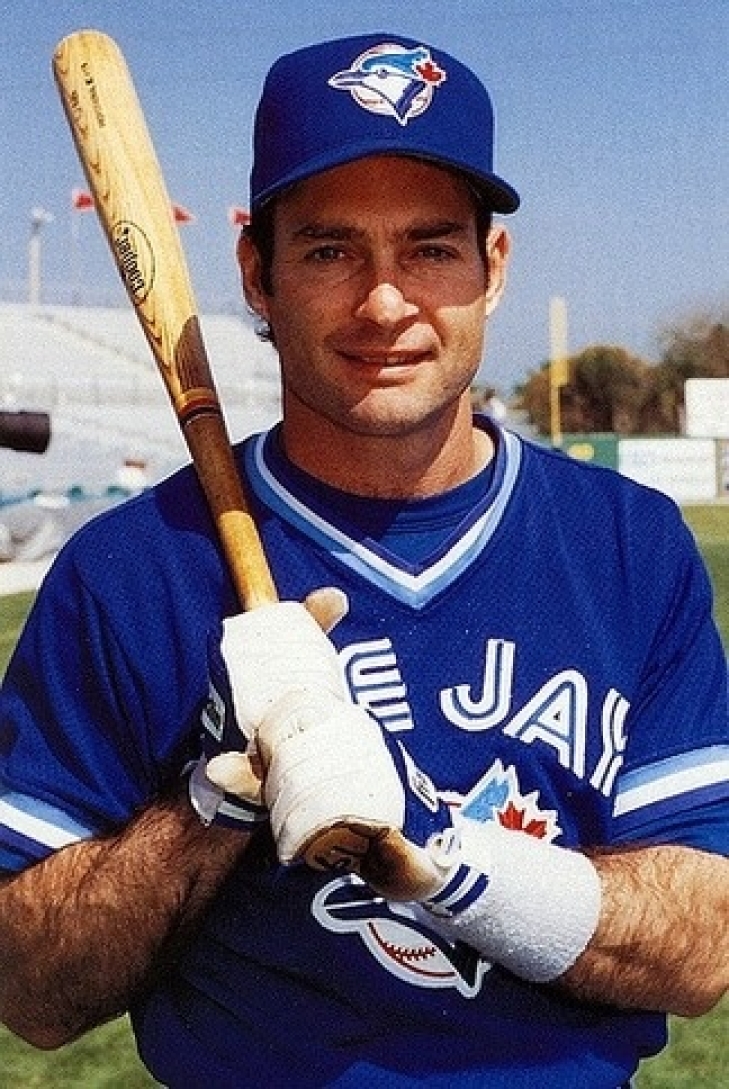
In 1992, the Toronto Blue Jays won their first world championship with Hall of Famer Dave Winfield as the designated hitter. After Winfield left in free agency, the team achieved a remarkable upgrade by signing Paul Molitor to a multi-year deal in December 1992. Molitor, affectionately called "The Ignitor,” brought exceptional contact hitting skills and a powerful, high-energy style. The intelligent right-handed hitter quickly made a significant impact, elevating the team's offense and solidifying his reputation as a hitting master.
Molitor’s debut in 1993 was truly historic. As a key part of the legendary "WAMCO" lineup, he dominated American League pitching. Using a compact, swift swing, he led the majors with 211 hits and achieved an impressive .332 batting average. More than just a singles hitter, Molitor showed added power, hitting a career-high 22 home runs and driving in 111 runs. This performance earned him the AL Silver Slugger Award and a close second in AL MVP voting.
That regular-season dominance beautifully set the stage for an immortal postseason showcase. As Toronto marched back to the Fall Classic, Molitor turned the 1993 World Series into his own personal playground. He shredded the Philadelphia Phillies' pitching staff, batting a staggering .458 with two home runs, two triples, and seven RBIs. Whether he was turning around fastballs or hitting line drives into the gaps, his clinical performance earned him the undisputed World Series MVP Award, capped by scoring the winning run on Joe Carter's historic walk-off three-run homer in Game 6, securing back-to-back world titles for Toronto.
Despite the 1994 strike-shortened season impacting the Blue Jays’ overall performance, Molitor stayed unaffected by decline. He delivered another outstanding offensive season, hitting .341 with 141 hits in only 115 games, earning his seventh All-Star appearance. Although his efficiency declined slightly in his final Toronto year in 1995, with a batting average of .270, his veteran leadership and excellent bat-to-ball skills kept him among the top designated hitters in baseball.
Prior to the 1996 schedule, the proud St. Paul native opted to return home, signing with the Minnesota Twins to beautifully chase his 3,000th career hit and close out his playing ledger where his roots began. Across three seasons in Toronto, Molitor appeared in 405 games and accumulated 508 hits, 87 doubles, 41 home runs, and 241 RBIs while generating a stellar .315/.388/.467 slash line (126 OPS+). He was inducted into the Baseball Hall of Fame in 2004.
32. Rance Mulliniks
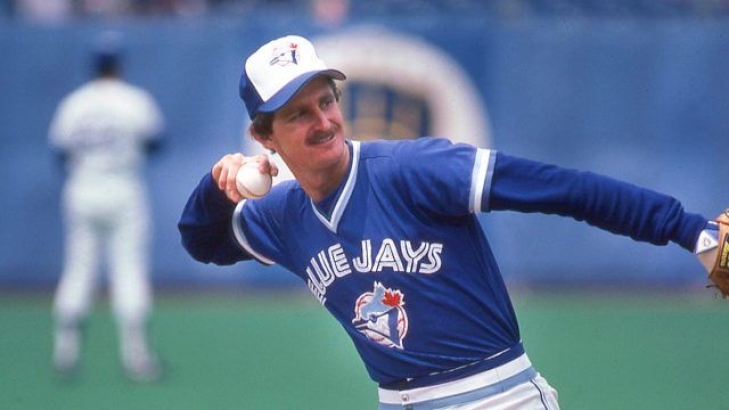
In his first five years in the Majors, Rance Mulliniks saw limited action, three with California and two with Kansas City. A trade to Toronto was just what Mulliniks needed, and for most of the 1980s, he was the main Third Baseman, often in platoons against right-handed pitching.
With the Blue Jays, the versatile Mulliniks had at least five years where he accrued 100 Hits and 10 Home Runs, batting over .300 in three of those years. He was a competent defensive player, and though he would never be a megastar, he would not be a liability either.
As Third Baseman Kelly Gruber emerged, Mulliniks’ time decreased, though his injuries and age grew. Although he barely played that year, he was a member of Toronto's 1992 World Series-winning team. Mulliniks retired after, totaling 843 Hits with a .280 Batting Average.
