


Committee Chairman
We have revised our Notinhalloffame Baseball 300 list to reflect 2024.
Last month, the Baseball Hall of Fame elected Scott Rolen into their midst; a month after the Veteran’s Committee unanimously chose Fred McGriff for the Class of 2023.
This means that for us at Notinhalloffame.com, it is time to revise one of our most important lists, the top 300 Baseball players who we feel are deserving for a look at enshrinement in Cooperstown.
Our list looks at the following criteria:
- Traditional and advanced statistics.
- Playoff performance.
- Impact and influence.
- Your votes and comments.
We take all of these factors into consideration (especially your input), but as years go by, it becomes more difficult to rank players, especially since many of those eligible are tainted with activity that has kept them out. Regardless of how Baseball may have decreased in popularity over the past decades, this is still the pre-eminent sports Hall of Fame in North America, and the standard by which all others are judged.
Specifically for the 2023 list, adjustments were made by removing Rolen and McGriff, factoring in your collective input, and adding former players who are eligible for the 2024 vote.
Our entire list of 300 can be found here, but below, we are pleased to present the Notinhalloffame.com Baseball top 20.
Remaining at #1 is Barry Bonds, the all-time leader in Home Runs (762) and is a seven-time MVP. Controversy overshadows the power hitter, who is universally believed to have taken PEDs, though never tested positive. Bonds concluded his ten years on the modern era ballot with 66%, and had there been 15 years like there were previously, he might have made it. He was on the recent Veteran’s Committee ballot that included McGriff, though Bonds failed to gain the minimum votes needed to even have his number made public. Bluntly, this means that Bonds is further than ever for Hall of Fame induction, as his peers do not view him as worthy. We suspect that Bonds will forever be the most potent hitter to never see a plaque in the Hall, and could remain #1 here for decades (unless, your votes and comments plumet him from the top spot.
Roger Clemens also remains fixed at #2, and most of what we said about Bonds, applies to Clemens, only that he is a Pitcher. A seven-time Cy Young winner, the “Rocket” never was suspended for PEDs, but the clouds around him are ominous, and he also did not win over a lot of friends in the media. Just like Bonds, Clemens had his highest total on his last year of modern eligibility, and did not gain enough votes on his first Veteran Ballot for his tally to be known.
Remaining at #3 is Alex Rodriguez, who was arguably the top player of the 2000s, and he will enter his third year of Modern eligibility. There was nobody (Bonds and Clemens included) whose first year on the ballot intrigued us the most. Unlike Bonds and Clemens, A-ROD DID test positive and served the longest suspension in MLB history. At one time, he was the most hated man in all of sports, yet here we are in 2023 where he has a job with Fox Sports, and was in a high-profile relationship with Jennifer Lopez. His marginal improvement in the 2023 vote does not forecast a Hall of Fame for Rodriguez.
With Pete Rose staying at #4, we have another player who looks to be forever to remain on the outside-looking-in. Baseball’s all-time hit king was banned from Baseball for gambling on the sport, though he has recently made some appearances. The Baseball Hall of Fame has followed the edict of MLB (although they don’t actually have to) and never added him to a ballot of any kind. Even if he is reinstated, he would still have to appear on a Veteran’s Committee ballot, and that group would have to choose him.
With “Shoeless” Joe Jackson at #5, we have a top five (our only) where it is likely that none will ever receive the call. Banned in 1920 for allegedly conspiring to throw the World Series from the year before, Jackson maintained his innocence, and there many suspect that the Outfielder, who may have known about it, did not participate, which reflects his 1919 postseason statistics.
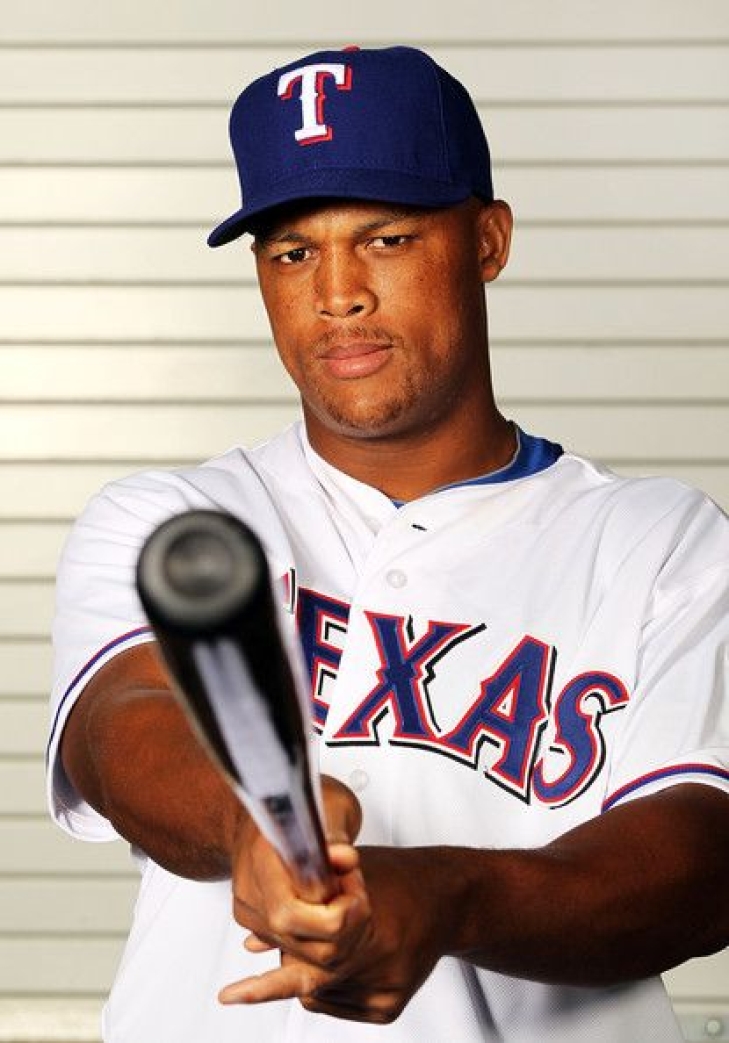
This takes us to #6, Adrian Beltre, who enters his first year on the ballot, and is a bona fide threat to enter on his first attempt. He brings a resume of 3,166 Hits, 477 Home Runs, four All-Stars, four Silver Sluggers and five Silver Sluggers.
Falling one spot to #7 is he former career-Tiger, Lou Whitaker. The Second Baseman and World Series Champion was a one-and-done on his only year on the ballot and is one of the most egregious omissions from the multi-ballot club.
Bill Dahlen, a previous Veterans Committee nominee, is at #8. We expect that he will be on the next one for his respective era.
Dropping one to #9 is Curt Schilling, whose war with the media (and possibly his right-wing politics) resulted in his perpetual snub. At the end of his run on the Modern Era ballot, the Pitcher asked the voters not to select him, and many acquiesced. Schilling was on the same Veteran’s Committee ballot that Bonds and Schilling was on, and though he also was denied induction, he fared much better, gaining 6 votes.
Rounding out the top ten is Manny Ramirez, who though is still on the ballot is running out of time. If Alex Rodriguez is unlikely to get elected, Ramirez has no shot, as he too was suspended, and has weaker (though Hall of Fame worthy) stats than A-Rod.
Todd Helton stays at #11. The “Toddfather” missed out on Cooperstown this year with 72.2 of the vote, but next year on 2024 looks promising for Helton, who enters year number six on the ballot.
Boston’s most wanted for the Hall of Fame, Dwight Evans, holds firm at #12.
Pre-1900 Pitcher, Jim McCormick, advances two spots to #13.
Carlos Beltran had a bit of tumble from #10 to #14. Like others above, Beltran has the stats, but is paying a penance for his prominent role in the 2017 Houston Astros cheating scandal. He received only…. 1st And we suspect that many voters wanted to make him wait a year. Beltran will likely jump significantly on his second vote.
Tommy John, whose career-saving surgery named after him is recognized by the Hall, fell one spot to #15.
The final five of the top twenty all hold the same positions as last year, respectively being; Roger Maris (#16), Dick Allen (#17), Mark McGwire, (#18), Dave Parker (#19) and Rafael Palmeiro (#20).
There are other new entries on our list. They are:
Chase Utley (#28), Joe Mauer (#37), Bartolo Colon (#77), David Wright (#89), Jose Bautista (#220) and Jose Reyes (#271)
We are now going to begin work on revising or Notinhalloffame.com Football 300, where we rank those to consider for the Pro Football Hall of Fame.
As always, we thank you for your support, and ask you to continue with your votes and comments.
How Do Champions Spend Their Free Time?

How Do Champions Spend Their Free Time?
When it comes to achieving greatness in sports, talent and hard work are not the only ingredients necessary for success. There are several factors involved that make an athlete who he or she is. This includes the kind of training and exercises you do, the food you eat, and any other thing you do at home when not playing. Having a routine and doing all these consistently is what makes them champions. In this article, we will explore how they spend their free time when not competing.
Rest and Recovery
For athletes to perform at their best, taking a rest to recover is important. This gives them time for their bodies to recuperate and recharge. They need to get enough sleep and sometimes engage in activities that help them relax and unwind. One activity they like engaging in during their downtime is online gaming. You can read the ruby fortune casino review to learn about the variety of games available. This includes slots and table events like blackjack and roulette. These can help them to relax their mind and unwind as they take their minds off the pressure of competition. However, it's important to note that while gaming can be a fun way to relax, it should never interfere with an athlete's training or sleep schedule. Champions know the importance of maintaining a healthy balance between their hobbies and their professional responsibilities.
Hobbies and Interests
Athletes often have a variety of hobbies and interests that they enjoy. These can range from artistic pursuits like painting and writing to physical activities like hiking and surfing. Whatever it may be, it's important for athletes to have something outside of their sport. Things they can turn to for enjoyment and relaxation. For example, tennis legend Roger Federer is known for his love of traveling and spending time with his family. He often takes them on tour with him and enjoys exploring new cities and cultures when he has time off from tennis. Similarly, Olympic gymnast Simone Biles is a passionate advocate for mental health. She uses her platform to encourage others to take care of their emotional well-being.
Training and Practice
Of course, it goes without saying that champions spend a significant amount of their free time on training and practice. As seen before, rest and relaxation are important for recovery. However, it’s also essential to continue working on skills and fitness to stay on top of the game.
This may mean working with a coach or trainer to improve specific areas of their performance. They sometimes spend extra time in the gym to build strength and endurance. It may also mean studying game footage or analyzing their opponents' tactics to stay ahead of the competition.
One example of a champion who is known for his rigorous training schedule is basketball superstar LeBron James. He is famous for his intense workouts and spends hours each day on strength training and conditioning. This helps in maintaining his peak physical form.
Family and Relationships
Athletes often have busy schedules and demanding training regimens. But they also make time for their family and loved ones. They understand the importance of maintaining strong connections with those who support them. This might mean taking a day off to spend time with their children. They can also attend family events and gatherings. Even if there is some distance between them, they still use phone calls, texts, or social media to keep in touch. They may also volunteer their time or resources to charitable organizations.
Conclusion
Champions understand the importance of using their free time wisely and strategically. It helps them to support their overall success. They often enjoy leisure activities and relaxation. However, it’s important to prioritize those that align with their goals. This includes promoting physical and mental well-being. They can pursue hobbies that build their skills and engage in regular exercise and other healthy habits. Additionally, they can also spend time with loved ones. But they know that this can directly impact their performance and long-term success. Champions can maintain their focus by embracing a disciplined and intentional approach to their free time. These will help them remain active and enjoy a fulfilling and balanced life.
Notinhalloffame NHL Cup Standings Update (110)
If you are a regular visitor at Notinhalloffame.com, you know that we created the Notinhalloffame NHL Cup, where in every regular season game, we award points (5-4-3-2-1) to the top five performers. This is the second year that we have done this, and Edmonton’s Connor McDavid won the first one.
To keep everyone regularly in the loop this time, we have decided to give regular updates, starting at when the first player cracked 40 Points, and tell all of you the top ten. We will this going forward with every update as the first player breaches the elevated ten-point threshold afterward.
Here is the current top ten, based on the first player to breach 110 Notinhalloffame Cup Points:
1. Connor McDavid, Edmonton Oilers. 113 Cup Points: 58 Games, 44 G, 61 A, 105 P, +4, 11.9 PS. (#1 on last update)
Connor McDavid is running away with every major statistical category, and recently became the fifth fastest player to score 800 career Points. Last year’s Notinhalloffame NHL Cup winner is extending his lead and he is currently the league-leader in Goals (44), Assists (61), Points (105) and Point Shares (11.9). The Hart is his to lose.
2. David Pastrnak, Boston Bruins. 96 Cup Points: 56 Games, 41 G, 36 A, 77 P, +27, 10.4 PS. (#3 on last update)
Pastrnak returns to the second hole, but there is a bigger gap between number one and number two than ever before. He currently is leading the NHL in Shots (270), is second in Goals (41) and fifth in Points (77).
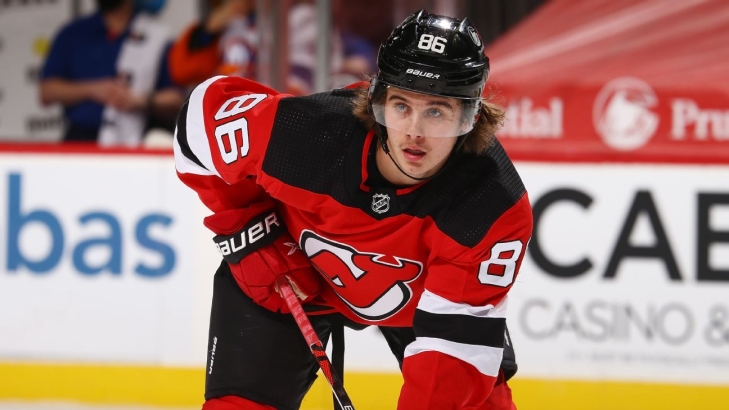
3. Jack Hughes, New Jersey Devils. 90 Cup Points, 53 Games, 35 G, 36 A, 71 P, +12, 8.9 PS. (#2 on last update)
Hughes falls one spot, but the two-time All-Star in fifth in Goals (35), ninth in Points (71), and is the offensive leader of what has been a surprisingly good New Jersey squad. Notably, Hughes has not added anu Cup Points since the last update.
4. Mikko Rantanen, Colorado Avalanche. 85 Cup Points: 55 Games, 36 G, 30 A, 66 P, +3, 7.8 PS. (#4 on last update)
Rantanen holds at #4, and is also fifth in Goals (34). Like Hughes, Rantanen, did not add any Cup Points since the last update.
5 (Tie). Linus Ullmark, Boston Bruins. 82 Cup Points: 36 Games, 29-4-1, 1.88 GAA, .937 Save Percentage, 9.3 PS. (Not on last update)
Ullmark returns to where he belongs in the top ten, as he has been the best Goalie this year. He is currently the league leader in Wins, GAA and Save Percentage.
5 (Tie). Nathan Mackinnon, Florida Panthers, 82 Cup Points: 57 Games, 28 G, 50 A, 78 P, +16, 8.6 PS. (#5 on last update)
Tkachuk has been on fire and proving Florida right in their pursuit of the power forward. He is currently sixth in Assists (50) and fourth in Points (78).
5 (Tie). Matthew Tkachuk, Florida Panthers, 82 Cup Points: 57 Games, 28 G, 50 A, 78 P, +16, 8.6 PS. (#5 on last update)
Tkachuk has been on fire and proving Florida right in their pursuit of the power forward. He is currently sixth in Assists (50) and fourth in Points (78).
8 (Tie). Brady Tkachuk, Ottawa Senators, 81 Cup Points: 56 Games, 24 G, 36 A, 60 P, -6, 6.6 PS. (not on last update)
For the first time, the Tkachuk brothers are both in the top ten, and while his Senators have disappointed, he has not.
9 (Tie). Brayden Point, Tampa Bay Lightning. 80 Cup Points: 56 Games, 33 G, 28 A, 61 P, +4, 7.2 PS. (#5 on last update)
Point is having a good year, and is a point-per-game player, there are still quite a few players with higher point tallies than the Tampa Center. Saying that, Point has been the most clutch player for the Lightning, and a reason we love this process! He is currently tenth in Goals (33).
9 (Tie). Jake Oettinger, Dallas Stars. 80 Cup Points: 43 Games, 23-8-9, 2.24 GAA, .925 Save Percentage, 9.4 PS. (#9 on last update)
In his third season, Oettinger is playing the best hockey of his life and is fourth in the NHL in GAA.
Edmonton’s Leon Draisaitl, Vancouver’s Elias Pettersson and Dallas’s Jason Robertson fell off the top ten.
Our next update will occur when the first player breaks 120 Cup Points.
What are the signs of a first-ballot Hall of Famer?

Every once in a while, in any sport played in the USA, there is a player who walks off the field in their final game and, metaphorically, straight into the Hall of Fame. Such players are not like Zach Thomas, who played with distinction for years in the NFL but was unfortunate to miss out repeatedly until he was inducted this year. A “first ballot” Hall of Famer, someone who after the mandatory five years of retirement is elected in his first year of eligibility, is rare - but we can be fairly sure that in 2028, Tom Brady will be one.
What is it that makes a player such an inevitable inductee into their sport’s Valhalla in this way? It differs between sports, from a statistical point of view. If people are heading to sinlicencia.org to find a betting site just so they can bet on one team, there is a fair chance it has a first ballot Hall of Famer on it. But there are certain characteristics about a player whose place in the pantheon of greats is guaranteed, and we’ll run through them here.
They can carry a team on their back
Not that they’ll usually need to, because the presence of such a player attracts other high-achievers and improves the players around them. But a player like Brady or Michael Jordan could go into a seeming fugue state where the sport happened through them, making clutch play after clutch play and delivering a team to the optimal success whenever they needed to. In 2017, Brady took the Patriots from 28-3 down at the half to win in overtime against the Falcons, securing yet another Super Bowl ring. And the scary thing about it was just how routine he made it look.
They are admired even by those who can’t like them
You could say that Brady and Jordan lacked a certain natural charisma that made people warm to them as people. This is often a trait in perfectionists and winners; they don’t always understand or value the idea of being liked. When it comes down to it, doing what they do to the highest possible degree is what matters to them. When they’re doing their thing, rival fans may be praying for them to come up short. But the main reason people are happy to see those rare failures is because they know that if a player like this gets in a groove, there’s nothing the opponent can do to stop them. We may not always love these players, but we can’t help but admire them.
They are talked about as future Hall of Famers before they’ve even retired
Zach Thomas is the perfect example of someone who deserves to be in the Hall of Fame, but had to wait years before he was finally inducted. There was uncertainty as to whether it would happen, because he was good, but there was a dispute over whether he was great. There is no disputing the greatness of a Brady, a Jordan, or a Wayne Gretzky. The closest thing we have to a future first ballot inductee in any sport right now is probably LeBron James - and to reach that level, look at the career he’s had to have.
