


Committee Chairman
48. Marco Estrada
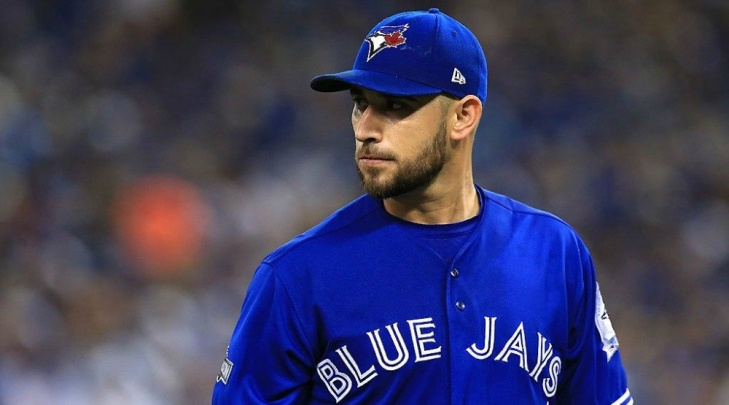
The trade that brought Marco Estrada to Toronto before the 2015 season is often seen as a major steal for the Blue Jays. He was sent directly from Milwaukee for veteran first baseman Adam Lind and was initially considered a versatile depth option to help bridge the rotation and bullpen. However, Estrada unexpectedly sparked a remarkable late-career resurgence, revolutionizing his approach with a high-leverage changeup that effectively neutralized some of the American League’s most potent offenses.
His 2015 debut tour was truly a personal showcase of excellence. Starting as a reliever, Estrada quickly transitioned to the starting rotation in May and maintained his momentum. He kept hitters off balance with a deceptive, late-fading changeup and a low-90s fastball that seemed faster due to its exceptional spin. He finished the season with a career-best 13–8 record and an impressive 3.13 ERA, leading Major League Baseball by allowing just 6.7 hits per nine innings.
When the bright lights of October arrived, Estrada elevated his game to legendary heights. With the Blue Jays facing elimination, down 2-0 in the ALDS against Texas, he took the mound and spun a brilliant, high-leverage gem to save Toronto's season. He repeated the feat in Game 5 of the ALCS, completely stymying the eventual world champion Kansas City Royals and keeping the city's World Series dreams alive.
The front office immediately focused on keeping their postseason hero, re-signing him to a multi-year contract during free agency. Estrada confirmed that his breakout summer was no fluke by delivering an outstanding 2016 season. He earned his only All-Star appearance, posted a solid 3.48 ERA, and led the American League by limiting opponents to only 6.8 hits per nine innings. That fall, he also added another memorable moment to his playoff legacy, nearly pitching a complete-game shutout in Game 1 of the ALDS against Texas, falling just two outs short.
Eventually, the intense workload and ongoing back problems affected him. During his last two seasons with Toronto, his control became inconsistent, and his performance noticeably declined, culminating in 2018 when his ERA exceeded five. He then signed with the Oakland Athletics as a free agent for the 2019 season, but injuries restricted him to only five more major-league games before he retired.
With the Blue Jays, Estrada appeared in 124 games (118 starts) and posted a 39–40 record, a 4.25 ERA, and a 1.22 WHIP. He threw 703.1 regular-season innings with 575 strikeouts.
46. Lyle Overbay

During the 2005–2006 offseason, the Toronto Blue Jays acquired Lyle Overbay aiming to secure a reliable, high-output middle-of-the-order hitter. The front office traded promising pitching prospects to bring the left-handed hitter from Milwaukee, seeking a steady presence at first base. Although Overbay didn’t drastically elevate the franchise’s potential during his five-year stay, his performance was far from disappointing. With a smooth, gap-to-gap swing, "O-Dog" offered the Jays a consistent and resilient level of production.
His debut campaign in Toronto in 2006 was a showcase of outstanding offensive performance. Overbay dominated American League pitchers, marking the peak of his 14-year major league career. He achieved career highs in every category, hitting 22 home runs, driving in 92 runs, and posting an impressive .312 batting average. Utilizing his classic left-handed swing, he hit 46 doubles and posted a remarkable .880 OPS, fueling an explosive Blue Jays lineup that led the league in doubles.
Yet, as subsequent summers rolled in, replicating that spectacular 2006 showcase proved incredibly difficult. Overbay was never able to hit the .300 threshold again, and his offensive impact became more of a steady, mid-tier contribution. After an injury-hampered 2007 season saw his average plummet to .240, he rebounded to establish a remarkably consistent run from 2008 through 2010. He remained an incredibly tough out, showcasing elite plate discipline by drawing 74 walks in back-to-back seasons (2008 and 2009) and establishing a franchise record by reaching base in 12 consecutive plate appearances in May 2008.
Overbay finished his Blue Jays run with a productive 2010 farewell tour, matching his career-high 20 home runs, including a four-hit, seven-RBI game in Boston. Afterward, he signed with the Pittsburgh Pirates. With Toronto, Overbay accumulated 672 hits, 180 doubles, 83 home runs, and 336 RBIs with a .268/.350/.446 slash line.
47. Orlando Hudson
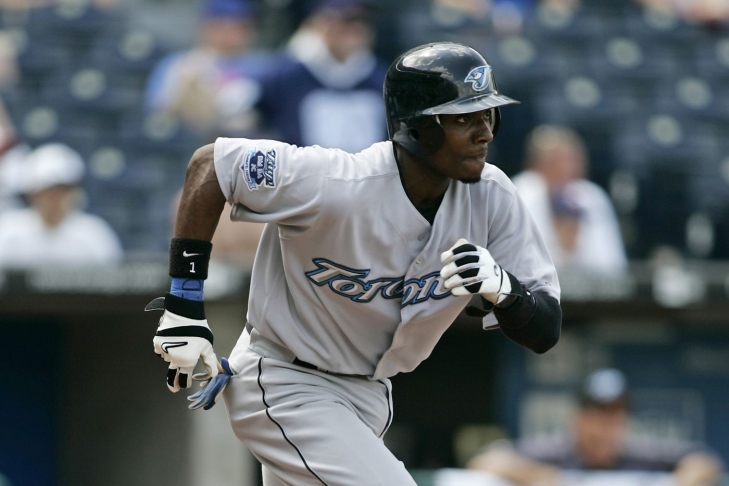
A player drafted in the 43rd round—an extremely late position that barely exists in today's draft—rarely makes it to the major leagues, much less has an eleven-year, decorated career. However, Orlando "O-Dog" Hudson defied these expectations completely. Coming out of Spartanburg Methodist College as a late-round pick in 1997, this switch-hitting second baseman relied on his exceptional defensive skills and a lively, energetic personality to reach the Rogers Centre field. His impact transformed how Toronto fans perceive defensive skill in the middle infield.
His transition to the big leagues was a masterclass in athletic adaptation. Stepping into the starting second base job full-time during a highly productive 2003 campaign, Hudson immediately established himself as a dynamic, run-saving force. He combined a steady .268 batting average with a superb 1.5 defensive bWAR, turning the area behind first and second base into a complete dead end for opposing hitters.
He elevated his defensive execution to an elite, league-leading apex during a brilliant 2004 campaign. That summer remains Hudson's individual masterpiece in a Blue Jays uniform. He completely paralyzed opposing offenses, leading the entire American League with an astronomical 2.7 defensive bWAR, making spectacular diving stops and acrobatic, high-leverage throws. At the plate, he added genuine mid-lineup value, setting career-highs with 32 doubles, 12 home runs, and a .270 average. While the national media inexplicably bypassed him for a Gold Glove that autumn, his spectacular efficiency had already cemented him as one of the premier second basemen in the game.
Justice finally arrived during the 2005 campaign. With the same elite range and a pristine .991 fielding percentage, Hudson officially captured his first American League Gold Glove Award.
Yet, with the front office eager to inject elite power into the middle of their lineup, the veteran infielder was packaged in a blockbuster trade to the Arizona Diamondbacks in December 2005, along with pitcher Miguel Batista, in exchange for third baseman Troy Glaus. Hudson would immediately continue his spectacular, gold-standard defensive showcase in the desert, eventually earning three more National League Gold Gloves and consecutive All-Star selections, cementing his legacy as a true defensive icon of his generation.
In Toronto, Hudson accumulated 437 hits, 88 doubles, 23 triples, 35 home runs, 201 RBIs, and a 7.5 dWAR.
43. Damaso Garcia
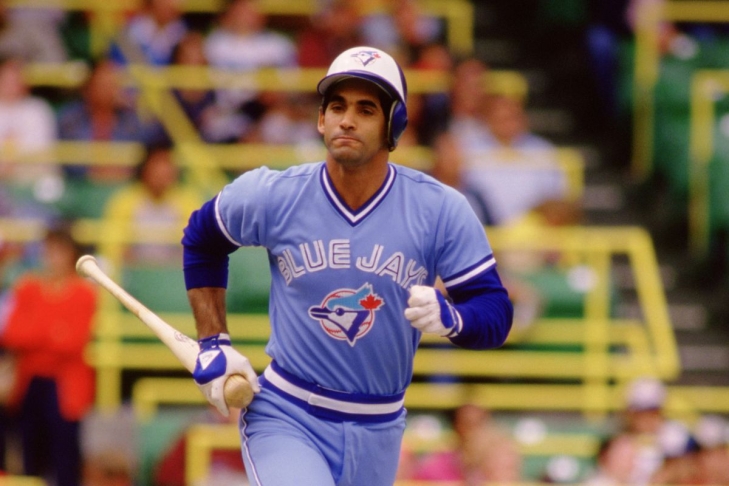
For a generation of Toronto baseball fans navigating the early, expansion-era struggles of the franchise, Dámaso García represented the first real spark of excitement in the middle infield. Acquired from the New York Yankees in November 1979 alongside Alfredo Griffin, García brought a dynamic energy to Exhibition Stadium. While the team was still trying to find its footing in the American League East, his quick hands and baseline speed gave the Toronto faithful an immediate fan favorite to rally behind.
His debut 1980 campaign as a full-time player showcased rookie efficiency. Skipping lengthy adjustment phases, García amassed 151 hits, hit 30 doubles, and posted a solid .278 average, finishing fourth in the AL Rookie of the Year vote.
That early showcase brilliantly laid the groundwork for an outstanding peak in 1982 under manager Bobby Cox. Moving to the leadoff position, García overwhelmed opposing pitchers with a smooth, level right-handed swing, achieving a career-best .310 batting average. He utilized his exceptional athletic instincts to intimidate catchers, stealing an impressive 54 bases—second in the league only after Rickey Henderson—and set franchise records for hits (185) and runs scored (89), earning the American League Silver Slugger Award. He continued this strong performance in 1983, maintaining his clutch hitting with a .307 average and 31 steals, solidifying the top of Toronto's rising lineup.
As the Blue Jays became serious AL contenders, García’s consistent performance in the regular season earned him consecutive All-Star selections in 1984 and 1985. Although his season-ending batting averages were slightly below .300 (.284 and .282), he continued to be a top-tier table-setter, contributing an impressive 46 stolen bases in 1984. His efforts played a key role in Toronto's milestone, making their first-ever postseason appearance in 1985.
The good times quickly unraveled during a disastrous 1986 season. García struggled significantly and became deeply frustrated with his diminished role under new manager Jimy Williams, who moved him to the ninth spot in the batting order. In a moment of intense emotion, García notoriously burned his own uniform in a clubhouse trash can to try to break an unlucky streak. This reckless act provoked Williams’s immediate and harsh reprimand, with the manager publicly lambasting him. Unable to recover from his slump or repair their strained relationship, García made an abrupt exit by getting traded to the Atlanta Braves that winter.
With the Blue Jays, García tabulated 1,028 hits, 180 doubles, 32 home runs, and 296 RBIs while swiping 194 bases and scoring 483 runs. He generated a .283/.312/.378 slash line for the squad.
