
Our All Time Top 50 San Diego Padres have been updated to reflect the 2025 Season

Yes, we know that this is taking a while!
As many of you know, we at Notinhalloffame.com are slowly generating the top 50 of each major North American sports team. That being said, we maintain and update our existing Top 50 lists annually. We are pleased to present our pre-2026 revision of our top 50 San Diego Padres.
As for all of our top 50 players in baseball, we look at the following:
1. Duration and Impact.
2. Traditional statistics and how they finished in the Major League Baseball.
3. Advanced Statistics.
4. Playoff performance.
5. Their respective legacy on the team.
6. How successful the team was when he was there.
7. Respecting the era in which they played.
Criteria 1-4 will make up the lion’s share of the algorithm. Please note that we have implemented this for the first time. This has changed the rankings all throughout the board.
Last year, the Padres finished second in the National League West with a 90-72 record and made the playoffs, though they fell to the Chicago Cubs in the Wild Card. There were multiple elevations on the list for the 2025 season, along with one new entrant. Notably, there is one new addition, but that is based on the algorithm.
As always, we present our top five, which saw significant changes.
1. Tony Gwynn
2. Trevor Hoffman
3. Jake Peavy
4. Dave Winfield
5. Fernando Tatis Jr.
You can find the entire list here.
According to the new algorithm, Jake Peavy and Dave Winfield switched their #3 and #4 rankings.
Tatis Jr., who was an All-Star and Gold Glove winner last season, moved from #7 to #5. He was also 8th in MVP voting last year.
Notably, while Manny Machado had a good 2025 season, he did not move from the #6 spot. He overtook former Cy Young winner Randy Jones, but Tatis Jr. passed both of them.
Jake Cronenworth went from #28 to #22.
Despite pitching sparingly in 2025, Yu Darvish benefited from the new algorithm and went up from #44 to #41.
The algorithm also brought back Gaylord Perry. He returns at #47.
Robert Suarez, who is now an Atlanta Brave, did enough last year to enter the list. He is at #50.
Jurickson Profar and Trent Grisham fell off the list.
We thank you for your continued support of our lists on Notinhalloffame.com.
26. Gaylord Perry
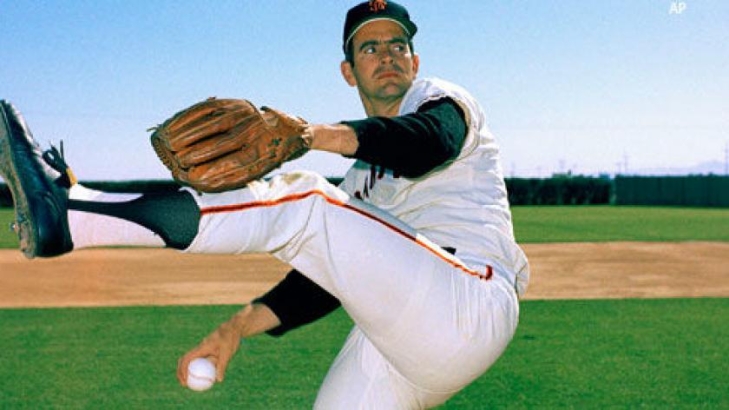
Gaylord Perry later became baseball's first pitcher to win a Cy Young Award in both leagues—excelling for Cleveland in the American League and San Diego in the National League. It’s easy for casual fans to overlook his remarkable ten-year stretch of consistent durability in Northern California. He made his major-league debut in April 1962, and initially faced challenges in securing a permanent spot, battling structural inconsistency and often pitching as an unpredictable reliever out of the bullpen. However, everything changed around 1964 when he fully mastered a highly controversial, grease-slicked spitball—an infamous pitch, real or imagined, that showcased his exceptional resilience and endurance.
His 1966 debut as a full-time, leading anchor immediately disrupted the senior circuit rankings. Perry made playing intense, high-stakes matches a disciplined daily practice, resulting in an impressive breakthrough. He ended the season with a 21–8 record, a sterling 2.99 ERA, and a career-high 201 strikeouts across 290.2 heavy frames to command his very first career All-Star selection.
This was just the beginning.
Perry established himself as a consistent presence at the top of the rotation, consistently maintaining an ERA below 3.00. He led the National League in innings pitched consecutively in 1969 (325.1) and 1970 (328.2). Additionally, he secured a place in the franchise's no-hit history by delivering a famous 1–0 game against Bob Gibson and the St. Louis Cardinals in September 1968.
The peak of his West Coast career came during an exceptional 1970 regular season. Perry delivered an outstanding display of durability, leading the major leagues with a career-high 23 wins and 29 complete games. His performance featured a historic run where he tied the franchise record with four straight shutouts and pitched 40 consecutive scoreless innings. His remarkable efficiency earned him a starting spot for the National League in the All-Star Game and a close second in the NL Cy Young Award voting behind Bob Gibson.
After a 1971 season where his wins dropped to 16, the front office became concerned about age. Believing that the 33-year-old starter had no more physical potential and that his prime was behind him, management made a heavily one-sided winter trade in November 1971, trading their star pitcher to the Cleveland Indians for Sam McDowell. This trade quickly gained a reputation as one of the worst in franchise history.
Although McDowell quickly faded on the West Coast, Perry turned his departure into a new chapter of national prominence, winning the 1972 AL Cy Young award in Cleveland and continuing his successful career for over a dozen more seasons, ultimately reaching 300 wins and 3,000 strikeouts.
Perry had 1606 strikeouts with a 134-109 record with the Giants, and he entered the Baseball Hall of Fame in 1991. San Francisco retired his number 36 in 2005, and three years later he was part of the Wall of Fame's first monstrous class.
RIP: Gaylord Perry
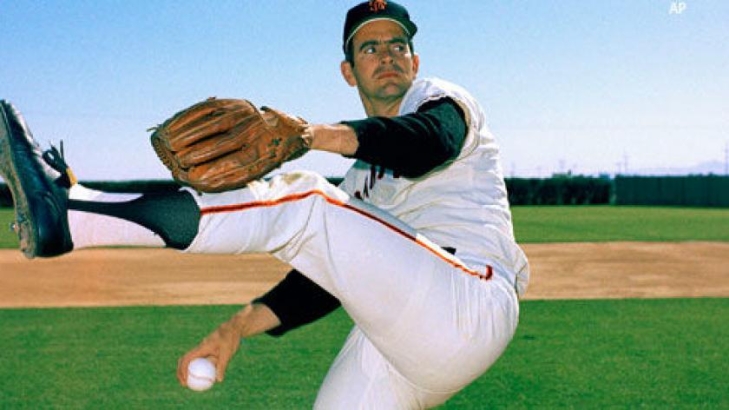
It has been rough week for us at Notinhalloffame.com, as following the deaths of John Had and Christine McVie, Baseball Hall of Fame Pitcher, Gaylord Perry, passed away at the age of 84.
The master of the spitball used cunning and guile to last 22 Seasons in the Majors, playing for San Francisco, Cleveland, Texas, San Diego, New York (AL), Atlanta, Seattle and Kansas City. Debuting for the Giants in 1962, Perry did not learn the spitter until two years later, and while it was widely known he used the illegal pitch, he was not caught until 1981. Batters were flummoxed by Perry before they got into the box, feeling that they were at a disadvantage whether Perry used that trick or not.
A Giant for the first ten years of his career, Perry bounced around afterward, but it was outside of the Bay Area where he had his Cy Youngs. The first was in 1972 with Cleveland, his first year in the American League. He would make history as the first Cy Young winner in both leagues, when he won his second award with the Padres in 1979, which he won just before he turned 40.
Perry played until 1983, retiring with a 314-265 record and 3,534 Strikeouts. He entered the Hall of Fame in 1991, on his third year on the ballot. Perry is also a member of the San Francisco Giants Wall of Fame and Cleveland Guardians Hall of Fame.
We here at Notinhalloffame.com would like to extend our condolences to the fans, friends and family of Gaylord Perry.
47. Gaylord Perry
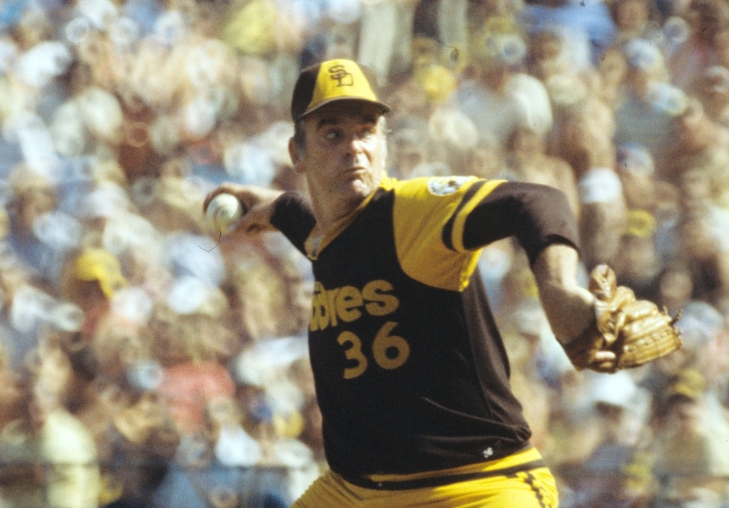
Gaylord Perry was already an established superstar when the Texas Rangers traded him to San Diego before the 1978 season, and the 1972 American League Cy Young winner was poised to add more trophies to his mantle.
The spitball specialist led the NL in Wins in 1978 (21), and he made history as the first hurler to win the Cy Young in both leagues. Perry turned 40 during his second year with San Diego but was still good, going to his fifth (and final) All-Star Game, while posting a 12-11 record with a 3.06 ERA. He was traded back to Texas afterward, leaving San Diego with 33 Wins against 17 Losses and a 2.88 ERA.
While Perry’s sabermetrics hold him back on this list, and it could be argued that he should not have won the ’78 Cy Young, he DID win it, and it will never be taken from him.
Perry entered the Baseball Hall of Fame in 1991.
Our All-Time Top 50 Cleveland Indians are now up
Yes, we know that this is taking a while!
As many of you know, we here at Notinhalloffame.com are slowly generating the 50 of each major North American sports team. We have a new one to unveil today, that of the Cleveland Indians.
The origin of the Cleveland Indians begins in Grand Rapids, Michigan, in 1894, where they played in the Western League. The franchise relocated in 1900, becoming the Cleveland Lake Shores, and eventually were an inaugural team of the American League, going through multiple name changes (Bluebirds, Broncos, Naps) before becoming the Indians for over a decade.
Cleveland would become a great sports town, but the baseball team has not given them very much to cheer for over the years. The Indians have only won the World Series twice (1920 and 1948), with three other appearances.
The team has announced that they will soon drop the Indians nickname, though as of this writing, it is not sure what they will change it to and when precisely it will take place.
Our Top 50 lists in baseball look at the following:
1. Advanced Statistics.
2. Traditional statistics and how they finished in the American League.
3. Playoff accomplishments.
4. Their overall impact on the team and other intangibles not reflected in a stat sheet.
Remember, this is ONLY based on what a player does on that particular team and not what he accomplished elsewhere and also note that we have placed an increased importance on the first two categories.
This list is updated up until the end of the 2019 Season.
The complete list can be found here, but as always, we announce our top five in this article. They are:
1. Bob Feller
2. Nap Lajoie
3. Tris Speaker
4. Lou Boudreau
We will continue our adjustments on our existing lists and will continue developing our new lists.
Look for our more material coming soon!
As always, we thank you for your support.
31. Gaylord Perry
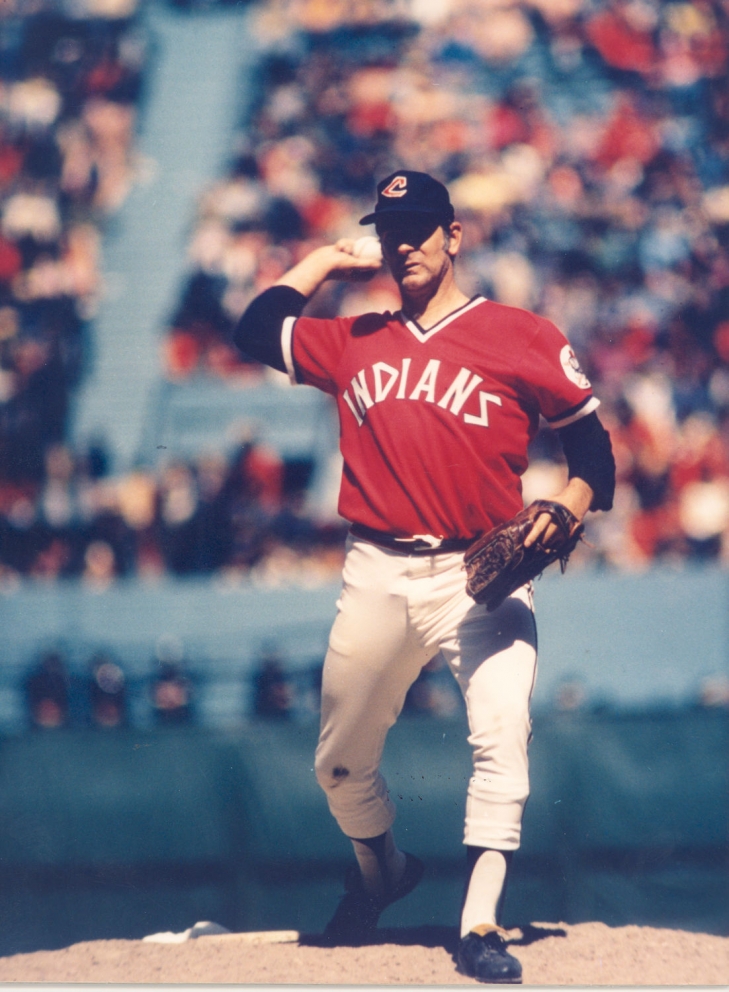
The trade that brought Perry from San Francisco following the 1971 season proved to be one of the most impactful transactions in franchise history. He made an immediate, seismic impact, authoring a 1972 campaign that remains etched in the record books as a masterclass of durability and deception. That year, he recorded 24 wins and a microscopic 1.92 ERA, earning him the American League Cy Young Award and a sixth-place finish in the MVP race. He possessed a specialized ability to disrupt a hitter’s focus, utilizing a vast repertoire of pitches and a high-frequency routine of fidgeting with his jersey and cap to maintain a mental edge over the competition.
The consistency Perry maintained during his stay was nothing short of extraordinary for a man who famously "worked" the baseball. He followed his Cy Young summer with a 1973 season in which he punched out 238 batters, and a 1974 All-Star turn in which he secured 21 victories. He was a model of specialized efficiency, serving as a high-leverage workhorse who consistently led the league in innings pitched and complete games. His craftsmanship wasn't just about his arm; it was about the professional resilience he displayed every fourth day, proving that he could out-think and outlast the most dangerous lineups in the Junior Circuit.
His presence in Cleveland was defined by a veteran poise and a competitive fire that often sparked as much friction as it did success. While he eventually clashed with player-manager Frank Robinson, leading to his 1975 trade to Texas, his statistical peak on the North Coast remained an undeniable achievement. Whether he was grinding through one of his 103 complete games for the Tribe or maintaining a sub-2.00 ERA during the peak of his powers, he competed with a focused intensity that solidified his status as a local immortal. He proved that a player could become a franchise pillar by simply mastering the high-stakes game of gamesmanship.
The chapter reached its conclusion in mid-1975, but the statistical benchmarks he left behind, 70 wins and 773 strikeouts in just over three seasons, are a testament to a pitcher at the height of his powers. He departed as the only man at the time to win a Cy Young in both leagues, having used his stint in Cleveland to cement his path to Cooperstown.
The organization provided the ultimate punctuation on his legacy by inducting him into the Cleveland Hall of Fame in 2012.
Gaylord Perry supports Bonds, slams Rose
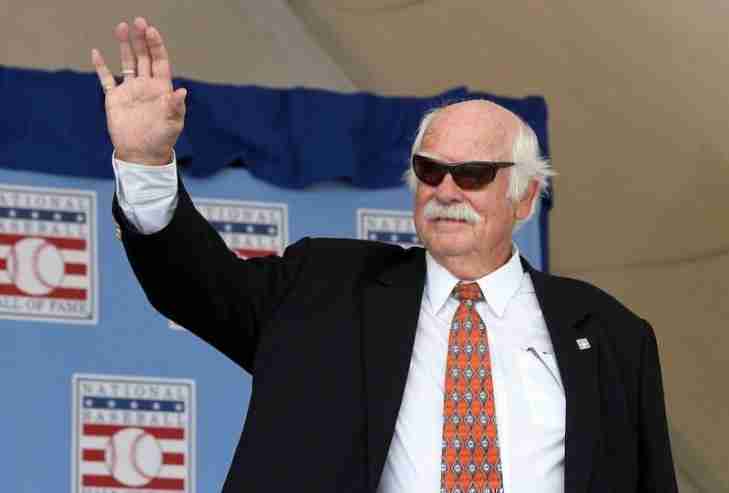
It has felt that for years that existing Baseball Hall of Famers have been constantly stating that PED users have no place in Cooperstown. As such, it took us by surprise when Hall of Fame Pitcher, Gaylord Perry said today that he thought Barry Bonds deserves to be inducted.
It took place in a conference call from Diamond Resorts, and while it was not exactly a glowing endorsement, it was considering that it came from a Hall of Famer over the age of 60:
“I think he’ll get in eventually. If you have a player like that, pretty soon, you put him in.’’
While this is not exactly a ringing endorsement, compared to his Hall of Fame peers it really is!
Perry may have had a somewhat lackadaisical endorsement of Barry Bonds, he had an adamant stance against Pete Rose:
“Pete did the worst thing possible, worse than steroids,…he put money on games, win or lose. He’s paying the price.”
Quite the different stance regarding Rose isn’t it?
Gaylord Perry was not the only Baseball Hall of Fame inductee who was on this conference call. John Smoltz was also on this call and he had a softer stance in regards to Bonds:
“I’m trying to figure out what is actual, and what isn’t, To me, the one thing forgotten in this thing is the mission statement. Character is a big part of it. You have to not only have the numbers, but the character that matches it
If you have first-hand knowledge that a player used, or has publicly acknowledged it, I think it’s an easy decision. When it is circumstance and evidence, and you don’t know, and just follow the rumor mill, that’s difficult for the writer to be judge and jury.”
This is not exactly an endorsement for Bonds, but it is not a condemnation either.
As it stands now, Bonds and his “PED brethren” are on the outside looking in, but from revealed ballots it looks like he and his ilk are inching closer to the 75% needed to get in. As some writers have put it, the fact Bud Selig has been chosen by the Today’s Game Committee, it is harder to omit the players who juiced up under his watch.
The Baseball Hall of Fame will announce their Class of 2017 on the 17th of January.
This could be the most interesting vote yet!
30. Gaylord Perry
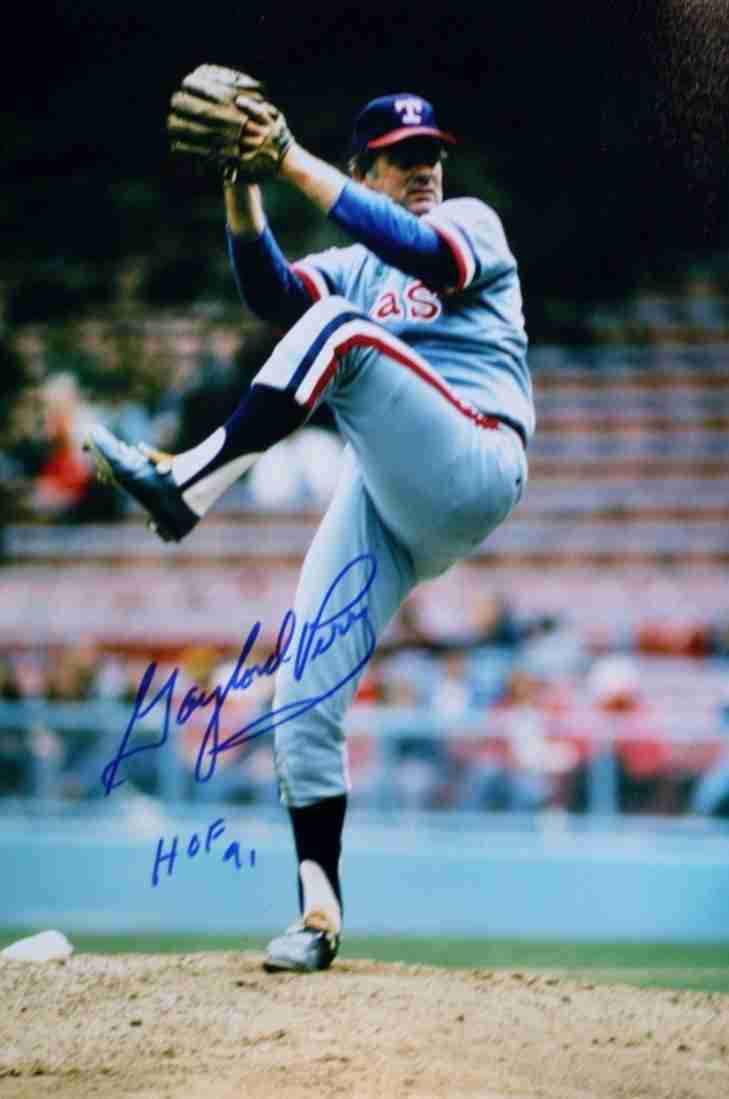
When the legendary Gaylord Perry joined Arlington in June 1975 through a mid-season trade from Cleveland, he brought with him an unrivaled reputation as baseball's top gamesman. A Cy Young winner and a tactician on the mound, the right-hander quickly assumed a leadership role in his late thirties, becoming the key competitive force for a young Texas Rangers team eager to establish itself in the American League West.
Perry commanded the strike zone with textbook precision, pairing his heavy, sinking fastball with a legendary, hyper-analyzed greaseball that kept hitters entirely off-balance. His first tour in Texas was an absolute masterclass in high-leverage durability. Over the second half of 1975 and the entirety of 1976 and 1977, he regularly swallowed up massive workloads for manager Frank Lucchesi, logging seasons of 184, 250, and 238 innings.
Although raw win-loss records for a developing team can hide a pitcher's true effectiveness, Perry's advanced metrics showed his genuine dominance. He expertly minimized damage on his own terms, finishing in the top five in the American League for Fielding Independent Pitching (FIP) in every full season with Arlington. His initial stint with the team was highlighted by a remarkable 1977 season, during which he achieved 15 wins, struck out 177 batters, and posted an elite, team-leading 6.3 bWAR.
After that season, Perry was traded to San Diego—where he would instantly capture a historic second Cy Young Award—but his history with the Rangers wasn't finished. In a great late-career twist, the future Hall of Famer returned to Texas for a brief second tour in 1980, adding 24 more starts and 155.1 steady innings to his Rangers ledger before being dealt to the New York Yankees for a pennant chase.
Across four seasons in Texas over two separate tours (1975–1977, 1980), Perry made 112 appearances (all starts). He compiled a 48–43 record with a stellar 3.26 ERA and a 1.20 WHIP. He threw 827.2 innings, recording 49 complete games and 10 shutouts. In 1991, Perry received the ultimate accolade when his name was called for the Baseball Hall of Fame.
