







When constructing a historical hierarchy for a Major League franchise, debating the top spot usually requires parsing through eras, contrasting raw power against pitching longevity, and splitting hairs over decimal points. This is not one of those times.
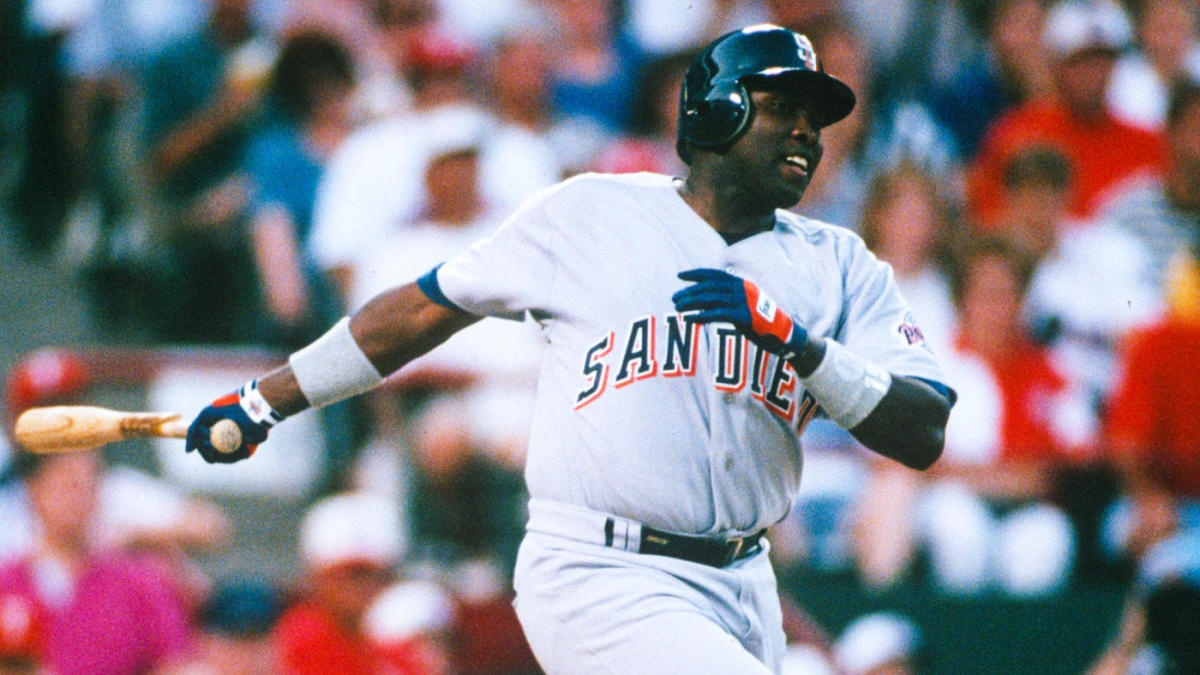
Tony Gwynn is not just the undisputed legend of the San Diego Padres; he is one of the most exceptional and mesmerizing pure hitters in baseball history. Long before advanced analytics changed player evaluation, Gwynn revolutionized the game by approaching the batter's box as a science, pioneering detailed video analysis to study opposing pitchers. With a compact, instinctive left-handed swing that skillfully navigates the "5.5 hole" between third base and shortstop, he elevated contact hitting to an art form and a consistent part of his daily game.
His initial appearance during the 1982 season offered a brief preview of what was ahead, but Gwynn truly rose to star status in 1984. That year, he delivered an exceptional regular season, putting the franchise on the national stage. His consistent performance overwhelmed National League pitching by hitting a league-leading .351 and amassing 213 hits, the most in the league. His outstanding hitting fueled San Diego’s first-ever National League pennant run, earning him his first All-Star honor, a Silver Slugger award, and a third-place finish in MVP voting. In the NLCS against Chicago, his critical double in the bottom of the seventh inning of Game 5 drove in the tying and go-ahead runs, an iconic moment that sparked celebration at Jack Murphy Stadium and secured the Padres' first appearance in the Fall Classic.
The stunning breakout of 1984 quickly became routine over the next fifteen years. Aside from his brief 54-game debut, Gwynn consistently avoided slumps, batting over .300 in 19 consecutive summers. He achieved an impressive eight National League batting titles, tying Honus Wagner for the league record, and led in hits seven times. The peak of his individual dominance was during the strike-shortened 1994 season, when he batted an extraordinary .394, creating a lingering "what-if" regarding the .400 batting average milestone. Although he never won the MVP award, his advanced batting efficiency earned him seven top-ten MVP finishes and 15 All-Star selections.
Fourteen years after his first taste of October magic, Gwynn served as a revered elder statesman and offensive catalyst for the legendary 1998 team. Showing unwavering consistency at age 38, he hit .321 with a career-high 148 adjusted OPS+, guiding the team through a tough postseason, including victories over a strong Houston squad and the pitching-heavy Atlanta Braves. This outstanding run earned San Diego its second National League championship pennant, bringing the franchise back to baseball's biggest stage. In Game 1 of the 1998 World Series at Yankee Stadium, Gwynn capped his postseason performance with a majestic, decisive home run off El Duque Orlando Hernández, a memorable moment that remains etched in Padres fans’ memories.
Labeling Gwynn solely as a singles hitter overlooks the multi-dimensional skill set that defined his physical peak. While he wasn't primarily focused on hitting over fences, he had sneaky gap power, hitting 543 doubles and 135 home runs, which helped him achieve a strong .459 lifetime slugging percentage. Additionally, before aging and physical decline affected him, his exceptional spatial awareness and quick acceleration made him a dangerous base runner, with 319 stolen bases in his career. His defensive instincts were equally sharp, enabling him to move gracefully across the outfield and earn five National League Gold Glove awards.
Gwynn’s careful daily preparation set the stage for a historically unique profile, now even more complex with modern analytics. During a time when strikeouts increased rapidly league-wide, he demonstrated exceptional strike-zone judgment. He faced Hall of Fame legends like Greg Maddux, Tom Glavine, John Smoltz, and Pedro Martínez a total of 323 times, and was remarkably never struck out by any of them. His skill in making contact against top-tier, high-velocity pitches allowed him to lead the batting order with an extremely low walk-to-strikeout ratio, showing that his legendary vision was not just a physical talent but also a disciplined, mental mastery of situational hitting.
When he finally left the diamond at the end of the 2001 season, he did so as a true, unwavering “Lifer”, spending his entire 20-year career in a single uniform. Gwynn established an extraordinary, record-breaking career that sounds like science fiction today: 3,141 hits, 1,138 RBIs, and an impressive .338 batting average, with only 434 strikeouts in nearly 10,240 plate appearances. The organization quickly recognized his significance by retiring his iconic number 19 and inducting him into the Padres Hall of Fame in 2004. Three years later, national voters cemented his legacy by inducting him into the Baseball Hall of Fame on his first ballot in 2007, ensuring that "Mr. Padre" remains legendary forever.

Comments powered by CComment