

Our All Time Top 50 Oakland Athletics have been revised to reflect the 2024 Season
Yes, we know that this is taking a while!
As many of you know, we at Notinhalloffame.com are slowly generating the top 50 of each major North American sports team. That being said, we have existing Top 50 lists and consistently look to update them when necessary and based on necessity. As such, we are delighted to present our post-2024 revision of our top 50 Oakland Athletics.
As for all of our top 50 players in baseball, we look at the following:
1. Advanced Statistics.
2. Traditional statistics and how they finished in the American League.
3. Playoff accomplishments.
4. Their overall impact on the team and other intangibles that are not reflected in a stat sheet.
Please note that our algorithm has changed, which yielded minor changes throughout the baseball lists.
Last year, the Athletics had another awful year, which turned out to be their final season in Oakland, as they will be playing in Sacramento for three years until they move to Las Vegas. There were no new entrants, but changes within the list based on the new algorithm.
As always, we present our top five, which saw a change at the top based on the new algorithm.
2. Lefty Grove
3. Eddie Plank
4. Jimmie Foxx
5. Al Simmons
You can find the entire list here.
As mentioned above, Henderson overtook Grove for the top spot based on the new calculations.
We thank you for your continued support of our lists on Notinhalloffame.com.
Jed Lowrie
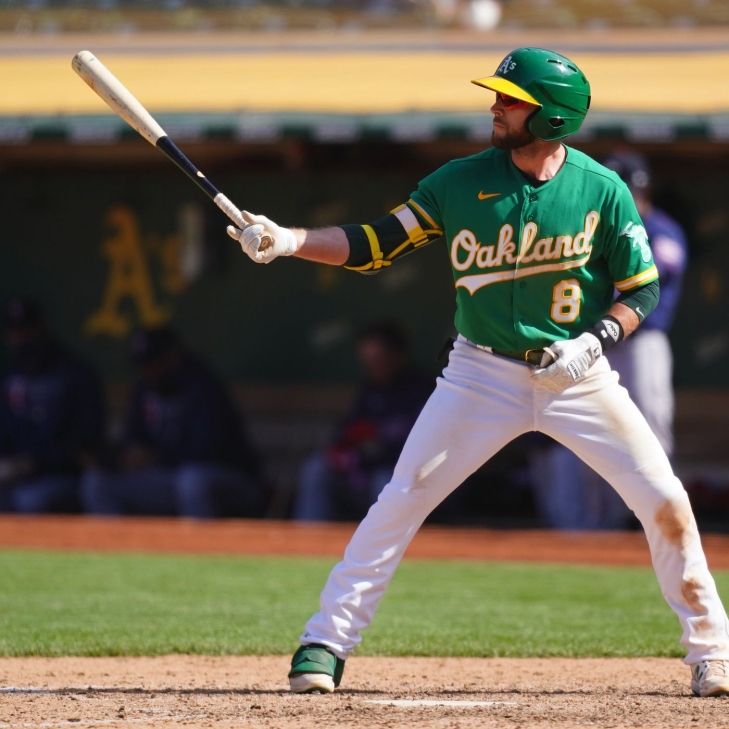
Jed Lowrie is a 14-year MLB veteran infielder who started his career with the Boston Red Sox. However, his most successful stint was with the Oakland Athletics. After playing for the Red Sox for four years (from 2008 to 2011), he was traded to Houston, who then dealt him to Oakland after a year. Despite never having played over 400 plate appearances in a season, Lowrie became Oakland's full-time shortstop and managed to hit 175 times with a batting average of .290. The next year, he recorded 125 hits with a .249 batting average. After becoming a free agent, Lowrie returned to the Astros but was soon shifted from shortstop to third base in favor of Carlos Correa, who won the Rookie of the Year. He was then traded back to Oakland, where he had his best season, being selected as an All-Star and achieving career-highs in home runs (23), runs batted in (99), and OPS+ (121).
Lowrie then signed a two-year contract with the New York Mets, but knee problems limited him to only nine games, and he missed the entire 2020 season. Later, he rejoined Oakland for two more seasons, finishing his career with 1,185 hits and 121 home runs.
Our All-Time Top 50 Oakland Athletics have been revised to reflect the 2023 Season
Yes, we know that this is taking a while!
As many of you know, we here at Notinhalloffame.com are slowly generating the 50 of each major North American sports team. That being said, we have existing Top 50 lists out and we always consistently look to update them when we can and based on necessity. As such, we are very happy to present our post 2023 revision of our top 50 Oakland Athletics.
As for all of our top 50 players in baseball we look at the following:
1. Advanced Statistics.
2. Traditional statistics and how they finished in Major League Baseball.
3. Playoff accomplishments.
4. Their overall impact on the team and other intangibles not reflected in a stat sheet.
Last year, the Athletics had another awful year, where they not only lost a lot of games and were mocked for their lack of attendance. Their time left in Oakland is questionable, and they remain in a perpetual state of rebuilding. This led to another year, where we saw no new entrants and elevations. Nevertheless, at the end of every year we always acknowledge that we took into account the past season.
As always, we present our top five, which (obviously) saw no changes:
1. Lefty Grove
3. Eddie Plank
4. Jimmie Foxx
5. Al Simmons
You can find the entire list here.
We thank you for your continued support for our lists on Notinhalloffame.com.
Our All Time Top 50 Oakland Athletics have been updated to reflect the 2022 Season
Yes, we know that this is taking a while!
As many of you know, we here at Notinhalloffame.com are slowly generating the 50 of each major North American sports team. That being said, we have existing Top 50 lists out and we always consistently look to update them when we can and based on necessity. As such, we are very happy to present our post 2022 revision of our top Oakland Athletics.
As for all of our top 50 players in baseball we look at the following:
1. Advanced Statistics.
2. Traditional statistics and how they finished in the American League.
3. Playoff accomplishments.
4. Their overall impact on the team and other intangibles not reflected in a stat sheet.
Last year, the Oakland continued their tradition as a basement dweller, that develop talent only to trade them when they can no longer afford them. This makes it very difficult for anyone to crack the Top 50, and no one was able to do so in 2022, but we wanted to show that this reflects the last season.
As always, we present our top five, which was not affected by the last season:
1. Lefty Grove
3. Eddie Plank
4. Jimmie Foxx
5. Al Simmons
You can find the entire list here.
We welcome your input and comments and as always, we thank you for your support.
Oakland finally announces a date for Dave Stewart's jersey retirement
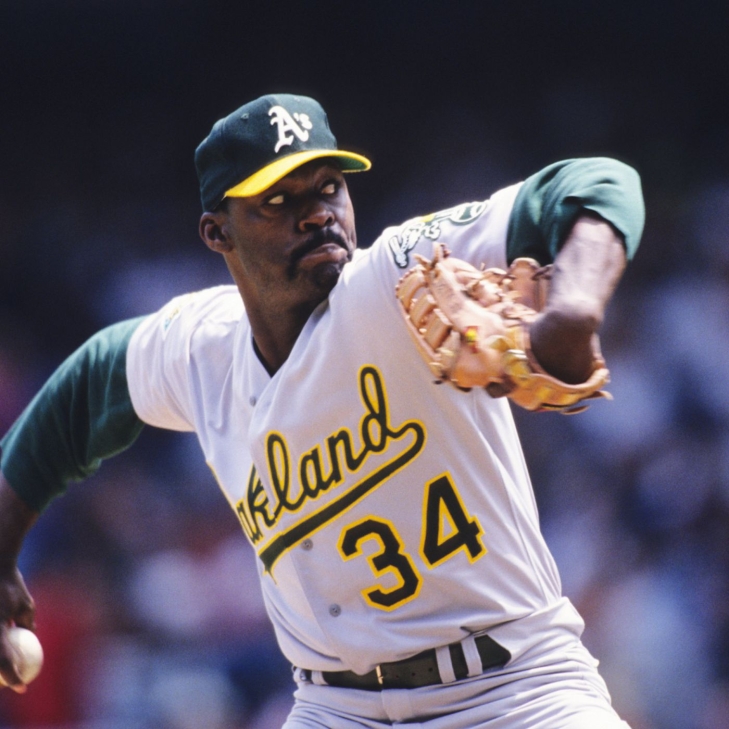
Sometimes, shame works.
Less than a month ago, Dave Stewart was asked on Twitter by a fan when the Oakland Athletics planned to follow through on his retirement. His response shocked A’s fans and Baseball alike:
I have no idea what the A’s are doing. At this point they can just retire the number with no celebration as far as I’m concerned. Come to the park and it will be on display with the other retired numbers. If you find out something before I do, please let me know?”
Oakland had announced in 2019 that the team would retire Stewart’s number in 2020, but COVID-19 but a squash to that. No announcement took place over 2020 and 2021, and it appeared that the Athletics marketing team forgot all about Stewart.
Obviously, they mended fences, and on September 11, during Oakland’s game against the White Sox, Stewart’s #34 (which he shared with Rollie Fingers and was already retired) will be officially honored by the team. Stewart becomes the sixth man to have his number retired, joining Fingers, Rickey Henderson, Dennis Eckersley, Catfish Hunter and Reggie Jackson.
We are looking forward to seeing this ceremony, and we are happy to see Dave Stewart obtain this accolade.
Dave Stewart upset with the Athletics due to lack of jersey retirement communication
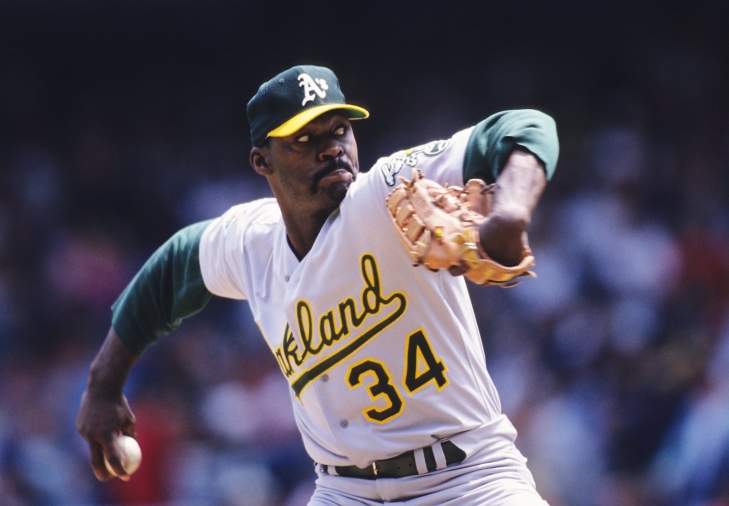
The Oakland Athletics have had their share of problems over the last few decades, as they are a small market team in an awful stadium, that are constantly the subject of relocation speculation. Add another one, as the team has upset a former superstar due to their mishandling of his impending jersey retirement.
In 2019, Oakland announced that they would retire the number 34 of Dave Stewart in 2000, but COVID postponed those plans. The team never announced any rescheduling, leading to a fan asking Stewart on Twitter when this would be happening. The former Pitcher responded:
“I have no idea what the A’s are doing. At this point they can just retire the number with no celebration as far as I’m concerned. Come to the park and it will be on display with the other retired numbers. If you find out something before I do, please let me know?”
You would think that the team would have been in contact with Stewart, as this is an embarrassment for the A’s, and a slap in the face their former star.
Hopefully, this will be rectified soon, and we can watch the man with one of the most intimidating glare on the mound do it one more time in the city he became a star.
Our All-Time Top 50 Oakland Athletics have been revised to reflect the 2021 Season
Yes, we know that this is taking a while!
As many of you know, we here at Notinhalloffame.com are slowly generating the 50 of each major North American sports team. That being said, we have existing Top 50 lists out and we always consistently look to update them when we can and based on necessity. As such, we are very happy to present our pre-2022 revision of our top 50 Oakland Athletics.
As for all of our top 50 players in baseball we look at the following:
1. Advanced Statistics.
2. Traditional statistics and how they finished in the American League.
3. Playoff accomplishments.
4. Their overall impact on the team and other intangibles not reflected in a stat sheet.
Oakland failed to make the playoffs in 2021, and they did what they always do after the season, which was to trade off assets before they became too costly.
As always, we present our top five, though there were no changes, and only one new addition overall.
1. Lefty Grove
3. Eddie Plank
4. Jimmie Foxx
5. Al Simmons
You can find the entire list here.
The only new entry is Third Baseman, Matt Chapman, a defensive wizard who was traded to Toronto in the off-season, who enters at #50.
We welcome your input and comments and as always, we thank you for your support.
245. Bob Welch
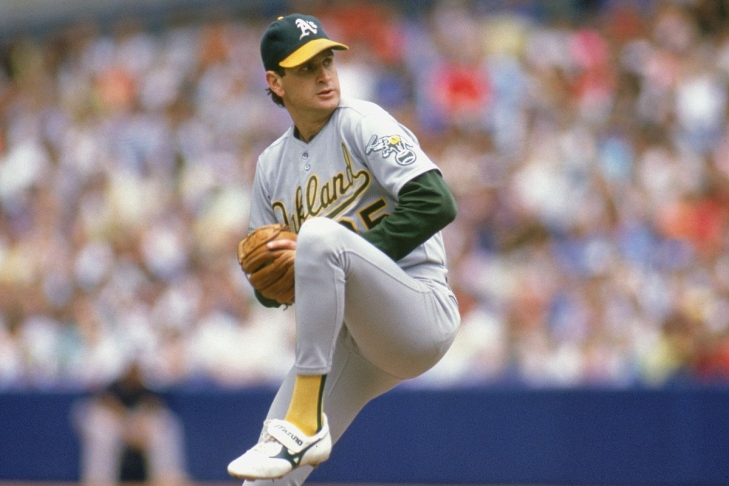
Bob Welch split his career between two California teams, the Los Angeles Dodgers and the Oakland Athletics, and he brought success to both of those squads.
227. Tony Phillips
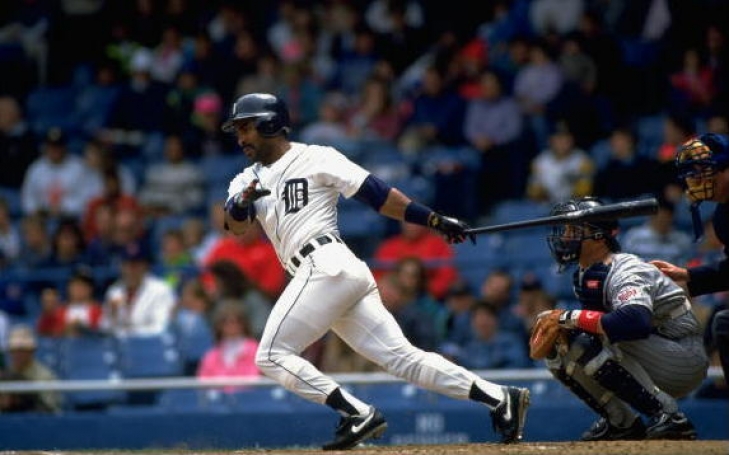
Tony Phillips never made an All-Star team, and he only had one year in which he received MVP votes (16th in 1995). Yet, here we have a player worth talking about among some of those worth a Hall of Fame look.
What Phillips did well was get on base. He twice led the league in Walks (1993 & 1996), and he was a key contributor in Oakland's 1989 World Series win. Phillips accumulated 2,023 career Hits with 160 Home Runs and was also a league-leader in Runs Scored in 1992. Defensively, he was versatile, able to play in the Outfield, Second, or Third, and do so at a more-than-average level.
Phillips retired with a career bWAR of 50.9, a number that actually eclipses many Baseball Hall of Famers. Phillips was never a star, but he provided value for years, and if you want to classify him as a utility player (as many publications have), he was one of the best.
187. Gene Tenace
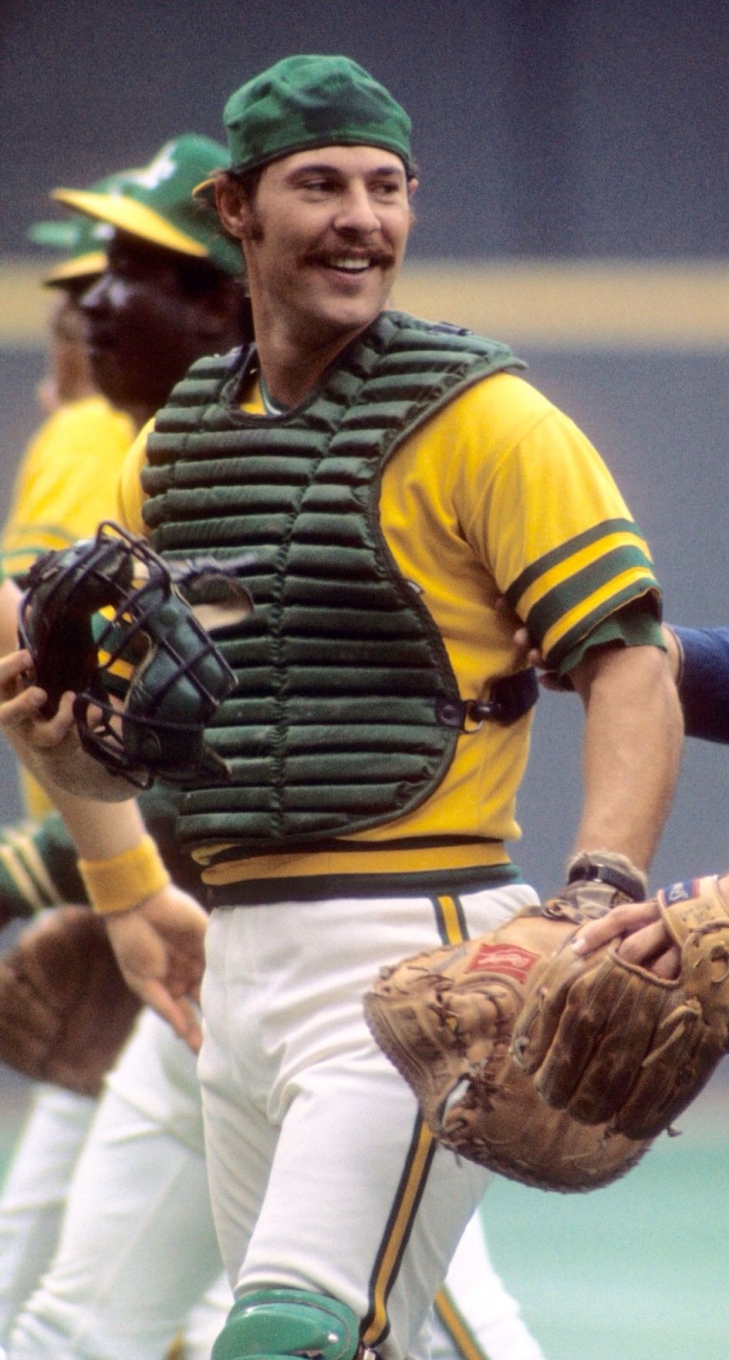
Prior to winning the World Series MVP in 1972, you could argue that Gene Tenace was one of its most unlikely recipients. The Catcher made his first appearance in the Majors in 1969 for Oakland, but he was mostly a backup. Late in the ’72 season, Tenace was promoted to a starter, and he belted four Home Runs in World Series.
172. Jose Canseco
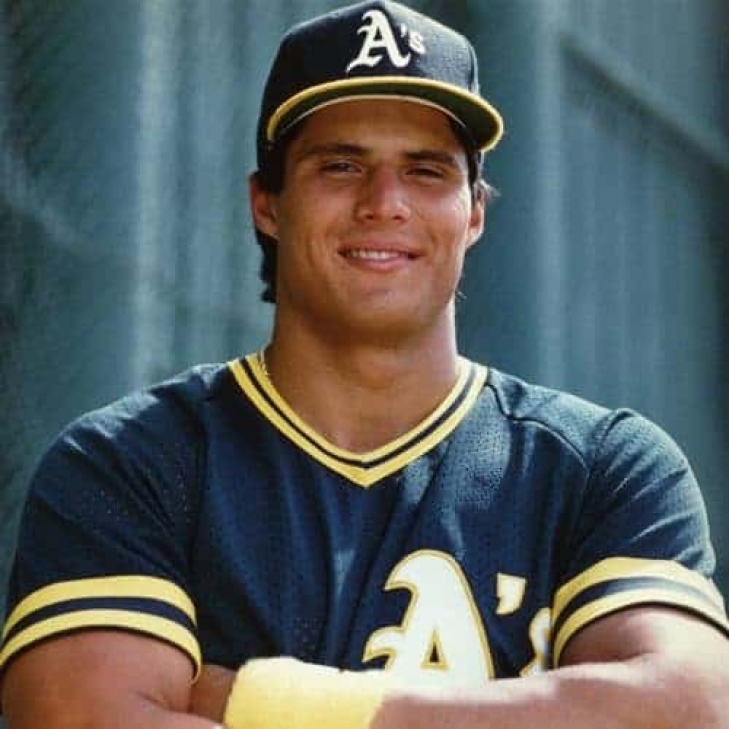
While the career of Jose Canseco was beset with controversy regarding his steroid use, the players he would later accuse of taking PEDS, and his off-field shenanigans, there should be no doubt that during his prime, he was pegged as a future Hall of Famer.
That prime was in the late 80s and early 90s, where Canseco was one half of the “Bash Brothers” with Mark McGwire in Oakland. Canseco was an immediate sensation, winning the American League Rookie of the Year award in 1986. Two years later, Canseco was the best hitter in baseball, winning the Home Run Title (42), RBI Title (124), and he was the first player to have a 40/40 year in Home Runs and Stolen Bases. Canseco was named the MVP, and he took the A’s to the first of three consecutive World Series appearances. Oakland only won one of them (1989), and Canseco continued to be an offensive force, winning another Home Run Title with 44 deep in 1991.
With Oakland, Canseco was a five-time All-Star and three-time Silver Slugger, but the rebuilding Athletics dealt him to the Texas Rangers during the 1992 season. Canseco was only 27, but he sustained injury after injury, and his defensive skills deteriorated badly, as with many big guys. When he was healthy, he could still belt it over the fence, as shown by his six straight 20 Home Run years from 1994-99, and he had a personal best in 46 with the Blue Jays in 1998.
Canseco also played for Boston, Tampa, New York (AL), and Chicago (AL) and retired with 462 Home Runs and 1,407 RBIs.
113. Bert Campaneris
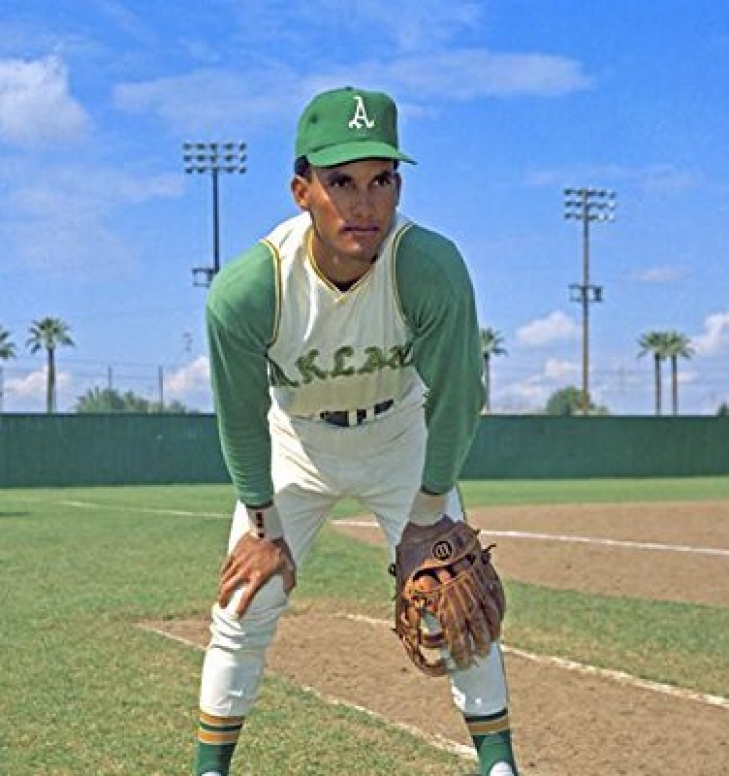
From the island of Cuba, Bert Campaneris would go down in history as one of the most versatile players in Major League history, and he would become the first man to ever play all nine positions in a Major League Game. He accomplished that early in his career in 1965 when he was with the Kansas City Athletics.
Kansas City was the first team he played for, joining in 1964. He was the starting Shortstop the following year, where he would lead the American League in Triples and Stolen Bases, a stat he would finish first in six times. "Campy" went to his first All-Star Game in 1968, which coincided with the Athletics’ relocation to Oakland.
Campaneris was the cornerstone of what became a powerful dynasty when the A's won the 1972, 1973, and 1974 World Series, and he was also an excellent defensive player who finished in the top ten in Defensive bWAR nine times.
He also played for the Texas Rangers, California Angels, and New York Yankees, and he would finish his career with 649 Stolen Bases and 2,249 Hits.
117. Vida Blue
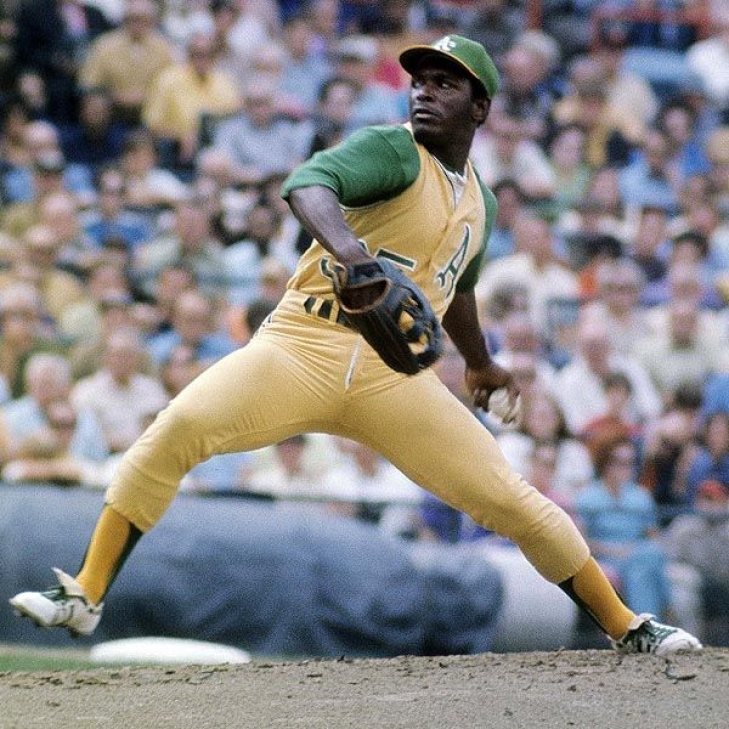
Vida Blue debuted in 1969, and over his 12 Games in Oakland, he was ineffective, posting a 6.64 ERA. His 1970 callup was different, with a 2-0 record over six starts and a pair of Shutouts. 1971 was one of the best seasons ever for an Oakland A’s Pitcher.
1971 was the year he went 24-8 with 301 Strikeouts and led the American League in ERA (1.82), FIP (2.20), and WHIP (0.952). Blue won both the MVP and the Cy Young, and he was part of what became an elite franchise in the AL. While Blue would have ups and downs afterward, the ups were very special. Blue was an anchor on the A's staff, helping them win three straight World Series Rings (1972-74), and while he was with Oakland, he was a three-time All-Star. In addition to his Cy Young, he had three other top ten Cy Young finishes as an Athletic.
In 1978, Blue crossed the bay and switched leagues to play for San Francisco, where in his first year there, he was an All-Star again and was third in Cy Young voting. He went to two more All-Star Games with the Giants, and after a stint with Kansas City, he returned to San Francisco, where he played his final two years before retiring in 1986.
Blue left the game with a 209-161 record and 2,175 Strikeouts.
119. Sal Bando
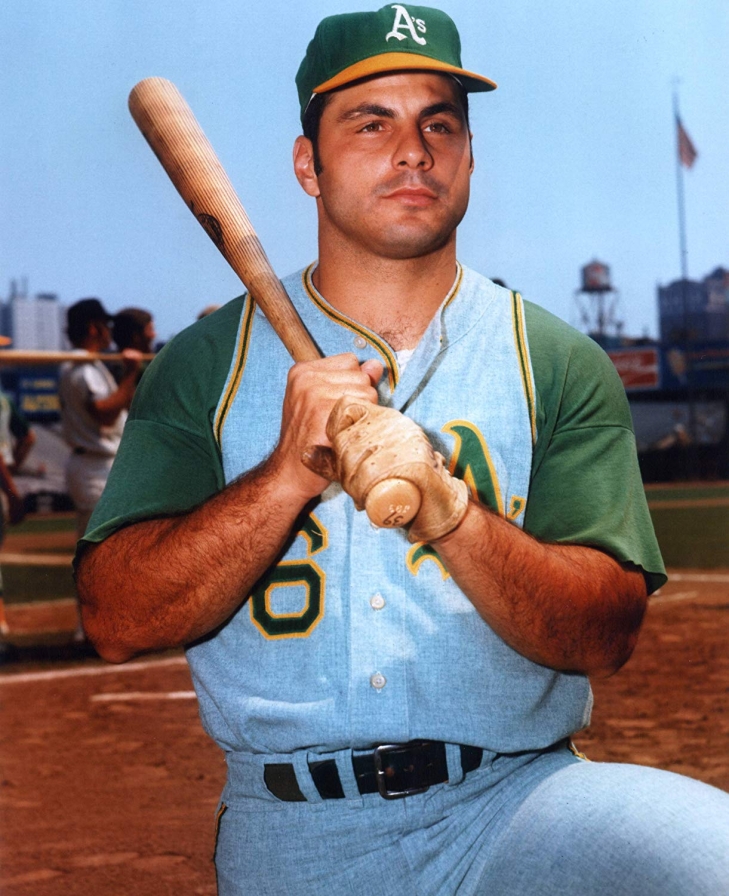
Sal Bando was an integral part of the Oakland Athletics dynasty, and he was there when they were toiling in obscurity in Kansas City. When the Athletics’ owner, Charles O. Finley, relocated the team to Oakland, Bando was at the core of what was poised to become a special team that would define the early 1970s.
Playing at the hot corner, Bando would prove to be a good hitter with decent power. The four-time All-Star had six 20 Home Run seasons, with two seasons seeing him accrue an On Base Percentage over .400. From 1971 to 1974, Bando would finish in the top four in MVP voting in three of those seasons, with the ’71 campaign seeing him as the runner-up. 1972 to 1974 was also the years of the A’s dynasty, where they won three consecutive World Series Championships, and Bando would hit five homers for Oakland in the playoffs.
Defensively, he was more than adequate, but as this was the era of Brooks Robinson and, later, Graig Nettles, a Gold Glove would elude him. Bando would later play for the Milwaukee Brewers from 1977 to 1981.
Our All-Time Top 50 Oakland Athletics have been revised

Yes, we know that this is taking a while!
As many of you know, we here at Notinhalloffame.com are slowly generating the 50 of each major North American sports team. That being said, we have existing Top 50 lists out and we always consistently look to update them when we can and based on necessity. As such, we are very happy to present the pre-2021 update of our top 50 Oakland Athletics of all-time.
As for all of our top 50 players in baseball we look at the following:
1. Advanced Statistics.
2. Traditional statistics and how they finished in the American League.
3. Playoff accomplishments.
4. Their overall impact on the team and other intangibles not reflected in a stat sheet.
There is only one new addition near the bottom part of our list. As always, we announce our top five immediately, but out full list can be found here.
1. Lefty Grove
2. Rickey Henderson
3. Jimmie Foxx
4. Eddie Plank
5. Al Simmons
There was some minor tinkering on the list due to the changing values from Baseball Reference. No active Athletics made the list, but the altering advanced stats led to former 1930s Rightfielder, Wally Moses, replacing Jack Barry.
We welcome your input and commentsand as always, we thank you for your support.
48. Wally Moses
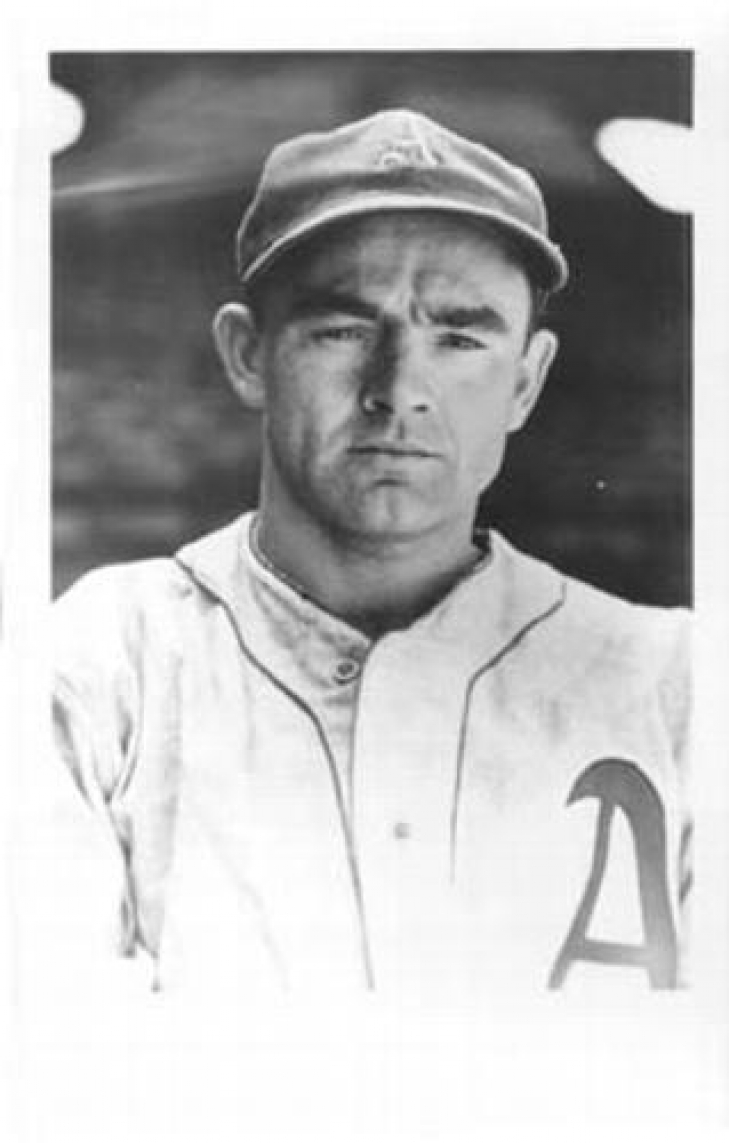
Wally Moses joined the Philadelphia Athletics in 1935, stepping into a gap left by the dismantled Connie Mack dynasties caused by the Great Depression. He quickly became the starting right fielder as a rookie, using his fast left-handed swing to dominate American League pitching for a decade.
His sophomore campaign in 1936 was an exemplary display of offensive prowess. Moses surpassed the prestigious 200-hit milestone by achieving 202 hits, integrating exceptional speed with a refined line-drive swing to attain a commendable .345 batting average and securing a 14th-place position in the American League Most Valuable Player voting.
Rather than hitting a plateau, he engineered an even more spectacular individual masterclass during the 1937 schedule. That summer, Moses put on a stunning display of multi-dimensional production, erupting for a career-high 25 home runs—the only time in his career he would reach double digits in that category. He punctuated his lone career All-Star selection by shattering his own personal ceilings with 208 hits, 48 doubles, 113 runs scored, and 86 runs batted in while maintaining a superb .320 average.
Although he would never quite replicate that astronomical power surge of 1937, Moses remained a remarkably consistent and prolific catalyst at the table for the financially constrained franchise. He achieved four consecutive individual seasons with a batting average well above .300 through 1941, employing superior base-running instincts to consistently turn singles into extra-base hits.
His impressive efficiency caught the eye of many, making him a prime target for an organization that was always trying to stay financially afloat. In 1939, Mack tried to sell his star outfielder to the Detroit Tigers, but Major League Baseball Commissioner Kenesaw Mountain Landis, a powerful figure, suddenly canceled the deal. It wasn't until two winters later that the front office finally reached their financial goal, successfully trading Moses to Chicago in a multi-player deal before the 1942 season started.
Following a highly productive decade spent with the White Sox and Boston Red Sox, his baseball career concluded in 1949 in a manner that was both fitting and full-circle. Moses returned to Philadelphia to dedicate his final three Major League seasons as a respected veteran and distinguished pinch-hitting expert from Mack's bench, ultimately retiring at the end of the 1951 season. With the A’s, Moses batted .307 with 1,316 Hits.
Our All-Time Top 50 Oakland Athletics are now up
Yes, we know that this is taking a while!
As many of you know, we here at Notinhalloffame.com are slowly generating the 50 of each major North American sports team. We have a new one to unveil today, that of the Oakland Athletics.
The Athletics were a charter member of the American League in 1901 when they were located in Philadelphia. While they played on the East Coast, they were owned and ran by Connie Mack, who had his share of success and failures. When they were good, they boasted Hall of Fame players like Lefty Grove, Chief Bender and Jimmie Foxx, and they won five World Series Championships (1910, 1911, 1913, 1929 & 1930) in their first half of existence.
While they had five more World Series Titles then their National League rivals, the Phillies, they struggled financially, and they relocated to Kansas City. They were there for 13 unremarkable years, and they then went all the way to West, to Oakland.
With players like Reggie Jackson, Rollie Fingers and Catfish Hunter, they rattled off three consecutive World Series wins (1972-74). Ownership let their stars go, but by the late 80s, they were back with Mark McGwire, Jose Canseco, Dennis Eckersley and Dave Stewart, and they won three American League Pennants (1988-90), winning the one in the middle.
At present, Oakland follows a Moneyball strategy, and though that tenth World Series has been elusive, they have shown competitiveness despite a low payroll.
As for all of our top 50 players in baseball we look at the following:
1. Advanced Statistics.
2. Traditional statistics and how they finished in the American League.
3. Playoff accomplishments.
4. Their overall impact on the team and other intangibles not reflected in a stat sheet.
Remember, this is ONLY based on what a player does on that particular team and not what he accomplished elsewhere and also note that we have placed an increased importance on the first two categories.
This list is updated up until the end of the 2018-19 Season.
The complete list can be found here, but as always we announce our top five in this article. They are:
1. Lefty Grove
3. Jimmie Foxx
4. Eddie Plank
5. Al Simmons
We will continue our adjustments on our existing lists and will continue developing our new lists.
Look for our All-Time Top 50 Seattle Mariners coming next!
As always we thank you for your support.
45. Miguel Tejada
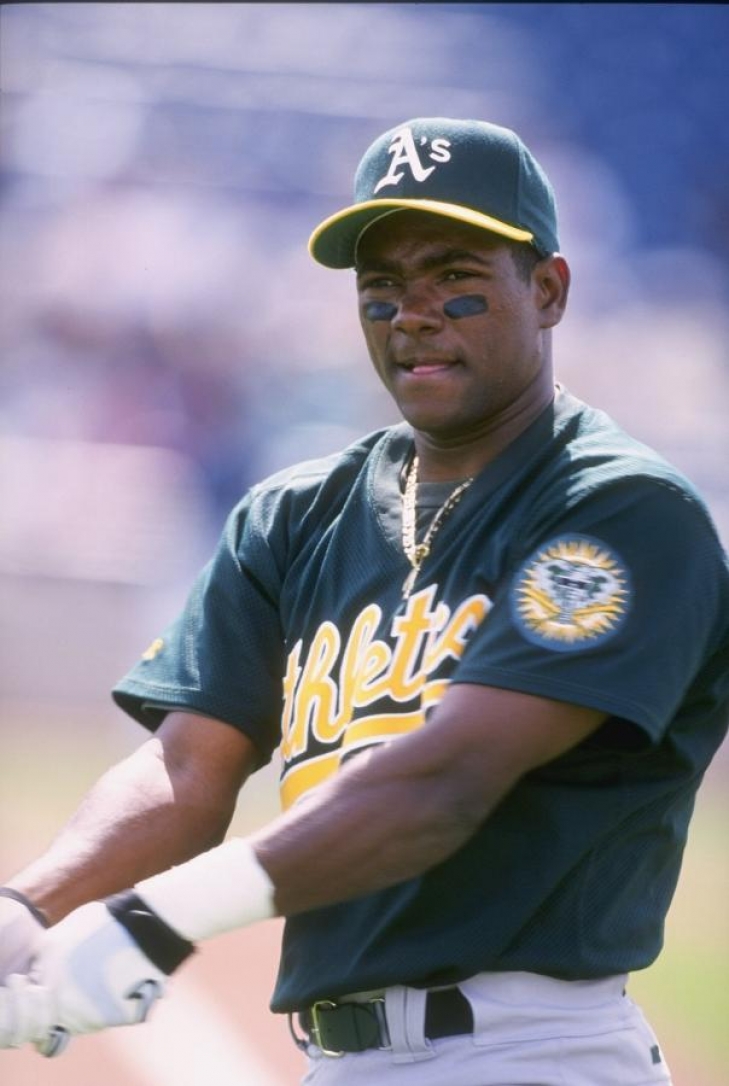
The Oakland Athletics acquired Miguel Tejada from the Dominican Republic in 1993, as an inexperienced and undeveloped youth escaping severe poverty. By the time he secured a permanent spot on the major league roster in 1997, he introduced an energetic and dynamic style of play to the East Bay that soon came to characterize the left side of the infield. By 1999, as the regular starting shortstop, Tejada broke traditional expectations for the position, emerging alongside Alex Rodriguez and Derek Jeter as part of a revolutionary movement of elite, power-hitting shortstops who fundamentally transformed the sport.
Tejada quickly became the emotional core and reliable leader of the "Moneyball" era teams. Between 2000 and 2002, he demonstrated exceptional power, hitting over 30 home runs in three straight seasons. His clutch performance was equally notable; he consistently drove in at least 100 runs for four summers from 2000 to 2003, acting as the main run producer while teammates Jason Giambi and Eric Chavez drew walks and created scoring opportunities ahead of him.
Tejada's peak during his time in Northern California came in the unforgettable 2002 season. He played all 162 games, hitting an impressive .308 with 34 home runs and 131 RBIs. He was the key offensive force behind Oakland’s historic 20-game winning streak that summer, securing multiple walk-off wins and establishing himself as a national icon. The baseball community recognized his excellence by voting him the 2002 American League Most Valuable Player, cementing his status as a franchise legend.
Ultimately, small-market financial constraints impacted his tenure. After a successful 2003 season, the front office allowed him to leave as a free agent, and he signed a lucrative deal with the Baltimore Orioles. He left Oakland with 968 hits, 156 home runs, and a reputation for bringing pure joy to the game.
Sadly, Tejada is more known for his 105 Game steroid suspension, and likely lying about his age (he is allegedly two years older than he listed himself to be). Nevertheless, in his prime, Tejada was one of the great ones.
46. Bing Miller
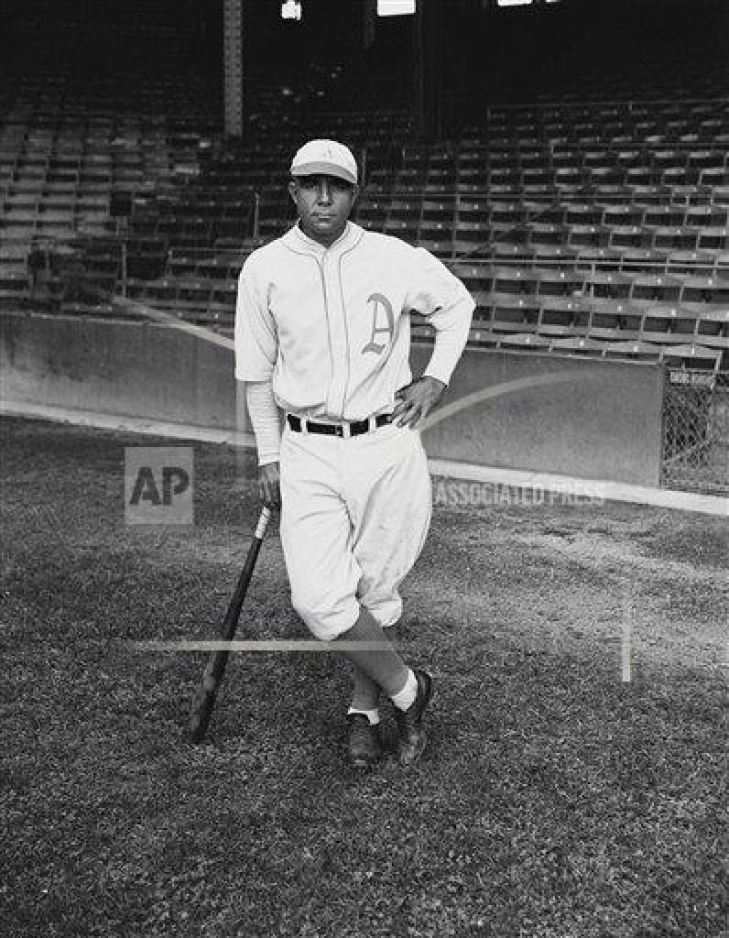
"Bing" Miller was a relatively late bloomer by baseball standards, not making his first extended major league appearance until he was a 26-year-old rookie with the Washington Senators. Seeking an injection of right-handed bat speed, Connie Mack engineered a trade to bring the Iowa native to Shibe Park ahead of the 1922 campaign.
The move proved highly fruitful. During his first four years with Philadelphia, Miller demonstrated exceptional contact-hitting skills, surpassing a .300 batting average three times. He narrowly missed a perfect four-for-four record, finishing at .299 in 1924. Despite his impressive performance, the team’s management viewed him as a tradeable asset in a competitive outfield market and sold him to the St. Louis Browns before the 1926 season.
However, his journey with the white elephant logo was not yet complete. Aware of the important veteran presence they had missing, Mack brought Miller back in 1928, placing him at the core of the franchise's most successful modern dynasty.
During his second period in Philadelphia, Miller posted three consecutive .300 seasons from 1928 to 1930, acting as a consistent line-drive hitter who regularly collected 150 hits annually for five summers in a row. Playing alongside legendary hitters Al Simmons and Mickey Cochrane, the right fielder was essential in helping the Athletics win consecutive World Series titles in 1929 and 1930.
He delivered his most crucial and impressive performance during the historic 1929 Fall Classic against the Chicago Cubs. Dominating National League pitching, Miller hit an outstanding .368 with four RBIs, including the renowned walk-off double in the bottom of the ninth inning of Game 5, which effectively secured the world championship for Philadelphia.
Advanced metric grids and modern spreadsheet purists do note that his defensive coverage in right field was a clear limitation, a reality that prevents him from climbing into the absolute top tier of all-time franchise outfielders. However, looking strictly at his defensive liabilities completely ignores his overwhelming regular-season volume and elite bat control.
Miller was released before the 1935 season, and with the Athletics, he batted .311 with 1,480 hits. He would later be chosen for the Philadelphia Baseball Wall of Fame in 1998.
50. Mark Mulder

Mark Mulder entered the league with massive expectations as the second overall pick in 1998 out of Michigan State. The smooth-throwing lefty didn't waste time, fast-tracking his way to the Coliseum by 2000.
That rookie campaign was rough around the edges, yielding a 5.44 ERA over 27 starts, but it served as the necessary baseline for what would become a rapid transformation.
Everything clicked in 2001. Mulder anchored the rotation with a league-leading 21 wins, commanding the strike zone with an aggressive sinker-splitter combination that kept hitters completely off-balance. He finished as the American League Cy Young runner-up to Roger Clemens—the highest point of award recognition he would reach, but far from his only productive summer in the green and gold.
As the southpaw component of Oakland’s famed "Big Three" alongside Tim Hudson and Barry Zito, Mulder became a model of efficiency. He rattled off three consecutive seasons of at least 15 wins following his breakout year, earning back-to-back All-Star selections in 2003 and 2004.
During his five-year peak with the Athletics, Mulder was an absolute workhorse, pitching to an 81-42 record with 668 strikeouts and leading the league in complete games twice.
Because the front office operated under strict small-market financial constraints, the roster churn was inevitable. Before his arbitration costs could skyrocket, Oakland traded Mulder to the St. Louis Cardinals prior to the 2005 season. He delivered one final, stellar 16-win campaign in the National League, helping push the Cardinals into the postseason.
