

 Not in Hall of Fame News
Yes, we know that this is taking a while! As many of…
 Not in Hall of Fame News
Yes, we know that this is taking a while! As many of…
 Not in Hall of Fame News
2002 SEMI-FINAL RESULTS: Thank you for your participation in the Pro Football…
 Not in Hall of Fame News
Yes, we know that this is taking a while! As many of…
 Not in Hall of Fame News
We are diligently working away at Notinhalloffame on revising our Football lists…
 Not in Hall of Fame News
We are diligently working away at Notinhalloffame on revising our Football lists…
 From the Desk of the Chairman
October baseball often turns individual pitching performances into lasting postseason memories. Strikeout…
 From the Desk of the Chairman
For decades, the sports debate ran on gut feeling. Barstool arguments, call-in…
 From the Desk of the Chairman
Introduction to Private Adult Tennis Camps in Prague Adult club players increasingly…
 From the Desk of the Chairman
Unlike in the case of pre-match betting, where you have to pick…
 From the Desk of the Chairman
Kupu178 builds trust with people by using top-end end-to-end encryption. It checks…
 From the Desk of the Chairman
Sports fans thrive on calculating strategy, reading momentum, and maximizing every tactical…



100 Active Potential Football Hall of Famers
-
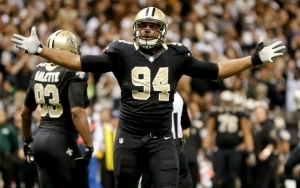 #15 Overall, Cameron Jordan, New Orleans Saints, Defensive End, #7 Defensive Lineman/Linebacker: Pass Rusher2025 Pre-Season Rank #14, 2024 Pre-Season Rank #21, 2023 Pre-Season Rank #27, 2022 Pre-Season Rank #25, 2021 Pre-Season Rank #36, 2020 Pre-Season Rank…
 -
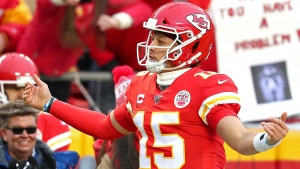 #4 Overall, Patrick Mahomes: Kansas City Chiefs, #2 Quarterback2025 Pre-Season Rank #4, 2024 Pre-Season Rank #2, 2023 Pre-Season Rank #10, 2022 Pre-Season Rank #21, 2021 Pre-Season Rank #31, 2020 Pre-Season Rank…in Quarterbacks
 -
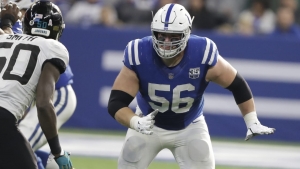 #22 Overall, Quenton Nelson, Indianapolis Colts, Left Guard, #2 Offensive Lineman2025 Pre-Season Rank #2025, 2024 Pre-Season Rank #29, 2023 Pre-Season Rank #42, 2022 Pre-Season Rank #51, 2021 Pre-Season Rank #78, 2020 Pre-Season Rank…
 -
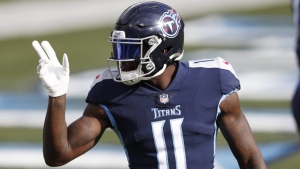 #50 Overall, A.J. Brown, New England Patriots, #9 Wide Receiver2025 Pre-Season Rank #49, 2024 Pre-Season Rank #76, #2023 Pre-Season Rank #106, 2022 Pre-Season Rank #142, 2021 Pre-Season Rank #141. Peak Period: 2020-24…
Visit the Fictitious Halls of Fame!


You May Also Like...
EDITOR’S CHOICE
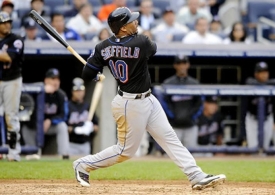 DDT's Pop Flies
When the veterans committee (VC), officially convening as the Contemporary Baseball Era…


 Live Music Head
Project/Objectan interview with André Cholmondeleyby Live Music HeadOriginally published at timessquare.com on…

LATEST RANKINGS

MOST POPULAR RANKINGS

Committee Chairman
8. Dick Schafrath
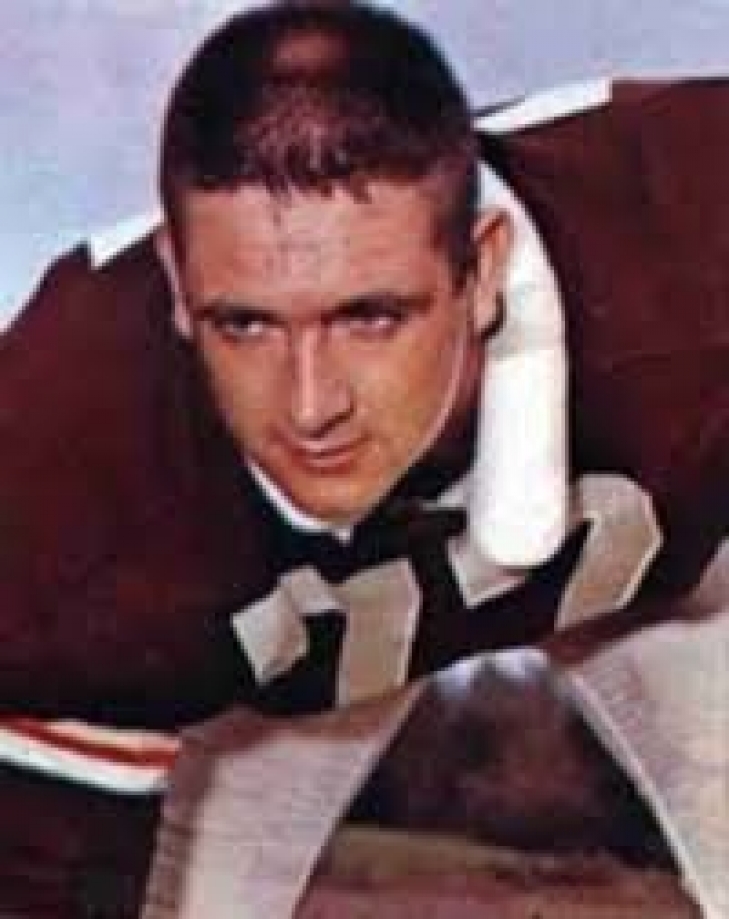
Drafted in the second round (23rd overall) of the 1959 NFL Draft from Ohio State—where he served as captain of a national championship team—Dick Schafrath entered the professional arena in Cleveland as a formidable force. Throughout a 13-year career exclusively with the Browns, "The Mule" upheld the left tackle position with exceptional leverage and superior mobility, facilitating one of the most formidable rushing eras in football history.
Schafrath demonstrated exceptional physical endurance complemented by meticulous technical skill during offensive engagements. Upon transitioning to the position of left tackle in his second season, he distinguished himself by effectively sealing off defensive ends and engaging linebackers during perimeter sweeps. His capacity to propel defenders away from the ball facilitated expansive and reliable running lanes for Cleveland's renowned backfield, while his proficient footwork secured the blindside protection for quarterbacks Frank Ryan and Bill Nelsen.
Schafrath assumed the role of primary starter in 1960 and swiftly established himself as one of the league's premier offensive linemen. His period of peak performance extended throughout the 1960s, during which he received four First-Team All-Pro honors (1963–1965, 1969) and was selected for seven Pro Bowls. In 1963, he was honored by his teammates with the title of Cleveland Browns' Most Valuable Player—a distinguished accolade rarely awarded to an offensive lineman.
His presence on the left side was crucial to Cleveland's historic rushing game; during his tenure, Browns running backs secured eight NFL rushing titles, with Schafrath protecting three future Hall of Famers: Jim Brown, Bobby Mitchell, and Leroy Kelly. The apex of his athletic career occurred in 1964, when he anchored the offensive line during Cleveland's 27–0 victory over the Baltimore Colts to claim the 1964 NFL Championship.
Schafrath continued to serve as a dependable starter throughout the 1971 season, retiring with the team that initially drafted him after participating in 176 regular-season games for Cleveland. Subsequent to his athletic career, he embarked on a distinguished public service trajectory, serving four terms as an Ohio State Senator and subsequently obtaining his bachelor's degree at the age of 69. In 2003, the franchise formally acknowledged his enduring contribution to the team's heritage by inducting him into the Cleveland Browns Legends.
7. Gene Hickerson
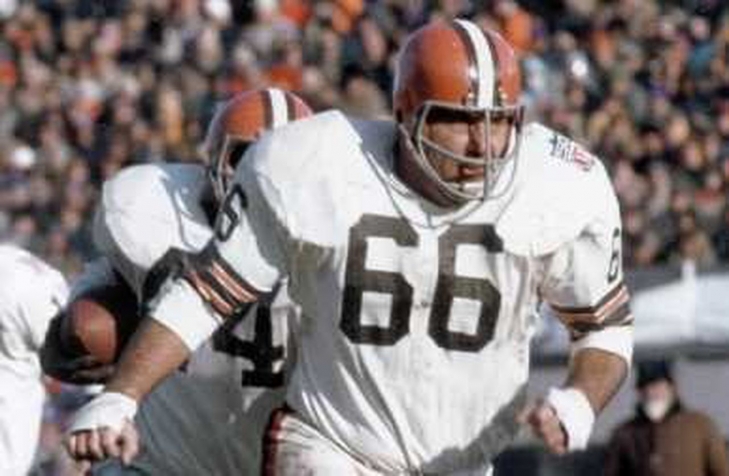
From Ole Miss, Gene Hickerson was chosen in the Seventh Round in the 1957 Draft, where Cleveland Browns Head Coach, Paul Brown, liked his speed and moved him to the Right Tackle position, where he became their starter in his second season. As Hickerson improved, his 1961 Season was taken from him due to a broken leg, but he returned the following season as a greater asset that protected Jim Brown and company.
Hickerson helped Cleveland win the 1964 NFL Championship, and as he turned 30, he defied time and grew into one of the top Guards in football. From 1965 to 1970, Hickerson put forth an Approximate Value of at least 11, peaking with 18 in 1968. In all of those six years, Hickerson went to the Pro Bowl and was a First Team All-Pro from 1967 to 1969. Hickerson played until the end of the 1973 Season, and he retired with the team he started with, finishing with 202 Games Played.
Hickerson received the Pro Football Hall of Fame call in 2007. Three years later, he was part of the first Browns Ring of Honor class. Notably, Hickerson was also named to the 1960s All-Decade Team.
6. Ozzie Newsome
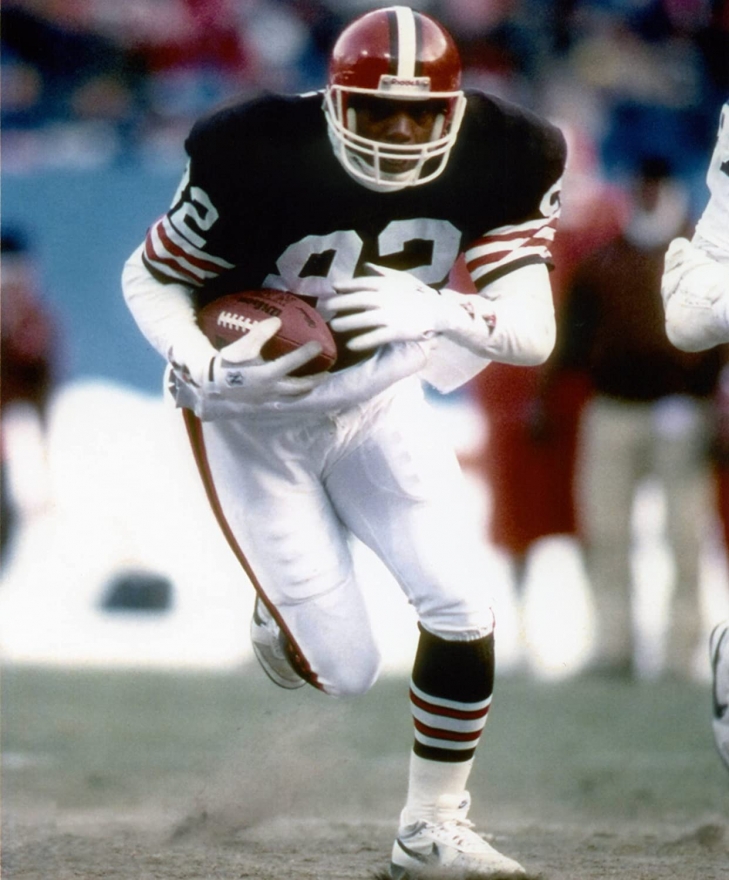
Selected 23rd overall in 1978 from Alabama, where he shined as an All-American under Bear Bryant, Ozzie Newsome made a remarkable impact in Cleveland, transforming the role of an NFL tight end. As a key part of a Browns team stepping into a competitive era, "The Wizard of Oz" led the offense with a blend of clever route-running, gentle hands, and powerful inline blocking for 13 seasons.
Newsome had a natural ability as a wide receiver, despite being built like a tight end. Back in a time when players who stretched the field from the flex position weren’t as common, he used his body control, awareness of his surroundings, and strong hands to get open against linebackers and safeties. Newsome ran precise routes through the gaps in zone defenses, handled tough hits over the middle with resilience, and was also a dependable blocker on the line in the run game.
Newsome quickly made a big splash by becoming the first rookie in 25 years to receive the Browns' Offensive Player of the Year award in 1978. He celebrated his first First-Team All-Pro honor in 1979, but it was in the early 1980s that his performance truly soared. In 1981, he achieved his first 1,000-yard receiving season with 69 catches for 1,002 yards, earning a well-deserved spot in the Pro Bowl.
His absolute peak came during two exciting seasons in 1983 and 1984. In 1983, he impressively caught 89 passes for 970 yards, and he continued his amazing performance in 1984 with another 89 receptions for 1,001 yards. These achievements earned him his second First-Team All-Pro honor and a second Pro Bowl invitation. Notably, he also set a franchise record for a single game with 191 yards against the New York Jets in 1984.
Newsome proudly achieved his third Pro Bowl selection in 1985. As Bernie Kosar's trusted safety valve, he played a key role in guiding the beloved "Kardiac Kids"into the late-80s powerhouse teams that wowed fans by reaching three AFC Championship Games within just four years (1986, 1987, 1989).
Newsome retired after the 1990 season, having played 198 consecutive games and catching a pass in 150 straight contests—a record streak for tight ends at that time. He left as the NFL's all-time leading receiver at the tight end position with 662 receptions for 7,980 yards and 47 touchdowns. These impressive numbers still stand as Cleveland's franchise records for catches and yards. In 1999, Newsome was honored with his induction into the Pro Football Hall of Fame in Canton. He was also named to the NFL 1980s All-Decade Team and was part of the inaugural class of the Cleveland Browns Ring of Honor in 2010.
31. Kyle Vanden Bosch
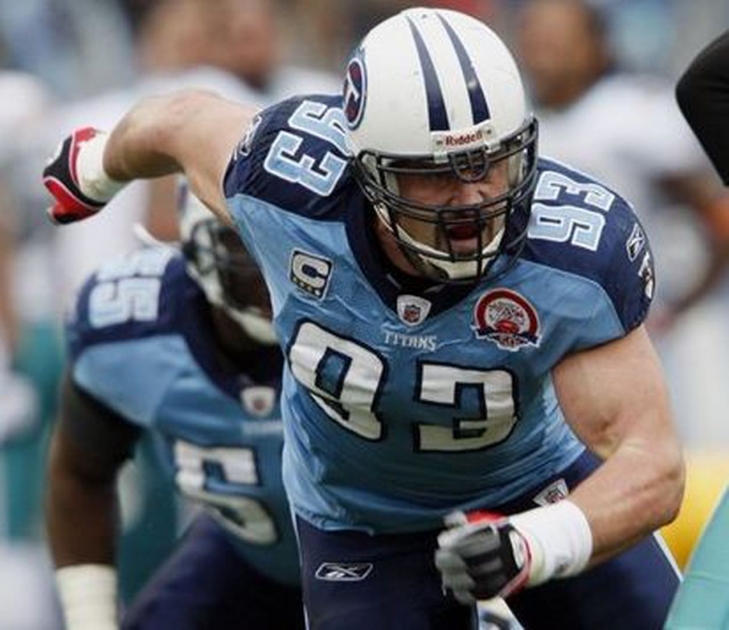
Kyle Vanden Bosch began his career with the Arizona Cardinals, serving four years there, but he is arguably best known for missing one complete season due to an ACL injury. Vanden Bosch joined Tennessee in 2005, and the change of scenery proved beneficial for the Defensive End.
Vanden Bocsh played five years for the Titans, and in alternating years (2005, 2007 & 2009) was a Pro Bowl Selection. Vanden Bosch showed off a nice blend of pass-rushing and run-stuffing in this five-year run, twice having a 12-Sack year and becoming a fan favorite.
He joined Detroit in 2010 and would have 270 Combined Tackles with 38.5 Sacks as a Titan.
