

 Not in Hall of Fame News
Yes, we know that this is taking a while! As many of…
 Not in Hall of Fame News
Yes, we know that this is taking a while! As many of…
 Not in Hall of Fame News
2002 SEMI-FINAL RESULTS: Thank you for your participation in the Pro Football…
 Not in Hall of Fame News
Yes, we know that this is taking a while! As many of…
 Not in Hall of Fame News
We are diligently working away at Notinhalloffame on revising our Football lists…
 Not in Hall of Fame News
We are diligently working away at Notinhalloffame on revising our Football lists…
 From the Desk of the Chairman
October baseball often turns individual pitching performances into lasting postseason memories. Strikeout…
 From the Desk of the Chairman
For decades, the sports debate ran on gut feeling. Barstool arguments, call-in…
 From the Desk of the Chairman
Introduction to Private Adult Tennis Camps in Prague Adult club players increasingly…
 From the Desk of the Chairman
Unlike in the case of pre-match betting, where you have to pick…
 From the Desk of the Chairman
Kupu178 builds trust with people by using top-end end-to-end encryption. It checks…
 From the Desk of the Chairman
Sports fans thrive on calculating strategy, reading momentum, and maximizing every tactical…






100 Active Potential Football Hall of Famers
-
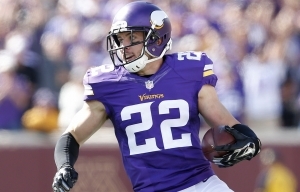 #28 Overall, Harrison Smith, Minnesota Vikings, Strong Safety, #2 Safety2025 Pre-Season Rank #38, 2024 Pre-Season Rank #50, 2023 Pre-Season Rank #72, 2022 Pre-Season Rank #79, 2021 Pre-Season Rank #90, 2020 Pre-Season Rank…in Safeties
 -
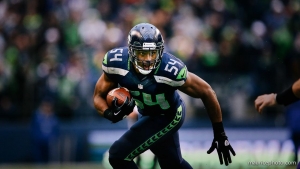 #3 Overall, Bobby Wagner: Free Agent Linebacker, #1 Defensive Lineman/Linebacker: Interior Lineman2025 Pre-Season Rank #2, 2024 Pre-Season Rank #3, 2023 Pre-Season Rank #3, 2022 Pre-Season Rank #6, 2021 Pre-Season Rank #10, 2020 Pre-Season Rank…
 -
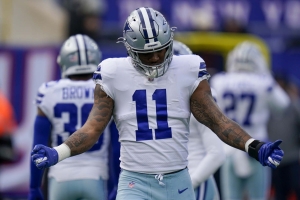 #29 Overall, Micah Parsons, Green Bay Packers, Linebacker, #10 Defensive Lineman/Linebacker: Pass Rusher2025 Pre-Season Rank #54, 2024 Pre-Season Rank #79, 2023: Pre-Season Rank #102. Peak Period: 2021-25 Here is what we wrote about Micah Parsons…
 -
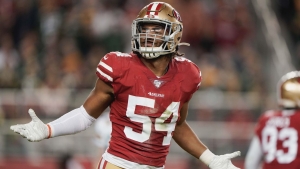 #30 Overall, Fred Warner, San Francisco 49ers Linebacker, #2 Defensive Lineman/Linebacker: Interior Lineman2025 Pre-Season Ranking #22, 2024 Pre-Season Rank #49, 2023 Pre-Season Rank #79, 2022 Pre-Season Rank #118, 2021 Pre-Season Rank #142. Peak Period: 2020-24…
Visit the Fictitious Halls of Fame!


You May Also Like...
EDITOR’S CHOICE

 DDT's Pop Flies
When the veterans committee (VC), officially convening as the Contemporary Baseball Era…

 Live Music Head
Project/Objectan interview with André Cholmondeleyby Live Music HeadOriginally published at timessquare.com on…

LATEST RANKINGS





MOST POPULAR RANKINGS
















Committee Chairman
12. Dante Lavelli
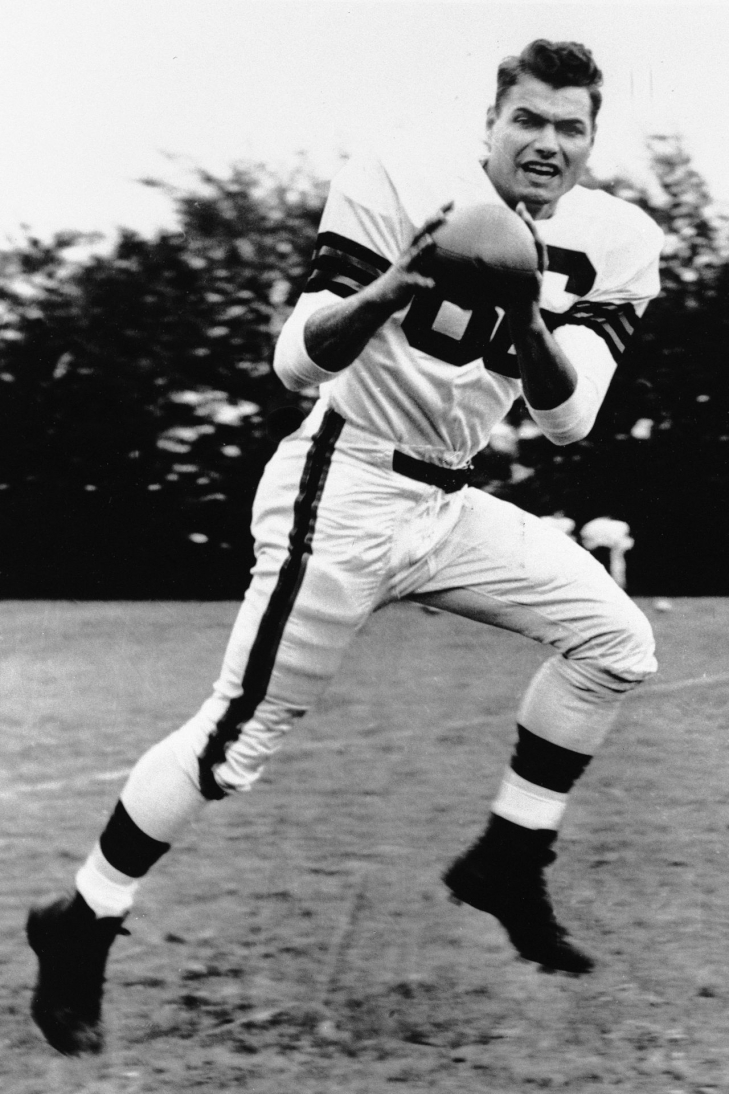
Playing for Paul Brown at Ohio State during their 1942 national championship season, Dante Lavelli put his football career on hold to serve in the U.S. Army during World War II, participating in the Battle of the Bulge. Upon returning home, he reunited with Brown on the inaugural 1946 Cleveland Browns, quickly earning the moniker "Gluefingers" for his miraculous hands and clutch big-play ability along the boundary.
Lavelli was known for his physical toughness, sharp route running, and remarkably strong hands. Playing as the main boundary end across from Mac Speedie, he was great at running crisp comeback routes and deep posts through heavy traffic, reliably catching contested throws from Otto Graham. His determination in run-blocking on the edge was just as important, helping to seal off defensive ends and create open lanes for Marion Motley and Motts Tonelli.
Lavelli quickly became the top receiving threat in the AAFC during its first season in 1946. He led the league with 40 receptions, 843 yards, and eight touchdowns. In the very first AAFC Championship Game, he caught the winning touchdown pass, setting the stage for an exciting four-year run where Cleveland proudly took home all four AAFC titles from 1946 to 1949.
When the Browns stepped into the NFL in 1950, Lavelli quickly became a key player in their passing game. During the 1950 NFL Championship Game, he caught eleven passes for 128 yards and two touchdowns, helping Cleveland achieve an exciting 30–28 win over the Los Angeles Rams. His outstanding performance earned him three straight Pro Bowl nominations from 1951 to 1953 and First-Team All-Pro honors in 1953, after he made 45 receptions for 647 yards and six touchdowns. He finished his career on a high note, helping Cleveland win back-to-back NFL Championships in 1954 and 1955.
Lavelli retired his athletic footwear following the 1956 season, thereby concluding an eleven-year career entirely with Cleveland. Throughout seven championship-winning seasons, he established a reputation as one of the most exceptional large-game pass catchers in early professional football history. In 1975, he was inducted into the Pro Football Hall of Fame. In 2010, the franchise permanently acknowledged his contributions by inducting him into the inaugural class of the Cleveland Browns Ring of Honor.
Overall, Lavelli played in 123 regular-season games, recording 386 receptions for 6,488 yards and 62 touchdowns.
11. Leroy Kelly
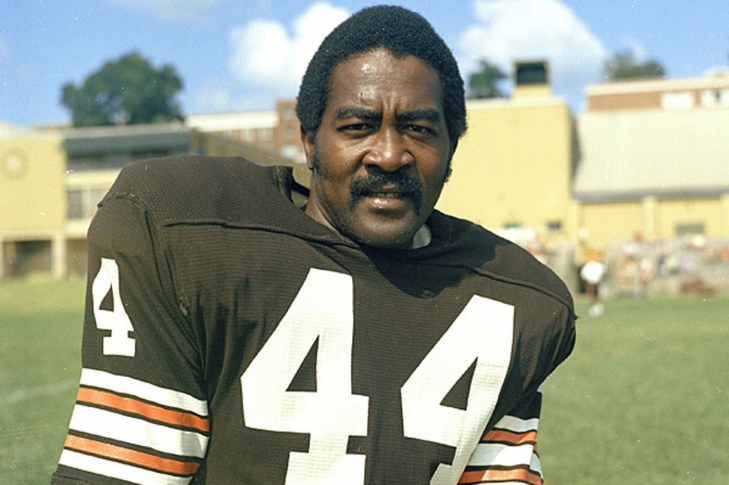
Drafted in the eighth round (110th overall) of the 1964 NFL Draft from Morgan State, Leroy Kelly confronted an extraordinarily challenging endeavor: succeeding Jim Brown. After dedicating two seasons as a distinguished contributor on special teams and serving as Brown's understudy, Kelly assumed the starting position when Brown unexpectedly retired prior to the 1966 season. Over the subsequent eight years, Kelly accomplished the remarkable—establishing his own distinguished career and affirming his status as a Hall of Fame athlete.
Kelly relied on exceptional balance, rapid first-step acceleration, and uncanny vision. Rather than overwhelming defenders with raw power, he excelled at setting up blocks for Cleveland's signature trap plays and perimeter sweeps, using subtle hip shifts to avoid tackles in the open field. His dual-threat versatility as a ball-carrier, pass-catcher, and return man made him a constant scoring threat from anywhere on the turf.
Kelly made an immediate impact as a full-time starter in 1966, rushing for 1,141 yards while leading the NFL with 15 rushing touchdowns and a 5.5 yards-per-carry average. He subsequently achieved consecutive NFL rushing titles in 1967 (1,205 yards) and 1968 (1,239 yards). During this exemplary three-year period from 1966 to 1968, he led the league in rushing touchdowns each season, accumulating a total of 42 touchdowns on the ground.
His consistency garnered him six consecutive Pro Bowl selections (1966–1971) and four First-Team All-Pro honors (1966–1968, 1971). Even as defensive strategies evolved to focus on stacking the box against Cleveland, Kelly persisted as the offensive key player, achieving three additional seasons with over 800 yards between 1969 and 1972.
Kelly finished his amazing ten-year journey with the Cleveland Browns after the 1973 season. When he retired, he had amassed 7,274 rushing yards, placing him just behind legendary players Jim Brown, Joe Perry, and Jim Taylor on the NFL's all-time rushing list. His remarkable contributions were honored in 1994 when he was inducted into the Pro Football Hall of Fame. Later, in 2010, Cleveland proudly welcomed him into the first-ever class of the Cleveland Browns Ring of Honor, celebrating his lasting impact.
Overall, Kelly had 7,274 rushing yards and 74 rushing touchdowns, while adding 2,281 receiving yards, 2,774 return yards, and 90 total touchdowns.
10. Frank Gatski
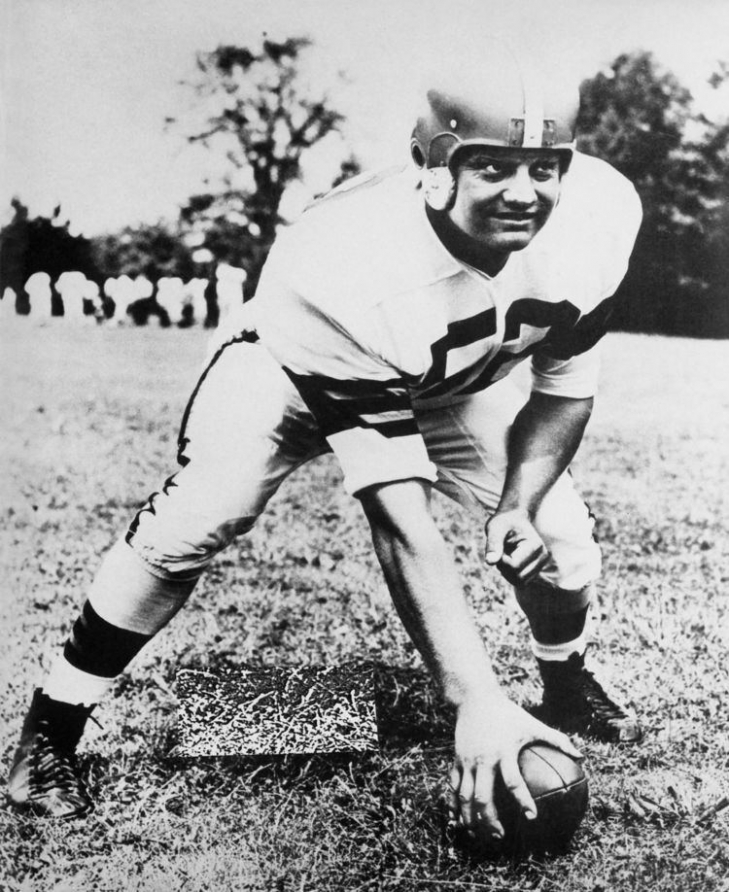
Joined by legendary head coach Paul Brown in 1946 after serving in the U.S. Army during World War II, Frank Gatski earned a spot on the inaugural Cleveland Browns through a walk-on tryout. Over 11 seasons in Cleveland, "Gunner" anchored the offensive line with relentless consistency and mistake-free mechanics, serving as the unsung offensive centerpiece for one of the greatest dynasties in pro football history.
Gatski drew on physical strength from his West Virginia coal-mining roots, leverage, and perfect mechanics. As the starting center, he ensured Otto Graham never experienced a botched exchange. His ability to snap, step, and instantly wall off interior nose tackles allowed Cleveland's trap-draw run scheme with Marion Motley to flourish, while his sturdy base kept the interior pocket clean against heavy blitzes.
Gatski became the Browns' full-time starting center in 1948 after two years backing up Mo Scarry. He led the line for an offense that secured all four AAFC Championships from 1946 to 1949, including a perfect 15–0 record in 1948. When the team transitioned to the NFL in 1950, Gatski continued to excel, starting every game as Cleveland won the 1950 NFL Championship in its first season.
His exceptional skills led to consecutive NFL Championship wins in 1954 and 1955. Widely regarded as the premier center of his era, Gatski received three first-team All-Pro honors (1952, 1953, 1955) and was selected for the Pro Bowl in 1956. Throughout his 12-year career, he appeared in 11 championship games, securing seven titles with Cleveland and adding an eighth after his trade to the Detroit Lions in 1957.
Gatski, renowned for his exceptional durability, supposedly never missed a practice or game during his high school, college, or 12-year professional football career. His achievements were cemented with his induction into the Pro Football Hall of Fame in 1985. Additionally, in 2010, the Cleveland Browns permanently honored him by inducting him into the first class of their Ring of Honor.
35. Miller Farr
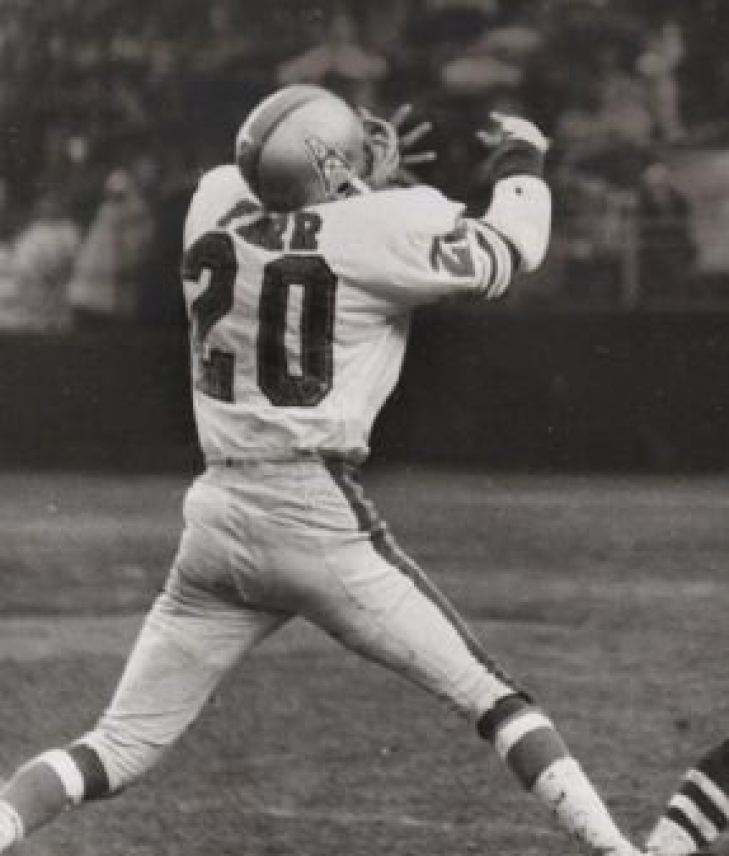
The first two years of Miller Farr's pro career could only be classified as "O.K.," as the Defensive Back from Wichita State was not a head-turner in his time with Denver and San Diego. Farr joined the Oilers in 1967, and for a three-year period, he was one of the best Corners in the AFL.
Farr exploded with an AFL-leading 10 Interceptions and 264 Interception Return Yards. He was rewarded with a First Team All-Pro Selection, and he was so again in 1968, though Farr was not going to sneak up on anyone anymore and was rarely targeted by opposing Quarterbacks. Farr was stellar again in 1969, collecting a third straight AFL All-Star nod.
He would bolt for the St. Louis Cardinals after, but he was never the same player again that he was with Houston. Farr amassed 19 Interceptions with the Oilers, an excellent number for only three years of service.
