


Committee Chairman
Super Bowl LVI Preview
The Super Bowl LVI participants are set, and there are not too many who would have bet on the Cincinnati Bengals to face the Los Angeles Rams. The Rams enter as a favorite, but that is perfectly fine for Cincinnati, who have overcome the odds to get to the big dance.
If you’re planning to place a bet on the Super Bowl, here is a guide with the 3 Easiest Super Bowl 56 bets anyone can make, that was created by the guys at Sports Betting Dime.
The Rams will have the luxury of playing in their home, SoFi Stadium, but this has been a post-season where the road teams have been dominant. Los Angeles went all in at the start of the season, trading their Quarterback, Jared Goff, and a slew of First Round Picks to Detroit for Matthew Stafford. The move was every bit the upgrade they hoped for, and it helped propel Wide Receiver, Cooper Kupp, to new single-season receiving records and a possible MVP.
Defensively, the Rams are led by Aaron Donald, the three-time Defensive MVP and future first ballot Hall of Famer. It is a complete team coached by Sean McVay, who at 36 years of age, will appear in his second Super Bowl, a first for any Coach under 40.
The Bengals have never won the Super Bowl, and are appearing in their third, the last coming 23 years ago in a loss to San Francisco. Cincinnati first beat Las Vegas at home, and then upset the top seed Tennessee Titans and defending AFC Champion, Kansas City on the road to get here.
Led by Quarterback, Joe Burrow, the Bengals are riding on momentum and emotion, and while Burrow is only in his second season, he already has a pedigree of a champion. Along with his teammate and current start Wide Receiver, Ja’Marr Chase, the duo won the National Championship at LSU two years ago, and the image of Burrow smoking a cigar after the victory is an iconic moment that Bengals fans hope to see repeated.
Both teams are capable of comebacks, as shown in each Conference Championship Games, so don’t let any halftime score make you think the game is over.
This is a fresh Super Bowl match, and we can’t wait to see how this will play out.
Super Bowl LVI will be on Sunday, February 13 at 6:30 p.m. EST.
37. Starling Marte
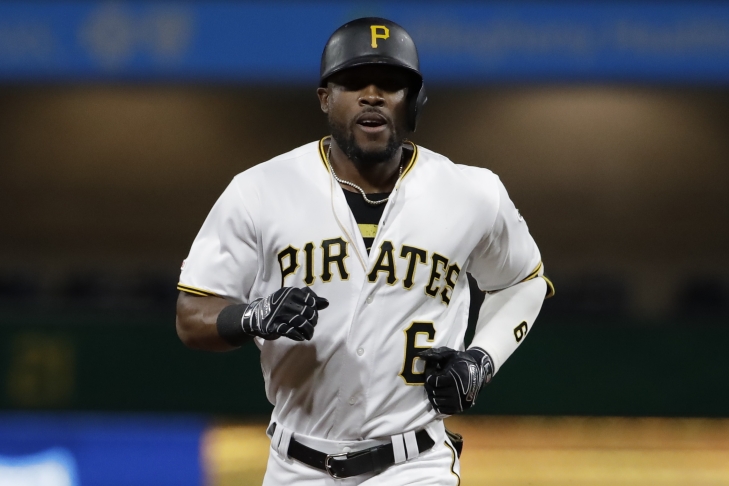
When tracking baseball's resurgence in Western Pennsylvania during the mid-2010s, talk often focuses on Andrew McCutchen. However, the key to those wild card teams’ edge was Santo Domingo's Starling Javier Marte. Signed from the Dominican Republic as a free agent in 2007, Marte entered the majors with extraordinary physical talents. He played with a fierce, high-energy style, combining speed, power, and fearless defense, becoming one of the most dynamic outfielders of the modern PNC Park era.
His introductory appearance midway through the 2012 campaign constituted an immediate shock to the system, marked by a historic first-pitch home run in his very first major league at-bat. From 2013 to 2016, Marte transformed baseline volume into a consistent regular-season performer, achieving four consecutive seasons with no fewer than 140 hits. He developed a highly effective, high-velocity approach at the plate that yielded 53 home runs over that four-year period, culminating in a remarkable 2016 season during which he achieved a career-high batting average of .311, thus earning his first National League All-Star selection.
Focusing solely on Marte’s offensive stats overlooks his remarkable defensive performance on the field. Starting in left field with McCutchen and later moving to center, Marte turned his area into a death zone for extra-base hits. Using exceptional tracking skills and a powerful throwing arm, he consistently disrupted opposing third-base coaches, earning consecutive Gold Gloves in 2015 and 2016, as well as the Wilson Defensive Player of the Year awards.
Tragically, his steady rise encountered a significant obstacle before the 2017 season. Marte tested positive for Nandrolone, leading to an 80-game suspension for performance-enhancing drugs, which caused considerable controversy and temporarily tarnished his reputation.
Showing deep competitive resilience upon his return, he immediately set about rebuilding his profile. He swiped 21 bases over the remainder of that shortened summer, following it up with consecutive 20-plus steal campaigns to stretch an incredible streak of seven straight seasons with at least 20 stolen bases.
With his contract coming due, Marte was traded to Arizona after the 2019 Season, leaving his numbers as a Pirate at .287 with 1,047 Hits, 108 Home Runs, and 239 Stolen Bases.
39. Bob Veale
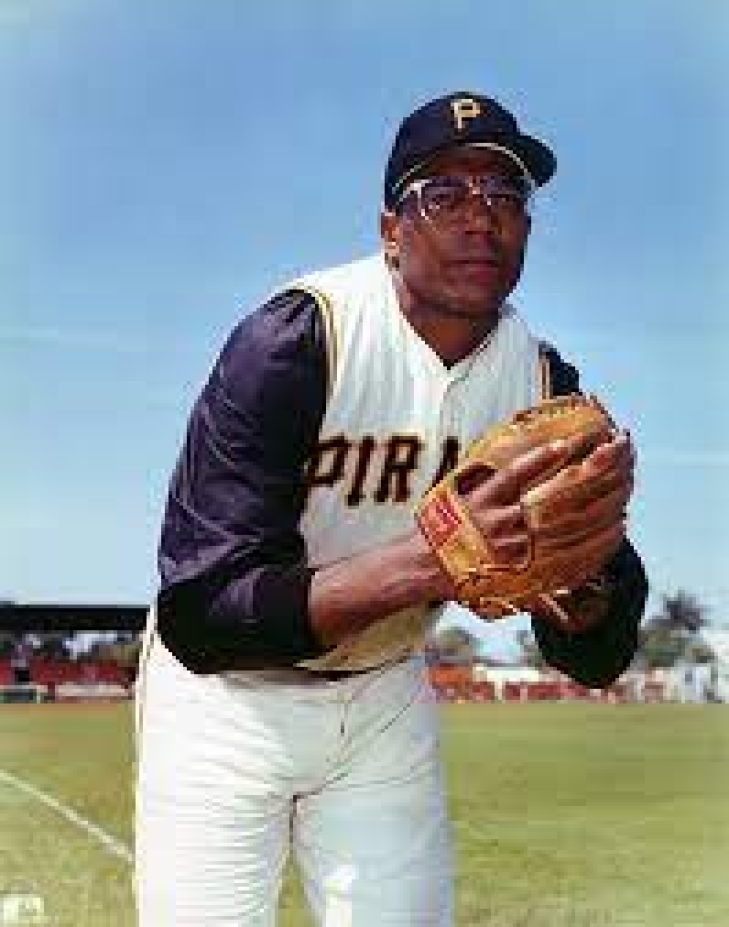
The 1960s are rightly celebrated as a golden age of pitching dominance, marked by legends who intimidated batters through their commanding presence and fast, high-velocity pitches. Bob Veale, a towering 6-foot-6, 230-pound southpaw from Alabama, exemplified this raw physical intimidation. Not only did he throw with formidable power, but his pitches also carried an unpredictable, terrifying movement that visibly unsettled batters. Due to severe Nearsightedness, Veale wore thick-rimmed glasses, which sometimes made it difficult to see the catcher's signs clearly, adding a psychological edge and high-stakes tension for opponents. For seven outstanding years, he was the leading strikeout pitcher in the Pittsburgh rotation.
Veale’s initial appearances were through brief bullpen auditions starting in 1962, but he secured a permanent starting role in 1964. He made a mark with exceptional run prevention and strikeouts, turning that season into a defining one. As a first-time full-time starter, he consistently shut down National League hitters, setting a franchise record with 250 strikeouts and leading the league in punchouts. He finished with an impressive 18–12 record and a low 2.74 ERA, quickly earning recognition as one of the most dominant and unhittable pitchers in the league.
That explosive debut launched a spectacular, volume-dense peak of durability. Veale remained a model of unshakeable consistency for the rest of the decade, rattling off six consecutive summers with at least 200 innings pitched and clearing the 200-strikeout threshold three more times.
His standout individual achievement occurred during the 1965 pennant race, when he used his renowned stamina to pitch a demanding career-high 266 innings, achieve 17 wins, and lead Major League Baseball with 14 complete games. He was selected as an All-Star in both 1965 and 1966, serving as a key figure on the pitching staff alongside young Bob Friend and Vern Law.
However, when evaluated with modern advanced metrics, his overall analytical profile hits a clear ceiling. Despite his strikeout numbers, Veale struggled significantly with command, leading the National League in walks allowed four times. His overly aggressive mound approach often resulted in deep counts, increasing his walk rate and pitch counts. Additionally, as natural aging and shoulder structural issues became apparent around the early 1970s, his raw velocity declined, and he was eventually transitioned to a relief role in the historic 1971 World Championship season.
With his starting days behind him and the club transitioning toward younger arms, the front office officially signaled an exit late in the 1972 schedule, releasing the veteran southpaw so he could latch on with the Boston Red Sox.
Veale had a 116-91 record with 1,652 strikeouts, a 3.06 ERA over 1,894.2 innings as a Pirate.
45. Doug Drabek
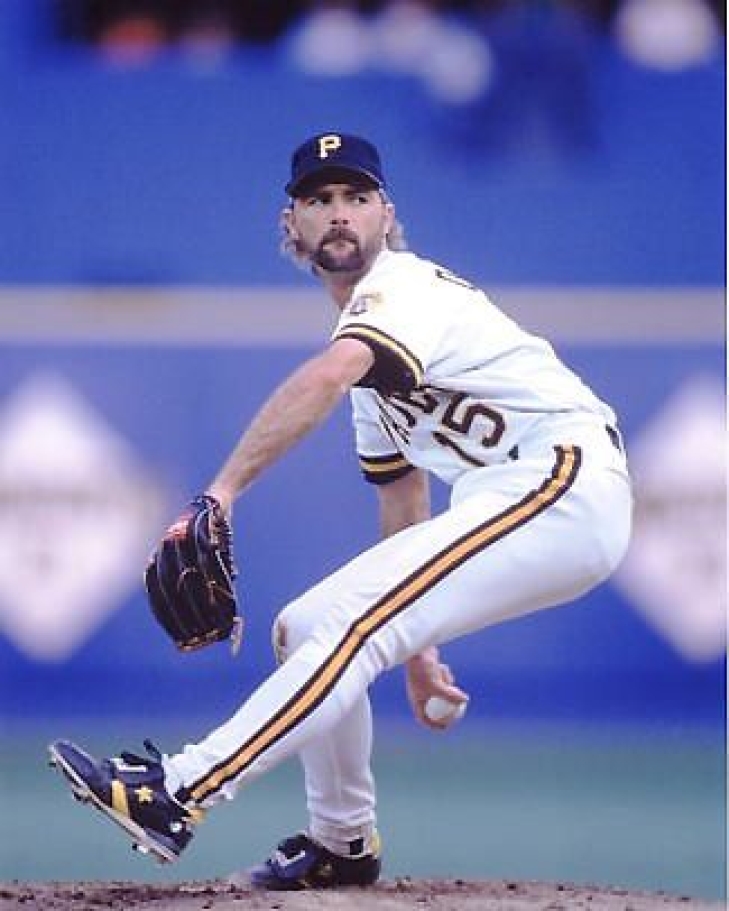
Modern analytics formulas are excellent at analyzing efficiency but sometimes overlook the emotional essence of a franchise's peak years. For example, a sabermetric review of the early 1990s Pittsburgh Pirates might suggest that the team’s core was elsewhere, based on data alone. However, anyone who watched games at Three Rivers Stadium or visited that clubhouse knew otherwise: Doug Drabek was the dominant force on the staff and the driving force behind their three straight appearances in the National League Championship Series.
His path to becoming a regular starter began with a historic trade that changed the landscape. Once a young prospect with the New York Yankees, the right-hander was traded to Pittsburgh before the 1987 season in a major six-player deal that sent Rick Rhoden to the Yankees. The team quickly placed the composed Texan in the starting rotation, and Drabek worked to make durability a consistent part of his season. He carefully improved his control, blending a powerful fastball with an effective slider to build his reputation as a frontline pitcher.
By the late 1980s, his evolution into a premier run-preventer was complete; he broke beneath the sub-3.00 ERA threshold for the first time during a brilliant 1989 showcase, registering a stellar 2.80 mark across 244.1 grueling innings.
His peak of personal and national recognition came during an outstanding 1990 pennant race. Drabek performed exceptionally on the mound, systematically shutting down National League batters to achieve a 22–6 record, his career best. He reduced his ERA to an impressive 2.76, maintained a stellar 1.063 WHIP, and led the Pirates into October. For his versatile dominance, he was awarded the 1990 National League Cy Young Award, establishing himself as the top ace in baseball.
Far from a one-summer wonder, Drabek was a crucial, high-speed contributor for the division-winning teams of 1991 and 1992. He used his remarkable durability to pitch 490 innings across those two summers, earning 30 more wins and ending his tenure with a stellar fifth-place finish in the 1992 Cy Young Award voting. Known for his toughness in critical moments, he notably carried a no-hitter into the ninth inning of the famous Game 7 of the 1992 NLCS, only to see his team's hopes dashed by a bullpen breakdown.
The Pirates imploded after the 1992 Season, essentially disbanding due to cost-cutting. Drabek joined Houston as a Free Agent. With the Pirates, Drabek won 92 games against 62 losses with a 3.20 ERA, a 1.148 WHIP, and 820 strikeouts.
