


gold star for USAHOF
 

2. Johnny Bench

2. Johnny Bench
  1. General
  2. Awards
  3. Career Stats
  • Born: December 7, 1947 in Oklahoma City, OK USA
  • Weight: 197 lbs.
  • Height: 6'1"
  • Bats: R
  • Throws: R
  • Debut: August 28, 1967
  • Final Game: September 29, 1983
  • Gold Glove - 1968
  • Rookie of the Year - 1968
  • TSN All-Star - 1968
  • Gold Glove - 1969
  • TSN All-Star - 1969
  • Gold Glove - 1970
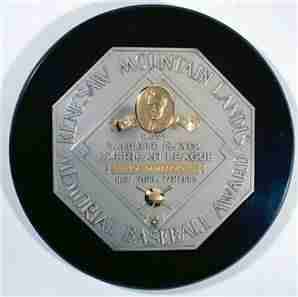
  • Most Valuable Player - 1970
  • TSN All-Star - 1970
  • TSN Major League Player of the Year - 1970
  • TSN Player of the Year - 1970
  • Gold Glove - 1971
  • Gold Glove - 1972
  • Most Valuable Player - 1972
  • TSN All-Star - 1972
  • Gold Glove - 1973
  • TSN All-Star - 1973
  • Gold Glove - 1974
  • TSN All-Star - 1974
  • Gold Glove - 1975
  • Lou Gehrig Memorial Award - 1975
  • TSN All-Star - 1975
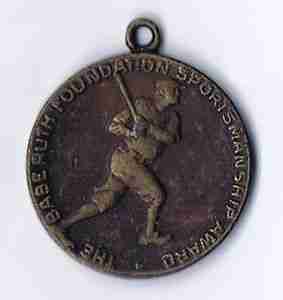
  • Babe Ruth Award - 1976
  • Gold Glove - 1976
  • World Series MVP - 1976
  • Gold Glove - 1977
  • Hutch Award - 1981
  • MVP - 1968
  • MVP - 1969
  • MVP - 1970
  • MVP - 1972
  • MVP - 1973
  • MVP - 1974
  • MVP - 1975
  • MVP - 1977
  • MVP - 1979
  • MVP - 1980
  • Rookie of the Year - 1968
 
ABRHHRRBISBAVG
15316218240967782752136 0.267
 

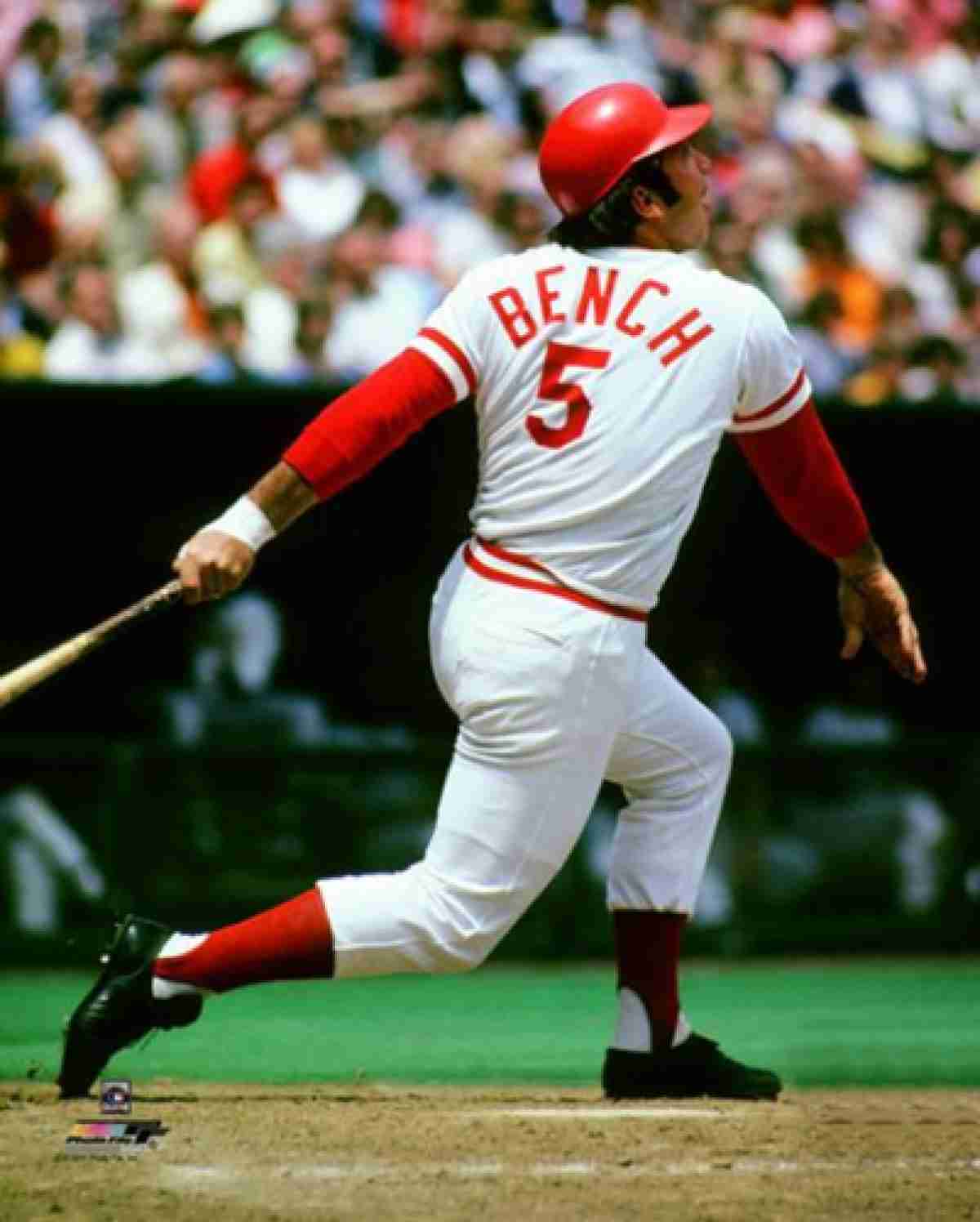
When Johnny Bench arrived in Cincinnati as a 19-year-old rookie in 1968, he didn't just win the Rookie of the Year award; he fundamentally changed how the position was played. Before Bench, catchers were often viewed as defensive specialists who provided little at the plate. Bench shattered that mold, wielding a bat that felt like a lightning bolt. He possessed a massive physical presence and a cannon for an arm that famously allowed him to throw out runners from a crouching position, a feat that terrified baserunners and anchored the Reds' defense for over a decade.

The peak of his residency saw him become the most-decorated catcher in the sport's history. Throughout the 1970s, Bench was the primary power source for the Big Red Machine, claiming two National League MVP awards (1970 and 1972) and leading the league in home runs twice. His 389 career home runs set a record for catchers that stood for decades, but his offensive dominance was matched by his "Cerebral" mastery of the pitching staff. Bench didn't just catch; he orchestrated, earning ten consecutive Gold Gloves and proving that he was as valuable for the runs he prevented as for the ones he drove in.

The middle of his journey was defined by a championship pedigree. Bench was the heartbeat of the back-to-back World Series titles in 1975 and 1976. In the latter, he put on a masterclass in the Fall Classic, claiming the World Series MVP after dismantling the Yankees' pitching staff. He was a 14-time All-Star who rarely took a day off, enduring the physical toll of the "tools of ignorance" with a level of durability that was almost unheard of for a catcher of his era.

However, the final walk toward the exit showed the inevitable wear and tear of a career spent behind the plate. By the early 1980s, the "Big Red Machine" was slowing down, and Bench transitioned to third base and first base to preserve his body. While his power numbers dipped, his clubhouse presence remained the gravity that held the veteran squad together. He played his final game in 1983, a career Red who never wore another professional jersey, concluding one of the most complete careers in the history of the game.

Johnny Bench left the Reds as the undisputed greatest to ever play his position. He was a first-ballot immortal who entered Cooperstown in 1989, and the Reds wasted no time honoring him, retiring his number 5 immediately after his retirement. He arrived as a kid from Oklahoma with a big arm and left as a permanent monument to excellence, the man who proved that a catcher could be both the smartest man on the field and the most dangerous man in the lineup.

The Bullet Points

  • Position: Catcher
  • Acquired: Selected in the 2nd Round of the Amateur Draft 6/8/65
  • Departed: Retired after the 1983 Season.
  • Games Played: 2158
  • Notable Statistics: 1,091 Runs Scored
    2,048 Hits
    381 Doubles
    24 Triples
    388 Home Runs
    1,376 Runs Batted In
    68 Stolen Bases
    .267/.342/.476 Slash Line
    75.1 bWAR

    45 Playoff Games
    27 Runs Scored
    45 Hits
    8 Doubles
    3 Triples
    10 Home Runs
    20 Runs Batted In
    6 Stolen Bases
    .266/.335/.527 Slash Line
  • Major Accolades and Awards: World Series Champion (1975 & 1976)
    MVP (1970 & 1972)
    All-Star (1968, 1969, 1970, 1971, 1972, 1973, 1974, 1975, 1976, 1977, 1978, 1979, 1980 & 1983)
    Gold Glove (1968, 1969, 1970, 1971, 1972, 1973, 1974, 1975, 1976 & 1977)
    Rookie of the Year (1968)
    Lou Gehrig Memorial Award (1975)
    Babe Ruth Award (1976)
    World Series MVP (1976)
    Hutch Award (1981)
    Highest bWAR for Position Players (1970)
    Highest Defensive bWAR (1972)
    Most Total Bases (1974)
    Most Home Runs (1970 & 1972)
    Most Runs Batted In (1970, 1972 & 1974)
    Most Extra Base Hits (1970 & 1974)
    Most Sacrifice Flies (1970, 1972 & 1973)
    Most Intentional Walks (1972)
    Most Putouts by a Catcher (1968 & 1976)
    Most Assists by a Catcher (1968)
    Most Double Plays Turned by a Catcher (1974)
    Highest Caught Stealing Percentage (1969, 1972 & 1973)
    Most Total Zone Runs by a Catcher (1970, 1972, 1973, 1974, 1975 & 1976)
    Highest Fielding Percentage by a Catcher (1976)
  • Other Points of Note: Top Ten MVP Finishes:
    1st in 1970, 1st in 1972, 10th in 1973, 4th in 1974 & 4th in 1975

Comments powered by CComment