


Committee Chairman
NFL News: Giants Plan To Keep DC Graham, Reid Comments On Mahomes Following AFC Title Loss, More
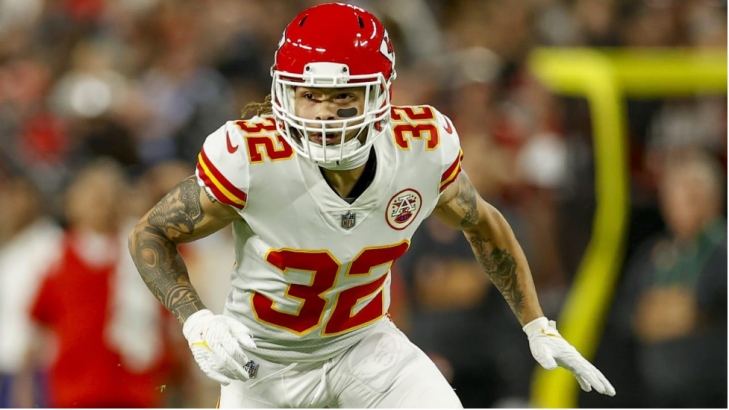
Giants Want To Retain Patrick Graham As Defensive Coordinator
On Friday, the New York Giants hired former Buffalo Bills offensive coordinator Brian Daboll as their new head coach.
Daboll may be replacing Joe Judge, but the Giants are planning to keep one of their valuable assistants for the new head coach.
Per NFL Network’s Ian Rapoport, the Giants will retain defensive coordinator Patrick Graham if he doesn’t get hired for a head coaching position elsewhere. Graham is a candidate for the Minnesota Vikings’ head coach job, Rapoport noted.
But if the Vikings go in another direction, Daboll and company won’t have to worry about filling Graham's position.
The Giants fielded the NFL’s 12th ranked defense as well as the ninth-best scoring defense in 2020. The defense regressed considerably this year, ranking just 23rd in scoring. Still, Graham has done excellent work with very limited talent on the defense side of the ball, and it’s no surprise that New York is planning to keep the 43-year-old.
Only five NFL teams currently have lower odds of winning next year’s Super Bowl than the Giants (+6500). Several New York sportsbooks promo codes are currently offering $1,000 in risk-free bets to customers.
Andy Reid: “Nobody Looking At Pat Mahomes Cross-Eyed From Our Side”
While the Cincinnati Bengals and Los Angeles Rams prepare for their Super Bowl LVI meeting, the Kansas City Chiefs are trying to comprehend what went wrong on Sunday afternoon.
A sluggish second half from Patrick Mahomes and the Kansas City offense saw the Chiefs fail to clinch a third consecutive Super Bowl berth.
Mahomes had two costly picks and coughed up the football in the waning seconds of the fourth quarter, but offensive lineman Joe Thuney managed to recover the ball before Cincy could clinch the game.
Following the Chiefs’ heartbreaking loss, head coach Andy Reid refused to critique his franchise quarterback. Reid made it clear that the coaching staff still has full faith in Mahomes.
“I think he was one half away from going to his third Super Bowl in a row, and that's pretty impressive," Reid said on Monday, per NFL.com’s Nick Shook. "You've been around this a long time as a lot of us have, and that's pretty impressive. Most of these teams that are getting this far have good quarterbacks, that's just how it works. We're fortunate to have him. There's nobody looking at Pat Mahomes cross-eyed from our side and I would anticipate our fans feel the same way.”
Two seasons ago, Mahomes led the Chiefs to a Super Bowl LIV victory over the San Francisco 49ers. Their bid at a repeat was thwarted by Tom Brady and the Tampa Bay Buccaneers, who cruised to a 31-9 victory inside their home venue of Raymond James Stadium.
This Kansas City team may have tasted championship glory not too long ago, but it’s hard not to think that they’ve already underachieved under Mahomes. Four straight AFC Championship Game appearances at home, and they only have the one Lombardi Trophy to show for it.
The Chiefs led the Bengals 21-3 late in the second quarter, and the lead was cut to 11 before halftime. Through the first two quarters, KC was firing on all cylinders, and the Bengals’ high-powered offense couldn’t get much of anything going.
But Cincy flipped the script entirely in the second half. They held Kansas City to just three points over the final two quarters and overtime. Burrow, Joe Mixon and Ja’Marr Chase went into a new gear and led Cincy to 14 unanswered second half points. It took a last-second Harrison Butker field goal for Kansas City to force OT.
Mahomes’ final opportunity to play hero in overtime was ripped away by Vonn Bell, who picked off a deep pass intended for Tyreek Hill. That set up Cincy with a short field, and Evan McPherson’s 31-yarder sent KC to the Super Bowl.
Packers Promote Adam Stenavich To Offensive Coordinator Position
The Green Bay Packers announced Monday that offensive line coach and running game coordinator Adam Stenavich has been promoted to offensive coordinator.
The 38-year-old Stenavich replaces Nathaniel Hackett, whom the Denver Broncos hired as their new head coach last week. Stenavich was solely the offensive line coach in 2019 and 2020 before having the running game coordinator position added to his duties in 2021.
Before Matt LaFleur hired Stenavich to his staff in 2019, the latter served as an assistant offensive line coach for the San Francisco 49ers under Kyle Shanahan from 2017 to 2018.
The future of likely 2021 MVP Aaron Rodgers has been a major talking point since last year’s draft. Rodgers hasn’t announced yet if he’ll continue playing football in 2022, and if he’ll return to the Packers following a dramatic offseason that saw him look for a trade.
If Rodgers decides to stay, it will certainly make Stenavich’s job that much easier.
Our All-Time Top 50 Philadelphia Phillies have been updated to reflect the 2021 Season
Yes, we know that this is taking a while!
As many of you know, we here at Notinhalloffame.com are slowly generating the 50 of each major North American sports team. That being said, we have existing Top 50 lists out and we always consistently look to update them when we can and based on necessity. As such, we are very happy to present our pre-2022 revision of our top 50 Philadelphia Phillies.
As for all of our top 50 players in baseball we look at the following:
1. Advanced Statistics.
2. Traditional statistics and how they finished in the National League.
3. Playoff accomplishments.
4. Their overall impact on the team and other intangibles not reflected in a stat sheet.
The Phillies did not make the 2021 Playoffs, nor did anyone crack the top 50, however there was movement among one active Phillie.
As always, we present our top five.
1. Mike Schmidt
4. Ed Delahanty
You can find the entire list here.
The only elevation is Starting Pitcher, Aaron Nola, who advanced one spot to #38.
We welcome your input and comments and as always, we thank you for your support.
48. Bill Swift
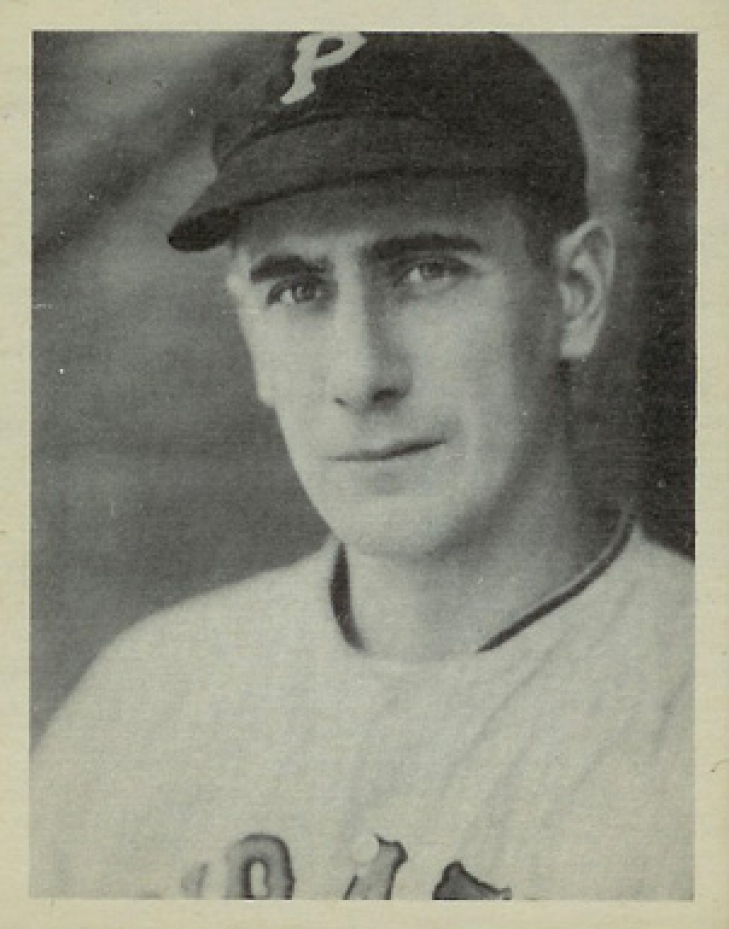
The 1930s National League is often remembered for its powerful offenses, but surviving that era's run-heavy style needed pitchers who could avoid giving up free passes. Bill Swift was the steady pitcher for the Pittsburgh Pirates—a versatile, control-focused thrower who pioneered the modern "swingman" role before it was named. Debuting in 1932, the Pennsylvania native lacked overwhelming stuff but had unshakeable strike zone control. By refusing to grant free passes, Swift became manager Pie Traynor's safety net, pitching whenever needed.
His debut campaign in 1932 immediately demonstrated his precise control. As a 24-year-old rookie entering the major leagues, Swift made consistent, efficient pitching a hallmark of his season, posting a 14–10 record over 194.2 innings. He consistently shut down opposing hitters by limiting walks and forcing them to make contact, finishing the season with the lowest walks per nine innings in the National League at just 1.1 (BB/9).
Although he never secured a permanent spot in the starting rotation, his versatility made him a reliable workhorse. During his first five summers in Pittsburgh, Swift compiled a 70–57 record and consistently crossed the 200-inning mark each year by easily switching between high-leverage starting roles and multi-inning relief duties.
As natural physical deterioration increased into the late 1930s, the coaching staff officially marked a transition by moving the veteran permanently to the bullpen. Despite a reduced role, Swift's consistent low-variance control remained a valuable asset throughout the 1939 season, aiding in maintaining leads and supporting a changing pitching staff.
Beyond relying on his skill with the rubber, Swift demonstrated a highly proficient approach at the batter's box, often saving the weaker Pittsburgh lineup. He was well regarded as one of the top-hitting pitchers of his era, with 132 hits and a solid .230 batting average during his time with the Pirates.
The organization dealt Swift to Boston after the 1939 season. In Pittsburgh, Swift had a 91–79 record, 71 complete games, seven shutouts, and a 3.57 ERA across 1,489 innings pitched.
47. Tony Pena
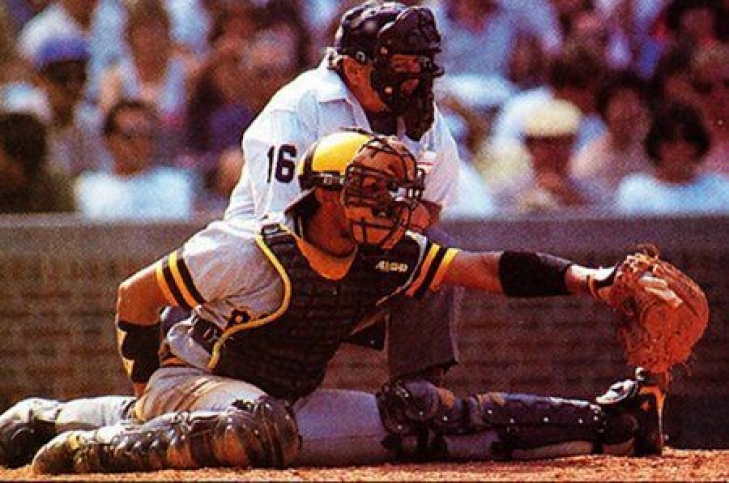
Tony Peña, who signed out of the Dominican Republic as an amateur free agent in 1975, didn't just keep runs from scoring; he revolutionized the catcher role into a showcase of athleticism and charisma. Known for his distinctive crouch, stretching his left leg flat on the dirt with no runners on base, Peña offered pitchers a precise target while maintaining a quick, explosive first step. After steadily advancing through the minor leagues and making his debut with the main team in 1980, this lively catcher revitalized the franchise with a mix of solid contact hitting and dazzling defensive skills, becoming a cherished figure of the 1980s Three Rivers Stadium era.
His true rise to frontline status happened in the 1982 campaign, earning his first National League All-Star invite. He quickly made his offensive volume a routine, using a short, line-drive right-handed stroke to trouble opponents.
The peak of his individual performance and efficiency came in a remarkable 1983 season. Peña showcased his skills at the plate, hitting a career-best .301 with 15 home runs, 153 hits, and 70 RBIs, finishing eleventh in the National League MVP voting—his highest career accolade.
However, concentrating solely on his offensive stats overlooks the exceptional defensive display he showcased behind the plate. Peña utilized a powerful throwing arm, effectively shutting down the running game in the Senior Circuit by leading the National League in baserunners caught stealing in 1984 and 1985.
His exceptional spatial awareness and quick-release skills enabled him to rank in the top ten for defensive bWAR four times as a Pirate, notably leading the league with a 2.5 defensive bWAR in 1984. Recognized for his versatile excellence, he won three straight Gold Glove awards from 1983 to 1985. Not just a fleeting star, this durable catcher was a four-time All-Star and maintained consistent offensive power, hitting double-digit home runs in five consecutive seasons from 1982 to 1986.
As the organization shifted to a complete rebuilding under young Jim Leyland, front-office priorities changed suddenly. In a significant spring trade before 1987, management traded the veteran icon to the St. Louis Cardinals for Andy Van Slyke, Mike LaValliere, and Mike Dunne, a blockbuster that reshaped both teams for the coming decade.
With Pittsburgh, Peña had 821 hits, 126 doubles, 63 home runs, and 340 RBIs alongside a highly respectable .286/.325/.414 slash line across 799 games.
