


Committee Chairman
RIP: Bill Fitch
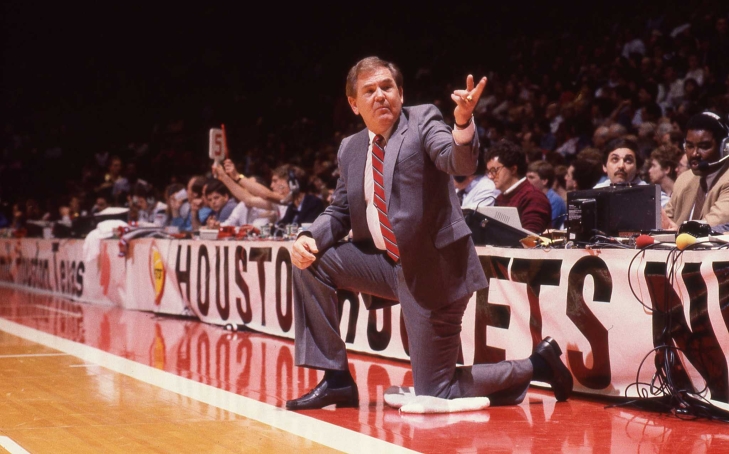
Basketball has lost one of the great ones as Bill Fitch passed away today. He was 89 years old.
Playing his college ball at Coe, Fitch would later become their Head Coach. He worked his way up the NCAA totem pole, helming North Dakota (1962-67), Bowling Green (1967-68) and Minnesota (1968-70) before earning an opportunity in the NBA to coach the expansion Cleveland Cavaliers.
The Cavs were dreadful due to a lack of talent, but he took them to an improbable Central Division Title in 1975-76, where the “Miracle at Richfield” Team made it to the Conference Finals, where they fell to Washington. For his efforts, Fitch won the NBA Coach of the Year.
Fitch resigned in 1979 and took over in Boston, who had a losing record the year before. The Celtics also drafted Larry Bird, and the team turned it all around, making the playoffs with Fitch winning his second NBA Coach of the Year. The season after, Fitch led Boston to an NBA Title, the first and only for the Coach. In 1996, Fitch was named one of the Top 10 Coaches in NBA History.
Following his resignation in 1983 in Boston, Fitch would take over as the Head Coach in Houston (1983-88), New Jersey (1989-92) and the Los Angeles Clippers (1994-98).
Fitch was inducted into the Naismith Basketball Hall of Fame in 2019.
We here at Notinhalloffame.com would like to extend our condolences to the fans, friends and family of Bill Fitch.
The Rock and Roll Hall of Fame announces the 2022 Finalists
The Hall of Fame season ramps up with today’s announcement of the Rock and Roll Hall Fame who announced this year’s Finalists. Unlike other Halls, the Rock Hall has no discernable pattern as to when they announce their classes. As typical, this group was announced with only 24 hours notice.
Here are this year’s nominees:
Beck: Beck is a first time nominee after three years of eligibility. His quirky style and critical love plays into what the Hall loves.
Devo: Devo returns to the ballot after being nominated last year and 2019. The New Wave pioneers have been eligible since 2003.
Dionne Warwick: Warwick has a trophy case full of Grammys and a laundry list of hits, but with an Adult Contemporary sound, her rock and roll credibility is suspect. That hasn’t stopped Hall voters before. This is her second straight nomination, and she has been eligible since 1988.
Carly Simon: The Singer/Songwriter makes her first nomination since first being eligible in 1997.
Dolly Parton: This is the first nomination for the Country/Pop legend, who has been eligible since 1989. While she is not considered a rock star, her stardom even in this list, has few equals.
Duran Duran: The masters of the video genre of the 1980s, finally obtain their first nomination. They have been eligible since 2007.
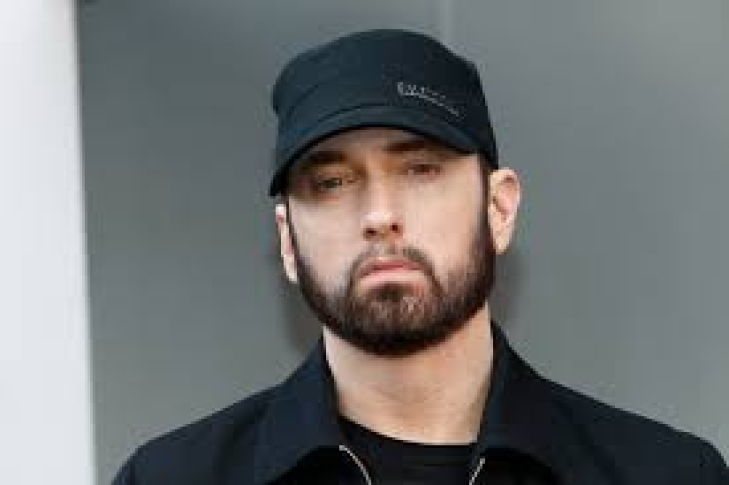
Eminem: Eminem is a Finalist in his first year of eligibility and the rap superstar is a lock to enter in his first year of eligibility. If anyone is a lock it is the man born as Marshall Mathers.
The Eurythmics: Annie Lennox and Dave Stewart have their first nomination in four years, and they have been eligible since 2007.
Kate Bush: Bush’s unique singing voice was only matched by her unique material. She was nominated twice before in 2018 and last year.
Fela Kuti: The African legend is on the ballot for the second year in a row, and if the Hall wants to go truly International, this is the guy.
Judas Priest: Priest is the Heavy Metal representative this year, and it is their third nomination in the past five years. They have been eligible since 2000.
Lionel Richie: This is the first nomination for Richie, who has been eligible since 2007. His previous band, the Commodores, have never been nominated.
MC5: The proto-punk pioneers are nominated for the sixth time, with five coming in the last six years. They have been eligible since 1992.
The New York Dolls: The Dolls return after being nominated last year, and it is their third after first appearing on the ballot in 2001.
Pat Benatar: Benatar was nominated in 2020 for the first in her 20th year of eligibility, but it was as a dup with her songwriter husband/partner, Neil Girardo. This time, she is nominated on her own.
Rage Against the Machine: RATM is on their fourth ballot of five years eligible, and finding a group that fused rap and hard rock/metal better than them is a daunting task.
A Tribe Called Quest: This is the first nomination for the influential hip hop group, who have been eligible since 2015.
We know there will be copious amounts of anger regarding who was not nominated. There always is. We do feel that the Rock and Roll Hall of Fame nominating committee did a good job nominating musicians across a musical landscape, and have for the last eight years.
This ballot also has the greatest number of women in nominating history.
What happens next is up to the Rock and Roll Hall of Fame voters.
Congratulations to all the Finalists, and let the debate again.
The Fan Experience: Then and Now
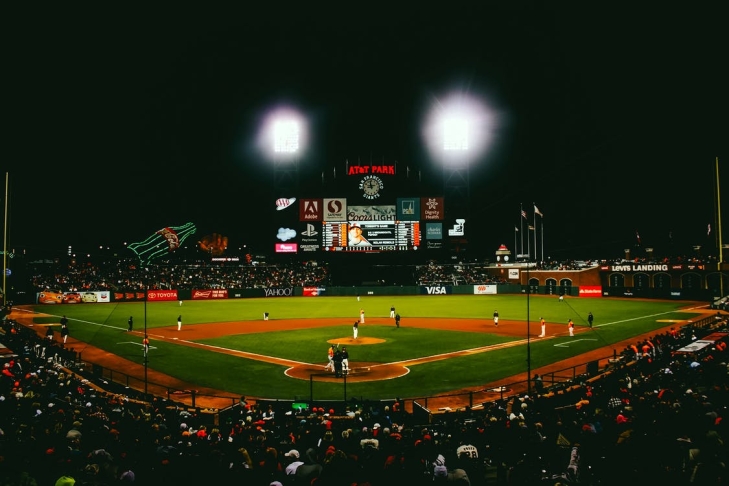
Fans have always loved their teams, but how has the fan experience changed over the years? Let’s take a look.
Supporting A Local Team
Sports are about more than what happens on the field; they’re closely intertwined with local pride, especially in some corners of the world. Local fans of the Boston Red Sox don’t just have an interest in their team because of their love for baseball; rather, it’s also a chance to show off their local pride. Indeed, sports teams with a solid local presence function as more than just another sports organization. They become pillars of the community, around which the local culture is based. In the past, this happened mostly because it wasn’t possible to support teams in other parts of the country or world due to the lack of information available.
Backing A Team to Win
The quality and professionalism of the action on the field have improved over the years. But some elements of the fan experience are the same today as they were in Roman times, two thousand years ago. The origins of gambling date back to the gladiator battles and chariot races held in those famous coliseums and, while we thankfully got rid of the bloody battles, the gambling stuck around. People will always want their teams to win for more reasons than just the initial glory. Sometimes they have a financial stake in it, sometimes it’s regional pride, and sometimes it’s because of how much they dislike the opposition.
Building A Life Around the Action
Is there a hobby that is as all-consuming as sports? People have various interests, but few can match the utter commitment and devotion that sports fans show. The time that fans dedicate to their teams extends far beyond the several hours on matchday. Indeed, the action that takes place at that time is just a springboard for the first half of the following week, when fans spend countless hours discussing the results and consuming related media. The second half of the working week is built around the upcoming game. And then the weekend itself is built around that game. Fans have always been highly passionate about their teams, so that’s something that hasn’t changed. In fact, it’s actually grown more consuming, thanks to the digital tools available.
Digital Tools
Fans in the past consumed all the action and news they could get their hands on. The issue was that there wasn’t all that much to consume. These days, things are different. Thanks to the rise of the internet, there’s not a moment when fans can’t indulge in their passion in one way or another. They can listen to a sports podcast on their commute, watch highlight videos on their phones, and discuss their team on Twitter whenever they please.
Reduced Connection Between Players and Fans
The increasing amounts of money in professional sports have undoubtedly led to an increase in quality -- and, as a result, an improved fan experience. But they have also created a divide between the players and the fans. Sports stars have always been viewed as de facto gladiators but, in the past, they were sports stars among the general public, i.e., they would still take the bus to the game. The significant salaries that players now earn largely cut them off from the community.
Global Appeal
We talked earlier about how fans support their local team but, in the olden days, if you didn’t have a local team, then you were more or less left out of the professional sporting experience. Thankfully, that’s not the case today. Due to digital multimedia, no matter where you live, you can follow a major sports team with just as much insight and passion as a local fan would.
Tom Brady Retires. Next Stop, Canton 2027
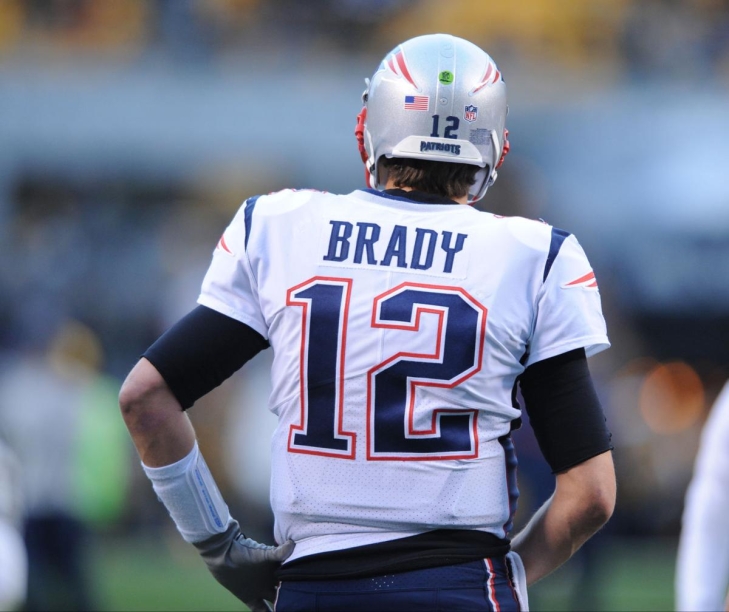
We all knew this was coming, but we didn’t want to believe it.
As era has come to the end, as Tom Brady, regarded as the greatest Quarterback in the history of the game officially retired, concluding an era of dominance that we might never see again.
Arriving as a sixth rounder from Michigan in 2000, Brady took over as the Patriots’ starting Quarterback early the season after following the injury to the incumbent QB, Drew Bledsoe. Brady would go to the Pro Bowl, and take New England to their first Super Bowl win.
Over his nearly two-decade tenure as the Patriots' starting QB, he would not only win six Super Bowls but bring them to four others. With New England, Brady was a four-time Super Bowl MVP, Brady won three AP MVPs, and went to the Pro Bowl fourteen times, with three years as a First Team All-Pro.
Brady stunned the world when he signed with the Tampa Bay Buccaneers, leaving Bill Belichick behind, and leaving fans wondering if he could win without him. All doubters were proven wrong, with Brady winning his seventh Super Bowl and fifth Super Bowl MVPs, breaking his both of his existing records. After another playoff year and a 15th Pro Bowl Selection, Brady’s career is now over.
Brady leaves the National Football League as the all-time leader in Approximate Value (316), Quarterback Wins (243), Pass Completions (7,263), Passing Yards (84,520), Touchdown Passes 624), Playoff Pass Completions (1,165), Playoff Passing Yards (13,049) and Playoff Touchdown Passes (86),
Brady is eligible for the Pro Football Hall of Fame in 2027, and will enter immediately on his first ballot. With Ben Roethlisberger already retiring, and Rob Gronkowski looking to follow suit, this will be a loaded group for 2027. This is especially clogged if Adrian Peterson retires too.
We wish Tom Brady the best in his post-playing career, but he won’t need any luck from us.
Thank you, Tom!
