





gold star for USAHOF
 

1. Pete Rose

1. Pete Rose
  1. General
  2. Awards
  3. Career Stats
  • Born: April 14, 1941 in Cincinnati, OH USA
  • Weight: 192 lbs.
  • Height: 5'11"
  • Bats: B
  • Throws: R
  • Debut: April 08, 1963
  • Final Game: August 17, 1986
  • Rookie of the Year - 1963
  • TSN All-Star - 1965
  • TSN All-Star - 1966
  • Hutch Award - 1968
  • TSN All-Star - 1968
  • TSN Player of the Year - 1968
  • Gold Glove - 1969
  • Lou Gehrig Memorial Award - 1969
  • Gold Glove - 1970
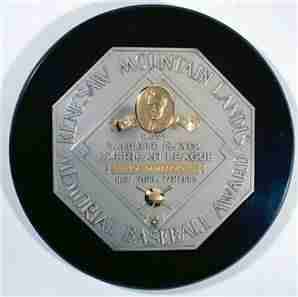
  • Most Valuable Player - 1973
  • TSN All-Star - 1973
  • World Series MVP - 1975
  • Roberto Clemente Award - 1976
  • TSN All-Star - 1978
  • Silver Slugger - 1981
  • TSN All-Star - 1981
  • MVP - 1965
  • MVP - 1966
  • MVP - 1967
  • MVP - 1968
  • MVP - 1969
  • MVP - 1970
  • MVP - 1971
  • MVP - 1972
  • MVP - 1973
  • MVP - 1975
  • MVP - 1976
  • MVP - 1977
  • MVP - 1978
  • MVP - 1979
  • MVP - 1981
  • Rookie of the Year - 1963
 
ABRHHRRBISBAVG
28106433085123202628396 0.303
 

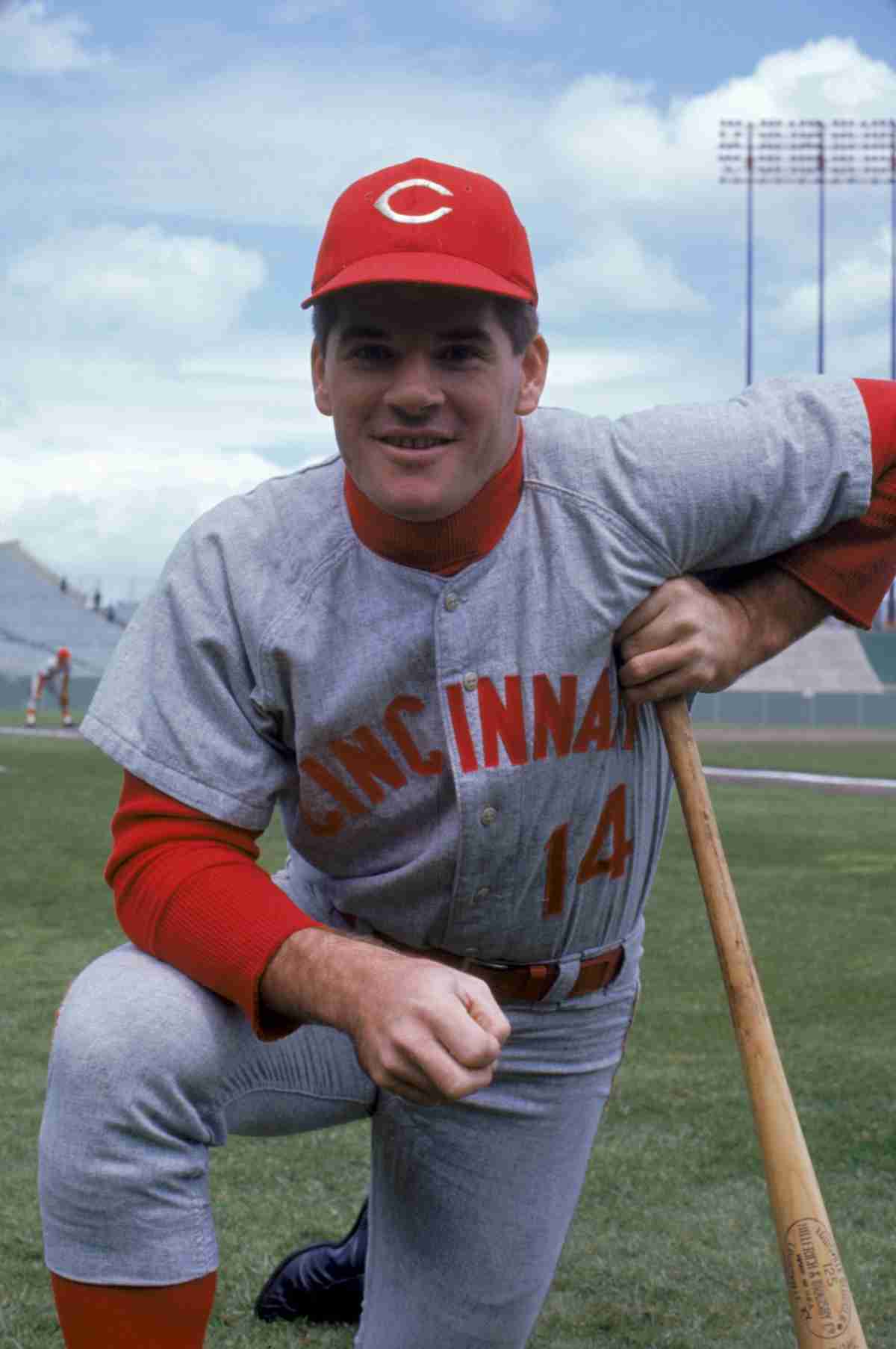
When Pete Rose burst onto the scene in 1963, he arrived with a head-first slide and a relentless motor that earned him the "Charlie Hustle" moniker. A local kid from Cincinnati, he didn't just play for the Reds; he personified the city's blue-collar work ethic. In his debut season, he claimed the National League Rookie of the Year award, signaling the start of a legendary pursuit of history. He was a human metronome of contact hitting, a switch-hitter who treated the baseball like a personal enemy that needed to be conquered four times a day.

The middle chapter of his residency saw him become the emotional and tactical heartbeat of the "Big Red Machine." Throughout the 1970s, Rose was the spark plug for one of the most terrifying lineups in the history of the sport. He claimed three batting titles and the 1973 MVP award, but his value transcended the regular season. In the 1975 World Series, he was the driving force behind a seven-game classic, earning the World Series MVP as the Reds finally reached the summit. He would help lead them to a repeat title in 1976, cementing his status as the premier leadoff threat of his generation.

His statistical footprint in Cincinnati is staggering. Of his all-time record 4,256 career hits, 3,358 were collected in a Reds uniform. He led the National League in hits six times and runs scored four times, providing the constant traffic on the base paths that allowed teammates like Johnny Bench and Joe Morgan to drive him home. He was a 12-time All-Star as a Red, showing a defensive versatility that saw him play everywhere from second base to the outfield, eventually settling in as a vacuum at third base during the championship years.

The departure toward the exit came first in 1978, when he signed with Philadelphia as a free agent, but the story naturally circled back to Cincinnati in 1984. His return as a player-manager was a victory lap for the city, culminating in the historic night in 1985 when he eclipsed Ty Cobb’s all-time hit record. It was a moment of pure sporting transcendence, a local boy making good on the grandest stage possible.

However, the final walk toward the exit in 1989 was shadowed by the controversy that would define his legacy thereafter. Following an investigation into gambling on baseball, Rose accepted a permanent ban from the game. While this has kept him out of the National Baseball Hall of Fame in Cooperstown, the city of Cincinnati refused to let the darkness erase the brilliance of his playing days. In 2016, the Reds officially retired his number 14 and inducted him into the franchise Hall of Fame, a formal acknowledgement that while the league may have closed its doors, the Queen City would always keep a light on for its favorite son.

Rose left the Reds as the undisputed statistical king of the franchise, a man whose 1,066 career multi-hit games in Cincinnati represent a level of consistency that borders on the impossible. He arrived as a scrappy local kid and left as the most prolific hitter to ever live, a player who proved that if you play every game like it’s your last, you might just live forever in the record books.

The Bullet Points

  • Position: Second Base, Third Base, Outfield
  • Acquired: Signed as an Amateur Free Agent 7/8/60
  • Departed: Signed as a Free Agent with the Philadelphia Phillies 12/5/78.

    Acquired (2):
    Traded from the Montreal Expos for Tom Lawless 8/16/84.

    Departed (2):
    Released 11/11/86.
  • Games Played: 2722
  • Notable Statistics: 1,741 Runs Scored
    3,358 Hits
    601 Doubles
    115 Triples
    152 Home Runs
    1,036 Runs Batted In
    146 Stolen Bases
    .307/.379/.425 Slash Line
    78.1 bWAR

    42 Playoff Games
    20 Runs Scored
    55 Hits
    10 Doubles
    2 Triples
    5 Home Runs
    16 Runs Batted In
    1 Stolen Base
    .318/.380/.486 Slash Line
  • Major Accolades and Awards: World Series Champion (1975 & 1976)
    MVP (1973)
    All-Star (1965, 1967, 1968, 1969, 1970, 1971, 1973, 1974, 1975, 1976, 1977 & 1978)
    Gold Glove (1969 & 1970)
    Rookie of the Year (1963)
    World Series MVP (1975)
    Hutch Award (1968)
    Lou Gehrig Memorial Award (1969)
    Roberto Clemente Award (1976)
    Highest Batting Average (1968, 1969 & 1973)
    Highest On Base Percentage (1968)
    Most At Bats (1965, 1972, 1973 & 1977)
    Most Plate Appearances (1965, 1972, 1973, 1974, 1976, 1977 & 1978)
    Most Runs Scored (1969, 1974, 1975 & 1976)
    Most Hits (1965, 1968, 1970, 1972, 1973 & 1976)
    Most Doubles (1974, 1975, 1976 & 1978)
    Most Singles (1973 & 1979)
    Most Total Zone Runs (1973)
    Most Putouts by a Leftfielder (1972, 1973 & 1974)
    Most Assists by a Leftfielder (1972, 1973 & 1974)
    Most Putouts by a Rightfielder (1971)
    Most Assists by a Rightfielder (1968)
    Highest Fielding Percentage by a Third Baseman (1976)
    Most Total Zone Runs by a Leftfielder (1972, 1973 & 1974)
    Highest Range Factor per Game by a Leftfielder (1972, 1973 & 1974)
    Highest Fielding Percentage by a Leftfielder (1972 & 1974)
    Highest Fielding Percentage by a Rightfielder (1970)
    Most Assists by an Outfielder (1968 & 1972)
    Most Total Zone Runs by an Outfielder (1973)
    Highest Fielding Percentage by an Outfielder (1970 & 1974)
  • Other Points of Note: Top Ten MVP Finishes:
    6th in 1965, 10th in 1966, 10th in 1967, 2nd in 1968, 4th in 1969, 7th in 1970, 1st in 1973, 5th in 1975 & 4th in 1976
Tagged under
More in this category: 2. Johnny Bench »

Comments powered by CComment