

Committee Chairman
28. Rip Sewell
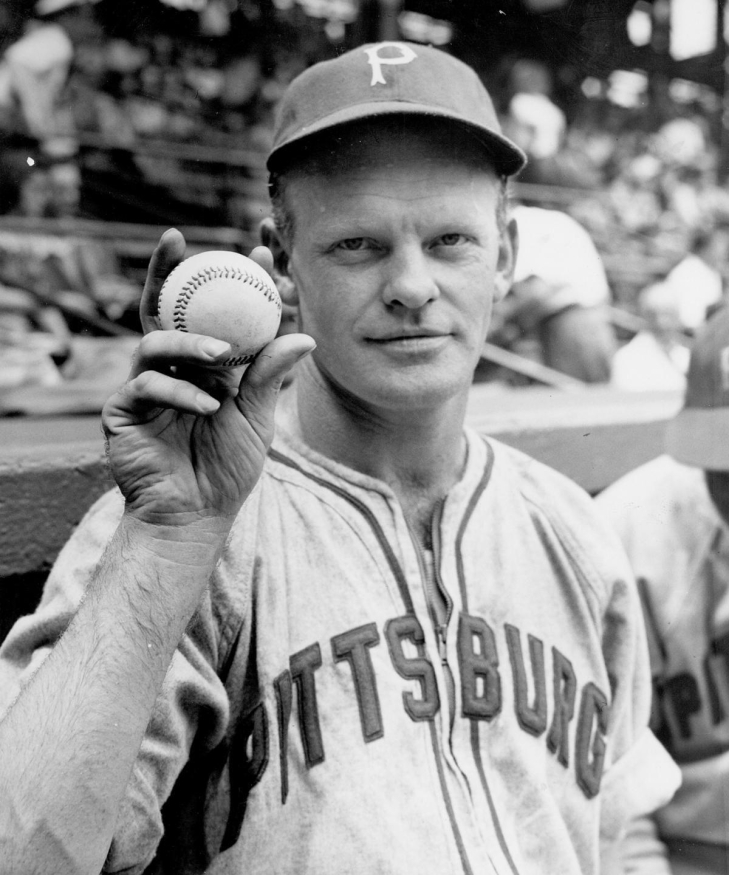
The history of baseball features many pitchers known for their overwhelming velocity, yet Truett"Rip" Sewell crafted an enduring legacy by defying physics. After a brief, five-game stint with Detroit in 1932, primarily remembered for a locker-room altercation with Hank Greenberg, Sewell spent years in the minors. By 1938, when he finally joined the Pirates, he was 31 and recovering from a serious, nearly fatal hunting accident that permanently damaged his feet. Facing physical limitations, the resourceful right-hander relied on cleverness, precise spatial control, and a unique pitching style that revolutionized the game: the "Eephus."
His breakthrough into the regular starting rotation happened during the 1940 season, but it was his use of the bloop pitch that made him famous nationwide. Gripping the baseball seams with his fingertips, Sewell would toss a high-velocity arc that sent the ball soaring 25 feet into the air, leaving hitters, who were expecting fast pitches, completely frozen.
Far from a mere gimmick, the Eephus was a highly sophisticated weapon of timing disruption, helping him turn run prevention into an absolute regular-season routine. Sewell rattled off a spectacular run of longevity, earning four consecutive All-Star selections from 1943 through 1946.
His peak performance during World War II marked the pinnacle of his individual dominance and powerful execution. In the 1943 pennant race, Sewell delivered an exceptional display, leading the National League with a career-high 21 wins, 25 complete games, and a remarkable 2.54 ERA. He repeated this impressive 21-win season the following summer, pitching an exhausting 285.2 innings. Although some critics argue that his best years came against weakened wartime teams, judging his skills unfairly ignores his true ability; Sewell consistently outperformed the competition in front of him.
His reputation as a big-game player was famously established during the 1946 All-Star Game, when Ted Williams became the only player to hit a home run off the Eephus pitch, a memorable, high-pressure moment Sewell took pride in, later mentioning that Williams had to almost run out of the batter's box to produce enough lower-body power to clear the fence.
Sewell remained an unshakeable pillar of the staff until his final walk off the diamond at the conclusion of the 1949 schedule, spending 12 summers serving as the undisputed heartbeat of the pitching staff. He left the Pirates possessing a magnificent, highly efficient localized baseline: a 143–97 record, a respectable 3.43 ERA, 148 complete games, and 23 shutouts across 390 appearances.
26. Jesse Tannehill
The early history of baseball has many specialized pitchers who saw their batting as a minor distraction, but Jesse Welborn Tannehill viewed the game differently. A gifted athlete with sharp reflexes, the slender left-hander from Kentucky was a double threat before the term was popular. He was known for a deceptive curveball and control on the mound, and also played outfield between starts. For five years around 1900, Tannehill was a key player for the rising Pittsburgh teams.
His introductory full year in the rotation was a rather nondescript affair, yielding a modest 9–9 record and a bloated 4.25 ERA as he adjusted to the dimensions of National League hitters.
Over the next five summers, Tannehill became one of Major League Baseball’s most reliable and dominant southpaws, leading a star-packed team with unwavering, consistent excellence. He achieved five straight seasons with at least 18 wins, including four seasons with 20 or more wins, demonstrating remarkable longevity. During this period, he consistently prevented runs, maintaining a single-season ERA below 3.00 each year.
His standout masterpiece came during the historic 1901 pennant race, where his cutting-edge efficiency stats hit league highs. Tannehill delivered an exceptional run-prevention performance to win the National League ERA title with a tiny 2.18, while leading the Senior Circuit with an elite 2.59 Fielding Independent Pitching (FIP) rating, helping him achieve a 21–11 record and 28 complete games.
However, focusing only on his throwing shoulder overlooks half of his actual contributions. Due to his natural bat control and spatial awareness, manager Fred Clarke often skipped standard bench players and moved Tannehill directly into the outfield when an offensive boost was needed. In 865 career at-bats with the Pirates, he demonstrated impressive contact ability, posting a .277 batting average, along with 29 extra-base hits and 96 RBIs, adding valuable run production that made the Pirates especially tough to face.
His historic tenure in Western Pennsylvania ended abruptly with the creation of the American League, which dramatically changed the landscape. Drawn by the large, unregulated financial incentives from the new league, Tannehill formally switched to the New York Highlanders before the 1903 season, marking the end of his main time in the National League as the modern World Series was being formed.
Tannehill had a 116-58 record with a 2.75 ERA and 466 strikeouts.
23. Andy Van Slyke
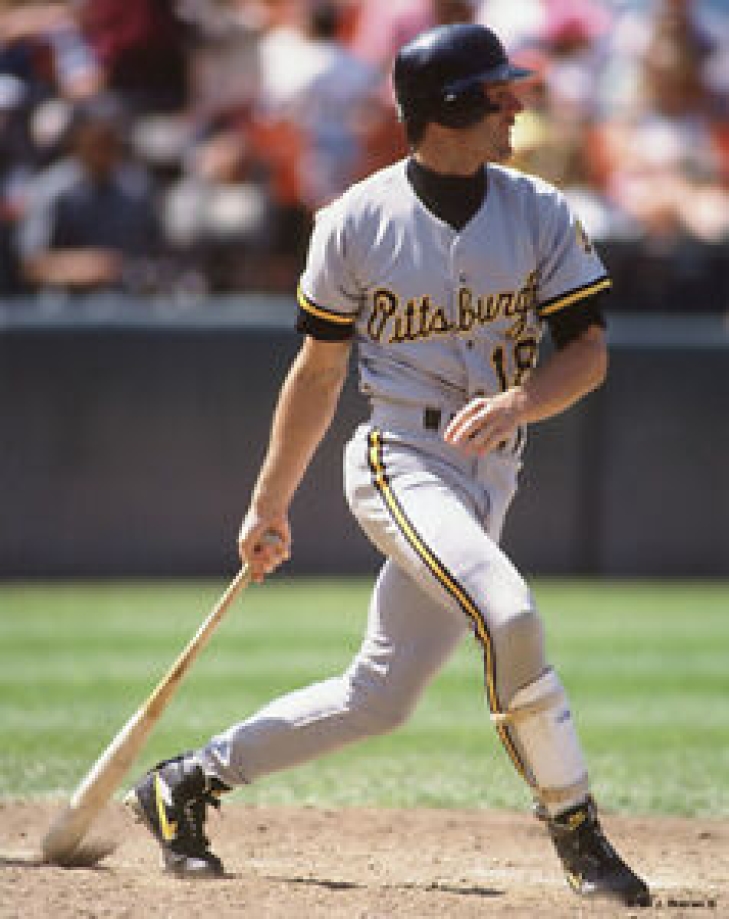
The early 1990s Pittsburgh Pirates are often remembered for Barry Bonds' rise, but the team's emotional and defensive anchor patrolled beside him. Coming from the St. Louis Cardinals in a 1987 trade for Tony Peña, Andy Van Slyke made Three Rivers Stadium his home. With sharp wit, a strong work ethic, and determination to catch every fly ball, the blonde center fielder became a fan favorite in Western Pennsylvania.
His true breakthrough as a versatile star occurred during an exceptional 1988 season, where his offensive output hit a league-leading peak. Van Slyke delivered an impressive at-bat performance, leading the National League with 14 triples and setting personal bests with 25 home runs, 100 RBIs, and an impressive .506 slugging percentage. He dominated the postseason awards, earning his first Gold Glove and Silver Slugger awards, and finished a notable fourth in the NL MVP voting.
Although a severe offensive decline slowed his batting that summer, his defense stayed an elite, high-impact asset that changed games fundamentally. Van Slyke established center field as a true no-fly zone, leveraging an exceptional, powerful throwing arm and perfect tracking instincts to earn five straight Gold Gloves from 1988 to 1992.
As the Pirates became the leading force in the National League East, Van Slyke regained his top-tier status at the plate. He secured consecutive All-Star selections in 1992 and 1993, shining brightly during the 1992 pennant race. Acting as the spark for a team that won its third straight division title, he led all of Major League Baseball with 199 hits and 45 doubles, achieving a career-high .324 batting average. This performance earned him his second Silver Slugger award and a fourth-place finish in MVP voting.
Sadly, the devastating loss in the 1992 NLCS against Atlanta marked the beginning of the decline of that legendary team core. During his last two seasons with the team, Van Slyke was significantly hampered by a series of severe lower-body injuries that diminished his famous speed and lower-half strength. As the franchise entered a cold, small-market rebuilding phase, he officially left club duty earlier than planned, signing a free-agent deal with the Baltimore Orioles before quietly retiring a year later.
He accrued 1,108 Hits, batted .284 with 127 Home Runs for Pittsburgh.
21. John Candelaria
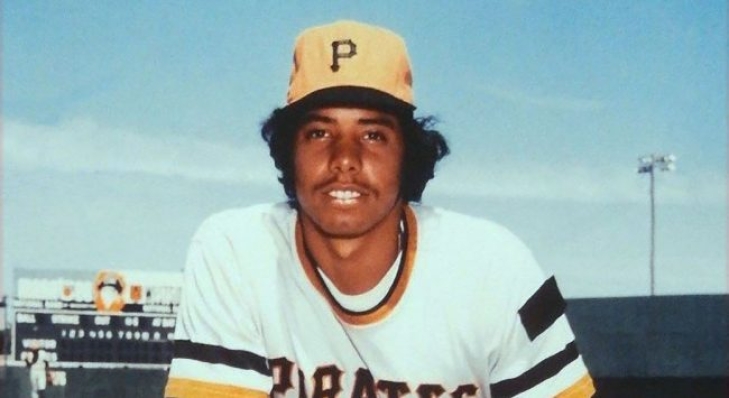
The 1970s "Lumber Company" era of Pittsburgh baseball is celebrated for its powerful, high-speed offense, with star sluggers often taking center stage. Behind that strong offense was a 6-foot-7 left-handed pitcher who methodically dominated National League lineups with calm, precise skill. John Robert Candelaria, known as "The Candy Man" by fans, brought a distinctive Brooklyn-inspired confidence to the mound. Drafted in 1972 after walking away from basketball, the lanky southpaw used an unorthodox, high-leverage cross-fire pitch that effectively neutralized opposing hitters, making him one of the most underrated starting pitchers in franchise history.
His quick rise through the farm system led to a remarkable debut in 1975, but it was his second season in 1976 that truly established his status as a top-tier pitcher. Candelaria made run prevention a consistent part of his game, highlighted by a historic moment on August 9 when he baffled the division-rival Cincinnati Reds with a stunning 2-0 no-hitter at Three Rivers Stadium, the first no-hitter by a Pirate in the city since 1907.
His peak physical performance and individual dominance reached its height in a stunning 1977 showcase, which remains a classic example of analysis. Candelaria delivered an exceptional pitching performance, achieving an impressive 20-5 record that led all major leagues with an .800 winning percentage. He dominated the National League by posting a league-leading 2.34 ERA and a flawless 1.071 WHIP, while consistently overpowering hitters and leading the league with a low 2.0 walks per nine innings, earning his first All-Star selection and finishing fifth in the Cy Young voting.
Candelaria's impact extended beyond a brief peak, offering exceptional durability to the rotation for ten years. He was a crucial, high-impact leader on the memorable 1979 "We Are Family" world championship team, winning 14 regular-season games and pitching six outstanding one-run innings to help secure a key win over Cincinnati in Game 1 of the NLCS. During his long initial tenure in Steel City, he recorded six more seasons with at least 11 wins, consistently dominating top hitters with precise control.
Tragically, rising tensions with management over his playing time and salary demands led to a mid-season trade to the California Angels in 1985, marking the end of his main tenure with the black and gold. However, demonstrating his strong emotional connection to the community, Candelaria returned to the Pirates for a short, nostalgic stint in the 1993 season to conclude his extensive major league career.
With the Pirates, Candelaria had a 124-87 Record, a 3.17 ERA, and fanned 1,159 batters.
