


Committee Chairman
43. Jake Beckley
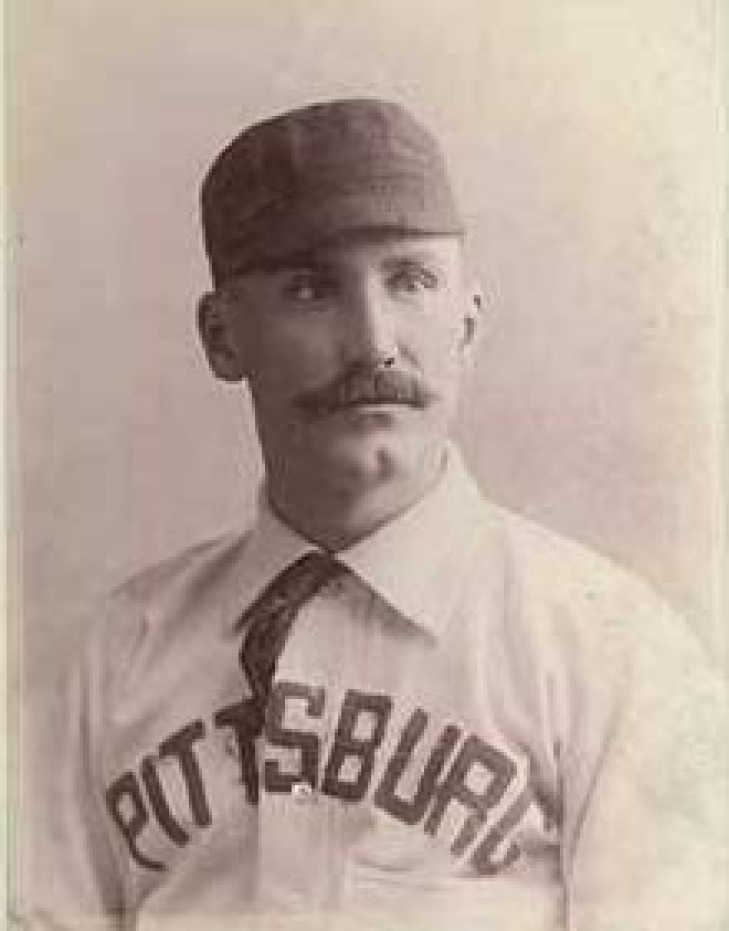
The modern Major League Baseball has a history of labor battles, but the pioneer of player autonomy, Jake Beckley—known as "Eagle Eye" for his strike zone judgment—was a foundational figure in late-19th-century baseball. Purchased by the Pittsburgh Alleghenys in 1888, the left-handed first baseman quickly became a star in Western Pennsylvania. Beckley was known for his low-variance hitting and durability, leaving a legacy of hitting milestones and challenging the sport's financial hierarchy.
His debut appearance after arriving in town during the 1888 season showcased top-tier talent, with the 20-year-old rookie posting an impressive .343 batting average over 71 games. He quickly established contact hitting and run production as a consistent part of his game, surpassing the 300 batting average again in 1889 and driving in 97 RBIs.
Beckley’s consistent rise in the National League was abruptly interrupted in 1890 by the emergence of the Players’ League. While many stars left the traditional league with lofty rhetoric, Beckley was notably honest about his motives, telling reporters he was "only in this game for the money’ when he joined the Pittsburgh Burghers. Despite the league's brief existence, Beckley performed exceptionally well, leading with 22 triples and driving in 123 runs, showcasing his talent during this short stint.
After stabilizing financially, Beckley rejoined the National League team, now known as the Pirates, for the 1891 season. Following a highly successful comeback, he experienced a difficult slump in 1892, with his batting average dropping to .236. Showing the intense internal resilience that earned him his famous nickname, "Eagle Eye,” he launched an impressive multi-year recovery. Over the next three summers, he greatly improved his performance, achieving batting averages of .303, .345, and .328, and driving in more than 100 runs each season, becoming a key player in the Steel City offense.
Tragically, after he limped out of the gate to a highly disappointing start during the 1896 schedule, the front office moved aggressively to reshape the core. In a landscape-shifting mid-season deal, management traded the franchise icon to the New York Giants for Harry Davis and cash, drawing a sudden curtain on his historic tenure in Pittsburgh.
With Pittsburgh, Beckley smacked 1,140 of his 2,938 career Hits while batting .300. The Baseball Hall of Fame inducted Beckley via the Veterans Committee in 1971.
41. Rick Rhoden
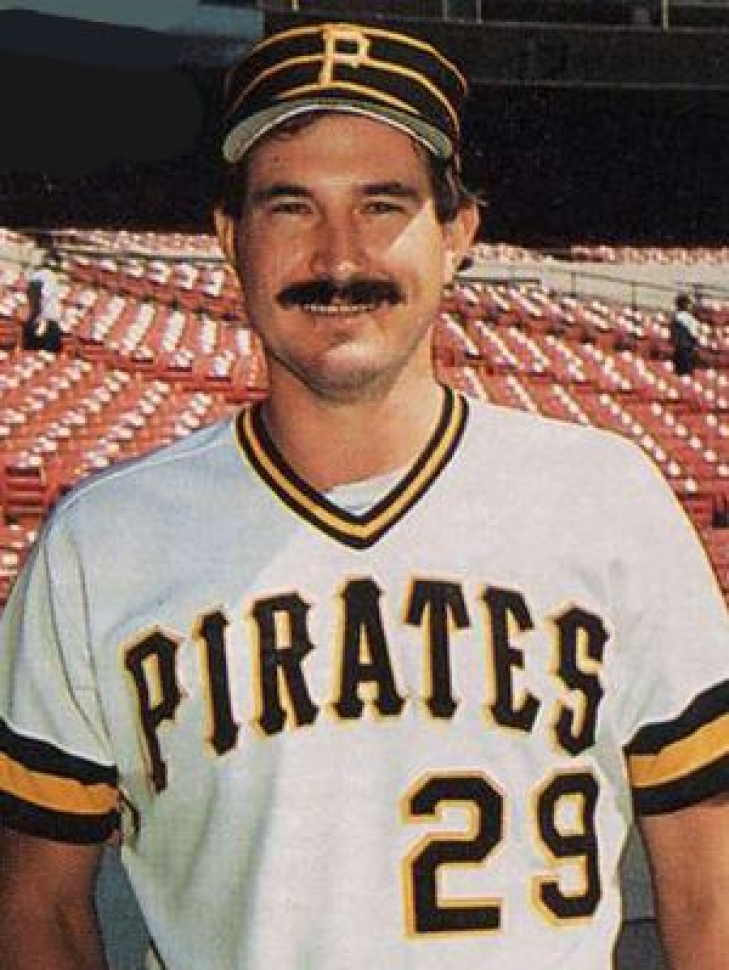
The blueprint of a top league pitcher is usually based on health and velocity, but Rick Rhoden's career was built on hard work. After shining with the Dodgers and helping them win consecutive NL pennants, shoulder issues led to a trade to the Pirates before 1979. Skeptics were right; Rhoden’s arm was so bad he played only one game during the 1979 championship run. However, unlike others, the Pirates waited patiently, a display of athletic resilience.
Once his shoulder finally stabilized, Rhoden made durability a regular part of his season under the lights at Three Rivers Stadium. With a strategic, high-efficiency pitching style, the right-hander achieved five straight seasons with at least 10 wins from 1982 to 1986, providing a steady, low-variance presence in an evolving rotation.
His peak season in Pittsburgh was 1986, when Rhoden demonstrated exceptional run prevention. He led the staff with a career-best 15–12 record, a superb 2.84 ERA, and an impressive 1.131 WHIP. His advanced efficiency stats earned him his first All-Star selection in ten years and a solid fifth-place finish in the National League Cy Young Award voting, the only major award of his career.
Evaluating Rhoden solely as a pitcher overlooks the complex skills that made him a versatile threat. Known as the top hitting pitcher of the 1980s, he had a quick, effective right-handed swing that managers often exploited. Rhoden consistently excelled against opposing batters, earning three straight National League Silver Slugger awards from 1984 to 1986, with 127 hits and a remarkable .251 batting average while playing for Pittsburgh. Additionally, his spatial awareness and athletic ability made him an excellent defensive player, achieving a perfect 1.000 fielding percentage over five summers and effectively shutting down opposing baserunners.
With his market value reaching an all-time peak and the organization pivoting toward a younger, small-market rebuilding cycle under Jim Leyland, the front office moved aggressively. In a high-profile winter blockbuster after the 1986 calendar, management traded the veteran ace to the New York Yankees in a six-player deal that brought Doug Drabek to town. His Pittsburgh stats included a 3.51 ERA, 852 strikeouts, and a record of 79- 73.
40. Brian Giles
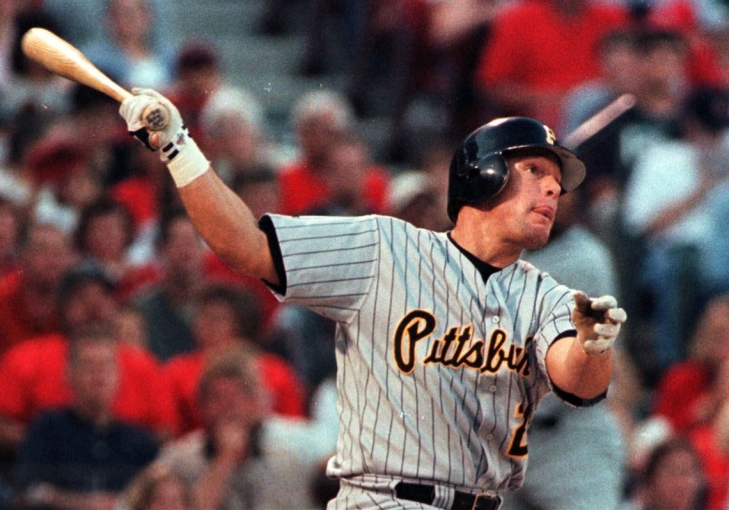
At the turn of the millennium, Western Pennsylvania baseball faced tough times with many losing seasons and the closure of Three Rivers Stadium. Despite this, a powerful, compact outfielder emerged, delivering some of the most spectacular and efficient offensive displays the city had seen. Acquired from the Cleveland Indians before the 1999 season, Brian Stephen Giles immediately rose to prominence at the peak of his physical condition. Holding a crouched, ready stance from the left side, he was not only a volume hitter but also had a modern, analytical profile combining impressive power with sharp plate discipline, making run production a regular season highlight.
His 1999 introductory campaign took local observers by surprise. Restricted by a crowded roster in Cleveland, Giles directed his frustration toward National League pitchers, achieving a remarkable .315 batting average, hitting 39 home runs, and driving in 115 RBIs. Throughout his four full summers leading the lineup in Pittsburgh, Giles consistently maintained high performance. He hit at least 35 home runs in four straight seasons and received National League MVP votes each year.
The peak of his individual dominance and high efficiency statistics culminated during an outstanding two-year period around the start of the decade. Giles was selected as an All-Star in the National League in both 2000 and 2001, often leading the league in advanced value metrics. He surpassed the 300 batting average mark three times with the Pirates, notably excelling in 2000 with a .315 average, 35 home runs, 123 RBIs, and an impressive 1.054 OPS.
He was a challenge for opposing managers since he refused to chase pitches, drawing at least 90 walks each full season in town, including a franchise-record 135 in 2002, resulting in a remarkable, low-variance .418 career on-base percentage with the team.
However, with the organization in the midst of a long rebuilding phase and his market value hitting a record high, the front office officially announced a shift around the middle of 2003. In a significant, game-changing trade in August, management sent the star slugger to the San Diego Padres in a blockbuster deal that brought Jason Bay and Oliver Pérez to the team.
With Pittsburgh, Giles had 782 Hits, 165 Home Runs, and batted .308.
Super Bowl LVI Preview
The Super Bowl LVI participants are set, and there are not too many who would have bet on the Cincinnati Bengals to face the Los Angeles Rams. The Rams enter as a favorite, but that is perfectly fine for Cincinnati, who have overcome the odds to get to the big dance.
If you’re planning to place a bet on the Super Bowl, here is a guide with the 3 Easiest Super Bowl 56 bets anyone can make, that was created by the guys at Sports Betting Dime.
The Rams will have the luxury of playing in their home, SoFi Stadium, but this has been a post-season where the road teams have been dominant. Los Angeles went all in at the start of the season, trading their Quarterback, Jared Goff, and a slew of First Round Picks to Detroit for Matthew Stafford. The move was every bit the upgrade they hoped for, and it helped propel Wide Receiver, Cooper Kupp, to new single-season receiving records and a possible MVP.
Defensively, the Rams are led by Aaron Donald, the three-time Defensive MVP and future first ballot Hall of Famer. It is a complete team coached by Sean McVay, who at 36 years of age, will appear in his second Super Bowl, a first for any Coach under 40.
The Bengals have never won the Super Bowl, and are appearing in their third, the last coming 23 years ago in a loss to San Francisco. Cincinnati first beat Las Vegas at home, and then upset the top seed Tennessee Titans and defending AFC Champion, Kansas City on the road to get here.
Led by Quarterback, Joe Burrow, the Bengals are riding on momentum and emotion, and while Burrow is only in his second season, he already has a pedigree of a champion. Along with his teammate and current start Wide Receiver, Ja’Marr Chase, the duo won the National Championship at LSU two years ago, and the image of Burrow smoking a cigar after the victory is an iconic moment that Bengals fans hope to see repeated.
Both teams are capable of comebacks, as shown in each Conference Championship Games, so don’t let any halftime score make you think the game is over.
This is a fresh Super Bowl match, and we can’t wait to see how this will play out.
Super Bowl LVI will be on Sunday, February 13 at 6:30 p.m. EST.
