

Committee Chairman
The Women's Basketball Hall of Fame announces their 2022 Finalists
The Women’s Basketball Hall of Fame announced the Finalists for the Class of 2012, which consists of 12 candidates.
The inductees will be announced on February 14 on ESPN2 during the Maryland vs Iowa game. Those inducted will be enshrined on June 11.
The Finalists are:
Debbie Antonelli (Broadcaster). Antonelli has been a broadcaster for 34 years and has worked for ESPN, CNS, FOX, Westwood One and the Big Ten Network.
Alice “Cookie” Barron (Player). Barron played for the Waylon Baptist Flying Queens and helped them win three National Championships. She also helped take the United States to Gold in the 1957 FIBA World Championship.
Evelyn Blalock (Coach). Blalock took Kilgore College to theww Junior College National Championships.
Cathy Boswell (Player). Boswell was a two-time All-American at Illinois State and an Olympic Gold Medalist for the U.S. in 1984.
Doug Bruno (Coach). Bruno has been the Head Coach at DePaul since 1986, and as of this writing has a record of 731-357 and has won five Big East Tournaments. He also won two Olympic Gold Medals for the United States as an Assistant Coach for the United States (2012 & 2016).
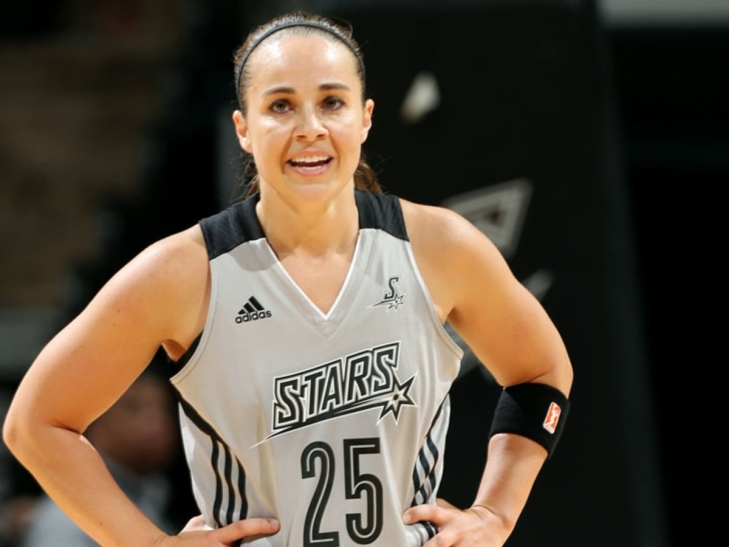
Becky Hammon (Player). Hammon is easily the biggest name on this list, and six-time WNBA All-Star and two-time First Team All-WNBA Selection. Hammon played pro for the New York Liberty and San Antonio Stars, and would later become an Assistant Coach for the San Antonio Spurs of the NBA. Currently the Head Coach of the Las Vegas Aces, Hammon was named to the WNBA 15th, 20th and 25th Anniversary Team, and Internationally won an Olympic Bronze Medal for Russia in 2008.
Donna Lopiano (Administrator). Lopiano was the Women’s Athletic Director at Texas from 1975 to 1992 and the CEO of the Women’s Sports Foundation from 1992 to 2007.
Lisa Mattingly (Referee). Mattingly has officiated in both the WNBA and College, and has refereed in 17 Final Fours.
DeLisha Milton-Jones (Player). Milton-Jones was the 1997 SEC Player of the Year, and the Florida Gator would later be drafted fourth overall by the Los Angeles Sparks in 1999, and helped them win two Titles (2001 & 2002). She also played for the Washington Mystics, New York, and Atlanta Dream and was a three-time WNBA All-Star. Milton is currently the Head Coach at Old Dominion.
Paul Sanderford (Coach). Sanderford took Western Kentucky to three Final Fours.
Bob Schneider (Coach). Schneider won five State (Texas) High School Titles and 634 Wins in Division II.
Penny Taylor (Player). From Australia, Taylor played nineteen professionally years, most notably for the Phoenix Mercury where she won three WNBA Championships. A three-time WNBA All-Star and one-time First Team WNBA Selection, Taylor won two Silver Medals and a FIBA World Championship for the Aussies.
We here at Notinhalloffame.com would like to congratulate the 12 Finalists for making it this far.
RIP: Meat Loaf
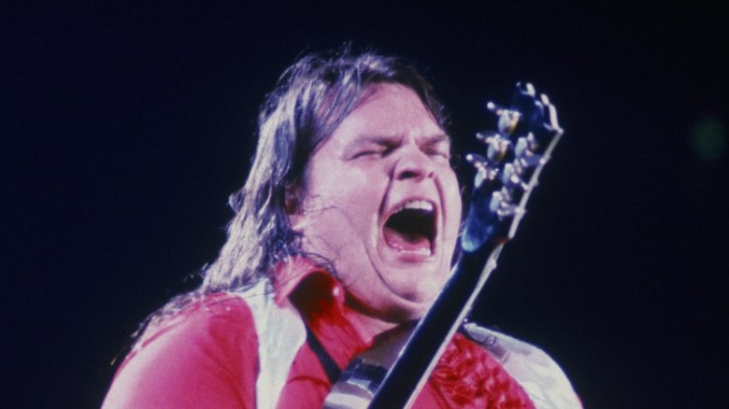
Meat Loaf, the charismatic singer who had one of the biggest albums of all time in “Bat Out of Hell” passed away at the age of 74. No cause of death was given.
Born Marvin Lee Aday, Meat Loaf first became known in 1975 from his appearance in the iconic cult film, The Rocky Horror Picture Show.
Two years later, Meat Loaf collaborated with Jim Steinman, to create the theatrical and powerful, “Bat Out of Hell”, which remains one of the most sold albums ever. Few people who worked on the album, with the exception of Meat Loaf and Steinman understood what they were creating, but the Wagnerian effort resulted in cross-popularity, and Meat Loaf was everywhere in the late 70s.
The 80s were not successful for Meat Loaf, who for years fought for royalties from his smash effort, and even had to declare bankruptcy. Creatively, his efforts in that decade floundered, yielding little sales, no hits and negative reviews. His career rebounded in 1993, with “Bat Out of Hell II”, a back-to-basics effort and reteaming with Steinman. It gave him his first and only #1, “I’d Do Anything for Love (But I Won’t Do That).
In addition to Rocky Horror, he also appeared in 1999’s Fight Club.
We here at Notinhalloffame.com would like to extend our condolences of to the fans, family and friends of Meat Loaf.
16. Pie Traynor
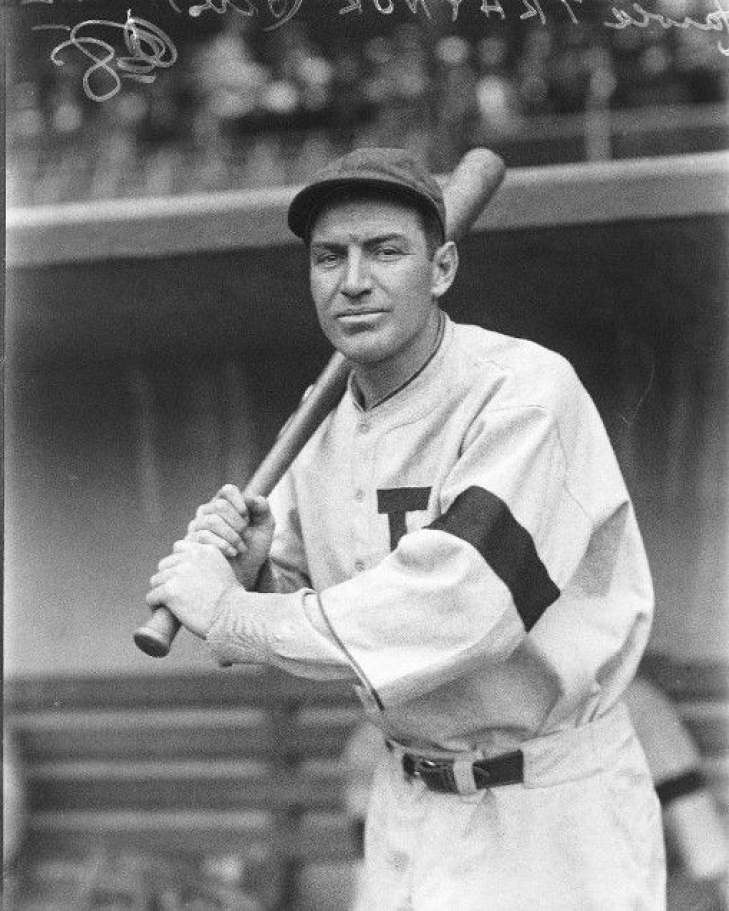
Early 20th-century baseball history often highlights Harold "Pie" Traynor as the benchmark for third-base excellence. Coming from Massachusetts’ sandlots to earn his nickname, the friendly and popular third baseman spent nearly twenty years as the franchise's main figure. For many fans and writers of his era, Traynor was the definitive standard, skilled defensively, a clutch hitter, and known for his gentlemanly behavior, making him a cherished part of Western Pennsylvania's sports culture.
After a brief appearance in the 1920 and 1921 schedules, Traynor fully claimed the everyday third baseman role in 1922 and held onto it for the next 14 seasons. He made contact hitting a consistent part of his game, skillfully adapting to the lively ball era with a remarkably smooth, low-variance right-handed swing.
Traynor frequently challenged National League pitchers, achieving over a .300 batting average in ten seasons. He ended his career with an impressive .320 average and 2,416 hits. Despite lacking modern power—hitting only 58 home runs in 1,941 games—he was exceptionally effective at producing runs in critical moments. Using a smart situational hitting strategy and excellent bat control, Traynor surpassed 100 RBIs six times and often drove the ball into the large gaps of Forbes Field.
His consistent individual performance gained him regular national recognition, with seven top-ten placements in the National League MVP voting. The peak of his team success came in the notable 1925 season, when he posted a .320 batting average, leading the Bucs to a pennant. He also hit a crucial home run against Walter Johnson in the exciting seven-game World Series, helping them win the championship.
Although traditional baseball legends celebrate his legacy, modern analytics provide a more critical view of his efficiency. When analyzed with current run-creation metrics, his overall value is limited by a low walk rate, resulting in a .362 career on-base percentage, and limited power. Defensive metrics like Total Zone indicate that, despite his impressive reflexes and strong arm, his positional range was more average than his legendary reputation suggests.
Since the Pirates have a notably top-heavy, historical hierarchy filled with immortal, high-volume Hall of Famers in the inner circle, these analytical adjustments ensure Traynor remains firmly in the secondary tier of franchise legends.
After retiring from playing, he smoothly moved into a successful managerial career and became a renowned sports broadcaster in the city, keeping his voice as a daily presence for local fans until he passed away in 1972.
Traynor was inducted into the Baseball Hall of Fame in 1948, and his number 20 was retired by the team in 1972.
13. Dave Parker
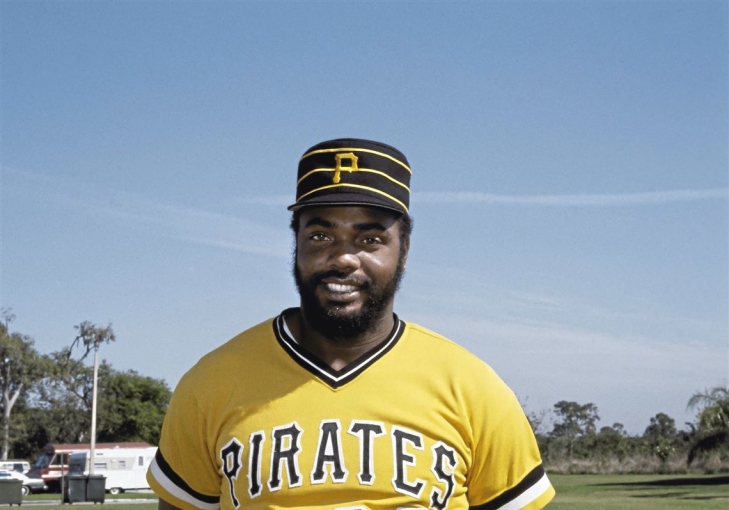
Few athletes in post-war baseball history have ever matched Dave Parker's commanding, almost theatrical presence. Standing 6-foot-5 and weighing 230 pounds, this imposing right fielder roamed Forbes Field and Three Rivers Stadium with a confident swagger that captured the attention of fans and players alike. Wearing a dark visor, a thick mustache, and swinging a hefty 37-ounce bat, "The Cobra" was more than just a player; he was a dominant force. During a remarkable period in the late 1970s, he was the undisputed top predator in the Major Leagues, a five-tool superstar with a cannon for an arm who made right field his personal domain.
His initial introduction in the 1973 schedule offered a brief glimpse of his impressive physical potential. By 1975, he had fully secured the regular right field position. Parker made producing runs from the middle of the order a consistent part of the season, achieving his first.300 batting average along with 25 home runs and 101 RBIs, finishing third in the National League MVP voting.
His definitive rise as a league-wide outlier occurred during the historic 1977 season, when he won his first National League batting title with a blazing .338 average. He also led the Senior Circuit with 215 hits and 44 doubles, earning his first Gold Glove award.
The peak of his regular-season prowess came during a remarkable 1978 showcase now legendary in club history. Parker delivered an outstanding offensive display, earning the National League MVP Award, securing his second straight batting title with an impressive .334 average, while also leading the league with a remarkable .585 slugging percentage and hitting 30 home runs.
On the field, his defensive skills were formidable; he had possibly the most intimidating throwing arm of his era, often halting base runners or gunning them out from deep in the outfield with precise, high-speed throws. This all-around talent peaked commercially during the memorable 1979 "We Are Family" season. Parker led the batting order for the championship-winning team, earning another All-Star selection and Gold Glove award, all while hitting a crucial .345 during the intense seven-game World Series victory against Baltimore.
Sadly, just as he appeared on track for a legendary career based on impressive stats, his rise started to decline sharply as the franchise entered the 1980s. A series of frustrating injuries and abrupt weight changes greatly affected his resilience, but his career suffered its most serious setback off the field due to his deep involvement in the prevalent cocaine culture of that time, a risky distraction that severely affected his focus and led to numerous missed games, hits, and damage to his reputation.
Understanding the need for a fresh environment, Parker officially left the Steel City before the 1984 season, signing as a free agent with his hometown Cincinnati Reds. He experienced a distinctive second phase, with notable, high-performance comebacks in Cincinnati and Oakland, interspersed with disappointing periods of low effectiveness before retiring after 1991.
He left an impressive 11-season Pirates record: 1,479 hits, 166 home runs, 758 RBIs, and a .305/.353/494 slash line in 1,300 games. In 2025, Parker received the long-awaited call and was chosen by the Veterans Committee for the Baseball Hall of Fame.
