


Committee Chairman
2. Roberto Clemente
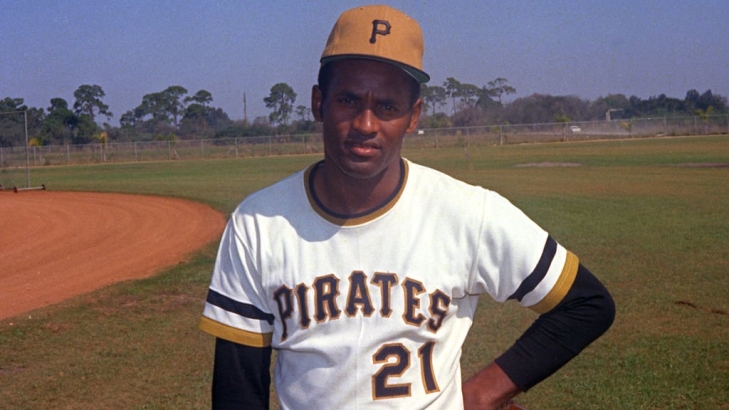
If there were going to be anyone who would have supplanted Honus Wagner as the greatest Pittsburgh Pirate of all time, it would have been Roberto Clemente.
Roberto Clemente's arrival in Pittsburgh before the 1955 season is one of the most fortunate moments in modern baseball history. He was claimed for $4,000 in the Rule 5 draft after the Brooklyn Dodgers tried to hide him on their minor league team in Montreal. The proud, highly athletic young outfielder from Carolina, Puerto Rico, immediately displayed a fierce and stunning style of play at Forbes Field. He moved with a smooth, explosive grace, threw with an incredible, fast arm from right field, and hit line drives with a powerful, relentless swing that challenged any pitcher who faced him.
By the early 1960s, that raw, kinetic talent had evolved into a clear, undeniable period of superstardom. Clemente set the standard for excellence in right field, making the corner of the diamond his own territory. From 1961 to 1972, he earned twelve consecutive Gold Glove Awards, consistently leading the National League in assists and intimidating baserunners with extraordinary throws. At the plate, his field coverage was renowned; he won four National League batting titles, hitting .351 in 1961, .339 in 1964, .329 in 1965, and an exceptional .357 in 1967. He was a regular contender for MVP honors, finishing in the top ten eight times and winning the 1966 Most Valuable Player award after hitting a career-high 29 home runs and driving in 119 runs.
His consistent performance in the regular season established the foundation for two major championship periods in Pittsburgh. In 1960, during the historic run, he hit safely in all seven games of the World Series upset against the New York Yankees. Eleven years later, in the 1971 Fall Classic against the heavily favored Baltimore Orioles pitching staff, 37-year-old Clemente delivered an outstanding performance. He batted .414 with two home runs, secured a hit in every game again, and largely dictated the series’ tempo to earn the World Series MVP award. This victory confirmed his legendary status as a clutch performer on baseball's biggest stage.
His last on-field appearance occurred on September 30, 1972, at Three Rivers Stadium. Playing against Jon Matlack of the New York Mets, Clemente hit a line-drive double to left-center, achieving exactly 3,000 career hits, a perfect milestone for a franchise record holder who also amassed 240 home runs and maintained an impressive .317 career batting average.
The story, sadly, never saw its usual closing chapter. On New Year's Eve 1972, Clemente boarded a heavily overloaded cargo plane carrying emergency relief supplies to earthquake victims in Managua, Nicaragua. The aircraft crashed into the Atlantic Ocean soon after departing from San Juan, claiming his life at 38 and plunging Pittsburgh and the global sports community into deep mourning. His selfless act went beyond the sport, cementing his legacy as the most influential Hispanic athlete in American history.
The Baseball Writers' Association of America convened for a special election, waiving the mandatory five-year waiting period to overwhelmingly vote Clemente into the National Baseball Hall of Fame as part of the Class of 1973. Locally, the franchise brought his memory home to open the new season on April 6, 1973, permanently retiring his iconic number 21 jersey to serve as the final, enduring punctuation mark on a legacy of pure grace, dignity, and unparalleled humanity.
How To Make the Most of Sports Betting in New Jersey

Since New Jersey won a Supreme Court case that allowed sports betting to become legal, the state has enjoyed one of the most thriving sports betting industries. As the first state, New Jersey surpassed 1 billion dollars in sports betting in September 2021 and the market shows no signs of slowing down.
If you are living in New Jersey or will be paying the state a visit, then you might be curious about what options you have if you want to bet on sport, and how you make the most of them.
Betting in-person or via online sites
In New Jersey you can either place a bet in person at specific sports betting sites throughout the state, or you can download and use online sports betting apps on your laptop, smartphone or tablet. The latter has become the preferred option for many as it’s much more convenient and often comes with great perks like welcome offers and ongoing promotions. Before you get started, find out how betting in New Jersey works so you know how to read the odds and make the best decisions.
Watch games in person
When you ask most sports gamblers why they bet, it’s rarely the money that comes first. The joy of sport takes first place and sports betting is often seen as a way of enhancing the experience. Let’s say you love basketball and follow NBA games on a regular basis, then you get much more out of it by watching a game in person, especially if you have placed bets. It makes it more thrilling and exciting. Besides, you get to speak with other fans and assess the players’ skills first-hand.
Be a part of a sports community
It’s more fun sharing your interest with other people, especially when it’s to do with sport. That’s why you get much more out of sports betting in New Jersey by teaming up with others. Get talking about it, share strategies and tactics and be part of the journey together. If your friends are all on board, it is a fun activity for your next weekend getaway as you can combine it with watching sport. Not bad.
Approach it like a professional
Sports betting is about luck, but it is mostly about skill. To be good at it, you need to be able to predict outcomes and results, and that often requires research and in-depth knowledge of the sport you are betting on. If baseball is your thing, then find out how the players are ranking. Who is best and are there any newcomers that will change things up? It’s all about research, getting to know the jargon and following the latest odds.
Remember to have fun
You must never lose sight of why you are betting on sports: Because it’s fun. Don’t let the dream of winning money overshadow the enjoyment you get from watching the sport. Having fun makes sports betting a more pleasurable experience – and you have better chances of winning too as you are less likely to make rushed and ill-informed decisions.
1. Honus Wagner
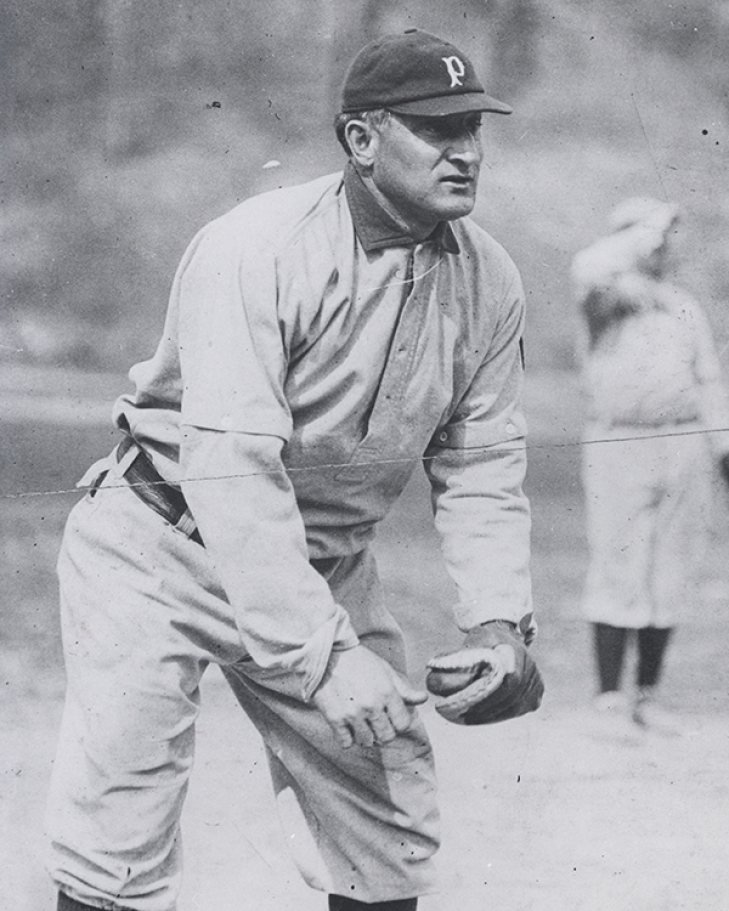
Honus Wagner’s arrival in Pittsburgh ahead of the 1900 season was the byproduct of structural chaos, landing with the Pirates alongside manager Fred Clarke and a massive influx of talent when the Louisville franchise folded. The stocky, bow-legged son of German immigrants didn't fit the classic mold of an agile, graceful shortstop; he possessed massive, barrel-chested strength, exceptionally large hands that scooped up dirt along with the baseball, and an explosive burst of athletic ability that defied his rugged frame.
He quickly changed the senior circuit baseline, winning his first National League batting title during his debut summer in 1900 with a blazing .381 average. This marked the start of a decade of dominance that defined early 20th-century baseball. Known as "The Flying Dutchman,” he set the benchmark for all dead-ball era players, confident in his style and virtually unstoppable. He secured eight National League batting titles, a record that still stands as the gold standard in senior circuit history, and is evenly matched with legendary Tony Gwynn.
When analyzed with modern advanced metrics, his dominance becomes not just impressive but truly extraordinary. Wagner consistently anchored the diamond by leading the National League in positional bWAR an impressive 11 times in his career. Between 1900 and 1912, he never ranked lower than third in the league in overall value, demonstrating an efficiency that seems almost artificially created. During an era when a soft, dark baseball often made deep hits rare, he overwhelmed opponents with his line-drive power, leading the league in slugging percentage six times and total OPS eight times.
Once he reached the basepaths, he unleashed an aggressive, high-leverage running game, pacing the National League in stolen bases five times on his way to 723 career swipes. Defensively, he was a vacuum at shortstop, weaponizing his range and an absolute cannon of an arm to shut down opposing offenses long before anyone conceived of a Gold Glove Award.
That individual brilliance was the engine behind the franchise's first taste of ultimate team success. Wagner pilot-steered the Pirates to three early pennants, culminating in a historic 1909 World Series triumph over Ty Cobb’s Detroit Tigers, where he hit .333 and stole six bases to deliver Pittsburgh its maiden world championship. He remained a fixture in the local lineup until walking away as a player in 1917, concluding his pinstriped journey as the all-time franchise leader in position player bWAR (120.1), runs scored (1,521), and triples (232).
Wagner was also a champion, leading the Pirates to a World Series win in 1909, the first in franchise history. He played until 1917, and is the all-time team leader in bWAR (120.1), Runs Scored (1,521), and Triples (232).
His legacy as one of the twin towers of early baseball history received its ultimate, historic punctuation marks in waves. In 1936, Wagner was elected as one of the "First Five" charter members of the National Baseball Hall of Fame, standing alongside Babe Ruth, Ty Cobb, Walter Johnson, and Christy Mathewson.
His strong connection to the city persisted through a long, multi-decade coaching career. When he retired from active duty on February 16, 1952, the organization immediately retired his jersey number 33, making it the first number to be officially retired in Pittsburgh history. In the spring of 1955, fans dedicated a large bronze statue of him outside Forbes Field. This monument now stands proudly at the home plate entrance of PNC Park, symbolizing the legacy of the greatest Pirate ever.
The Greatest Athletes from Philadelphia
Philadelphia is not only the birthplace of the United States but also the birthplace and childhood neighborhood for many great sportspeople. With four major sports teams in the city, the city of brotherly love has been called an underachiever with just two major championships in the last twenty years. Still the city has had much to offer with many great athletes and hall of famers growing up in Philadelphia. Let’s have a look at some of the legends.
Wilt Chamberlain
This Philadelphian is one the greatest athletes from Philadelphia and one of the best to play the game of Basketball. The 7-feet 1-inch-tall player was known for his long-standing rivalry with Bill Russell and still holds numerous NBA records.
To this date he is still the only player to have scored 100 points in a single game. He is the only player in history to average more than 30 points and 20 rebounds per game and is second only to Michael Jordan in point per game average. He was a major part of the 1967 championship winning roster that took home the second NBA title to the city of Philadelphia and has earned him legendary status in the city.
Joe Frazier
Frazier was not born in Philadelphia but packed up his bags in 1959 at the age of 15 to travel to Philadelphia. The boxer soon became a big name in the amateur ranks and won three Golden Gloves championships in a row from 1962 through 1964 before taking home an Olympic gold medal at the 1964 Tokyo Games.
Smokin’ Joe would go on to become a heavyweight world champion in 1970 and go up against Muhammad Ali in 1971 in what has been billed as the fight of the Century. The fight saw Frazier hand Muhammad Ali the first defeat of his career and create a legend about the hard hitter from South Carolina.Kobe Bryant
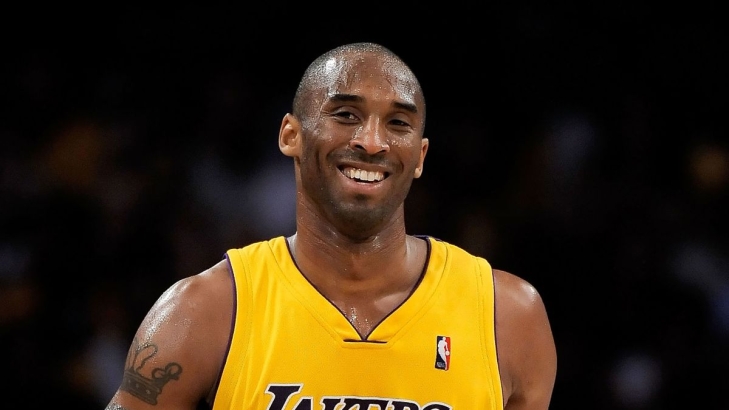
A life that ended up with a tragedy was started in the neighborhoods of Philadelphia, where his father Joe Bryant played for Philadelphia 76ers. Growing up in Italy and Philadelphia Bryant grew his own talent and decided to skip college and enter the 1996 draft as a high school player.
The Black Mamba was picked 13th overall by the Los Angeles Lakers and would go on to be one of the most legendary players in franchise history. With him on the team the franchise won 5 NBA championships in 21 seasons with him being elected to 18 all-star games, second only to Kareem Abdul-Jabbar.
This year his former team the Lakers are one of the favorites for the NBA title with Lebron James leading the franchise. With many games still left this season you can find plenty of games to bet on. Read all about betting here.
Mike Powell
This track and field athlete still holds the world record for the longest long jump ever. His record of 8.95 meter has stood since 1991 and it does not look like it is going to be beaten any time soon. Unfortunately for Powell there was another amazing American long jumper at the time called Carl Lewis who would go on to win two Olympic gold medals right in front of him. At the World Championships in 1991 in Tokyo Mike Powell finally got the better of him to take home his first major championship medal.
