


Committee Chairman
15. Bill Mazeroski
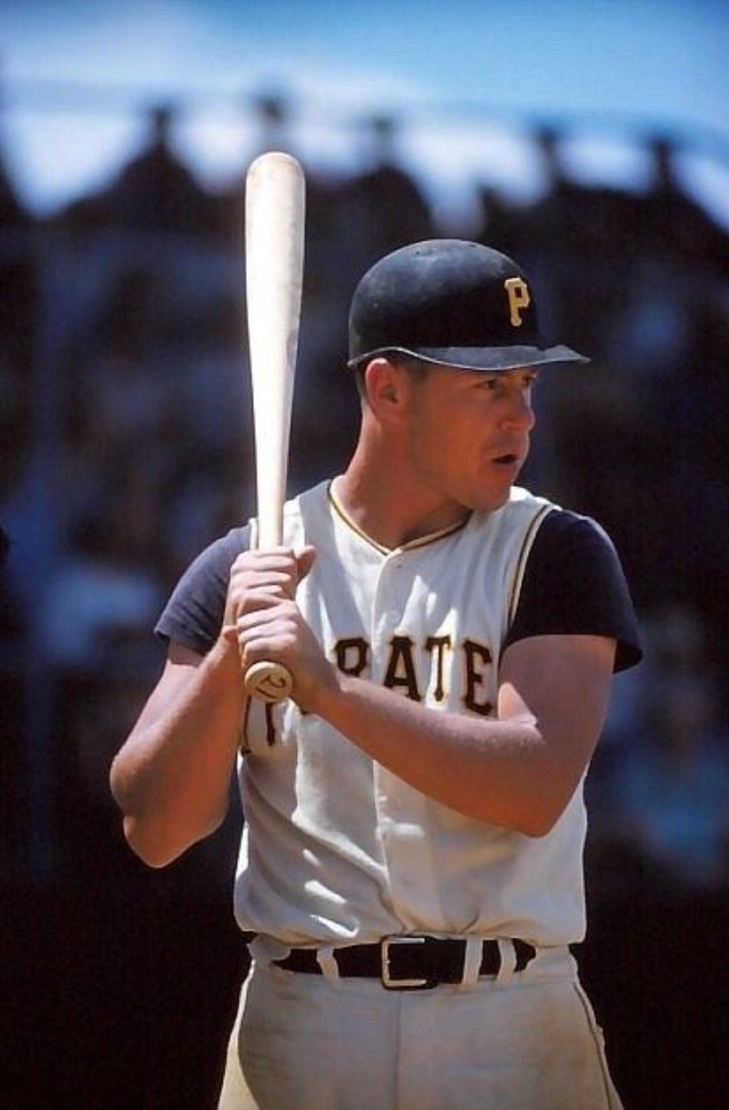
Mention Bill Mazeroski to any sports fan, and the reaction is immediate: recalling the iconic moment at Forbes Field when he hit a high-speed drive over the left-field wall, leading to a euphoric dash around the bases while waving his helmet to clinch the 1960 World Series victory. This remains the only Game 7 walk-off home run in baseball history. However, summing up his entire 17-season career in black and gold as just that single lightning-fast swing significantly underestimates his true impact on the game. "Maz" was not only a legendary October hero but also spent nearly twenty years perfecting a masterful middle-infield defense that set the gold standard in his position.
His debut in the 1956 schedule signaled the emergence of a lifelong player who dedicated his entire career to the Pittsburgh dirt. Mazeroski transformed the infield pivot into a true art, moving with a smooth, lightning-fast throw that totally changed the way double plays are executed.
He was a superior defender, earning eight Gold Gloves and regularly leading the National League in assists, putouts, and double plays. Advanced metrics have further highlighted his exceptional skill, establishing him as the franchise’s all-time leader in Total Zone Runs and career double plays. During the 1960s, his defensive bWAR exceeded 1.5 on eight occasions, making second base virtually impenetrable for opposing grounders.
While his glove offered top-tier structural stability, his offensive capabilities were more modest, showing a low-variance baseline. Mazeroski was a reliable contact hitter, amassing 2,016 hits, 294 doubles, and 138 homers over 2,163 games, and earning ten All-Star selections. Nonetheless, his aggressive, free-swinging style resulted in a modest .299 career on-base percentage and a .260 lifetime batting average, limiting his overall ranking when evaluated by modern advanced run-creation metrics.
However, during critical moments, his bat consistently delivered. Aside from his legendary 1960 home run against the formidable New York Yankees, his enduring career enabled him to act as a crucial veteran presence for a new generation. When the aging infielder contributed to winning the 1971 world championship, he and the iconic Roberto Clemente became the only two players to appear on both the 1960 and 1971 championship teams, marking a unique place in club history.
After he took his final walk off the diamond in 1972, modern writers initially had difficulty assessing his worth, which kept him out of Cooperstown for years due to his average batting stats. The definitive recognition of his historic significance came in 2001, when the Veterans Committee decisively voted Mazeroski into the National Baseball Hall of Fame, ending the debate. The Pirates knew he was an iconic figure far earlier, as his number 9 was retired by the team in 1987.
18. Sam Leever
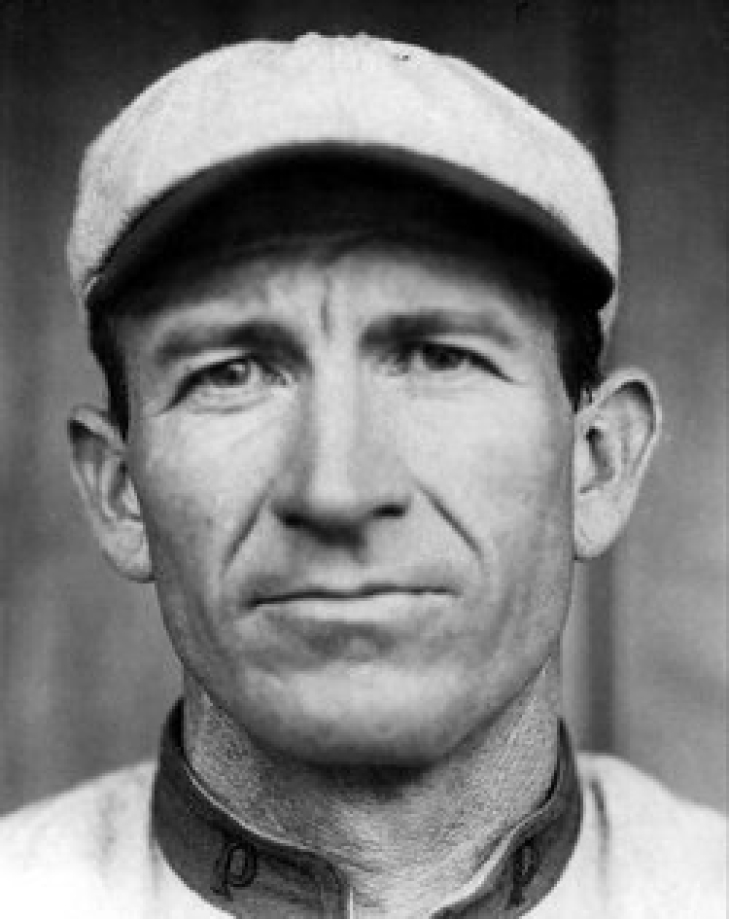
To truly grasp early 20th-century baseball culture, it's important to examine men like Sam Leever, who chose the diamond over conventional careers. Known as "The Goshen Schoolmaster” in the National League, this right-handed pitcher spent seven years teaching schoolchildren in Ohio before fully dedicating himself to professional baseball. His delayed entry into the majors at age 26 was due to this academic background. Leever approached the game with a calculated, cerebral style, favoring an excellent curveball and precise control over raw speed.
Leever dedicated his 13-season major league career to pitching in Pittsburgh, creating a model of efficiency that made him one of the most dominant pitchers of the Deadball Era.
His initial complete appearance during the 1899 campaign was a remarkable display of endurance. At 27 years old and a rookie, Leever made his durable pitching a constant effort, leading the National League with 51 games and a demanding 379 innings pitched.
Although he posted a modest 21–23 record and a 3.18 ERA with a middle-tier team, that heavy workload was vital for his growth into a top pitcher. Once manager Fred Clarke’s early dynasty took shape, Leever fully honed his skills. He deliberately reduced his regular-season innings, avoiding reaching 300 innings again, which significantly boosted his efficiency. Throughout the rest of his career, he consistently kept runs surrendered low, never allowing his season ERA to exceed 3.00.
During his historic 1903 campaign, Leever demonstrated exceptional control, leading to the National League ERA title with a remarkable 2.06. He achieved a superb 25–7 record, completed 30 games, and pitched seven shutouts, helping the Bucs secure the pennant.
Leever's impressive performance was more than just a brief moment of brilliance. He led the rotation with four separate 20-win seasons, offering a consistent stream of victories with low variability. His career record of 194–100, a remarkable .660 winning percentage, ranks among the best in major league history and shows his strong determination to win. Despite his dominance in the regular season, his postseason success was limited. A serious shoulder injury during the first modern 1903 World Series against Boston severely hampered his effectiveness.
Six summers later, in the historic 1909 campaign, veteran Leever contributed significantly by going 8–1 both as a reliever and starter, helping the team secure a National League pennant. Although he did not pitch in the seven-game World Series victory over Detroit, he was a highly respected member of that legendary team and ultimately achieved the ultimate validation with a world championship.
He retired from the sport after the 1910 season due to a salary dispute with management, leaving behind a remarkable body of work. In 388 games with Pittsburgh, Leever posted a tiny 2.47 ERA, completed 241 games, and recorded 847 strikeouts over 2,660.2 innings.
Our All-Time Top 50 Miami Marlins are up
Yes, we know that this is taking a while!
As many of you know, we here at Notinhalloffame.com are slowly generating the 50 of each major North American sports team. We have a new one to unveil today, that of the Miami Marlins.
Along with the Colorado Rockies, the Florida Marlins came into existence in 1993, although they have been far more successful than their expansion counterparts.
The Marlins won the Pennant in only their fourth year of existence, but surely, they could not beat the New York Yankees for the World Series! Florida did precisely that, shocking the world, and then they surprised everyone by conducting a fire sale, dismantling the team, and starting from scratch.
Florida again built a good team in 2003 and once again befuddled the baseball world by winning their second World Series. True to form, they repeated what they did after 1997 by cost-cutting and getting rid of the parts that won it for them.
Since that time, the Marlins changed their team name to the Miami Marlins but have remained to operate as a small market team.
Our Top 50 lists in Baseball look at the following:
1. Advanced Statistics.
2. Traditional statistics and how they finished in the National League.
3. Playoff accomplishments.
4. Their overall impact on the team and other intangibles not reflected in a stat sheet.
Remember, this is ONLY based on what a player does on that particular team and not what he accomplished elsewhere and also note that we have placed an increased importance on the first two categories.
This list is updated up until the end of the 2021 Season.
The complete list can be found here, but as always, we announce our top five in this article. They are:
3. Josh Johnson
We will continue our adjustments on our existing lists and will continue developing our new lists.
Look for our more material coming soon!
As always, we thank you for your support.
Three new members to the Minnesota Twins Hall of Fame
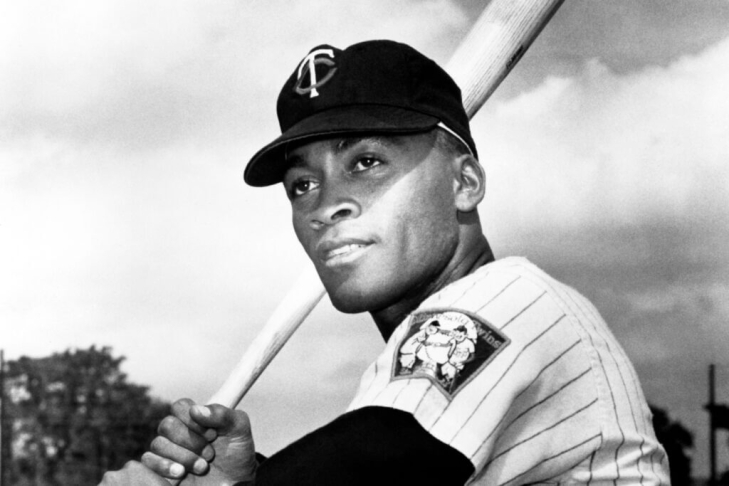
Regular visitors of Notinhalloffame.com know that we are slowly working on the top 50 of every major team in the NHL, NBA, NFL and MLB. Once that is done, we intend to look at how each team honor their past players, coaches and executives. As such, it is news to us that the Minnesota Twins have announced that three new men, Dan Gladden, Cesar Tovar and Ron Gardenhire have been inducted into their franchise Hall of Fame.
Gladden played for Minnesota from 1987 to 1991, where the Outfielder accumulated 661 Hits with 116 Stolen Bases and a .268 Batting Average. A member of both the 1987 and 1991 World Series winning team, Gladden is one of seven former players who were on both championship squads, and he notably scored the series-winning run in the ’91 Fall Classic. Gladden enters not only as a player, but as a broadcaster, having been the color man for the Twins radio broadcasts since 2000.
From Venezuela, Tovar played for Minnesota from 1965 to 1972 where the versatile player logged significant times at Second Base, Third Base, Shortstop and all three Outfield positions. Tovar batted over .300 twice for Minnesota, and in 1970, he led the NL in Doubles (36) and Triples (13), and was the league leader in Hits (204) in 1971. Receiving MVP votes in five straight years (1967-71), Tovar amassed 1,164 Hits, 186 Stolen Bases and batted .281 for the Twins.
Gardenhire was Minnesota’s longtime Manager from 2002 to 2014, and had a record of 1,068 and 1,039 for the team.
We here at Notinhalloffame.com would like to congratulate all three for this impending honor.
