
Committee Chairman
22. Vern Law
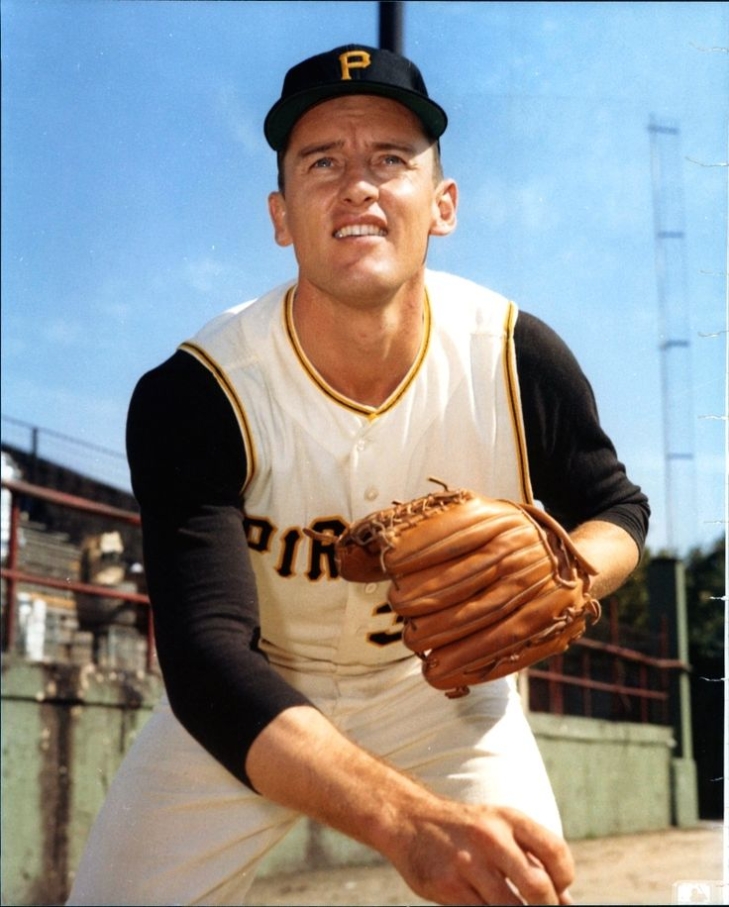
An athlete's greatness often extends beyond their skills, reflected in their character. Vern Law embodied this with unwavering faith and respect in sport. Known as "The Deacon" for his integrity and calm, he led Western Pennsylvania's rotation for nearly two decades, symbolizing blue-collar reliability. Despite tough times in the 1950s, he achieved peak performance when it mattered most.
His initial appearance during the 1950 schedule offered a brief glimpse of his frontline potential, but his development was suddenly interrupted when he was called away for a multi-year military service. Law rejoined the club before the 1954 season, and over the next five summers, he moved smoothly within a transitional pitching staff as the front office gradually built a competitive team.
His rise to elite efficiency truly occurred during a remarkable 1959 breakout, when he achieved 18 wins and maintained a spotless 2.98 ERA, solidifying his national reputation.
The pinnacle of his career was during the memorable 1960 regular season. Law showcased incredible control and resilience, pitching despite a painful ankle injury to earn the prestigious Cy Young Award, the first in franchise history. He made taking the mound a symbol of consistent excellence, winning a personal-best 20 games and leading all major league pitchers with 18 complete games.
When the Pirates faced the formidable New York Yankees in the Fall Classic, "The Deacon" secured his everlasting place in Steel City lore by starting three games and earning two crucial wins, outshining the American League champions and leading Pittsburgh to a historic world title.
Far from a one-summer wonder, Law demonstrated remarkable longevity by overcoming a severe shoulder tear that could have ended a lesser player's career, maintaining his role on the staff until 1967. His 16-year tenure as a “Lifer" included nine seasons with double-digit wins, during which he consistently outsmarted hitters with a sharp breaking ball and excellent control of the strike zone.
He left the game after 1967, leaving a strong local baseline. In 483 games for Pittsburgh, Law had 162 wins, 119 complete games, 28 shutouts, and 1,092 strikeouts over 2,672 innings.
20. Ed Morris
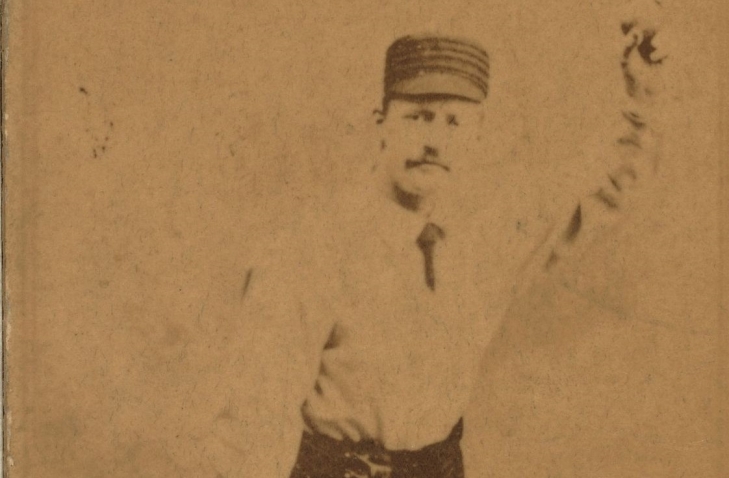
To truly understand the origins of professional baseball in western Pennsylvania, it’s necessary to go back to the 1880s—a time of grueling workloads, rough schedules, and primitive equipment that could break a modern athlete in just weeks. Ed "Cannonball" Morris exemplified this rugged, pioneering era. After the 1884 season, the Pittsburgh Alleghenys (later known as the Pirates) acquired him in a major asset deal from the collapsing Columbus Buckeyes. The broad-shouldered left-hander arrived in Pittsburgh with a fastball that revolutionized the way teams approached preventing runs.
What followed was a short but intense multi-year peak, still regarded as one of the most remarkable displays of raw endurance in local history. Morris made handling the ball an almost daily habit, recording workloads that are hard to imagine today. During his initial two summers in Pittsburgh (1885 and 1886), he led the pitching staff alone, securing 80 wins and pitching over 1,100 innings.
He consistently shut down American Association offenses, leading the league in shutouts in consecutive summers while keeping a remarkably low ERA below 2.50. His precise effectiveness was also confirmed by winning back-to-back league WHIP titles and recording a league-high 298 strikeouts in 1885.
When the franchise moved to the National League in 1887, Morris struggled with the changing competition and rules, posting a challenging 14–22 record and a high 4.31 ERA. However, demonstrating remarkable resilience, he mounted an impressive comeback in the 1888 season. Morris pitched an exhausting 480 innings, finishing with a strong 28–23 record and an outstanding 2.31 ERA, briefly regaining his national recognition.
Sadly, his heavy workload ultimately compromised his physical longevity. The intense strain led to his throwing arm failing the next summer. In a desperate attempt for financial stability, Morris left to join the rogue Pittsburgh Burghers of the newly formed Players' League in 1890, but he performed poorly on the mound and soon retired quietly.
He stepped away from the sport, leaving behind a remarkable, high-concentration localized baseline. During his five summers representing the city, Morris achieved 129 wins, a stellar 2.81 ERA, and 890 strikeouts over 233 complete games and 2,106 innings pitched.
Since his groundbreaking achievements occurred at the very beginning of professional baseball, his legacy has been greatly diminished over time, leading to his complete omission from current Cooperstown discussions. Nonetheless, he stays the original franchise ace, the formidable, brief-lived workhorse who first established the standard for pitching excellence in Pittsburgh.
With Pittsburgh, Morris went 129-102 with a 2.81 ERA and 890 strikeouts.
8 Greatest Fullbacks in NFL History
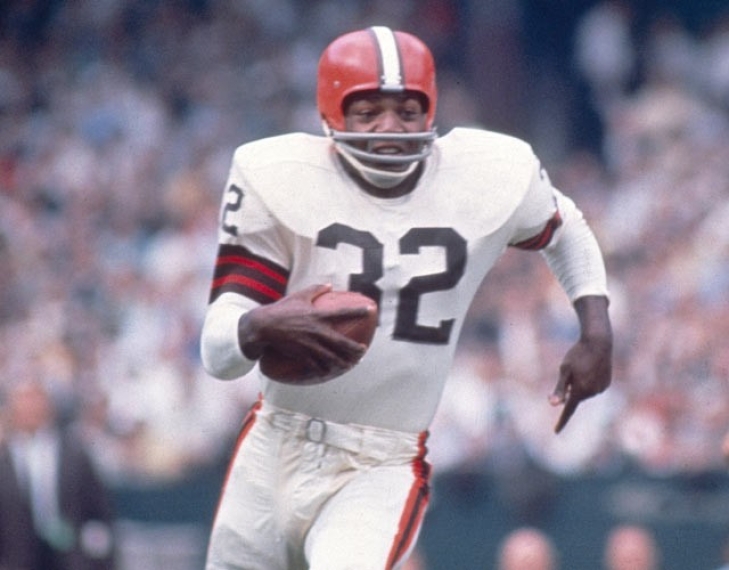
Fullbacks are one of many vital positions in any good NFL team. Without a good fullback, a team might as well not be playing! A fully qualified quarterback can considerably increase a team’s NFL odds
The fullback is often referred to as the ‘muscle’ of a team. Fullback players are often incredibly powerful and muscular, and, as such can easily cut through an opposing team’s defenses, able to push through even the toughest tackles.
There have been many fullback players over the years for many different teams, but only a few have ever etched their names in the NFL hall of fame. Let’s take a look at 8 of the best!
#1 - Jim Brown:
Jim Brown has long been hailed as one of the greatest fullbacks in the history of the NFL. Over the course of his very extensive career, he was able to carry the ball over 2,000 times and carried it over a cumulative distance of 104 yards.
He has even performed an incredible 106 touchdowns, an incredible hallmark for any player!
#2 - Joe Perry:
Having played in both the world-famous San Francisco 49ers and the Baltimore Colts, Joe Perry has had an incredible career over his tenure in the sport. He played from 1948 until 1963, which was his final year, earning him an impressive 15 years in the sport!
Joe Perry boasted an incredible build that allowed him to carve a path right through so many defensive strategies, this was most likely benefited by his time in the military, where he was first scouted for the 49ers!
#3 - Larry Csonka:
Larry Csonka proved to be a vital part of his team the Miami Dolphins, and he was able to bring his absolute best to every single game he played. This earned him an incredible reputation that struck fear in opposing forces.
In his time he was one of the largest and most imposing players on the field, which helped his team to earn an incredible number of career touchdowns!
#4 - Larry Centers:
Catching is equally as important to a successful play in the NFL as actually touching the ball down, and no player understood this better than Larry Centers.
He was able to catch pretty much any ball that was thrown his way, which made him the perfect fullback for his varying teams, which included the Buffalo Bills, New England Patriots, and the Washington Redskins.
He was definitely a player to keep your eye on!
#5 - Jim Taylor:
Jim Taylor was most likely amongst some of the first true NFL superstars thanks to his commanding presence which he boasted across the field from 1958 to 1967.
He famously played for two teams, the Green Bay Packers, and the New Orleans Saints, and brought his formidable presence to them both, to lead them to many amazing victories!
#6 - John Riggins:
John Riggins was often famously referred to as “The Diesel”. This name was likely given to him as a result of the powerful and fast way in which he cut a course across the field. No players could compete against him, and any player that even attempted to tackle him would quickly be thrown to the wayside.
John Riggins was definitely a spectacle who had to be witnessed first-hand to be truly appreciated!
#7 - Bronko Nagurski:
Even in his early days in the sport, playing for university teams, Bronko Nagurski proved to be an absolutely commanding force.
He began his career with the Chicago Bears in 1930 and kept his incredible track record going for an impressive 13 years, until 1943.
Upon finishing his career in the NFL, Bronko also went on to have a very healthy career in professional wrestling, benefited by his incredibly large and muscular physique. Within both sports, he was able to make an incredible name for himself and create a legacy that will last for many years to come!
#8 - John Henry Johnson:
John Henry Johnson proved to be an absolute game-changer. He made a considerable splash upon starting in the NFL, impressing onlookers with his incredible strength and speed. And on a game-to-game basis, his quick thinking and his incredible strength meant he was able to make game-saving or game-turning moves.
John Henry Johnson has proven responsible for saving his team from enduring many losses, while also performing many tide-turning touchdowns that shook up the NFL rankings frequently.
John Henry Johnson played for the San Francisco 49ers, the Detroit Lions, and the Pittsburgh Steelers, making him one of the most prolific players of his generation.
To Wrap Up:
The NFL has seen many incredible Fullbacks come and go, but none are perhaps so amazing and legendary as the eight players we explored above. The legacy of these players will definitely be felt for many more years in the NFL!
David Ortiz elected the Baseball Hall of Fame
We love this day!
Though, that does not mean, we always love the results.
The Baseball Hall of Fame announced the results of the Class of 2022, and it ends an era of sorts as many of the controversial PED associated players are off the ballot.
Let’s get right into it.
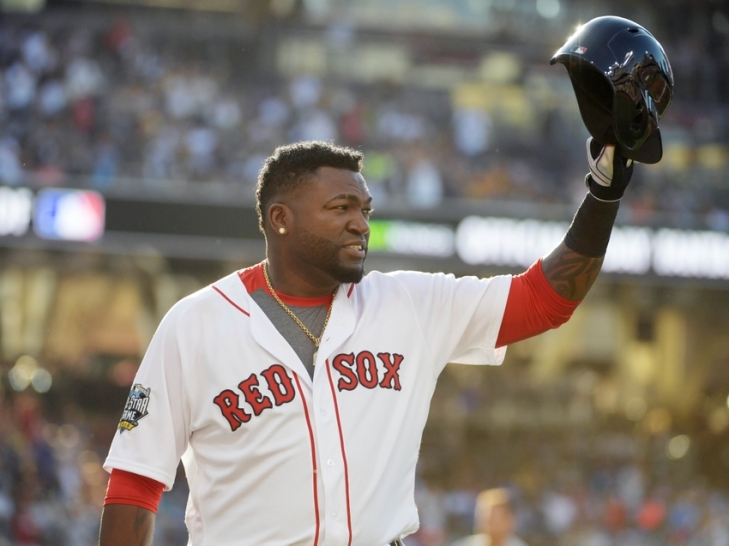
The Baseball Hall of Fame elected one player this year, which was David Ortiz, who enters on his first year with 77.9%. The long-time Designated Hitter led the Red Sox to three World Series Championships, and had 541 Home Runs, 1,768 RBIs and went to ten All-Star Games. Ortiz becomes the first predominant DH to enter the Hall in his first year.
Here is a look at the rest of the vote:
Barry Bonds. 66.0%, 10th and Final Year: Bonds was a seven-time MVP, and let’s be frank: We all knew that he was using PEDs, and so did the people who kept voting him as an MVP. Saying that, Bonds is one of the greatest offensive baseball players that the game ever saw, and is the game’s all-time leader in Home Runs (762) and Walks (2,558), and has a career Slash Line of .298/.444/.607. Statistically speaking, we know that Bonds belongs in the Hall, and we also know why the voters kept him out. He climbed from 61.8% from last year.
Roger Clemens. 65.6%, 10th and Final Year: We could “lather, rinse, repeat” with Clemens in regards to Bonds, as he is also a generational superstar who won seven Cy Youngs. Like Bonds, Clemens was surly, but also was never officially popped for PEDs by Major League Baseball. Clemens has every Hall of Fame stat you can think of, and shatters many of the inductees, but he will have to exist in an island with Bonds of players that eclipse the actual Hall of Famers. Clemens reached his highest total, increasing from last year’s 61.6%.
Scott Rolen. 63.2%, 5th Year: Rolen, continues to rocket up the votes. Debuting with only 10.2% in 2018, Rolen had 52.9% last year, and is poised to enter in 2023 with this result. We would bet on it!
Curt Schilling. 58.6%, 10th and Final Year. Schilling told voters not to vote for him, and that is exactly what he got, as he dropped from 71.1% from last year. While we think he has the resume for Cooperstown, his off-field feud with the media did him no favors. This was his last year on the ballot, debuting at 38.8% in 2013, and peaking at 71.1% in 2021. Frankly, we feel that this elevates his fame, rather than decreases it, and a martyr factor now exists with Schilling. His only path is the Veteran’s Committee, and it is likely that he will feel the same when he is eligible in those forums.
Todd Helton. 52.0%, 4th Year: Helton has now gone from 16.5 in Year one to looking like he is one or two years away. We recently named Helton the greatest Colorado Rockies player of all-time.
Billy Wagner. 51%, 7th Year: Wagner is the top closer on this ballot, and considering his first three years he was barely over 10%, his ascension has been more than impressive. This is his first year exceeding 50%.
Andruw Jones. 41.1%, 5th Year: Jones did not have double-digits if Hall of Fame votes in his first two years, but made it to 33.9% last year and cracks 40% this year.
Gary Sheffield. 40.6%, 8th Year: Sheffield has all of the Hall of Fame metrics, but lacks the name, the team, and the notoriety. It was a little surprising he got to 40 percent last year, and he has the exact same number this year. This is not boding well for Sheffield.
Alex Rodriguez. 34.3%, 1st Year: We said this for years, in that we were most intrigued of any player in any potential Hall to see where he would finish in terms of his first year of eligibility. A-Rod was popped for PEDs, was at one time massively unpopular, but only Bonds had better stats of any position player on this ballot, and he is among the top ten ever in terms of skills and stats. Bluntly, this is way lower than we thought.
Jeff Kent. 32.7%, 9th Year: Kent is a former MVP but never got past 30 percent on the ballot until last year (32.4). A rise of less than half a percent tells us all we need to know about his chances.
Manny Ramirez. 28.9%, 6th Year: Unlike other PED-associated players on this list, Ramirez WAS popped and suspended for steroids. He only climbs up .7% from last year.
Omar Vizquel. 23.9%. 5th Year: Ouch!!!! While we don’t this for sure, has anyone fallen worse than Vizquel? Since the last vote, he was accused of domestic violence, and it has shattered his chances. Considering he debuted at 37.0, and he is now double digits lower than this, what chance does he have? He drops from 49.1% and 52.6% from 2020.
Sammy Sosa. 18.5%, 10th and Final Year: Say what you want about Sosa, but this is a player who at one point was considered to be one of the top five players in the game for a half-decade, and was in the upper-echelon in terms of popularity. For what it is worth, this was the highest result that Sosa received.
Andy Pettitte. 10.7%, 4th Year: Pettitte has a lot of the numbers you need, but is an admitted PED user. For whatever reason, Pettitte dropped from 13.7%.
Jimmy Rollins. 9.4%, 1st Year: Rollins enters the ballot and survives to see another day.
Bobby Abreu. 8.6%, 3rd Year. Abreu still has not reached ten percent, but he hasn’t dipped below five either. He had 8.7% last year.
Mark Buehrle. 5.8%, 2nd Year. Buehrle hangs on, but plummets from 11.0% from last year.
Torii Hunter. 5.3%, 2nd Year. Hunter is clinging to life on this ballot, and like Buehrle, he suffered a similar drop. He had 9.5% last year.
The following did not receive the 5% needed to remain on the ballot:
Joe Nathan (4.3%), Tim Hudson (3.0%), Tim Lincecum (2.3%), Ryan Howard (2.0%), Mark Teixeira (1.5%), Justin Morneau (1.3%), Jonathan Papelbon (1.3%), Prince Fielder (0.5%), A.J. Pierzynski (0.5%), Carl Crawford (0.0%) and Jake Peavy (0.0%).
We will rework our Notinhalloffame.com Baseball list of those to consider for the Baseball Hall of Fame by the end of February. This will involve removing those who were inducted, and added those worthy and eligible.
We here at Notinhalloffame.com would like to congratulate David Ortiz.
