


Site Admin
17. Roger Brown
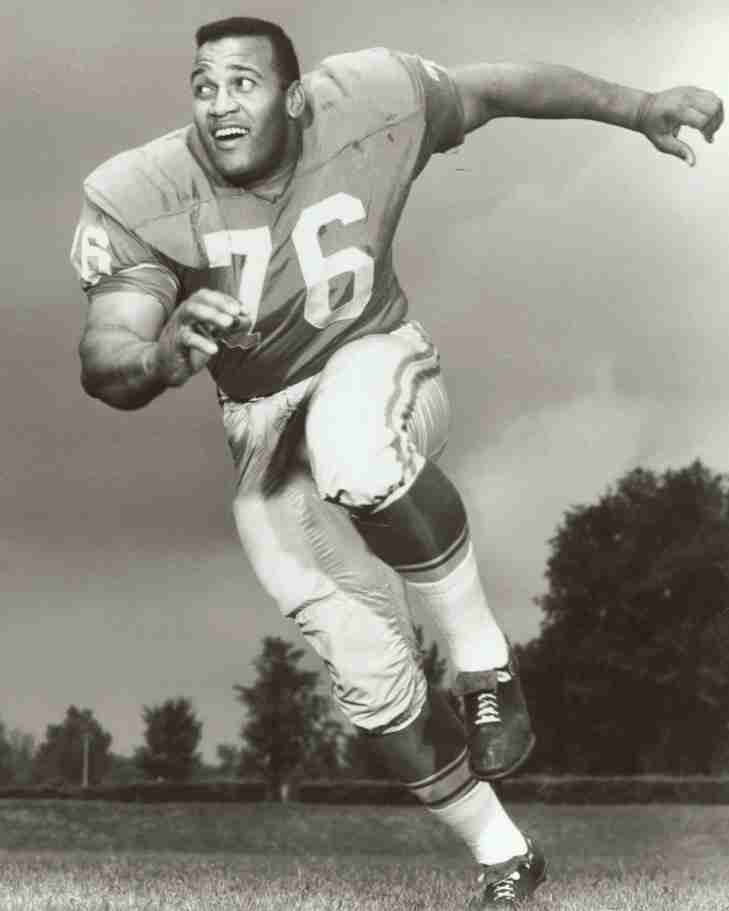
Taking the field at 6-foot-5 and over 300 pounds—reportedly making him the NFL’s first 300-pound player—Roger Brown possessed an uncanny blend of brute force and sideline-to-sideline quickness that defied his size. Landing in Motown as a fourth-round pick out of Maryland Eastern Shore in 1960, Brown joined Alex Karras to form arguably the most destructive interior defensive tackle duo in pro football history.
Brown made his presence felt immediately, earning a starting role as a rookie before bursting into national superstardom during his sophomore season. His defining masterpiece unfolded during the famous 1962 "Thanksgiving Day Massacre" against the undefeated Green Bay Packers. Brown systematically dismantled Vince Lombardi’s offensive line, racking up six individual sacks—including a game-altering safety of Bart Starr—and forcing a fumble as the Lions handed the eventual champion Packers their sole defeat of the year.
That historic afternoon served as the catalyst for a dominant run in which Brown earned five consecutive Pro Bowl selections (1962–1966) and First-Team All-Pro honors in back-to-back seasons (1962 and 1963). While unofficial film tracking credits him with roughly 63.5 sacks in Honolulu Blue, his ability to blow up double teams allowed Detroit’s linebackers to flow freely to the ball, keeping the Lions' defense among the elite throughout the decade.
He was eventually traded to Los Angeles in 1967 to replace Rosie Grier in the famed "Fearsome Foursome," but Brown's prime belonged strictly to Detroit.
Brown played in 98 regular-season games with 96 starts for Detroit. He compiled an unofficial 63.5 sacks, 11 fumble recoveries, and three safeties. Brown was inducted into the Pride of the Lions in 2018.
14. Charlie Sanders
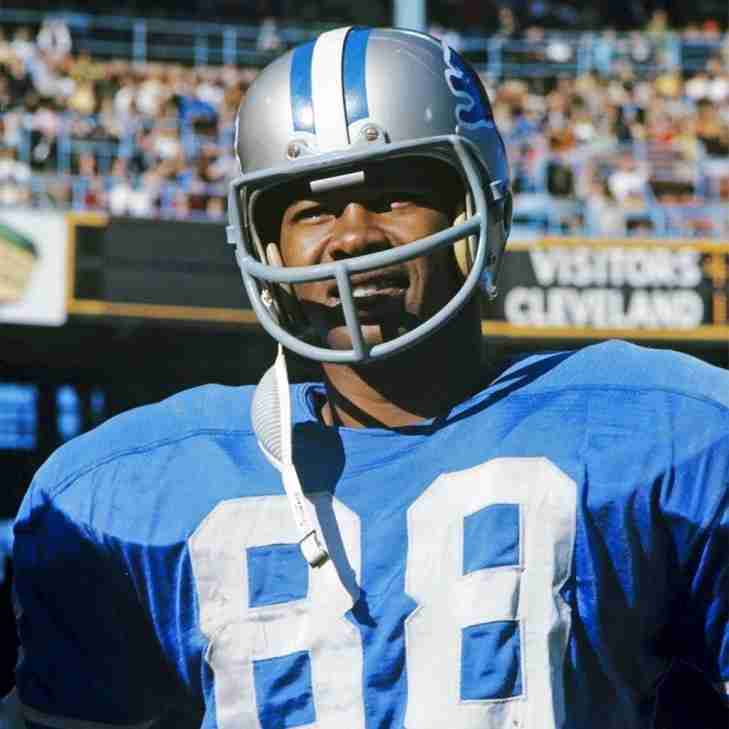
Chosen in the third round of the 1968 NFL Draft out of Minnesota, Charlie Sanders arrived in Detroit and promptly redefined what it meant to play tight end. At 6-foot-4 and 230 pounds, Sanders possessed a rare mix of size, soft hands, and open-field speed that made him a mismatch nightmare. At a time when tight ends were primarily used as glorified extra tackles, Sanders helped pave the way for the modern pass-catching weapon without sacrificing an ounce of inline blocking toughness.
Sanders made a significant impact as a rookie in 1968, catching 40 passes for 533 yards and earning his first of seven Pro Bowl selections. He quickly became quarterback Greg Landry’s most reliable target, especially over the middle. Over the next few years, Sanders dominated opposing secondaries, earning three straight First-Team All-Pro honors from 1969 to 1971. In 1969, he led the Lions with 42 receptions for 699 yards, averaging an impressive 16.6 yards per catch—an outstanding feat for a tight end across any era.
What truly defined Sanders was his fierce execution in the run game. He enjoyed sealing the edge for running backs such as Altie Taylor and Steve Owens, leveraging his broad build and persistent effort to open lanes. This dual-threat ability earned him seven Pro Bowl selections over ten seasons in Motown, ranking him as one of the most celebrated tight ends of the 1970s.
Sanders’ ongoing knee injury led him to retire before the 1978 season, yet his influence on the franchise endured. He stayed a cherished figure in Detroit for many years, working as a color commentator, assistant coach, and scout.
In Detroit, Sanders had 336 receptions, 4,817 yards, and 30 touchdowns. A seven-time Pro Bowler, three-time First-Team All-Pro, and member of the NFL’s 1970s All-Decade Team, Sanders was enshrined in the Pro Football Hall of Fame in 2007 before becoming a charter member of the Pride of the Lions in 2009.
21. Jason Hanson
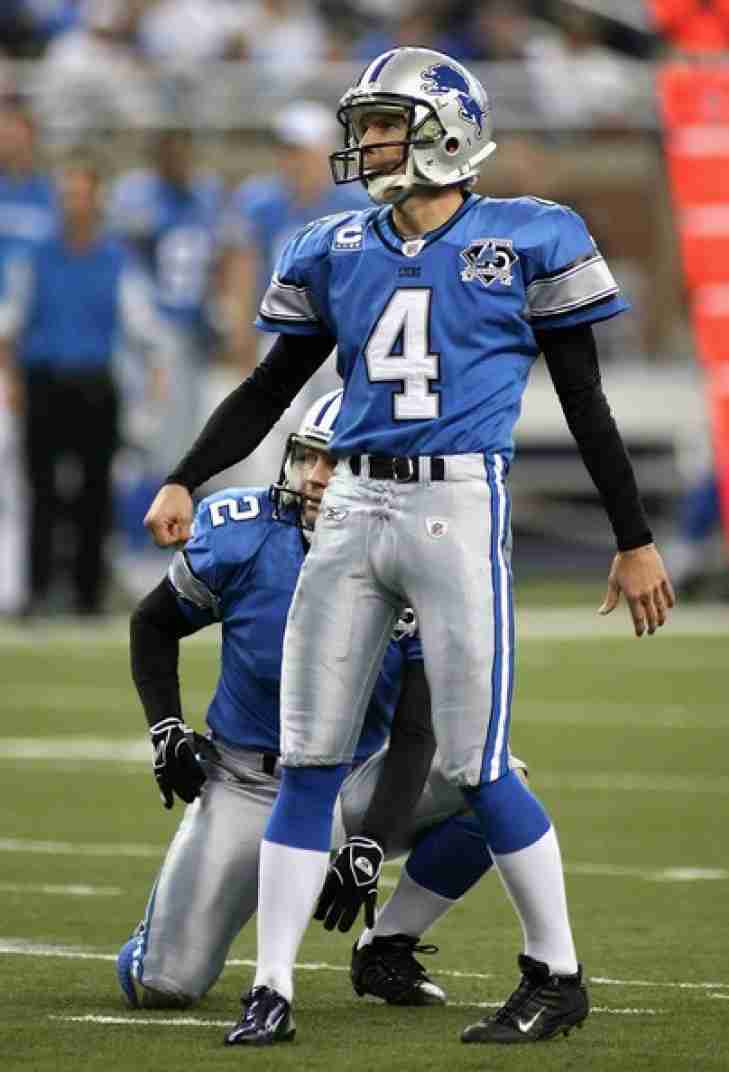
Drafted in the second round out of Washington State in 1992, Jason Hanson stepped into the Lions’ roster and delivered unprecedented longevity at the placekicker position. Over the next two decades, Hanson remained the lone constant through changing coaching staffs, evolving front offices, and roster overhauls, anchoring Detroit's special teams unit for an extraordinary 21 consecutive seasons.
Hanson's leg was a weapon from long distance, particularly inside the climate-controlled domes of the Pontiac Silverdome and Ford Field. He made his first Pro Bowl in 1997, earned a second selection in 1999, and set an NFL record for the most 50-plus yard field goals in a career (52). He stands as the first player in NFL history to play 300 games for a single franchise, ultimately appearing in 327 games for the Lions without ever donning another uniform—the all-time league record for seasons and games played with one team.
His accuracy under pressure yielded 17 game-winning field goals, cementing his reputation as one of the most reliable pressure kickers of his generation. When he retired after the 2012 campaign, he ranked among the top scorers in NFL history, having accumulated a staggering 2,150 career points.
That massive scoring tally firmly entrenched him as Detroit's all-time leading scorer, a record that will likely stand for generations. Recognizing his two decades of dedication and clutch kicking, the Lions inducted Hanson into the Pride of the Lions Ring of Honor in 2013 during his first year of eligibility.
4. Dutch Clark
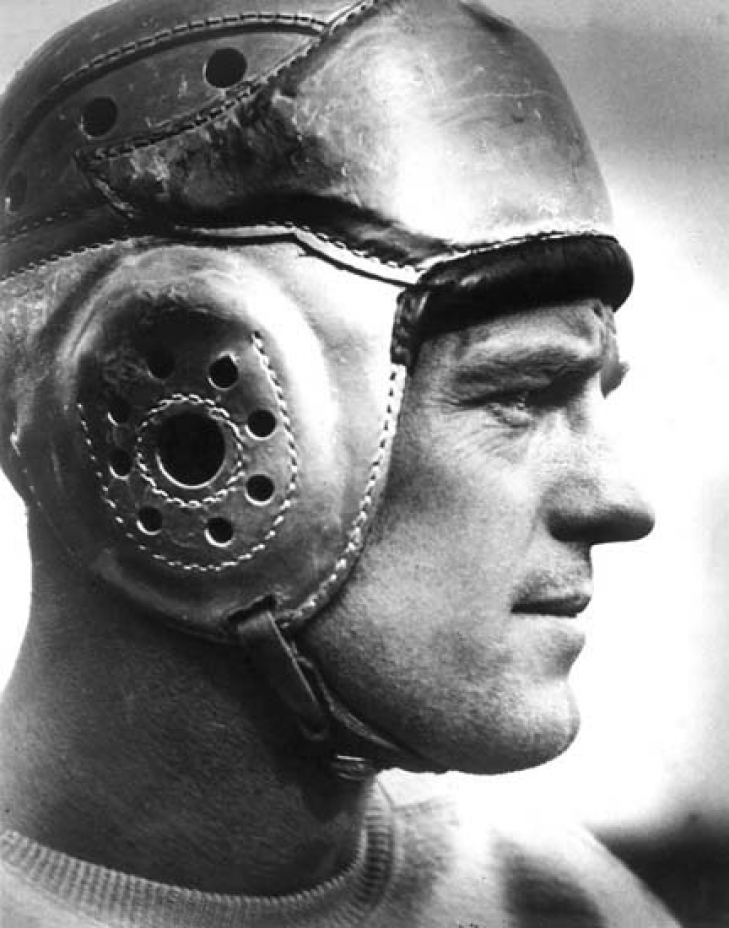
Before modern football established specialized positions, Earl "Dutch" Clark operated as the ultimate master of the gridiron. Joining the Portsmouth Spartans in 1931 out of Colorado College, the versatile tailback and field general brought unmatched vision and tactical genius to the backfield. When the franchise relocated and rebranded as the Detroit Lions in 1934, Clark became the foundational star of professional football in the Motor City, serving as the team's primary signal-caller and top offensive weapon.
Clark's playmaking style relied on incredible footwork and elite decision-making, earning him a reputation as the game's supreme open-field orchestrator. Operating as a true triple-threat back in the single-wing formation, he controlled games through his running, passing, and kicking abilities. He led the NFL in rushing total offense in 1934 with 763 yards on the ground and topped the league in scoring three separate times (1932, 1935, and 1936), often finishing drives by drop-kicking extra points and field goals himself.
His finest team achievement arrived in 1935, when he guided Detroit to its first-ever NFL Championship. Clark directed a high-powered offense that systematically broke down opposing defenses, crowning the season with a 26–7 victory over the New York Giants in the title game. His leadership was so paramount that the organization named him player-coach in 1937, where he continued to call plays from the backfield while directing the team from the sideline over his final two active seasons.
A six-time First-Team All-Pro selection across his seven professional seasons, Clark was named the AP's outstanding NFL player of the 1930s.
Clark played seven seasons with Portsmouth and Detroit (1931–1932, 1934–1938), accumulating 2,772 rushing yards, 36 rushing touchdowns, 1,507 passing yards, and 341 receiving yards. He scored 42 total touchdowns and 369 points, a record at his retirement. Named to the NFL 1930s All-Decade Team, he was part of the Hall of Fame's first class in 1963. The Lions retired his No. 7 jersey and made him a charter member of the Pride of the Lions in 2009.
