


Site Admin
19. Jim David
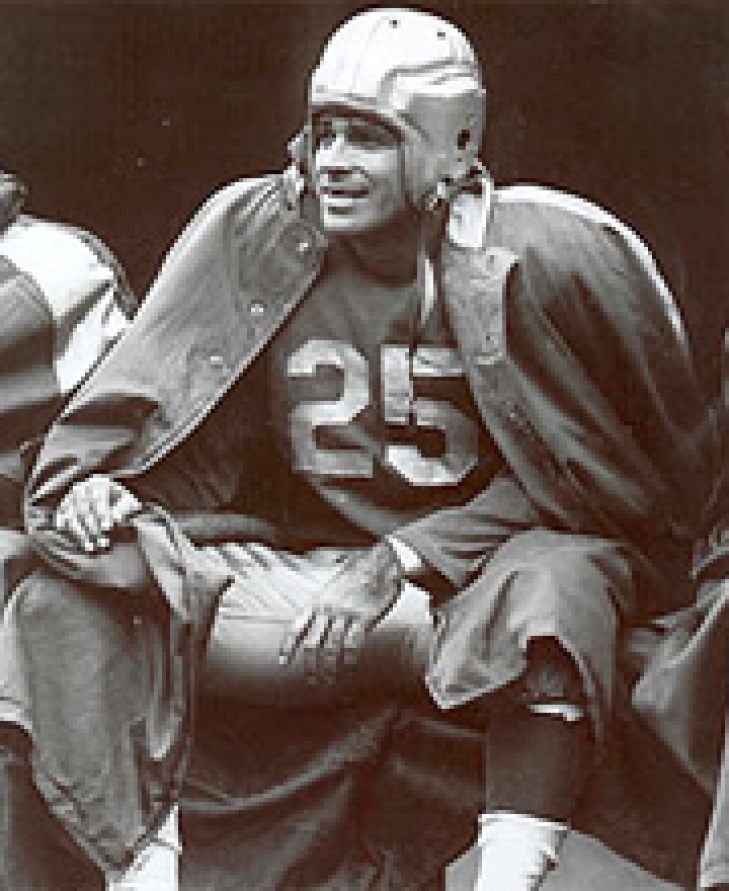
Standing just 5-foot-11 and barely tipping the scales at 175 pounds, Jim David entered the league as a 22nd-round longshot out of Colorado A&M in 1952. What he lacked in bulk, he made up for with pure, unadulterated hostility on the field. Opponents quickly dubbed him "The Hatchet"—a moniker earned after his relentless, bone-crushing tackles knocked Hall of Fame talents like Y.A. Tittle and Tom Fears out of back-to-back games in 1953.
Operating at right defensive halfback, David served as the physical Enforcer of "Chris' Crew," Detroit's legendary secondary alongside Hall of Famers Jack Christiansen and Yale Lary. While his reckless tackling set a terrifying defensive tone for Buddy Parker's squad, his ball-hawking range was equally lethal. David hauled in seven interceptions as a rookie in 1952, going on to match that seven-pick mark in both 1954 and 1956.
His true claim to Motor City immortality came on the postseason stage. David was a vital catalyst for Detroit's three NFL Championship teams (1952, 1953, and 1957), remarkably picking off a pass in all three title game victories. From 1954 through 1959, he was selected to six consecutive Pro Bowls, establishing himself as one of the era’s premier defensive backs.
After retiring in 1959, David remained a fixture in the organization, eventually serving as Detroit's defensive coordinator from 1967 to 1972 under former teammate Joe Schmidt. He was inducted into the Michigan Sports Hall of Fame in 1997.
David compiled 36 interceptions, 259 interception return yards, and five fumble recoveries in Detroit (adding three postseason picks).
27. Doug English
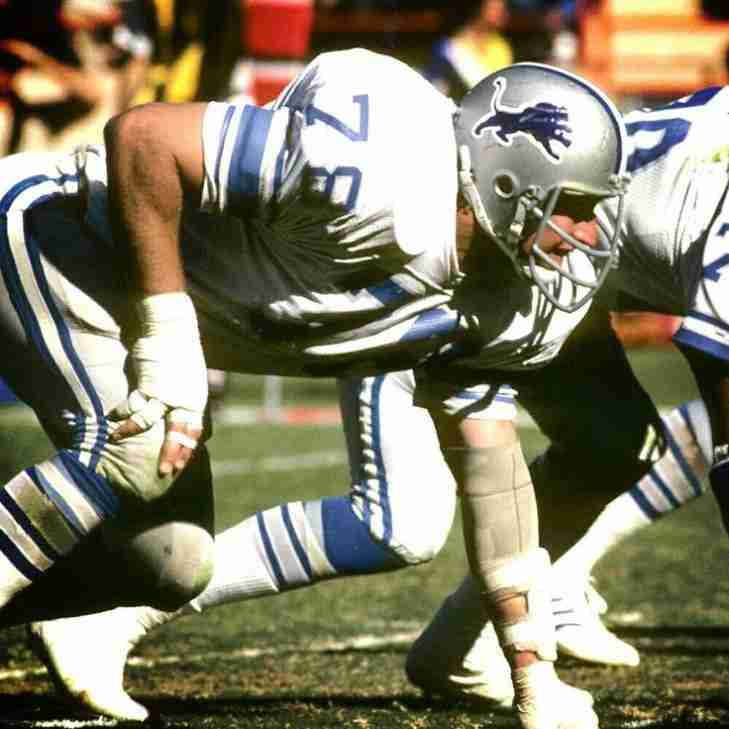
Selected in the second round out of Texas in 1975, College Football Hall of Famer Doug English didn't take long to transform Detroit's front four into an absolute nightmare for opposing offenses. Sliding into the interior at defensive tackle, he emerged as the undisputed centerpiece of Motown's fearsome "Silver Rush" defensive line alongside pass-rushing terrors Al Baker, Bubba Baker, and Dave Pureifory.
English possessed a rare combination of raw power and quickness off the snap, allowing him to collapse pockets from the inside just as easily as he stuffed the run. After earning his first career Pro Bowl selection in 1978, he briefly stepped away in 1980 to recharge, but returned in 1981 without missing a beat. His finest campaign arrived in 1983, when he recorded a career-high 13.0 official sacks to lead Detroit to an NFC Central title while earning consensus First-Team AP All-Pro honors and his third Pro Bowl nod.
In addition to his pass-rushing prowess, English proved to be uniquely opportunistic when trapped near the opponent's goal line. He shares the NFL record for most career safeties with four, including a rare two-safety performance during his explosive 1983 season. While the NFL did not track sacks as an official statistic until 1982—leaving his official total at 25.0—unofficial tracking credits him with 59.0 total sacks across his decade in Detroit, a mark that firmly ranks among the top six in franchise history.
English remained a dominant interior disruptor until a severe neck injury cut his career short in 1985, ending a solid run spent entirely with the Lions.
23. Alex Wojciechowicz
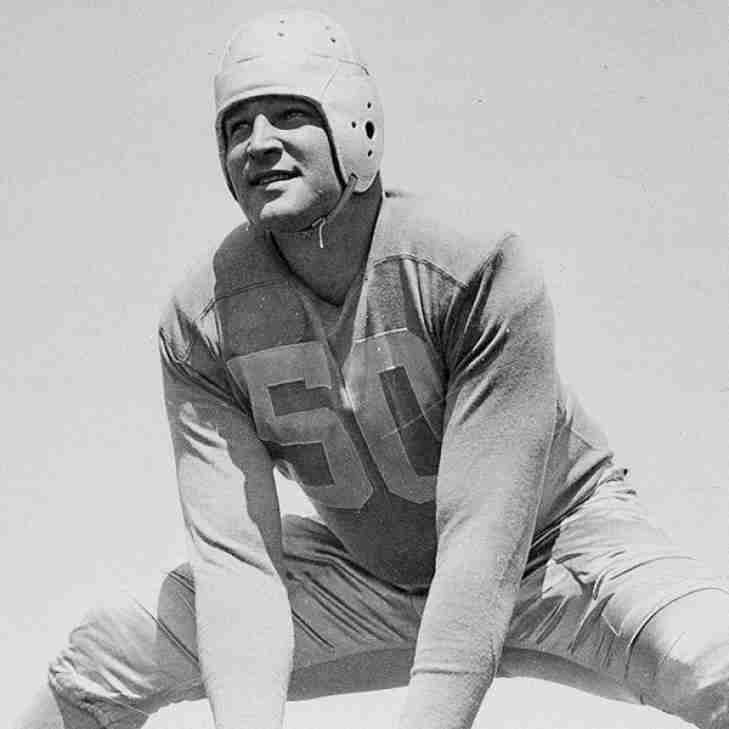
Famous as a member of Fordham's legendary "Seven Blocks of Granite" offensive line, Alex Wojciechowicz—known throughout gridiron history simply as "Wojie"—arrived in Motown as the sixth overall pick in the 1938 draft. He immediately became an indispensable fixture for the Lions, operating as a relentless two-way iron man who rarely left the field.
Wojciechowicz, who snapped the ball at center on offense and played as a tough linebacker on defense, embodied the physical toughness of early football. He received First-Team All-Pro honors in 1939 and stayed a key interior player through World War II. In addition to his fierce tackling, his pass coverage skills were exceptional for his time; in 1944, he intercepted seven passes, setting a franchise record for most in a season that lasted for many years.
After nearly nine seasons with Detroit, Wojciechowicz was traded to the Philadelphia Eagles halfway through the 1946 season. He shifted to a strictly defensive role, bringing championship experience to Greasy Neale's team and aiding their back-to-back NFL Championship wins in 1948 and 1949.
Recognized as a premier interior force of his generation, Wojciechowicz was selected to the NFL 1940s All-Decade Team. Enshrined into the Pro Football Hall of Fame in 1968, his legacy in Motown was immortalized when the Lions inducted him as part of the inaugural class of the Pride of the Lions in 2009. As a Lion, he compiled 14 interceptions, 127 interception return yards, and one defensive touchdown, while also playing on the offensive line.
22. Chris Spielman
A Linebacker born in Canton, Ohio. How perfect!
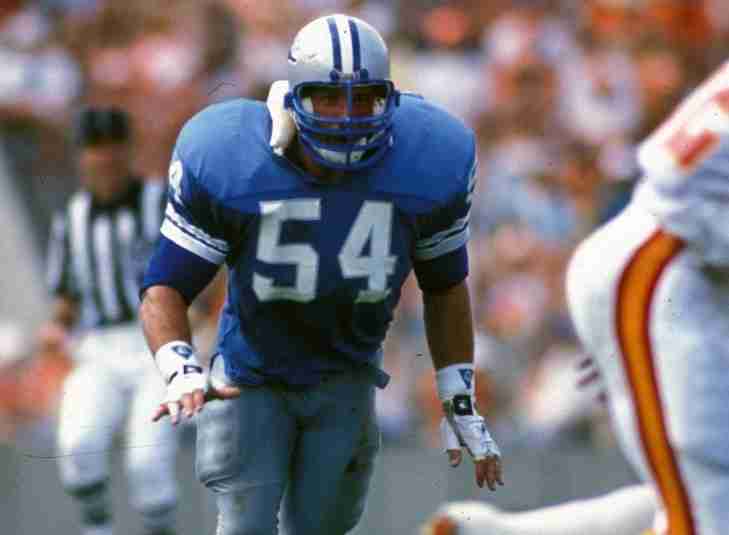
Drafted in the second round out of Ohio State in 1988, the consensus All-American linebacker landed in Detroit and immediately became the ferocious, heartbeat captain of Wayne Fontes' defense.
Spielman's relentless preparation and energetic sideline-to-sideline effort quickly made him a key figure in Detroit's defense. He led the team in tackles in seven of his eight seasons in Motown, setting a franchise record with 195 tackles in 1994. As the vocal leader and main anchor, Spielman drove Detroit's rise to a competitive team, guiding them to four postseason appearances, two NFC Central titles, and a trip to the 1991 NFC Championship Game.
His individual accolades matched his impact. Spielman represented Detroit in four Pro Bowls (1989, 1990, 1991, 1994) and earned First-Team AP All-Pro honors in 1991, alongside two Second-Team All-Pro selections (1992, 1994).
After leaving the Lions following the 1995 campaign, Spielman played two seasons with the Buffalo Bills—setting a franchise record with 206 tackles in 1996—before retiring. He later returned to the Lions front office as a key executive, cementing his lifelong bond with the organization before being formally enshrined in the Pride of the Lions in 2021.
Spielman amassed 1,138 tackles, 10.5 sacks, four interceptions, 14 forced fumbles, and 17 fumble recoveries for the organization.
