


Site Admin
26. Ndamukong Suh
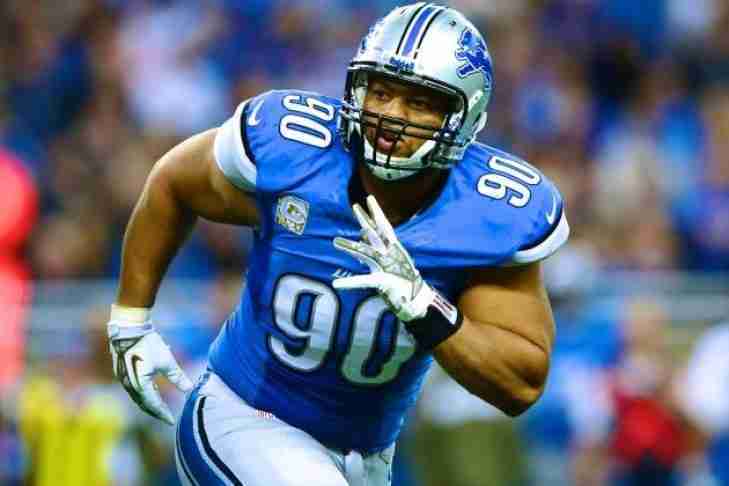
Selected second overall out of Nebraska in 2010 after one of the most terrifying individual college seasons in gridiron history, Ndamukong Suh stepped into the state of Michigan as an instant structural force. Boasting rare raw power, explosion off the snap, and a mean streak that threw opposing offensive lines into complete disarray, Suh immediately redefined what an interior defensive tackle could accomplish.
Suh took the NFL by storm as a rookie, racking up 10.0 sacks, 66 tackles, an interception, and a fumble recovery for a touchdown to capture 2010 AP Defensive Rookie of the Year honors alongside First-Team All-Pro recognition. Alongside Nick Fairley and Cliff Avril, he anchored a vicious front four that helped transform Detroit from a league afterthought into a playoff contender, propelling the Lions to postseason berths in 2011 and 2014.
Suh’s prime years in Detroit were pure interior disruption. Opposing offensive coordinators had to fundamentally alter their game plans, committing two and sometimes three blockers to contain him, yet he still routinely blew up plays in the backfield. His relentless pursuit and upper-body strength made him equally devastating against the run, suffocating interior rushing lanes and allowing linebackers like DeAndre Levy to roam freely. During his final season in Detroit in 2014, Suh led a unit that finished as the NFL’s top-ranked rushing defense, allowing an astonishingly low 69.3 rushing yards per game.
While his relentless physical style frequently crossed the line—earning him an infamous reputation as one of the league's dirtiest players alongside a string of hefty fines and high-profile suspensions—there was no denying his sheer game-disrupting dominance. Teams were forced to commit double-teams on virtually every snap, yet Suh routinely collapsed pockets from the inside and disrupted backfield handoffs before they could even materialize.
He departed following the 2014 season to sign a record-breaking contract with Miami, later winning Super Bowl LV with Tampa Bay and earning a spot on the NFL 2010s All-Decade Team. He compiled 238 tackles, 36.0 sacks, 66 tackles for loss, 98 quarterback hits, and one interception in Detroit.
36. Greg Landry
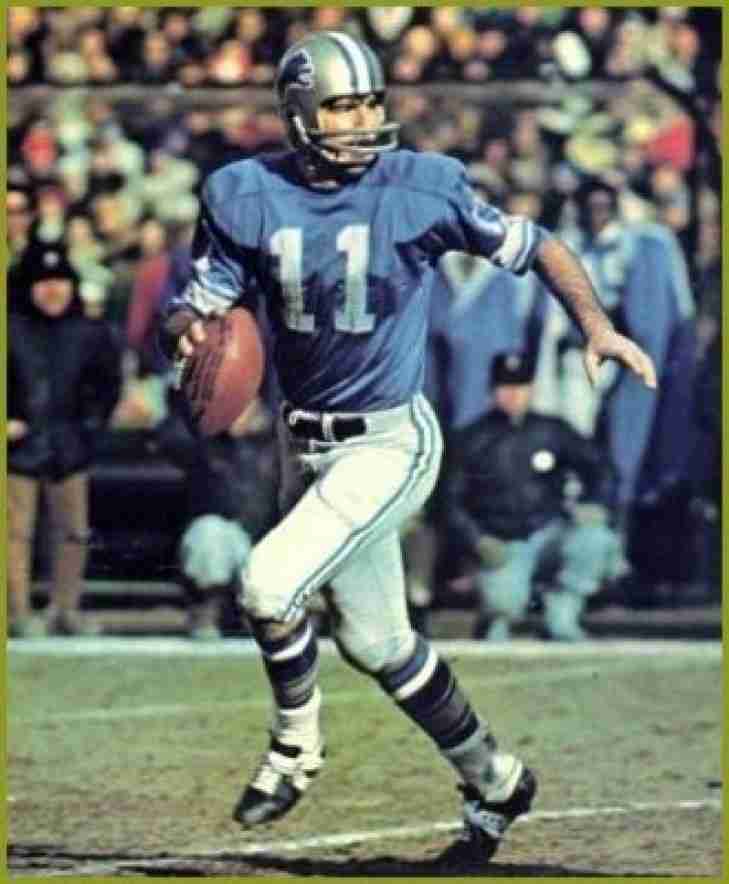
Stepping out of UMass in 1968, Greg Landry provided Motown with a rare structural prototype long before the modern dual-threat quarterback became standard operating procedure. Standing 6-foot-4 and 210 pounds with exceptional open-field athleticism, Landry brought a bruising, power-running dimension to the signal-caller position that fundamentally altered how defenses had to prepare for Detroit.
After earning the starting job full-time in 1971, Landry unleashed a solid season. He threw for 2,237 yards and 16 touchdowns while rushing for 530 yards and three scores, becoming the first quarterback in NFL history to pass for over 2,000 yards and rush for over 500 in the same campaign. His rare athletic skill set earned him a Pro Bowl selection and First-Team AP All-Pro honors as he led Detroit to a 7–6–1 record. He backed it up in 1972 by throwing 18 touchdown passes and rushing for a career-high nine touchdowns on the ground.
Landry's running ability wasn't just a scramble drill when plays broke down; head coach Joe Schmidt routinely called designed option plays and quarterback draws for his imposing field general. Though major knee and shoulder injuries limited his availability in the mid-1970s, Landry staged a triumphant comeback in 1976, passing for 2,191 yards and 17 touchdowns to earn the PFWA Comeback Player of the Year award.
After losing his starting role to Gary Danielson and seeing his playing time dwindle during a frustrating 1978 campaign, Landry's eleven-year tenure in Detroit came to an end in April 1979 when he was traded to the Baltimore Colts in exchange for draft picks. He went on to spend three seasons as a backup and spot starter in Baltimore, brief stints in the USFL, and a final year with Chicago before transitioning into coaching. With Detroit, Landry amassed 12,451 passing yards, 80 passing touchdowns, 81 interceptions, 2,502 rushing yards, and 19 rushing touchdowns.
33. Paul Naumoff
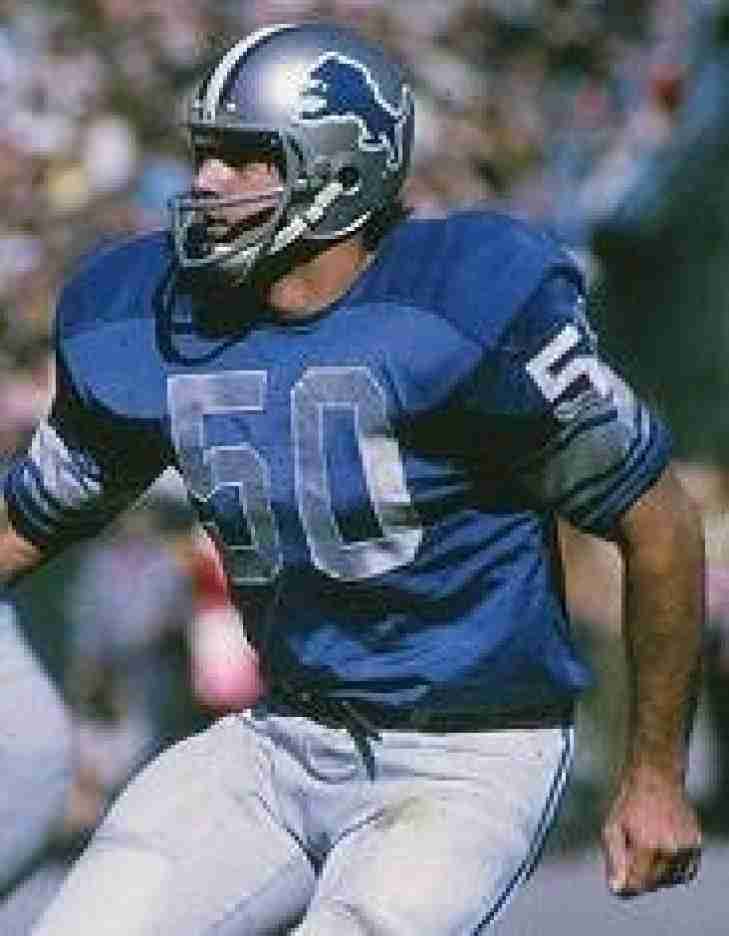
Drafted in the third round out of Tennessee in 1967, consensus All-American Paul Naumoff came to Detroit as a hard-hitting linebacker with an incredible football IQ. After carving out a role on special teams as a rookie, Naumoff quickly took over as the starting left linebacker, anchoring the second level of Detroit's defense for the next decade with remarkable consistency.
Naumoff’s intelligence and range made him a nightmare for opposing quarterbacks trying to diagnose coverage. He hit his peak on the national stage in 1970, helping lead Detroit to a 10-4 record and a playoff berth while earning his first career Pro Bowl selection. Known as the quintessential glue guy in the locker room, coaches and teammates alike revered his steady leadership and instincts. That respect culminated in 1975 when his peers voted him the team’s Most Valuable Player after a stellar season featuring two interceptions.
Durability was the hallmark of Naumoff’s career. He once played in 142 consecutive games for the Lions, missing just two contests across his entire 12-year tenure in Honolulu blue. When he finally hung up his cleats following the 1978 season, only Wayne Walker and Dick LeBeau had appeared in more games in franchise history.
In his career, Naumoff played in 168 regular-season games with 151 starts, plus one postseason contest. He compiled 6.0 interceptions, seven fumble recoveries, and 20.5 sacks.
35. Johnnie Morton
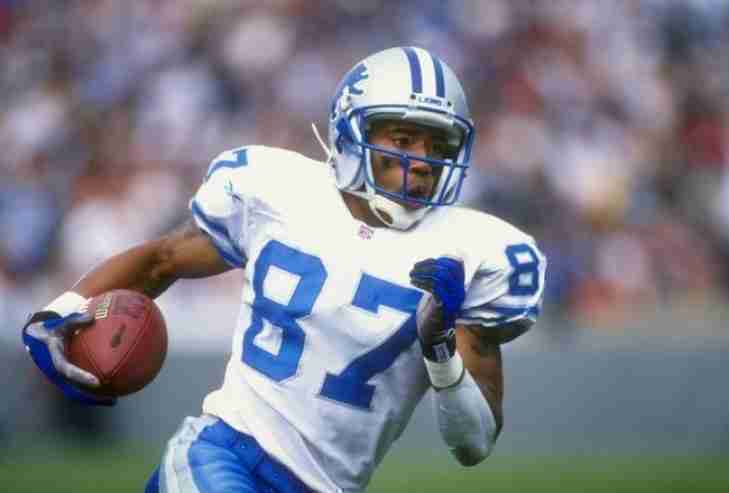
Selected in the first round (21st overall) out of USC in the 1994 NFL Draft, Johnnie Morton arrived in Motown with exceptional route-running ability, smooth open-field acceleration, and reliable hands. While he often played alongside high-profile offensive stars like Herman Moore and Brett Perriman early in his career, Morton quickly carved out a vital role as the ultimate intermediate and deep-threat weapon in Detroit's passing game.
Morton stepped into a full-time starting role in 1996 and broke out the following season with his first 1,000-yard campaign, catching 80 passes for 1,057 yards. He proved to be much more than a secondary option, stringing together three consecutive 1,000-yard receiving seasons from 1997 to 1999. Known for his crisp double-moves and ability to convert critical third downs, Morton became a go-to safety valve for quarterbacks Scott Mitchell and Charlie Batch, consistently punishing secondary coverage that rolled toward Herman Moore.
His best season came in 2001. Operating as the primary target, Morton hauled in 77 receptions for a career-high 1,154 receiving yards while averaging 15.0 yards per catch. His durability was remarkable throughout his eight-year tenure in Detroit, missing only two games while serving as one of the few explosive constants through coaching transitions and roster shifts.
When Morton departed following the 2001 season to finish his career with Kansas City and San Francisco, he left the Lions as one of the most productive pass-catchers in franchise history. He finished his Lions tenure sitting behind only Herman Moore and Calvin Johnson on the organization's receiving leaderboards.
As a Lion, Morton accumulated 469 receptions, 6,499 receiving yards, 35 receiving touchdowns, and 142 rushing yards.
