


Site Admin
20. Matthew Stafford
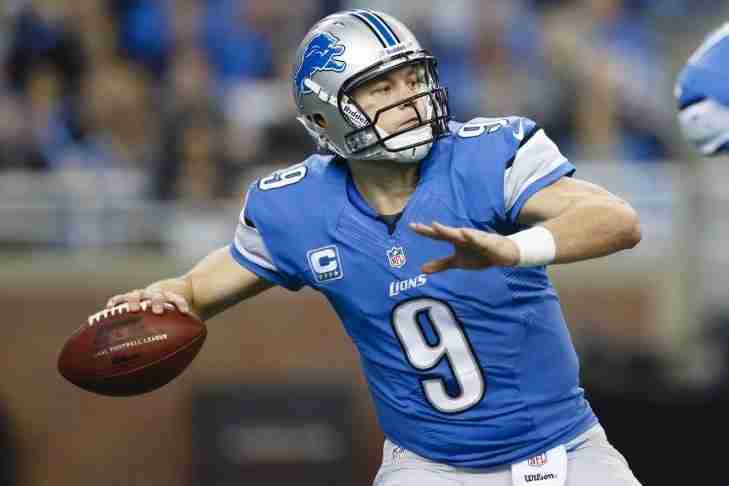
Selected first overall out of Georgia in 2009, Matthew Stafford stepped into a Motor City franchise coming off a bleak 0-16 campaign, tasked with resurrecting the organization from the ground up. Equipped with a signature cannon arm and extraordinary toughness, Stafford locked down the starting job instantly and spent twelve seasons operating as the unquestioned face of the franchise.
Stafford's statistical explosion came in 2011—his first fully healthy season—when he threw for 5,038 yards and 41 touchdowns, earning Comeback Player of the Year honors while leading Detroit to its first playoff berth in over a decade. Possessing lethal arm strength from every platform angle, Stafford made a habit of staging late-game heroics, setting an NFL single-season record in 2016 with eight fourth-quarter comeback victories.
Throughout his run, he developed an iconic connection with Hall of Famer Calvin Johnson, but even after Megatron's retirement, Stafford continued to rack up monster production. He cleared the 4,000-yard passing threshold in seven separate seasons as a Lion (19 overall), earned a Pro Bowl nod in 2014, and snapped a long franchise drought by becoming the first Lions passer since Greg Landry in 1971 to earn a Pro Bowl trip.
Despite his jaw-dropping volume, a lack of consistent defensive support and a nonexistent running game frequently left Stafford fighting uphill, resulting in a 74-90-1 regular-season mark in Detroit. A blockbuster 2021 trade sent him to the Los Angeles Rams, where he immediately validated his elite ceiling by capturing Super Bowl LVI in his inaugural West Coast campaign.
Over his run in Detroit, Stafford compiled 45,109 passing yards, with a 282-144 TD-INT ratio.
,
37. Ed Flanagan
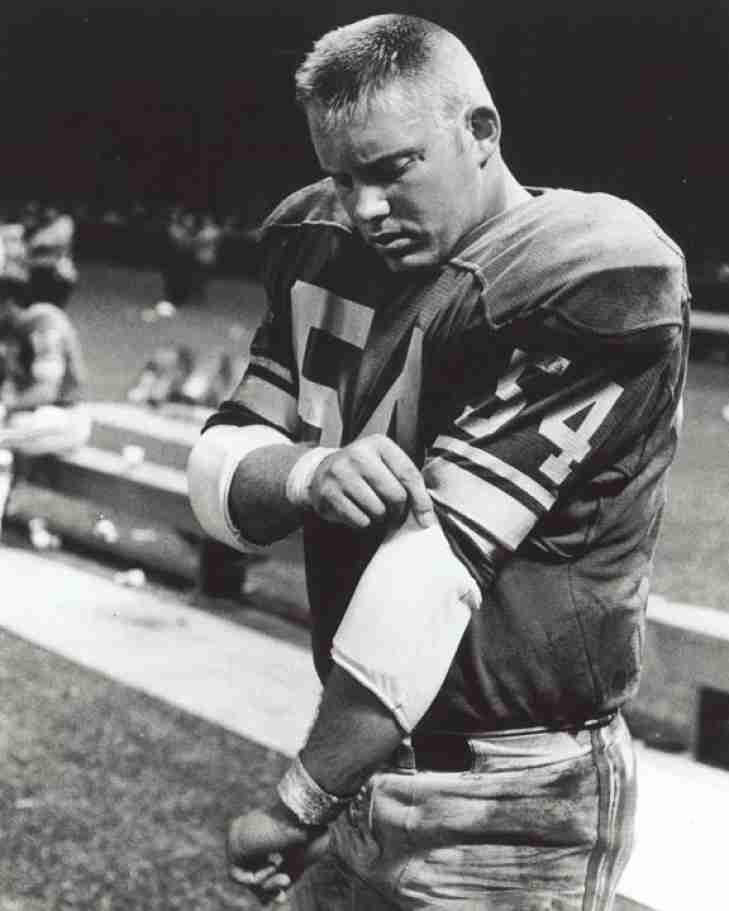
Selected in the fifth round out of Purdue in 1965, Ed Flanagan had an elite athletic foundation and technical mastery that allowed him to make an immediate impact. Stepping onto the field as a rookie, he instantly claimed the starting center spot, anchoring the middle of Detroit's offensive line with quiet brilliance for the next decade.
Flanagan stood out for his exceptional leverage, swift lateral movement, and flawless line calls, serving as the unsung engine for Detroit's offense. Operating in the trenches during a punishing era of interior line play, he earned immense respect from opposing defensive tackles across the NFC who recognized his tactical consistency. His exceptional play earned him four Pro Bowl selections (1969, 1970, 1971, 1973) and two Second-Team AP All-Pro nods (1969, 1970), solidifying his reputation as one of the premier centers of his era.
From 1965 through 1974, he anchored the pivot through a grueling 129 consecutive games, serving as a steady protector for quarterbacks like Greg Landry and Bill Munson while clearing lanes for power runners like Altie Taylor. After ten seasons in Detroit, he capped off his career with a two-year stint with the San Diego Chargers before retiring.
His contributions to the franchise were later recognized with selections to both the Lions 75th Anniversary Team and the All-Time Team.
39. Larry Hand
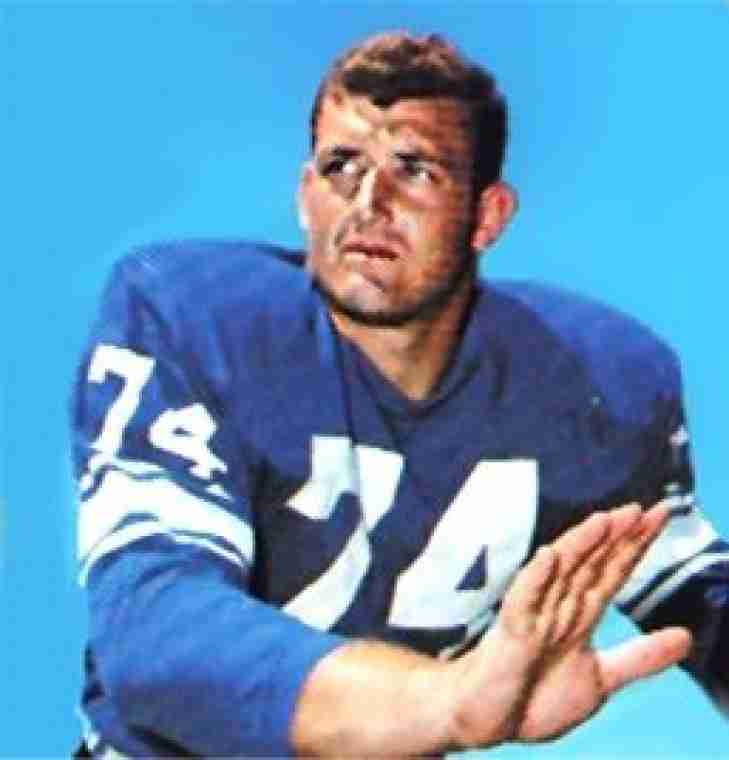
Taken in the 10th round (132nd overall) out of Appalachian State in the 1964 NFL Draft, Larry Hand joined the Lions as a late-round pick who soon became one of the franchise's most notable draft steals. The 6-foot-4, 250-pound defensive lineman secured a roster spot through relentless effort and physical discipline, earning a starting position on Detroit's front four by his second season and maintaining it for more than ten years.
Hand demonstrated exceptional positional flexibility, fluidly moving between defensive end and tackle based on scheme needs. As a formidable run defender and a persistent pressure creator, he was a key component of Detroit's defense alongside Alex Karras and Wayne Walker. Although he never received Pro Bowl honors, his teammates and coaches recognized his value in 1972 by voting him the Detroit Lions’ Most Valuable Player after an outstanding season.
Durability and defensive playmaker instincts defined Hand's 13-year run. In addition to terrorizing backfields for 62.5 retroactively tracked sacks, Hand had an uncanny knack for turning defensive plays into points—housing three of his five career interceptions for touchdowns, including a 62-yard pick-six against Chicago in 1970. When he retired following the 1977 season as a lifelong Lion, he had logged 164 games played, cementing his legacy as one of the most dependable interior anchors in team history.
He compiled 62.5 sacks, five interceptions (110 return yards, three defensive touchdowns), and eight fumble recoveries over his career.
38. Gail Cogdill
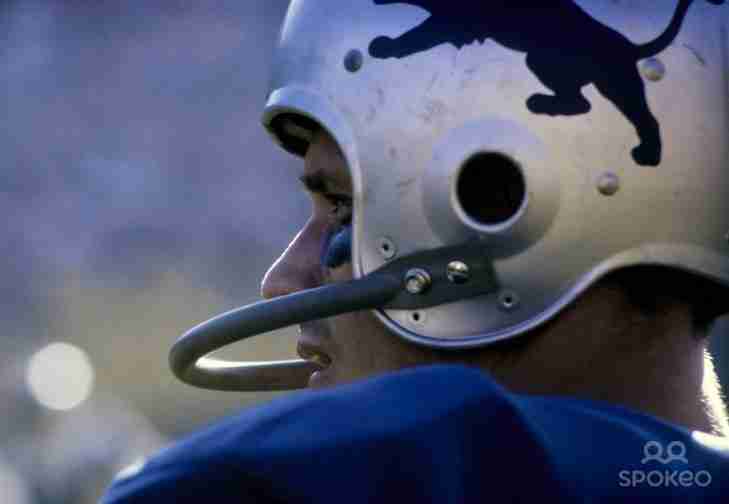
Selected in the sixth round out of Washington State in the 1960 NFL Draft, Gail Cogdill stepped onto the field as a smooth, long-striding split end with vertical speed that immediately stretched opposing defenses. He burst onto the professional scene like a flash of lightning, claiming the 1960 UPI and Sporting News NFL Rookie of the Year awards while establishing himself as Detroit's primary deep threat.
Cogdill's inaugural campaign set the tone for an explosive decade in Motown. As a rookie, he hauled in 43 passes for 964 yards and seven touchdowns, averaging an astonishing 22.4 yards per reception and earning his first Pro Bowl selection. He remained the focal point of Detroit's aerial attack throughout the early 1960s, earning two more Pro Bowl nods (1962, 1963) and three consecutive AP Second-Team All-Pro honors from 1962 to 1964.
Operating in an era dominated by ground-and-pound run schemes, Cogdill's ability to rack up air yardage was extraordinary. He posted back-to-back 900-plus-yard receiving seasons in 1962 and 1963, consistently bailing out quarterbacks like Earl Morrall and Milt Plum on long third-down conversions. Though injuries hampered the later stages of his career, Cogdill remained a steady veteran leader until his departure in 1968, when he finished his career with brief stops in Baltimore and Atlanta.
When Cogdill moved on from the organization, he held virtually every major receiving record in franchise history, leaving a blueprint for future Lions split ends to follow. He would later be named to the club’s 75th Anniversary Team and the All-Time Team. Overall, he had 325 receptions, 5,221 receiving yards and 28 receiving touchdowns.
