


Site Admin
45. Rocky Freitas
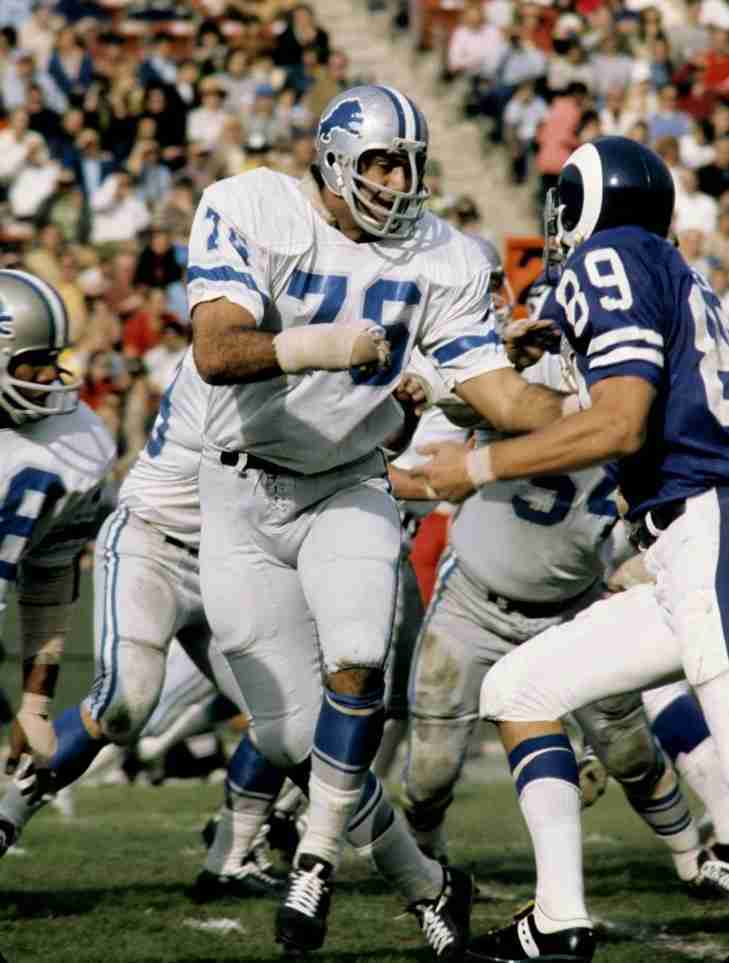
Selected in the third round (73rd overall) of the 1967 NFL Draft by the Pittsburgh Steelers out of Oregon State, Rockne "Rocky" Freitas spent his initial rookie offseason on the move before securing a permanent football home in Motown. Joining the Detroit Lions in 1968, the Kailua, Hawaii native quickly transformed into a bedrock anchor along the right side of the offensive line, leveraging his towering 6-foot-6 frame to overwhelm edge rushers and open massive holes for the ground game.
Taking over as the full-time starter at right tackle during his second campaign, Freitas gave the offense rare technical stability and raw physical power. His pass protection and run-blocking mechanics helped power Detroit to a 10–4 record in 1970, helping the franchise secure its first postseason berth since the merger.
His standard-setting performance came in 1972. Starting all 14 games at right tackle, Freitas anchored an offensive front that routinely dictated terms at the line of scrimmage. His dominant play earned him his first career Pro Bowl invite and Second-Team AP All-Pro honors, while posting a team-high 14 Approximate Value—an impressive mark for an offensive lineman that highlighted his standing as a force in the trenches.
Freitas remained a quiet, dependable cornerstone for Detroit throughout the mid-1970s, making 115 starts across 121 regular-season games in Honolulu blue. His durability and veteran poise steadied the Lions through multiple coaching shifts until his decade-long tenure in Michigan wrapped up after the 1977 campaign. He spent one final active season with the Tampa Bay Buccaneers in 1978 before hanging up his pads to build a distinguished second career in higher education and public leadership back home in Hawaii.
As the first Native Hawaiian player to earn NFL All-Pro honors, Freitas forged a groundbreaking legacy that extended far beyond the box score.
48. John Gordy
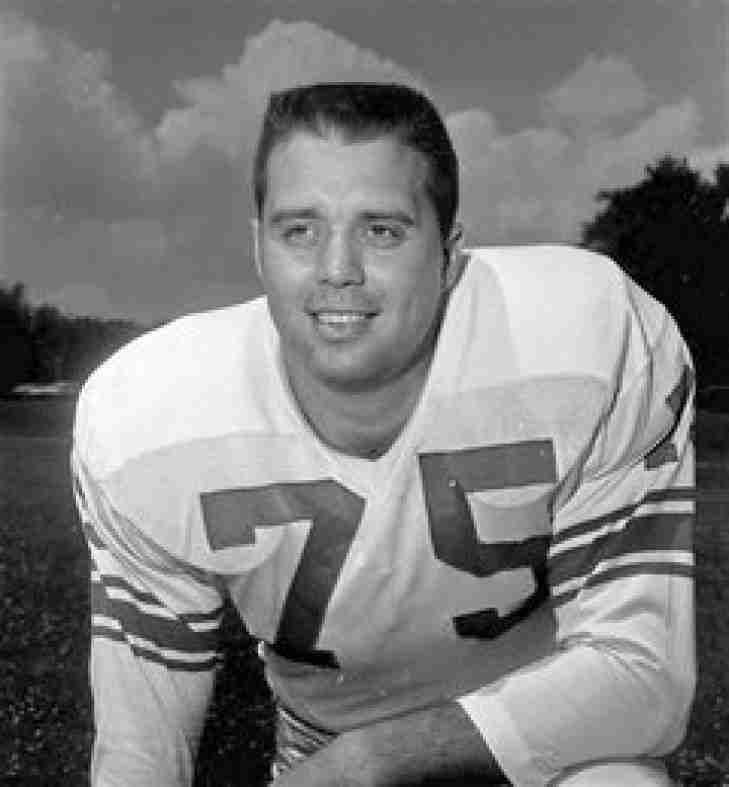
Long before he captivated paperbacks as a storytelling muse, John Gordy laid the physical foundation for Detroit’s final NFL crown. Selected in the second round of the 1957 draft out of Tennessee, the rookie lineman slid right onto the frontline, splitting time between right tackle and guard while clearing paths for Tobin Rote in a 59–14 championship rout of the Cleveland Browns.
After stepping away briefly in 1958 to coach at the University of Nebraska, Gordy returned to the Lions in 1959 and quickly became one of the premier interior offensive linemen in the National Football League. Transitioning full-time to right guard, his rare combination of lateral agility, pulling power, and cerebral protection reads made him the centerpiece of Detroit's blocking schemes throughout the 1960s.
Gordy’s peak years in Honolulu Blue were defined by consistent league-wide recognition. He earned three consecutive Pro Bowl selections from 1963 through 1965, along with three AP Second-Team All-Pro selections (1964, 1966, 1967) and three First-Team All-Pro honors from United Press International (1964–1966). His dominance on the line shielded quarterbacks like Milt Plum and Earl Morrall while paving the way for running back Nick Pietrosante.
Beyond his on-field execution, Gordy was an articulate and charismatic figure who made immense contributions to the sport off the field. As president and executive director of the NFL Players Association in the late 1960s, he spearheaded negotiations for the league's first collective bargaining agreement in 1968, forever shaping modern player rights and sports labor relations.
Gordy’s personality and colorful football stories also captured the imagination of famous participatory journalist George Plimpton. Following the success of Paper Lion, Plimpton featured Gordy ("Bears") alongside defensive tackle Alex Karras ("Mad Ducks") as the central subjects of his acclaimed 1973 book, Mad Ducks and Bears, turning Gordy into a national sports figure and literary favorite.
After a knee injury sidelined him during 1968 training camp, Gordy left an enduring legacy in Detroit. In 2008, the franchise formally honored his ten-season impact by selecting him for the Detroit Lions 75th Anniversary Team.
49. Nick Pietrosante
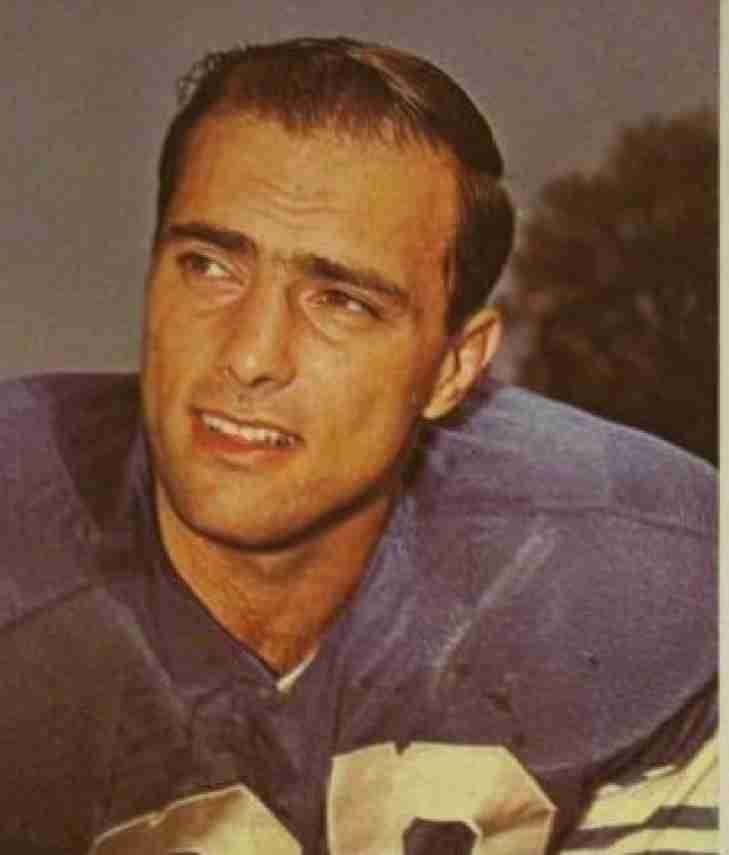
Selected in the first round (sixth overall) of the 1959 NFL Draft out of Notre Dame, Nick Pietrosante arrived in Detroit with immense expectations and immediately established himself as the premier fullback of his era. The power runner delivered a breathtaking debut season, rushing for 447 yards and three touchdowns while averaging 4.7 yards per carry, capturing the UPI NFL Rookie of the Year award and instantly becoming a fan favorite at Briggs Stadium.
Pietrosante elevated his production to elite levels over the next two campaigns, anchoring the Lions' backfield with a punishing, downhill running style. In 1960, he earned his first career Pro Bowl selection after rushing for 872 yards—the third-highest total in the NFL—and scoring eight touchdowns. He followed that up with a second consecutive Pro Bowl nod in 1961, carrying the ball 211 times for 841 yards and five touchdowns while helping lead Detroit to an 8–5–1 record.
Alongside halfbacks like Gale Sayers and Danny Lewis, and behind guard John Gordy, Pietrosante was the focal point of head coach George Wilson's ground attack. His physical presence between the tackles forced opposing defenses to commit heavy boxes, opening up passing lanes for quarterback Milt Plum. He was also an accomplished pass-blocker and sneaky receiver out of the backfield, hauling in 143 receptions for 1,220 yards and three touchdown catches during his time in Detroit.
Pietrosante remained a steady contributor through the middle of the decade, logging seven total seasons in Honolulu Blue from 1959 through 1965. By the time he departed for the Cleveland Browns in 1966, he held the Lions' franchise record for career rushing yards—a mark that stood for nearly two decades until Billy Sims broke it in 1984.
Tragically, Pietrosante passed away from cancer in 1988 at the age of 50. His legacy as one of the toughest, most respected leaders in Detroit sports history remains secure, honored by teammates and fans alike for his blue-collar work ethic and classic fullback toughness.
Overall, in Detroit, Pietrosante had 938 rushing attempts for 3,933 rushing yards with 28 rushing touchdowns, 134 receptions for 1,323 receiving yards with two receiving touchdowns, and 5,256 yards from scrimmage.
46. Mike Lucci
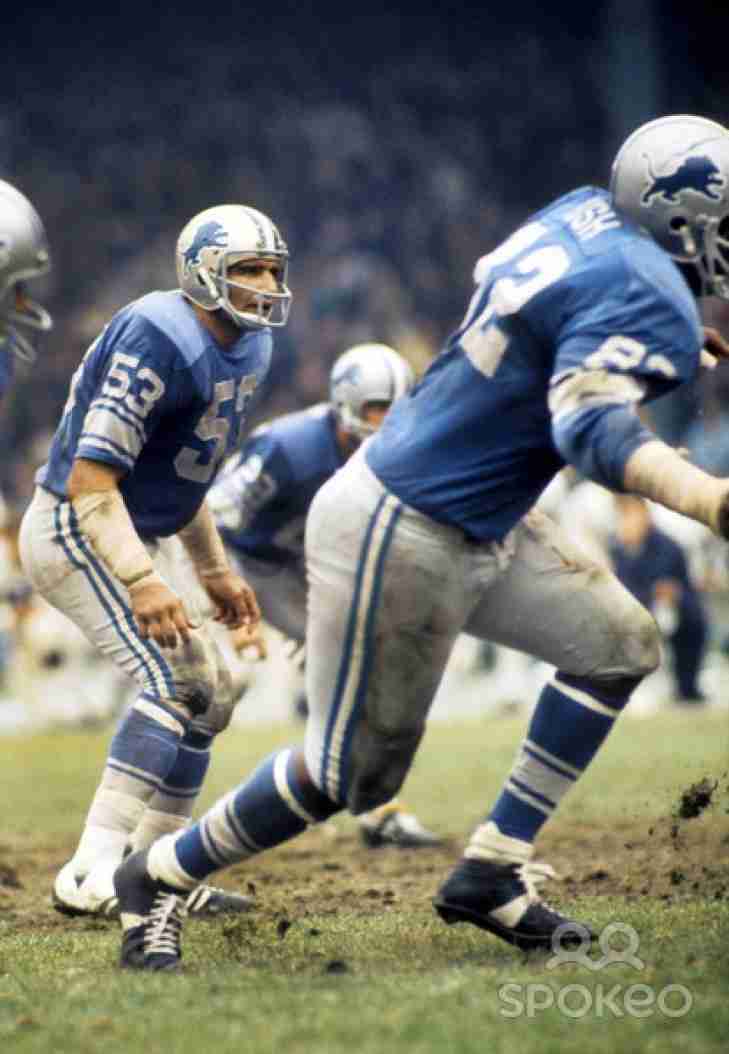
When the Detroit Lions acquired Mike Lucci from the Cleveland Browns before the 1965 season, they sought a physical successor to team legend Joe Schmidt in the middle of their defense. The former Pittsburgh and Tennessee product did more than fill a void; he became the unquestioned emotional heartbeat and vocal captain of Motown’s defense for nine gritty seasons.
Taking over as the starting middle linebacker in 1966, Lucci established a reputation as one of the toughest, most uncompromising interior defenders of his generation. Playing through broken bones, severe sprains, and structural injuries that would have sidelined lesser competitors, he commanded the huddle with an iron will. His exceptional pre-snap diagnostics enabled him to blow up interior running plays while dropping effortlessly into intermediate coverage to neutralize opposing tight ends.
Lucci reached the peak of his leadership between 1969 and 1971, a remarkable three-year stretch where his teammates voted him the Detroit Lions Team Defensive MVP in three consecutive seasons. Head coach Joe Schmidt lauded him as the league's top middle linebacker in 1969, and Lucci backed up that praise by earning Second-Team AP All-Pro honors while helping propel Detroit to a 10–4 record and a playoff berth in 1970.
During the 1971 campaign, Lucci was in the national spotlight, leading a tough defensive front. He intercepted five passes, scoring two touchdowns from those returns, and earned his first Pro Bowl selection. Over his nine seasons in Detroit, ending after 1973, Lucci totaled 21 interceptions — the most among NFL middle linebackers at the time. Four of these were returned for touchdowns.
