


Site Admin
44. Eddie Murray
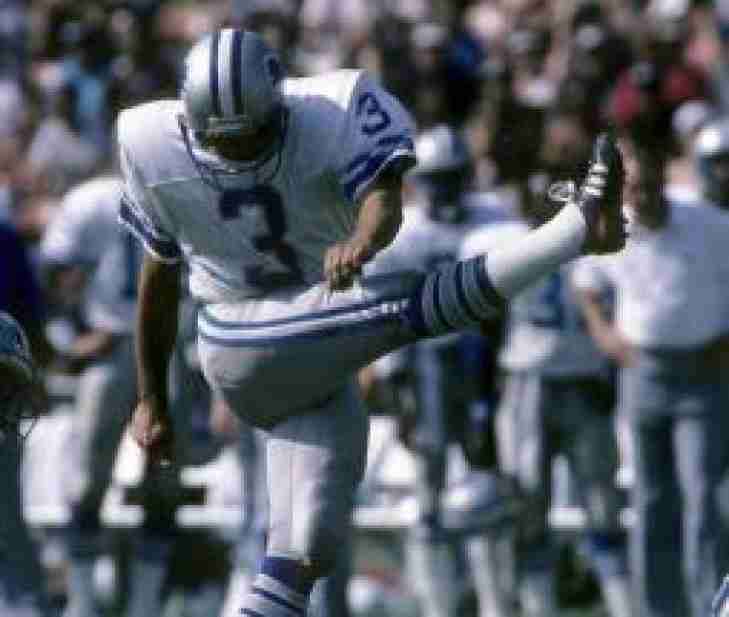
Selected out of Tulane in the seventh round (166th overall) of the 1980 NFL Draft, Eddie Murray faced the immediate pressure of stepping into Detroit’s primary placekicking job. The Canadian-born specialist answered with one of the most remarkable debut campaigns by a kicker in league history. Converting 27 of 42 field goals and scoring 116 points, Murray captured the NFC scoring title, earned a Pro Bowl nod, and took home PFWA All-Rookie Team honors. In the 1981 Pro Bowl, he delivered a five-field-goal clinic—becoming the first and only rookie kicker ever awarded the game’s MVP.
That record-breaking debut set a standard of steady production that defined Motown's special teams unit for over a decade. Under the Pontiac Silverdome roof, Murray had a booming leg paired with exceptional technical composure under pressure. He routinely converted long-range attempts in an era where 50-plus yarders were rare, setting a Lions franchise record in 1983 with a 54-yard strike—which he matched in the postseason that same year.
Murray’s calling card in Detroit was absolute precision. In back-to-back seasons in 1988 and 1989, he reached the absolute peak of kicking efficiency, leading the entire NFL by converting an astounding 95.2% of his field goal attempts in both years (20-of-21 in each campaign). That razor-sharp accuracy earned him his second Pro Bowl invitation following the 1989 season, solidifying his reputation as "Steady Eddie" among teammates and opponents alike.
The curtain fell on Murray's iconic run in Detroit during the spring of 1992. Following the team's run to the 1991 NFC Championship Game, the Lions opted to retool their special teams unit, waiving the 35-year-old veteran on April 29, 1992, after selecting future franchise icon Jason Hanson in the second round of the 1992 draft. While the roster move closed a twelve-year chapter, Murray departed as the Lions' all-time leading scorer with 1,113 points. He went on to play nine more NFL seasons—winning Super Bowl XXVIII with Dallas in 1993—before retiring after a legendary 21-year career.
With the Lions, Murray compiled 244 field goals made on 325 attempts (75.1%), 381 extra points made on 386 attempts (98.7%), for 1,113 points.
41. Altie Taylor
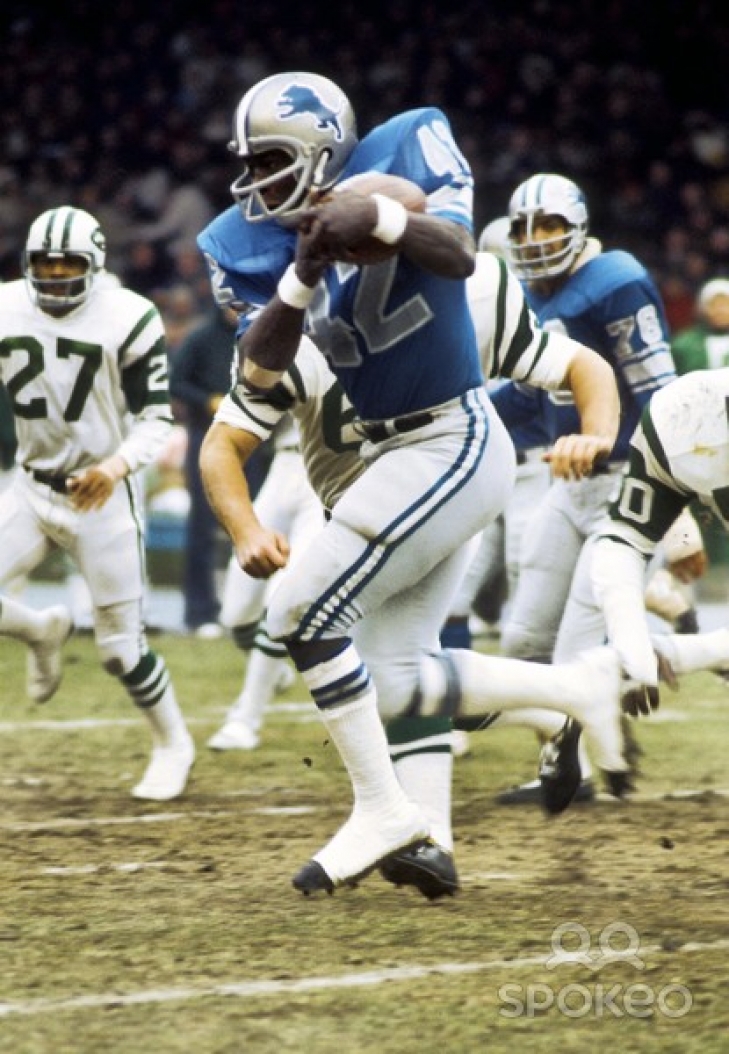
Selected in the second round (34th overall) of the 1969 NFL Draft out of Utah State, Altie Taylor entered the professional ranks known for his bruising style, sure hands, and versatility out of the backfield. Settling into Motown during a transition era for the franchise, the 5-foot-10, 200-pound ball-carrier quickly proved to be a durable, hard-nosed cornerstone for Detroit's offense.
After flashing potential as a rotational rookie, Taylor seized control of the backfield during the 1970 season, starting all 14 games and posting 927 yards from scrimmage to help propel the Lions to a 10–4 record and a playoff berth. Operating as a true dual-threat weapon, his soft hands out of the backfield complemented his rugged interior running, allowing him to consistently move the chains on third downs.
Taylor’s apex came between 1972 and 1974, a three-year stretch in which he served as the team's undisputed primary ground weapon and led Detroit in rushing three straight seasons. His crowning individual campaign arrived in 1973, when he compiled 719 rushing yards, 252 receiving yards, and five touchdowns. Highlighted by a signature 160-yard rushing performance against the rival Green Bay Packers, Taylor's grinding consistency earned him the honor of being named the Lions' Team Offensive MVP.
By 1975, Taylor had etched his name into the franchise record books, surpassing Nick Pietrosante to temporarily become the Detroit Lions' all-time leading rusher with 4,297 yards on the ground. Across his seven-year tenure in Detroit, Taylor accumulated over 6,000 all-purpose yards (including return yards) and scored 30 total touchdowns.
29. Harley Sewell
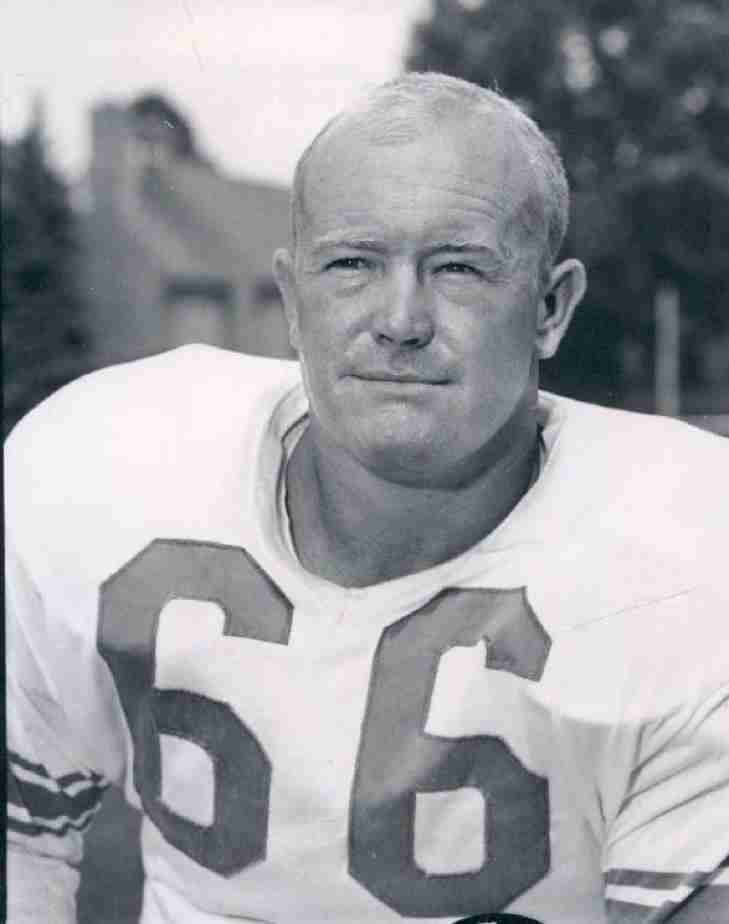
Taking him in the first round (13th overall) out of Texas in the 1953 NFL Draft, the Detroit Lions added an immediate physical presence to their interior line in Harley Sewell. Known for his exceptional speed and leverage as a pulling guard, Sewell stepped into the starting left guard spot as a rookie and instantly solidified Motown's offensive line.
Sewell's mobility made him the ideal lead blocker on sweeps and traps, clearing paths for iconic backs like Doak Walker and Bobby Layne. He earned immediate postseason success, helping power Detroit to an NFL Championship as a rookie in 1953 and capturing a second title ring in 1957. Recognized as one of the premier interior guards of his era, Sewell earned four Pro Bowl selections (1957, 1958, 1959, 1962) and a Second-Team AP All-Pro nod in 1957.
Beyond his offensive line mastery, Sewell was a relentless hustler who also starred on special teams, regularly leading the coverage units in tackles. After ten dependable seasons anchoring the Lions' interior, he concluded his career with a brief stint with the Los Angeles Rams in 1963. Detroit later honored his enduring impact with a spot on the Lions’ 75th Anniversary Team.
Sewell had 111 starts over his 120 games for the team.
40. Mel Gray
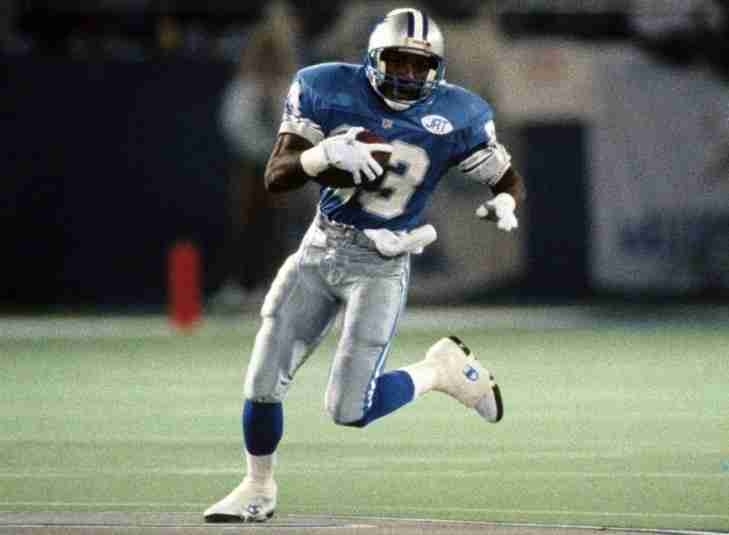
Before recent changes to the kickoff rule changed the game strategy, Mel Gray was a lightning-fast force on the field, particularly in field position. Joining Detroit in 1989 after playing in New Orleans and the USFL, the dynamic return specialist spent six key seasons shaping the Lions' special teams, setting standards for speed and agility that still stand unmatched in franchise history.
Gray saw limited involvement in Detroit’s standard offensive passing schemes, but his exceptional ability as a return specialist made him a key figure in the team's mid-1990s playoff campaigns. When punters and kickers missed the sidelines, Gray turned standard kicks into highlight-worthy plays. His sharp vision, quick burst of speed, and precise cuts often gave Barry Sanders and the Lions' offense advantageous field positions.
His prime years were between 1990 and 1994, a remarkable period when he earned First-Team AP All-Pro honors in three seasons (1990, 1991, 1994) and received four straight Pro Bowl selections. His standout performance was in 1994, leading the league with a remarkable 28.4-yard kickoff return average and returning three kickoffs for touchdowns, notably a 102-yard run versus the Chicago Bears.
By the time he left Detroit after 1994, Gray had nearly 7,000 return yards and 7 touchdowns with the Lions. He was the franchise leader in kickoff returns (216), yards (5,478), and touchdowns (5). Named to the NFL 1990s All-Decade Team as a kickoff returner, Gray’s legacy as a top special teams player in Motown endures.
