


Site Admin
32. Roy Halladay
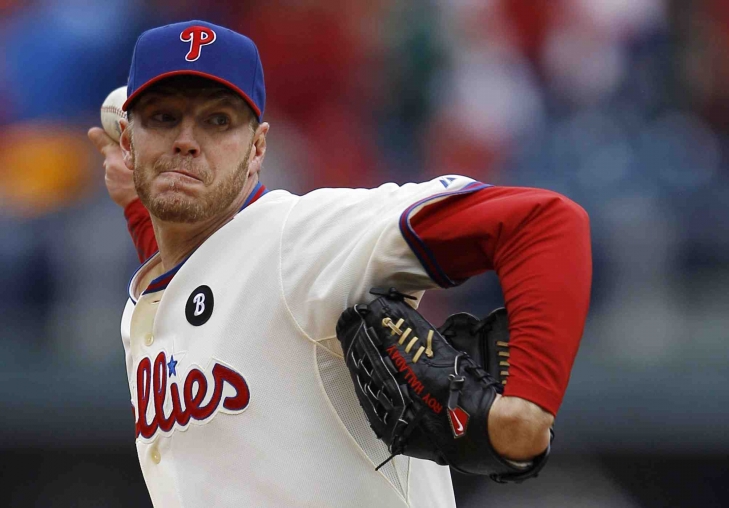
Before Roy Halladay donned a Philadelphia jersey, his reputation as a top-tier player in the modern game was well established. As the reliable and dominant pitcher for the Toronto Blue Jays, "Doc" had already won an American League Cy Young Award and led the league in bWAR for consecutive seasons. He exemplified the ideal old-school workhorse, thriving in an era of strict pitch counts. However, when he was traded to the Phillies before the 2010 season, Halladay managed to elevate his already stellar career into an enduring baseball legend.
His debut campaign in red pinstripes showcased exceptional athletic control. Halladay systematically dismantled National League lineups, achieving a 21-10 record with a stellar 2.44 ERA, leading the majors with nine complete games and four shutouts. On May 29, during that remarkable summer, he delivered a flawless performance by pitching a perfect game against the Florida Marlins. This historic feat secured him the unanimous National League Cy Young Award, placing him among the few to win the honor in both leagues.
Yet, it was his unforgettable introduction to the high-leverage theater of October that permanently altered the archives of the sport. Making the very first postseason appearance of his twelve-year career in Game 1 of the NLDS, Halladay stepped onto the mound at Citizens Bank Park and completely paralyzed the Cincinnati Reds. Armed with a devastating, biting cutter and immaculate spatial command, he carved his way through history to spin a no-hitter, marking only the second no-hit masterpiece in postseason history after Don Larsen’s famed 1956 World Series perfect game.
He carried his front-line dominance into the 2011 season, posting a strong regular season with a 19-6 record and a career-best 2.35 ERA, earning him a close second in the Cy Young voting. Unfortunately, the intense workload needed to maintain that level of excellence took a severe physical toll. Serious shoulder and back injuries caused him to lose much of his signature velocity and movement, diminishing his once-formidable presence to a shadow of itself during two painful, less effective seasons before he officially retired in late 2013.
Halladay would die in 2017 when he crashed his amphibious plane in the Gulf of Mexico. The Phillies would posthumously induct him into their Baseball Wall of Fame in 2018, and the Baseball Hall of Fame chose him the next year.
31. Larry Bowa
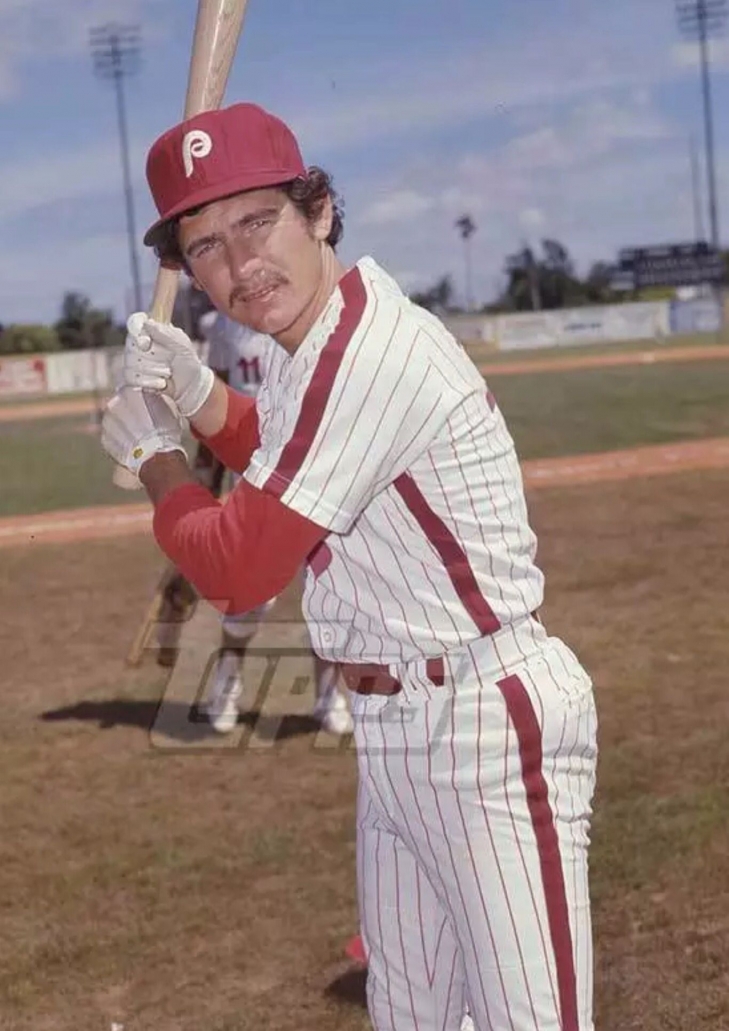
Surviving twelve tough seasons as the Phillies' starting shortstop demands exceptional defensive skills. For Larry Bowa, this was the only way to succeed. Known for his fiery, ultra-competitive nature, which earned him the nickname "The Gnat,” he turned the shortstop role into a showcase of precise positioning and relentless coverage. Although his power at the plate was modest, his glove was a top-tier, era-defining defense that anchored the infield during the team’s golden era.
From a run prevention standpoint, Bowa was an exceptionally efficient player with low variability. He led all National League shortstops in fielding percentage five times, thanks to his quick first step and flawless glove work, which helped him reliably cover the turf at Veterans Stadium.
His advanced spatial metrics were extremely impressive, far exceeding a simple regional favorite. He ranked in the top ten in the National League for defensive bWAR five times, peaking in 1978 when he led all Senior Circuit position players with a remarkable 2.9 defensive WAR.
Evaluating Bowa solely as a defensive player overlooks his highly productive role as a table-setter in the lineup’s bottom half. Despite lacking power—hitting only 13 home runs over 1,739 games in Philadelphia, he consistently found ways to prolong innings. Bowa achieved three summers hitting over .280 and amassed 1,798 hits while with Philadelphia. His exceptional speed allowed him to disrupt catchers, securing nine straight seasons with at least 20 stolen bases.
The peak of his regular-season efforts and national acclaim occurred during the iconic 1978 year. Bowa delivered an outstanding display on both offense and defense, achieving a career-high 192 hits and posting a impressive .294 batting average, which earned him a well-deserved third place in the National League Most Valuable Player voting.
That impressive pedigree remained completely unbreakable when the spotlight was brightest during the remarkable 1980 championship run. He made the Fall Classic his personal stage, batting an impressive .375 against the Kansas City Royals and playing a key role in securing the franchise's first-ever world title.
After being traded to the Chicago Cubs before the 1982 season, he eventually became a prominent, passionate presence in the dugout. In 2001, he rejoined his true baseball home, taking charge of a rebuilding team and leading an unexpected turnaround of 86 wins, which earned him the National League Manager of the Year award, demonstrating that his emotional core was forever linked to Broad Street.
Of course, the primary reason his overall historical valuation faces stiff resistance from modern spreadsheet analysts lies in the final two-thirds of his slash line. With a career franchise on-base percentage of .301 and a slugging metric of .324, his low-efficiency approach at the plate was a persistent drag on offensive run creation. Saying that, he was beloved in his heyday in Philly.
He was later inducted into the Philadelphia Baseball Wall of Fame in 1990.
27. Greg Luzinski
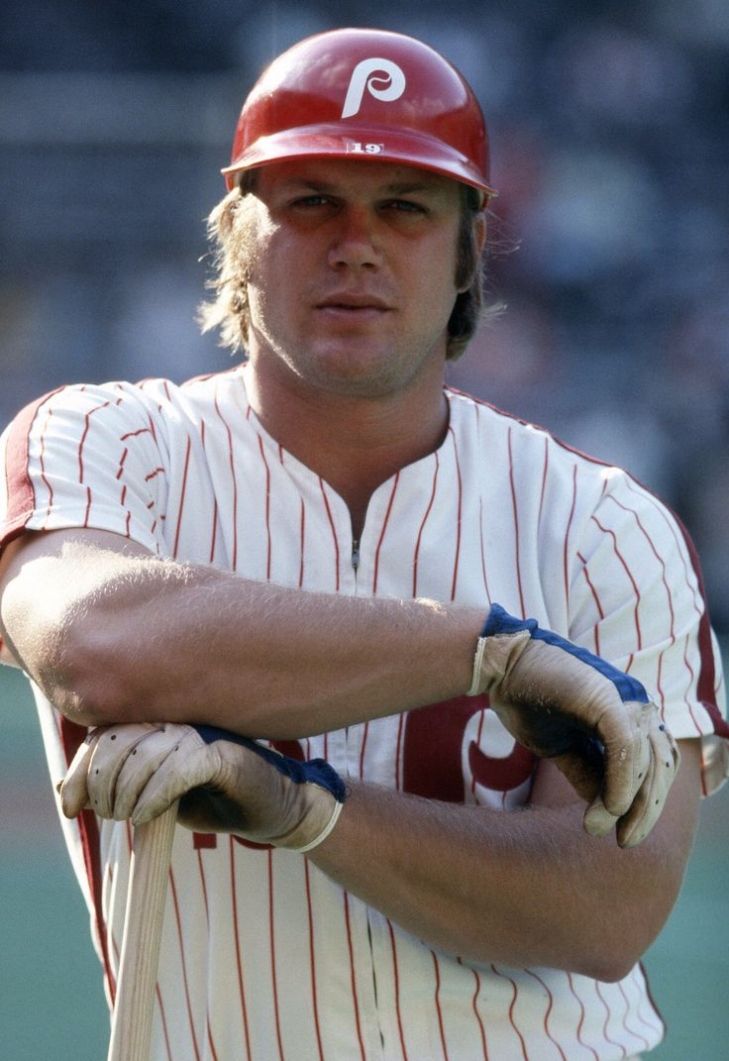
Few players have ever visualized their nickname quite like Gregory Michael "The Bull" Luzinski. Weighing 255 pounds on a six-foot-one frame, he appeared more like a powerful defensive lineman who accidentally wandered onto the baseball field rather than a typical outfielder. During the 1970s, Luzinski was a beloved figure in eastern Pennsylvania, teaming with Mike Schmidt to create one of the most formidable and high-powered batting duos of the post-war period. When he stepped up to the plate at Veterans Stadium, pitchers knew any mistake could send the ball soaring out of the park.
During the mid-to-late 1970s, Luzinski wasn't simply popular; he was a ruthlessly efficient, middle-of-the-order engine. He secured four consecutive National League All-Star selections from 1975 through 1978, anchoring the offense during the franchise's prominent run of three straight division titles.
Over three remarkable summers, he regularly surpassed 30 home runs and 100 RBIs, punishing pitchers with powerful extra-base hits. Far from just a pull-happy slugger, The Bull demonstrated a highly refined plate approach, hitting above .300 three times within that four-year span, showing he could control the strike zone as well as he could hit the ball hard.
His top regular-season performance and national acclaim peaked in 1975 and 1977, when he finished as a close runner-up for the National League Most Valuable Player Award. In 1975, he led the NL with a career-best 120 RBIs. Two years later, he had an outstanding 1977 season, hitting a personal best of 39 home runs and recording 130 RBIs.
Assessing Luzinski’s historical ranking without considering his defensive metrics would be incomplete. In left field, his large physique made it difficult to cover the ground. His limited range was an understatement; he was a significant defensive weakness, often forcing his center fielders to cover twice the usual area. Advanced metrics show he had six seasons with a defensive bWAR of -1.5 or worse, including three particularly poor summers dropping below -2.0. These defensive struggles significantly impact his overall career evaluation.
During the brightest moments, The Bull consistently rose to the occasion, creating legendary franchise memories. He safely hit in each postseason game during the 1976–1978 playoffs and, as a bench player in the memorable 1980 NLCS against Houston, recorded two iconic, game-winning hits. These performances helped lead the Phillies to their first World Series title.
He concluded his memorable eleven-year stay in Philadelphia with 1,299 hits, 223 home runs, and 811 RBIs before returning to his native Chicago in 1981 to close his career with the White Sox. Philadelphia chose Luzinski for the Philadelphia Baseball Wall of Fame in 1997.
34. Charlie Ferguson
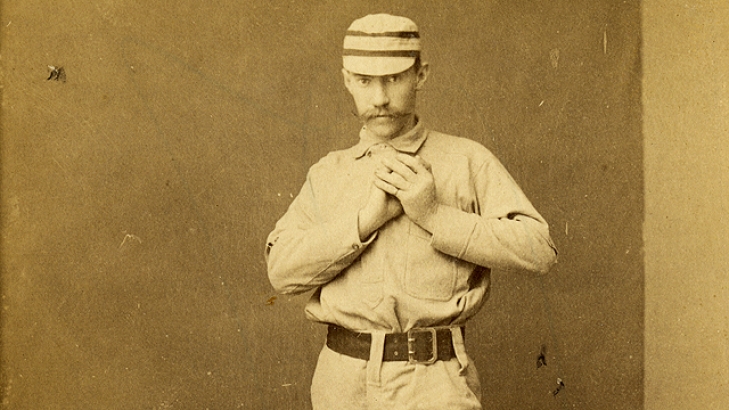
The history of professional baseball is rich with legendary figures whose contributions are etched in history, yet some, like Charlie Ferguson, occupy a more bittersweet, frozen-in-time place. Ferguson, a Charlottesville native, was a standout for the 19th-century Philadelphia Quakers, long before the team officially became the Phillies. He quickly proved himself as a versatile and exceptional Player, not only participating in the game but also excelling at it from the pitcher’s mound and the middle of the batting order. Ferguson exemplified qualities of a modern elite athlete well before baseball fully evolved.
His debut in the National League in 1884 marked the emergence of a reliable workhorse. Ferguson took on the demanding physical role of the era, pitching 416.2 innings as a 21-year-old rookie and earning 21 wins. By the 1985 season, his control improved significantly, culminating in a memorable August afternoon when he pitched a perfect 1-0 no-hitter against the Providence Grays, the first no-hit game in franchise history.
His peak pitching achievement occurred in a remarkable 1886 showcase. Ferguson delivered a historic regular season, finishing with a 30-9 record, a tiny 1.98 ERA, and a stellar 0.976 WHIP. With a blazing fastball and a consistent, low-variance delivery, he led the pitching staff and cemented his reputation as one of the top right-handed pitchers in the nation.
What set Ferguson apart as a true unicorn of the Deadball Era was his remarkable versatility. Recognizing his exceptional bat speed and soft hands, legendary manager Harry Wright consistently used him as a key position player on days when he wasn't pitching. Ferguson mastered both patrolling center field and playing second base in the infield, turning both into a refined skill. During his four years with Philadelphia, he achieved an impressive career batting average of .288.
His multi-dimensional peak culminated dramatically during the 1887 pennant race, when he delivered an exceptional individual performance. While securing 22 wins as a pitcher to help the Quakers achieve a strong second-place finish, he also became the regular second baseman late in the season. He posted an impressive .337/.417/470 slash line and led the team with 85 RBIs in only 264 at-bats.
The reason there was no fifth season is that in April 1888, Ferguson contracted typhoid fever and died within a month, depriving the game of what many regarded as the best all-around player at the time. It is only speculation to imagine that Charlie Ferguson could have been a Hall of Famer if tragedy had not intervened.
Tragically, the baseball world would never see a fifth season of his groundbreaking career. During spring training before the 1888 season, Ferguson suddenly contracted a severe case of typhoid fever. The illness quickly worsened, taking a heavy toll on his young body, and he died on April 29, 1888, just twelve days after turning 25. This devastating news plunged the baseball community into deep mourning; in his memory, the Quakers and several rival teams wore black crepe on their left sleeves throughout the summer.
He ended his career prematurely, winning nearly 61% of his decisions with a remarkable 99-64 record, 165 complete games, and a 2.67 ERA, all while delivering elite offensive performance.
