


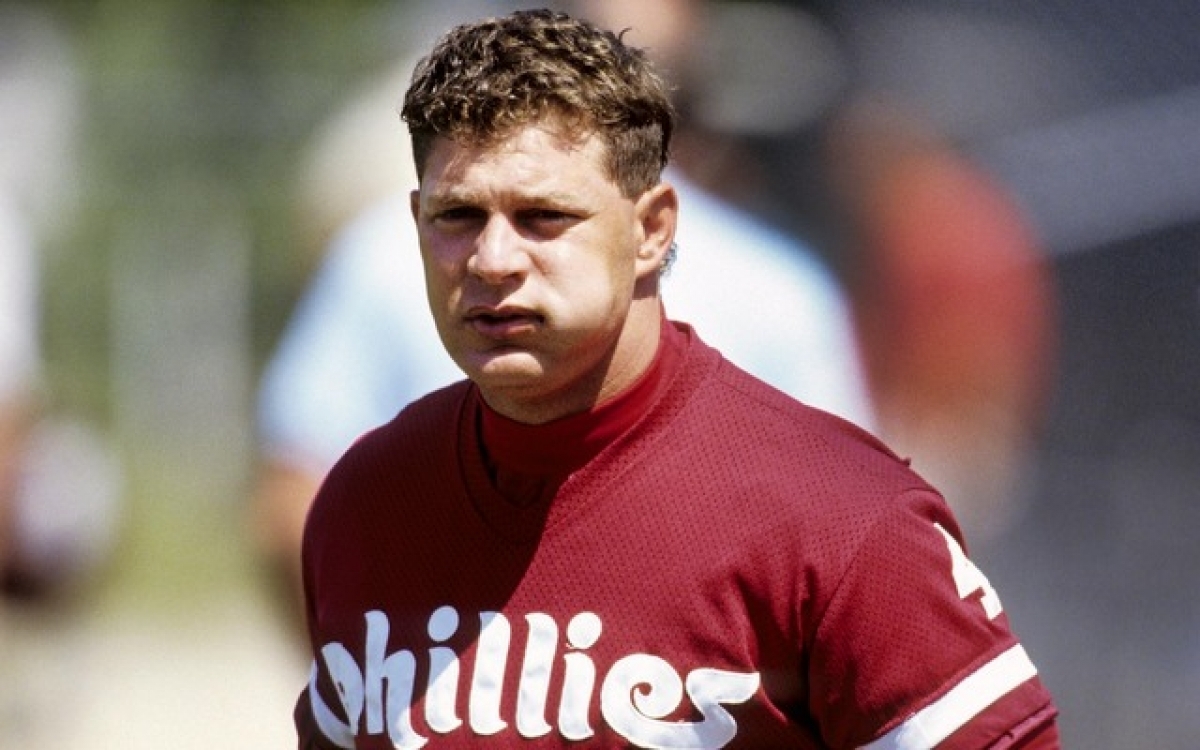


Few players in franchise history have ever matched the raw, dirt-caked intensity that Lenny Dykstra brought to the diamond. He had already established himself as a highly popular postseason catalyst with the New York Mets, helping secure the 1986 World Series title, but that outer-borough fame completely paled in comparison to the absolute obsession he generated in eastern Pennsylvania. Known universally as "Nails" for his fearless, wall-crashing style of play, the stocky center fielder personified the exact blue-collar, unyielding identity of the city he represented. When he was on the field, his hyper-aggressive energy dictated the club’s entire operational pace.
His eight-year tenure with the Phillies was marked by a tumultuous series of intense physical peaks and injury-ridden lows. When he was in the training room, his absence created a significant, noticeable gap at the top of the lineup; however, when healthy, Dykstra was an exceptional, game-changing presence.
During his first full summer in Philadelphia in 1990, he showcased his high-volume batting skills by leading the National League with 192 hits and a remarkable .418 on-base percentage. However, his true standout moment came during the 1993 pennant race, when he became the heart of a team of clubhouse rebels. That season, Dykstra delivered an extraordinary individual performance, leading all of baseball with 143 runs scored, 194 hits, and 129 walks, and achieving a career-best .902 OPS. He was a close runner-up to Barry Bonds for the National League Most Valuable Player award, acting as the driving force that propelled the franchise to the World Series.
Although the enchanting autumn ultimately ended with a devastating defeat at the hands of the Toronto Blue Jays, no blame could be attributed to Dykstra. In an exemplary postseason performance, he systematically overwhelmed Toronto’s pitching staff, hitting four home runs and demonstrating an exceptional .348/.500/913 slugging average throughout the six-game series, nearly leading the team to victory single-handedly.
Tragically, the legacy he left on the grass has been significantly overshadowed by a prolonged series of severe personal crises following his career. Dykstra was extensively involved in the use of performance-enhancing drugs during his playing days, and his post-baseball business pursuits encountered substantial legal difficulties, ultimately leading to a three-year federal incarceration for financial fraud.
For a generation of local fans who saw him dive into the turf at Veterans Stadium with a tobacco-stained jersey, the raw connection remains distinct from his later struggles. During his 734 games with the Phillies, he achieved 821 hits, 381 walks, and 149 stolen bases, a burst of energetic brilliance that cemented his status as one of Philadelphia's most cherished folk heroes.

Comments powered by CComment