


Site Admin
16. Bobby Abreu
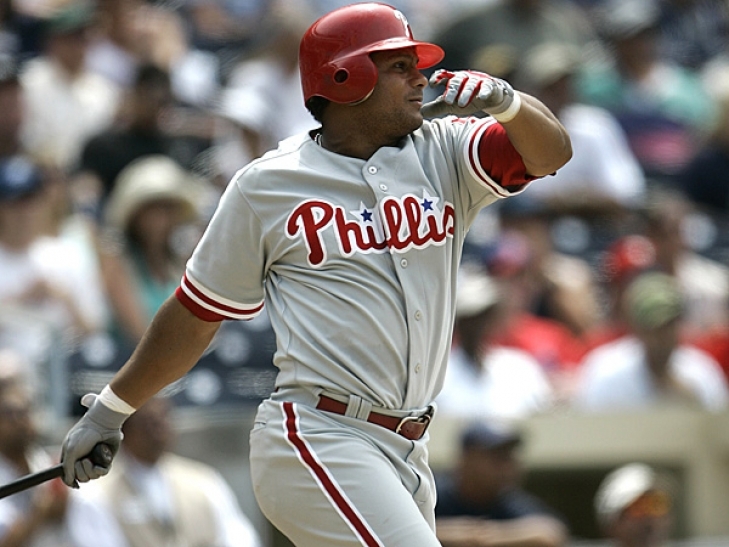
When modern spreadsheet analysts and advanced metric enthusiasts think of the standout example of the sabermetric movement, they often point to Bobby Abreu. Even before he gained widespread attention with his high-profile trade to the New York Yankees, the talented Venezuelan outfielder made the batter's box in Philadelphia feel like his own research lab. Abreu was a true master at working deep pitch counts, blending a sharp eye for the strike zone with a quick, graceful left-handed swing that kept opposing strategies at bay.
While some casual observers in the late 1990s and early 2000s overlooked his quiet efficiency for more flamboyant sluggers, Abreu was building one of the most complete, high-volume peaks in modern franchise history. His remarkable consistency on Broad Street was almost surreal. Over 1,353 games with the Phillies, Abreu showcased a stunning level of multi-dimensional performance, recording six straight seasons with at least 170 hits, 20 home runs, and 20 stolen bases.
More than just a compiler, his efficiency metrics were exceptionally elite; five campaigns saw him reach a .300 batting average and a .400 on-base percentage simultaneously. He consistently ranked high on senior circuit leaderboards, finishing in the top ten of the National League in OBP eight times while anchoring the middle of the lineup.
His consistent run production resulted in an outstanding .303/.416/513 slash line, making history with the franchise and becoming a rare example of the elite "3/4/5" triple-slash that few modern players maintain over many seasons. Abreu combined this exceptional plate discipline with quick instincts on the bases, often stealing 30 or more bases annually to consistently challenge opposing defenses.
He even showcased a highly capable, intelligent toolset out on the grass, navigating the tricky caroms of Veterans Stadium and Citizens Bank Park with fluid efficiency to capture a National League Gold Glove Award in 2005.
Despite his outstanding performance in the regular season and earning two well-deserved All-Star selections in red pinstripes, the front office often struggled to assemble a robust, championship-quality pitching staff around Abreu's exceptional on-base skills. As the team shifted toward developing a new core, management decided to free up financial resources by trading their veteran star to the Bronx partway through the 2006 season.
Abreu departed Philadelphia having accumulated 1,474 hits, 348 doubles, 195 home runs, and 254 stolen bases.
13. Cole Hamels
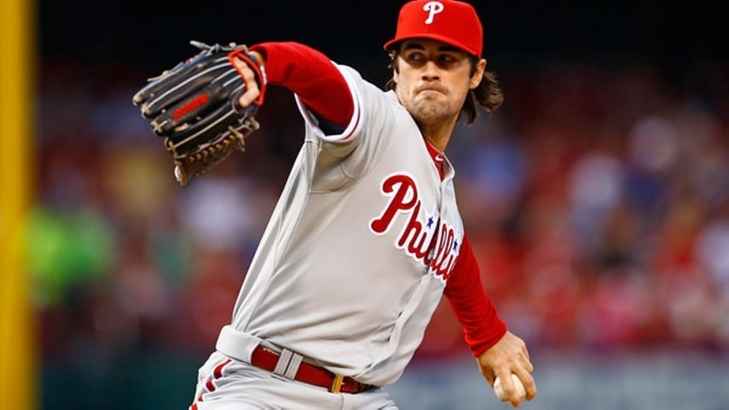
Every championship team has an iconic image, and for the 2008 Philadelphia Phillies, that’s Cole Hamels. With a smooth delivery that defied physics, the slender left-hander dismantled hitters using a devastating circle changeup and a crisp fastball. While the roster had power hitters and leaders, Hamels was the cool, clinical staff ace when the stakes increased in October.
Drafted by the Phillies in the first round in 2002, Hamels entered the majors with high expectations, which his performance quickly confirmed. He quickly developed into a top-tier, front-of-the-rotation pitcher known for his consistent durability during the regular season and his exceptional skill at generating swings-and-misses.
Throughout his ten years with Philadelphia, Hamels achieved a notable 114-90 record, ranking among the top ten in strikeouts in the National League seven times. He amassed an impressive 1,844 strikeouts with the Phillies. His exceptional control of the strike zone was particularly clear in the historic 2008 season, when he led the National League with a remarkable 1.082 WHIP (walks plus hits per inning pitched).
Although Hamels never won a regular-season Cy Young Award, he was consistently recognized as a top pitcher. He earned three All-Star nods wearing his red pinstripes and ranked in the top ten for Cy Young voting four times. His best finish was fifth in 2011, a year when he played a key role in the famous "Four Aces" rotation with Roy Halladay, Cliff Lee, and Roy Oswalt.
His lasting legacy was cemented during the intense pressure of the 2008 postseason. In a showcase of exceptional big-game pitching, Hamels delivered one of the most remarkable individual playoff performances in baseball history. He started five games that fall, finishing with a perfect 4-0 record and striking out 30 batters across 35 outstanding innings. He completely dominated the Los Angeles Dodgers to earn the NLCS Most Valuable Player award, then carried that momentum into the Fall Classic, overpowering the Tampa Bay Rays to win the World Series MVP award, solidifying his role as the key architect of the franchise's first global championship in 28 years.
In July 2015, he concluded his time with Philadelphia with a poetic flourish by pitching a brilliant no-hitter at Wrigley Field against the Chicago Cubs in his last game before being traded to the Texas Rangers.
Hamels was welcomed back in 2024 when the Phillies added his name to the Wall of Fame.
12. Gavvy Cravath
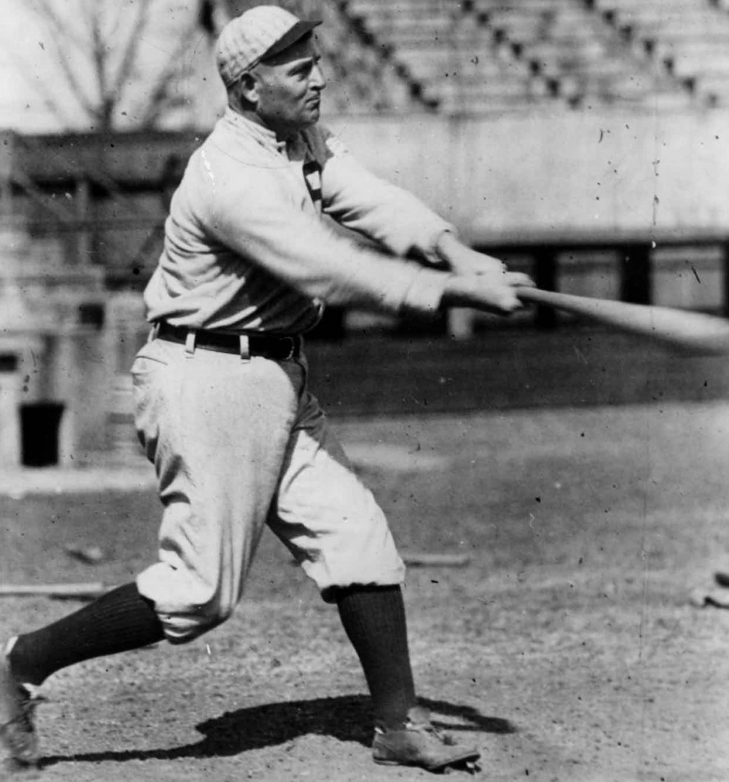
Prior to Babe Ruth fundamentally altering the landscape of professional baseball with his formidable power hitting to the upper deck, the unparalleled home run king during the dead-ball era was Gavvy Cravath. Nonetheless, in accordance with the prevailing baseball rationale of the early 20th century, Cravath was expected to be entirely phased out of the sport. Making his Major League debut at the age of 27 with the Boston Red Sox, he was widely criticized by teammates, fans, and front offices for his painfully slow on-field foot speed. He remained within the minor league system for several years, seemingly relegated to the lower levels on organizational depth charts, until a highly unconventional clerical error in a telegram, at the age of 31, afforded him a second opportunity with the Philadelphia Phillies, an opportunity he capitalized on to completely rewrite the record books.
Arriving at Shibe Park in 1912, Cravath promptly established himself as a formidable force at the plate. During an era characterized by scuffed baseballs, heavy bats, and low-scoring tactical contests, his right-handed power-hitting was remarkably exceptional. He secured the National League home run title an impressive six times within a seven-year period.
Although his 24 home runs in 1915 was a modest total by today's standards, it was a remarkable and extraordinary feat for its era, surpassing the combined power of entire opposing teams. He skillfully used his strong pull-hitting ability to take advantage of the small size of Philadelphia’s Baker Bowl, making the right-field wall his own personal launching pad.
However, labeling Cravath just as a powerful hitter ignores his impressive offensive efficiency. He wasn't a free swinger; instead, he had a keen, disciplined eye at the plate, leading the National League in on-base percentage twice, including an outstanding .412 in 1915. He was a highly effective run scorer, leading the senior circuit in RBIs twice, most notably with 128 RBIs in 1913, and was a league leader in slugging percentage and OPS twice, helping build the franchise's historic 1915 pennant-winning team.
The sheer density of his production during his nine-year stay on Broad Street yielded an exceptional .291/.391/.489 slash line—a statistical fingerprint that commands immense respect across any generation of baseball history. He even stepped up to serve the organization as a player-manager during his final two summers, providing a steady, respected hand through a difficult transitional era before officially retiring after the 1920 season.
He was chosen for the Philadelphia Baseball Wall of Fame in 2000.
11. Billy Hamilton
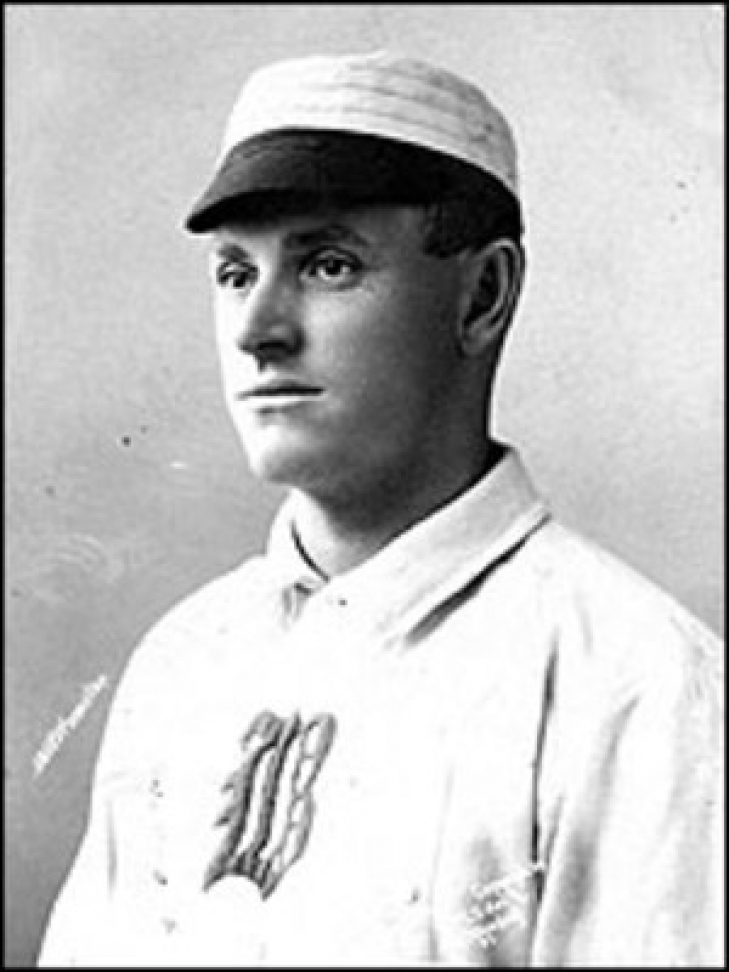
In the hyper-competitive landscape of 1890s baseball, “Sliding" Billy Hamilton was universally recognized as a human hurricane on the basepaths. He didn't just break the existing rules of baserunning; he completely rewrote the operational blueprint of the sport, popularizing the head-first slide, the drag bunt, and the daring art of advancing from first to third on a single. Decades after he hung up his heavy woolen uniform, an objective evaluation of his statistical fingerprints confirms that he remains firmly among the most elite, high-efficiency weapons ever to play the game.
To genuinely acknowledge Hamilton’s remarkable dominance, it is essential to consider the extraordinary volume of his stolen base statistics. During his six-year tenure with the Philadelphia Phillies, he regarded the basepaths as his personal domain, leading the National League in stolen bases four times within that period. Three of these seasons saw him surpass the remarkable three-hundred mark.
Certainly, to influence a defensive play on the basepaths, a runner must initially secure a position on base—and Hamilton mastered the art of creating such traffic with exceptional proficiency. He earned two National League batting titles while playing for Philadelphia, combining a formidable line-drive swing with a highly disciplined, precise eye that resulted in three individual on-base percentage titles in the senior circuit.
The pinnacle of this offensive discipline was reached during the historic 1894 season. That summer, Hamilton showcased extraordinary offensive skill, achieving a remarkable .521 on-base percentage and setting a major league record with 192 runs scored—a unique single-season achievement that has stood untouched for more than a century.
Contemporary metric purists and roster analysts occasionally observe that his tenure on Broad Street was relatively brief, encompassing only six summers before his trade to the Boston Beaneaters prior to the 1896 season. However, attempting to diminish his ranking based solely on traditional longevity overlooks the unparalleled intensity of his peak performance. In merely 702 games wearing a Philadelphia uniform, Hamilton dominated opposing pitching staffs with an extraordinary .360 batting average, 1,084 hits, and an impressive 510 stolen bases. Working alongside future legends Ed Delahanty and Sam Thompson, he constituted the core of arguably the most exceptional scoring outfield ever assembled.
The Veteran’s Committee for the Baseball Hall of Fame chose Hamilton in 1961 for the Baseball Hall of Fame, but an overall look at what he accomplished as a baseball player will easily tell you that this was decades too late. The Phillies inducted Hamilton into the Philadelphia Baseball Wall of Fame in 2004.
