


Site Admin
41. Von Hayes
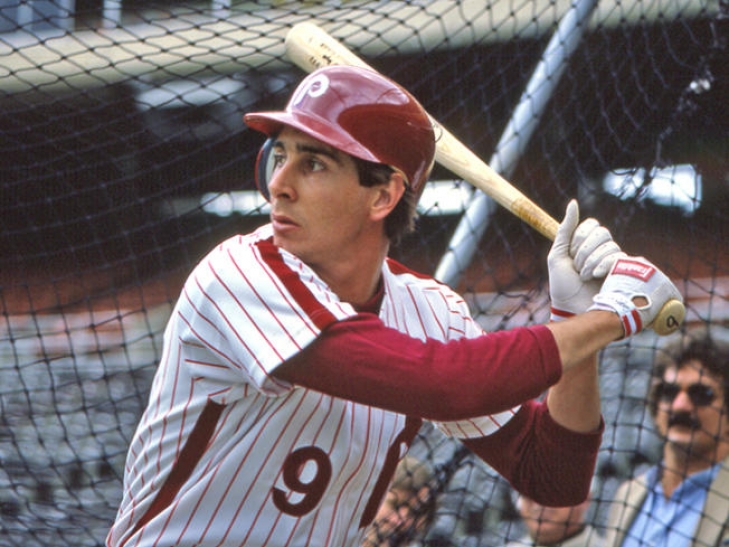
The psychological impact of a trade can sometimes shape a player’s entire legacy, influencing how fans view them despite their actual performance. Von Hayes is arguably the most intriguing and divisive example of this in the modern history of the Delaware Valley. With his impressive, lanky six-foot-five build and a smooth left-handed swing reminiscent of Ted Williams, Hayes arrived from Cleveland before the 1983 season, quickly earning the nickname “Five-for-One." This was because the front office traded five players, including the popular World Series hero Manny Trillo and a young Julio Franco, to acquire him. As a result, local fans saw him more as a savior than just a young outfielder. When he didn't immediately produce at a level comparable to Mike Schmidt, the nickname was often used as a full-blown insult by the crowd at the Vet.
However, viewing Hayes solely through the lens of that transaction's structural pressure overlooks his highly productive, high-volume baseline over nearly a decade. He was a versatile, efficient player capable of switching seamlessly among five defensive positions and functioning as a consistent on-base threat at the top of the lineup.
His standout regular-season moment came in a remarkable 1986 season, during which he consistently defeated National League pitchers to top the league in runs scored (107) and doubles (46). He also posted an impressive .305 batting average, earning him eighth place in the National League MVP voting.
On June 11, 1985, he made a mark in major league history during a memorable game against the Mets by hitting two home runs in the first inning. He started with a solo shot and later hit a powerful grand slam, becoming the first player ever to accomplish this in a single inning.
Hayes proved to be more than just a one-year sensation, combining his extra-base hitting power with remarkable patience and top-tier speed on the bases. In 1987, he had an outstanding season, drawing 121 walks to achieve a high .404 on-base percentage. This was followed by his best all-around offensive performance in 1989. With Schmidt's retirement and the team undergoing major changes, Hayes became the franchise's cornerstone, hitting a career-high 26 home runs and stealing 28 bases, earning him a well-deserved spot on the National League All-Star team.
During nine seasons in red pinstripes, he amassed 1,181 hits, 124 home runs, and 202 stolen bases, outperforming most teammates in a lean era. His name is tinged with a bittersweet aura due to how his career ended—a broken wrist from a 1991 hit-by-pitch weakened his bat speed, leading to a quiet exit to the California Angels before retiring.
Sportsbooks Pull the Trigger on New Orleans for Super Bowl LIII
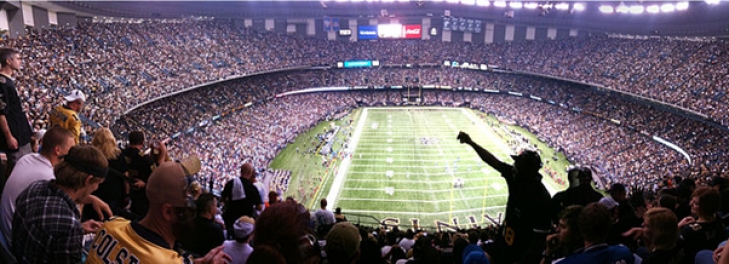
Football is about to enter the ‘business end’ of the season, with several sides already punching their tickets to the playoffs and some even knowing that they will go straight to the divisional round It hasn’t been an up and down season by any means, with the majority of predicted contenders in September essentially being the same clutch of teams that are ‘real’ contenders as we push towards Christmas.
There has, of course, been some evolution throughout the season. The Ravens, for example, have been taken more seriously as we moved from fall to winter. The Chargers, too, seem to have a lot more respect now. However, by and large, pundits and sportsbooks have stuck with a clutch of teams as the main Super Bowl LIII contenders throughout the season: the Patriots, Rams, Chiefs and Saints.
Of that quartet, the candidacy of the favorite has changed between them at different junctures. The Patriots were the preseason favorites, but were soon usurped by the Rams and, for a while, the Chiefs. However, as divisions have started to be clinched, it’s now clear that the sportsbooks have settled on a favorite that they are likely to stick with – New Orleans Saints.
This is being written just before Week 16, so you can follow the link for the latest updated NFL odds, but at the moment the Saints are coming in at around +275 with William Hill and others. At almost half the odds of the chasing pack, that’s the first time there has been clear daylight between a team at the top and the other contenders. Both the Rams and Chiefs can be found at odds of about +600, with the erratic Patriots further back at +800. The Chargers have also been recently put in around +800 with some bookmakers, with the Bears (+1200) the only other side less than +1600.
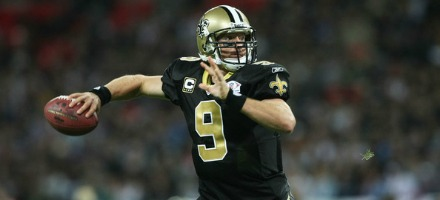
The pertinent question, however, is have the sportsbooks called it correctly? On one hand, it’s hard to argue with the idea that the Saints should be favorites to win their first Super Bowl since 2010. The haven’t missed a beat all season, matching scintillating offense with decent(ish) defense. Drew Brees looks once again like the sprightly 31-year-old who took the MVP trophy at Super Bowl XLIV. Crucially for a championship chasing team, the Saints look just as comfortable on the road as they do at home. Things just seem right with Brees, Sean Payton and co.
However, if this was a horse race, we would very much hold the rest of the field in respect. A run to the Super Bowl will likely entail a showdown with the Rams in the NFC Championship game. Home advantage is still up for grabs at the time of writing, but even if it was played at the Superdome, where they defeated the Rams earlier in the season, a win is by no means guaranteed. When you consider a date with the Chiefs, Patriots are some AFC team with a lot of momentum, +275 looks a little short at this point of the season.
The Buck Stops Here -- Episode 5: A look at the New Rock and Roll HOF Inductees
39. Darren Daulton
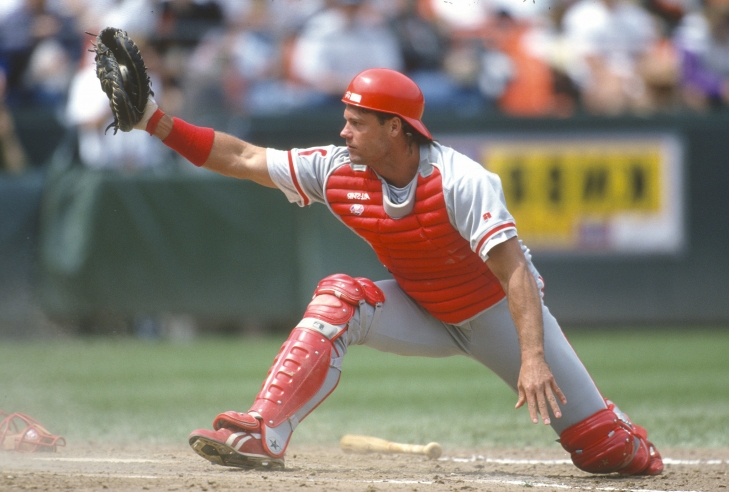
The narrative of contemporary Philadelphia baseball cannot be adequately documented without considering the significant influence of Darren Daulton. During the initial phase of his career, "Dutch" was predominantly perceived as an inexperienced, injury-prone catcher possessing a resemblance to Hollywood actors and exhibiting a consistent, low-risk batting style that impeded his ability to remain on the field. Nonetheless, through steadfast perseverance and an unwavering commitment to overcoming nine separate knee surgeries, this resilient leader systematically evolved into the definitive, dominant presence and essential figure of the franchise. By the early 1990s, he not only commanded the respect of his teammates but also exerted influence across the entire National League from behind the home plate.
His statistical improvement in the early 1990s marks a remarkable, high-output peak that few catchers in the post-war period have ever achieved. Daulton elevated run production to an art form, earning three National League All-Star titles in 1992, 1993, and 1995.
His peak performance in the regular season came in 1992, when he broke typical positional norms by hitting 27 home runs and leading the league with 109 RBIs. This achievement made him one of the few catchers in Major League history to win an RBI title, earning him a Silver Slugger Award and placing sixth in the National League MVP voting. He followed that with a 1993 performance, launching 24 blasts, driving in 105 runs, and pacing the Senior Circuit with 117 walks, finishing seventh in the MVP race.
Evaluating Daulton solely based on his power as a middle-order hitter vastly underestimates his true impact. He was a strategic thinker and the moral compass of the legendary, dirt-stained group of rebels on the 1993 pennant-winning team. It's widely recognized in the local sports community that the Phillies likely wouldn't have reached the 1993 World Series without Daulton's fierce leadership and stable presence, which steered a typically unpredictable pitching staff through the intense pressure of October.
Sadly, the physical strain from crouch-induced wear and tear eventually shortened his career, turning his last summers in Philadelphia into a frustrating struggle against his own body. Acknowledging his exceptional veteran experience and dedication to the team, the front office made a compassionate trade midway through 1997, sending him to the Florida Marlins for a final chance at glory. This move created a poetic end to his career: as a clutch hitter and team leader, Dutch hit .389 in the Fall Classic, retiring as a deserved World Series Champion.
Daulton accumulated 134 home runs, 191 doubles, and 551 RBIs in Philadelphia. In 2010, the Phillies welcomed Daulton back as an inductee to the Philadelphia Baseball Wall of Fame.
.
