


Site Admin
44. Willie Jones
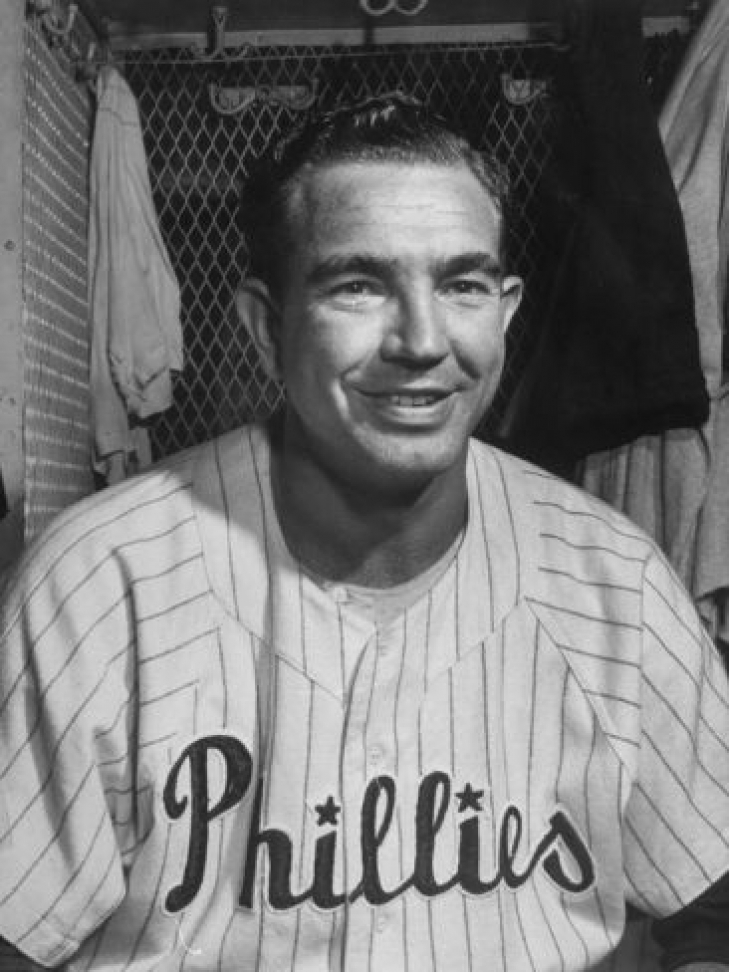
Long before Mike Schmidt set the benchmark for third basemen in the Delaware Valley, Willie Jones was busy creating the initial model of local excellence at the position. As a key member of the famous 1950 "Whiz Kids," this robust South Carolina native anchored the hot corner during a golden age of baseball. Jones combined powerful hitting with excellent defensive skills, providing the franchise with much-needed stability and solidifying his reputation as the top National League third baseman of his time.
His ten-year tenure with the Phillies from 1947 to mid-1959 showcased remarkable durability. Jones not only amassed impressive statistics but also integrated consistent performance into the team's fabric. He achieved a commendable 1,502 hits with Philadelphia and stood out as a powerful hitter during an era when third basemen infrequently displayed such high-velocity power.
His peak regular-season performance and rising national recognition culminated in 1950 and 1951, when he was chosen for the National League All-Star team in two consecutive years.
During the 1950 pennant race, Jones delivered an outstanding offensive performance that helped the young team win the National League championship. He hit a career-high 25 home runs, drove in 88 runs, scored 100 runs, and made 163 hits, leading the Senior Circuit in games played. He also started that memorable summer with a remarkable 16-game hitting streak—a franchise record that remained unbroken for 73 seasons. In 1951, he continued his strong form, posting a career-best .285 batting average and hitting 22 home runs.
Evaluating Jones solely based on his 180 home runs misses his true significance in club history. He was a defensive powerhouse at third base, consistently leading in fielding percentage six times and in putouts for seven straight years. Although some modern metrics suggest limited lateral mobility, his low-variance, mistake-free style effectively supported his pitching staff, demonstrating his flawless positioning and glove work.
By June 1959, when traded to Cleveland, he left a notable legacy with 753 RBIs and six grand slams, second only to Schmidt and Ryan Howard on the club's all-time list. Jones entered the Philadelphia Baseball Wall of Fame in 1994.
48. John Titus
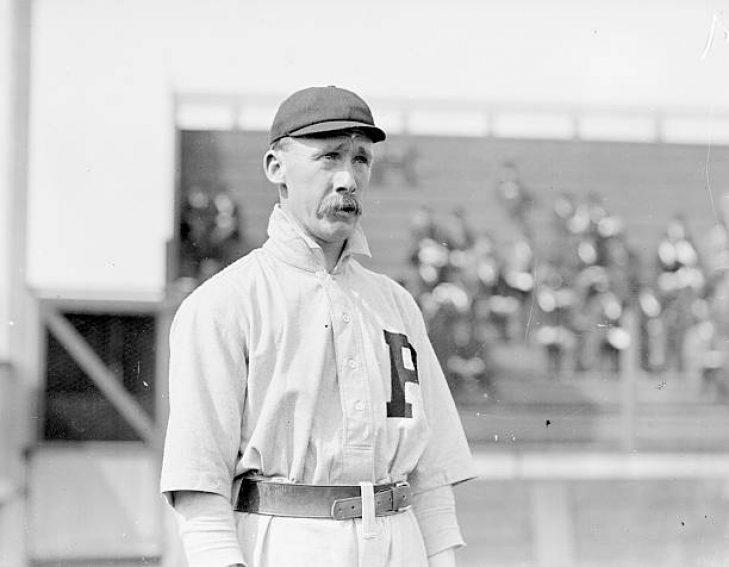
The baseball scene at the dawn of the 20th century was characterized by vibrant, outspoken individuals who approached the game with theatrical flair. John Franklin Titus, notably, declined to partake in such performative elements. Consistent with his primary nickname, "Silent John,” he maintained a discreet and disciplined demeanor, which was reflected in his physical conduct; conventional Deadball Era anecdotes recount that teammate Kid Gleason once observed Titus did not produce a sound when he spat.
His secondary, significantly more vivid label—"Tight Ass"—was a direct pun on his surname and his renowned, low-variance financial practices. Titus is well known for his refusal to access his earnings during the summer, instead saving each paycheck until October, when he would cash them collectively in a single, high-volume transaction in his hometown.
Yet, beneath the quiet demeanor, the toothpick clamped firmly between his teeth, and the magnificent handlebar mustache, sat an incredibly disciplined, high-efficiency offensive machine.
His addition to the Philadelphia team during the middle of the 1903 season brought in one of the most refined eyes of the Deadball Era. Titus turned the batter's box into a masterclass in spatial awareness and pitch recognition. Hall of Fame teammate Grover Cleveland Alexander often described Titus as having one of the best pure eyes he had ever seen, admiring how effortlessly he managed the strike zone.
That patient baseline firmly places him among the top early franchise leaders. During his ten seasons with the Philadelphia team, Titus consistently dominated opposing pitchers, surpassing the .400 on-base percentage twice and ranking among the top ten in the National League for OBP six times.
Far from a passive walker, he combined elite selectivity with an impressively consistent stroke that consistently produced high seasonal volume. Titus achieved three top-ten finishes in the National League batting race, highlighted by a remarkable 1905 breakthrough. Moving between corner outfield positions to better balance the team, he demonstrated a versatile hitting approach, batting .308 with 169 hits, 36 doubles, 14 triples, and a career-high 89 RBIs, ranking among the upper tier in slugging percentage on the Senior Circuit.
His time in Philly ultimately drew to a close midway through the 1912 season when management traded the aging veteran to the Boston Braves. He walked away, leaving a slash line of .280/.368/.377, underpinned by 593 walks and 84 instances of being hit by a pitch.
46. Granny Hamner
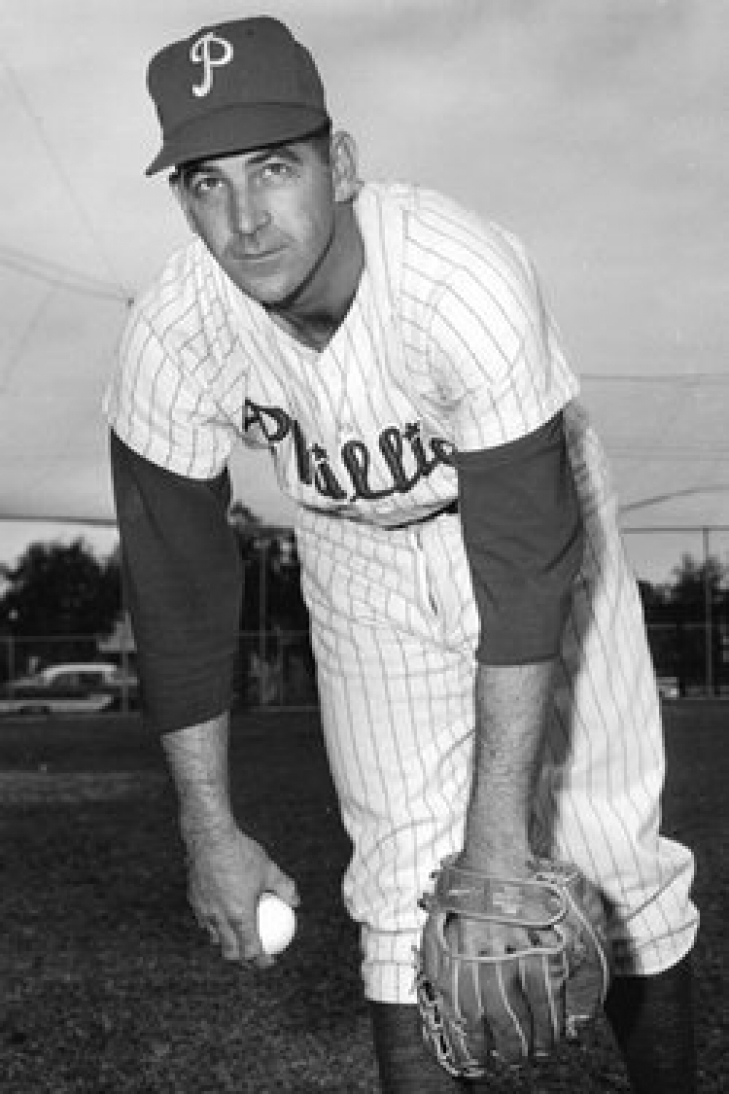
The wartime roster shuffle of the mid-1940s prompted many organizations to fast-track prospects before they were fully physically or tactically ready. Granny Hamner serves as a compelling example. Signed from Virginia as a very raw 17-year-old talent, he was thrown into the major leagues during the 1944 season and set an unbreakable record in 1945 as the youngest player to start on Opening Day. Although these early appearances revealed his developmental gaps, Hamner worked systematically to improve, earning the regular shortstop position by 1948. He quickly matured into the gritty, vocal leader and team captain of the popular 1950 "Whiz Kids”.
His consistent presence at the middle of the field during the franchise's golden era showcased unmatched durability. Hamner made taking the field a daily habit, anchoring the infield during a remarkable period from 1949 to 1954, when he ranked among the top ten shortstops in the National League for defensive assists and double plays.
Far from a passive defender, his advanced efficiency filters were highly effective; his perfect positioning and raw arm strength earned him steady recognition among the top defensive bWAR anchors in the Senior Circuit, helping stabilize the field for elite arms like Robin Roberts and Curt Simmons.
However, measuring Hamner’s impact only by his defensive stats overlooks the highly effective middle-of-the-order power he consistently displayed at his peak. He recorded six straight seasons with at least 150 hits and was a key run-scorer, finishing with over 80 RBIs four times, a significant amount of production for an infielder in the post-war period.
His national profile and local prominence reached their peak during a remarkable three-year period from 1952 to 1954, when he was selected for the National League All-Star team three consecutive years. Notably, he secured starting positions at two different positions: shortstop in 1952 and second base in 1954.
Although his elite regular-season performance was a key factor for the team, his reputation in crucial games became legendary during the 1950 Fall Classic against the highly favored New York Yankees. Even though the young Whiz Kids were ultimately swept in four close games, Hamner delivered an outstanding offensive display, dominating the Bronx bombers with a remarkable .429 batting average and three extra-base hits.
The main reason his overall historical valuation hits a ceiling under modern analysis is his low-efficiency on-base approach. Known for his aggressive, high-velocity swing, Hamner seldom sought free passes, resulting in a lengthy 1,501-game career in red pinstripes with a modest .305 on-base percentage that significantly limited his run-creation potential.
Evaluating his extensive real estate in franchise history solely by traditional stats like on-base percentage fails to capture the powerful influence of his leadership and long career. He ultimately left via a trade to Cleveland halfway through the 1959 season, leaving an outstanding record of 1,518 hits and 103 home runs.
In 1987, he was chosen for the Philadelphia Wall of Fame.
Hit the Road Jack
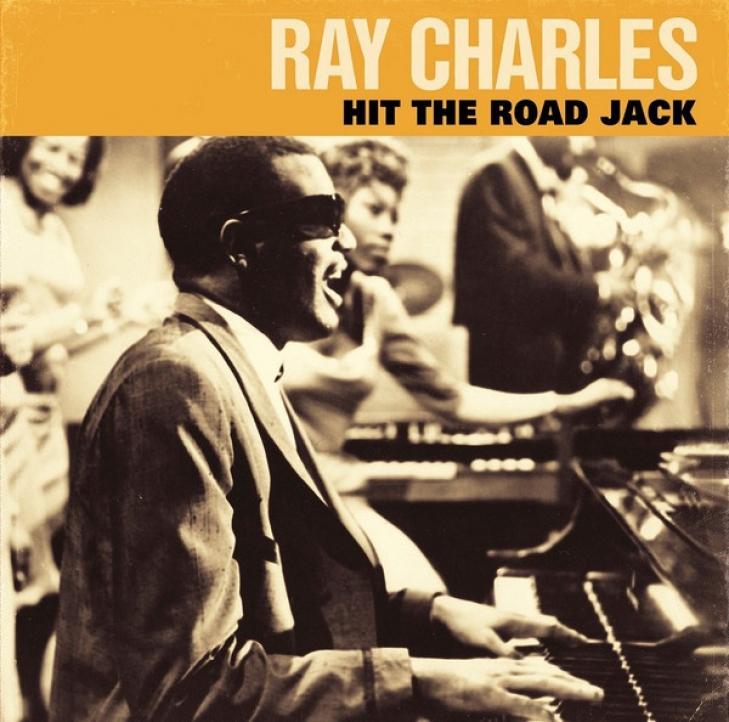
October 9 – 22, 1961
Ray Charles
Hit the Road Jack
