


Site Admin
29. Garry Maddox
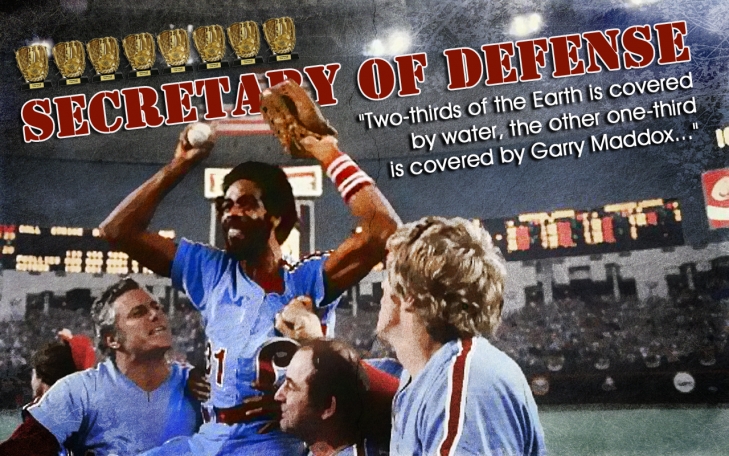
The outfield grass at Veterans Stadium had an unforgiving, low-friction artificial turf that often challenged defenders. However, in the late 1970s, Garry Maddox turned this difficult environment into his own stage for athletic control. Traded from the San Francisco Giants early in the 1975 season, the agile center fielder earned the nickname "The Secretary of Defense" from local media. His smooth, effortless ability to track high-speed line drives into the gaps contributed to a famous piece of baseball lore: “Two-thirds of the Earth is covered by water, the other one-third by Garry Maddox.”
From the perspective of contemporary spatial metrics, Maddox represented an unequivocal pioneer of his era. He secured eight consecutive National League Gold Glove Awards from 1975 to 1982, thereby effectively neutralizing the extra-base aspirations of opposing lineups.
Beyond being just a regional favorite, his advanced efficiency metrics were extremely elite; he led Major League Baseball in defensive bWAR twice, thanks to his quick first step and excellent positioning, which alone kept his pitching staff safe from costly big innings.
However, labeling Maddox solely as a brilliant yet one-dimensional gloveman overlooks his significant contributions at the plate. He was a capable hitter, amassing 1,333 hits and maintaining a steady .284 batting average over his lengthy career in eastern Pennsylvania.
His ultimate peak occurred in the historic 1976 season, where he led the lineup with an impressive career-high .330 batting average. That season, he also recorded 37 extra-base hits and stole 29 bases, earning a fifth-place finish in the National League MVP voting. This achievement cemented his reputation as a true, elite catalyst.
While his regular-season efficiency slightly declined with age by the early 1980s, his reputation in big games stayed strong during the team's remarkable 1980 championship season. He contributed by driving in the winning run in the tenth inning of Game 5 of the NLCS against Houston, and he also offered outstanding defensive support in the outfield during the World Series, helping the franchise achieve its first world title.
By the mid-1985 campaign, time and the relentless pounding of the Vet's artificial turf finally caught up with the veteran speedster, triggering a sharp decline in his overall physical volume. Rather than seeking a twilight change of scenery or hanging on as a bench compiler elsewhere, Maddox chose to walk away on his own terms.
In 2000, Maddox was chosen for the Philadelphia Baseball Wall of Fame.
25. Ryan Howard
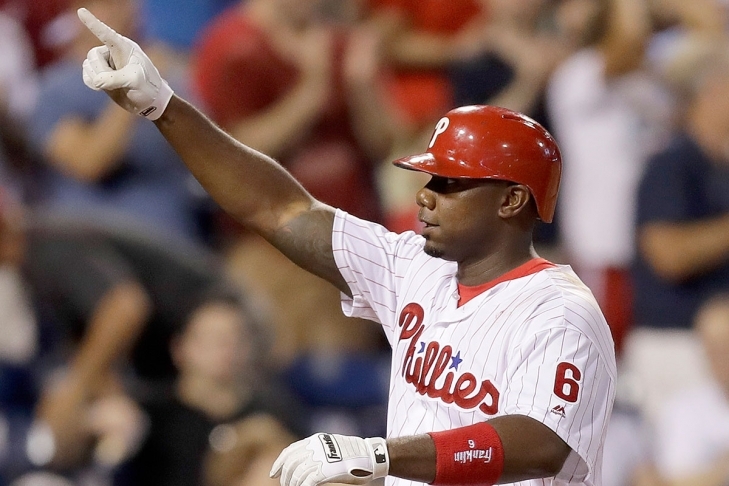
Few figures in modern baseball inspire such a clear divide between traditional fans and data-driven analysts as Ryan Howard. When measuring greatness by raw power and high-pressure performances that unsettle opposing teams, the left-handed slugger appears as an undeniable franchise icon, ranking high on any leaderboard. However, focusing on advanced efficiency stats, defensive skills, and strikeout rates presents a very different view. This internal tension explains why"The Big Piece"'s legacy remains rooted in a complex, highly analyzed middle ground.
Let’s begin on the positive side of the ledger, where Howard’s absolute peak was as explosive as any hitting stretch the sport has ever witnessed. Locked behind Jim Thome on the organizational depth chart early on, Howard burst onto the big-league stage like a runaway freight train, capturing the 2005 National League Rookie of the Year award despite playing in just 88 games.
The following summer, he delivered a showcase of pure power, establishing himself as a force of destruction. Howard won the 2006 National League Most Valuable Player award after smashing a jaw-dropping, franchise-record 58 home runs, overwhelming Senior Circuit pitching staffs. This was not just a one-year feat; he continued to surpass the 40-home run mark in each of the following three seasons. His ability to drive in runs turned into a relentless production line; from 2006 to 2009, he consistently crossed the 135-RBI mark each summer, leading the National League three times. He remained a constant presence in the national spotlight, finishing as MVP runner-up in 2008 and placing fifth and third in 2007 and 2009.
The main reason sabermetricians heavily discount his overall value is due to the significant structural challenges inherent in his approach. Howard’s powerful, wide swing resulted in a high number of missed pitches, as he twice topped the National League in strikeouts and became the fastest player to reach both 100 home runs and 1,000 career strikeouts.
Moreover, his spatial awareness and movement around the first-base bag consistently proved to be a persistent, low-efficiency weakness. Over ten different campaigns, he finished with a defensive bWAR of -1.0 or worse, repeatedly highlighting a significant defensive flaw that required his managers to frequently adjust late-game strategies for better coverage.
Evaluating Howard solely by single-season WAR overlooks the emotional and big-game qualities he brought. He was the powerful, unifying middle-of-the-order hitter that fueled the team's most successful period in franchise history. The Phillies wouldn't have won the 2008 World Series without his clutch, high-pressure performances, highlighted by his three home runs in that unforgettable Fall Classic.
A catastrophic Achilles tendon tear on the final play of the 2011 NLDS permanently stripped away his lower-half explosiveness, leading to a long, low-variance decline phase that clouded the back half of his career. He ultimately played his entire 13-year journey exclusively in Philadelphia, retiring with 1,475 hits, 1,194 RBIs, and 382 home runs—the second-most in franchise history behind only Mike Schmidt.
In 2024, the Phillies chose Howard for their Wall of Fame.
26. Lenny Dykstra
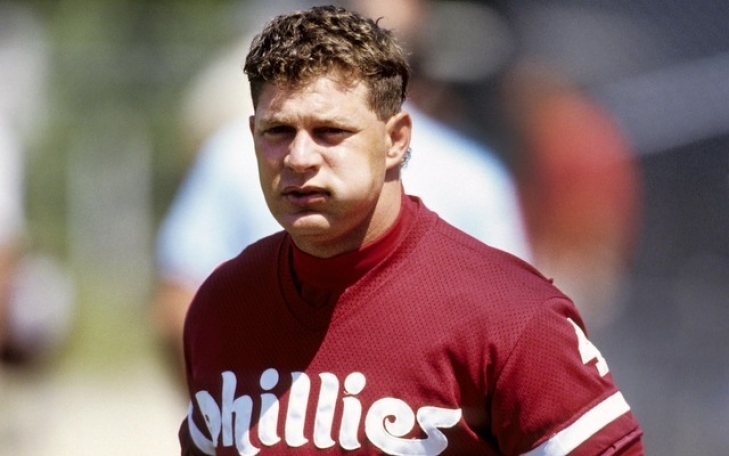
Few players in franchise history have ever matched the raw, dirt-caked intensity that Lenny Dykstra brought to the diamond. He had already established himself as a highly popular postseason catalyst with the New York Mets, helping secure the 1986 World Series title, but that outer-borough fame completely paled in comparison to the absolute obsession he generated in eastern Pennsylvania. Known universally as "Nails" for his fearless, wall-crashing style of play, the stocky center fielder personified the exact blue-collar, unyielding identity of the city he represented. When he was on the field, his hyper-aggressive energy dictated the club’s entire operational pace.
His eight-year tenure with the Phillies was marked by a tumultuous series of intense physical peaks and injury-ridden lows. When he was in the training room, his absence created a significant, noticeable gap at the top of the lineup; however, when healthy, Dykstra was an exceptional, game-changing presence.
During his first full summer in Philadelphia in 1990, he showcased his high-volume batting skills by leading the National League with 192 hits and a remarkable .418 on-base percentage. However, his true standout moment came during the 1993 pennant race, when he became the heart of a team of clubhouse rebels. That season, Dykstra delivered an extraordinary individual performance, leading all of baseball with 143 runs scored, 194 hits, and 129 walks, and achieving a career-best .902 OPS. He was a close runner-up to Barry Bonds for the National League Most Valuable Player award, acting as the driving force that propelled the franchise to the World Series.
Although the enchanting autumn ultimately ended with a devastating defeat at the hands of the Toronto Blue Jays, no blame could be attributed to Dykstra. In an exemplary postseason performance, he systematically overwhelmed Toronto’s pitching staff, hitting four home runs and demonstrating an exceptional .348/.500/913 slugging average throughout the six-game series, nearly leading the team to victory single-handedly.
Tragically, the legacy he left on the grass has been significantly overshadowed by a prolonged series of severe personal crises following his career. Dykstra was extensively involved in the use of performance-enhancing drugs during his playing days, and his post-baseball business pursuits encountered substantial legal difficulties, ultimately leading to a three-year federal incarceration for financial fraud.
For a generation of local fans who saw him dive into the turf at Veterans Stadium with a tobacco-stained jersey, the raw connection remains distinct from his later struggles. During his 734 games with the Phillies, he achieved 821 hits, 381 walks, and 149 stolen bases, a burst of energetic brilliance that cemented his status as one of Philadelphia's most cherished folk heroes.
28. Chris Short
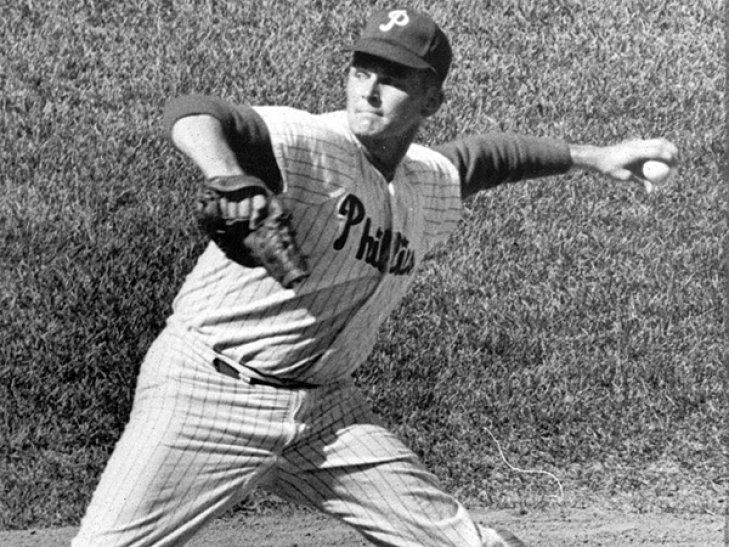
Though post-war baseball history often highlights legendary right-handers, Chris Short stood out in the mid-1960s as one of the top left-handed pitchers. Signed by the Philadelphia Phillies as an amateur free agent in 1957, this lanky Delaware native spent several summers developing before securing a spot in the starting rotation in 1963. Following this, he enjoyed a remarkable peak, where his sharp slider and deceptive delivery established him as a leading force on the mound.
Between 1964 and 1968, Short led the pitching staff alongside Jim Bunning, establishing a five-year period marked by exceptional individual performances. He made success a consistent achievement, recording a minimum of 17 victories in four separate seasons. The peak of his workload occurred during the 1966 schedule, demonstrating remarkable resilience by completing 272 innings and achieving an impressive 20-10 record. Not merely a compiler, his underlying efficiency metrics were extraordinarily elite; Short received two National League All-Star selections in 1964 and 1967, posting a minuscule 2.20 ERA in 1964 and a stellar 2.39 ERA in 1967, ranking third in the Senior Circuit's ERA standings during both summers.
Any historical review of Short’s career inevitably centers on the infamous, heartbreaking pennant race of 1964. With a seemingly unbeatable six-and-a-half-game lead and only twelve games left, the Phillies experienced a disastrous and highly unpredictable collapse. In a desperate and controversial move to stop the decline, manager Gene Mauch overused his two key pitchers, forcing Bunning and Short to start eight of the last twelve games on short rest. Despite Short’s brave pitching and minimal earned damage, the depleted team around him collapsed, creating a tragic story that has overshadowed his impressive summer performance.
Yet, allowing that autumn collapse to diminish his legacy completely miscalculates the immense regular-season volume he generated for the franchise across fourteen dedicated winters. A recurring back injury in 1969 permanently compromised his high-velocity edge, but he departed Philadelphia following the 1972 campaign, holding an exceptional club baseline of 132 victories, 24 shutouts, and 1,585 strikeouts over 459 appearances in red pinstripes.
He was chosen for the Philadelphia Baseball Wall of Fame in 1991.
