


Site Admin
18. Mort Cooper
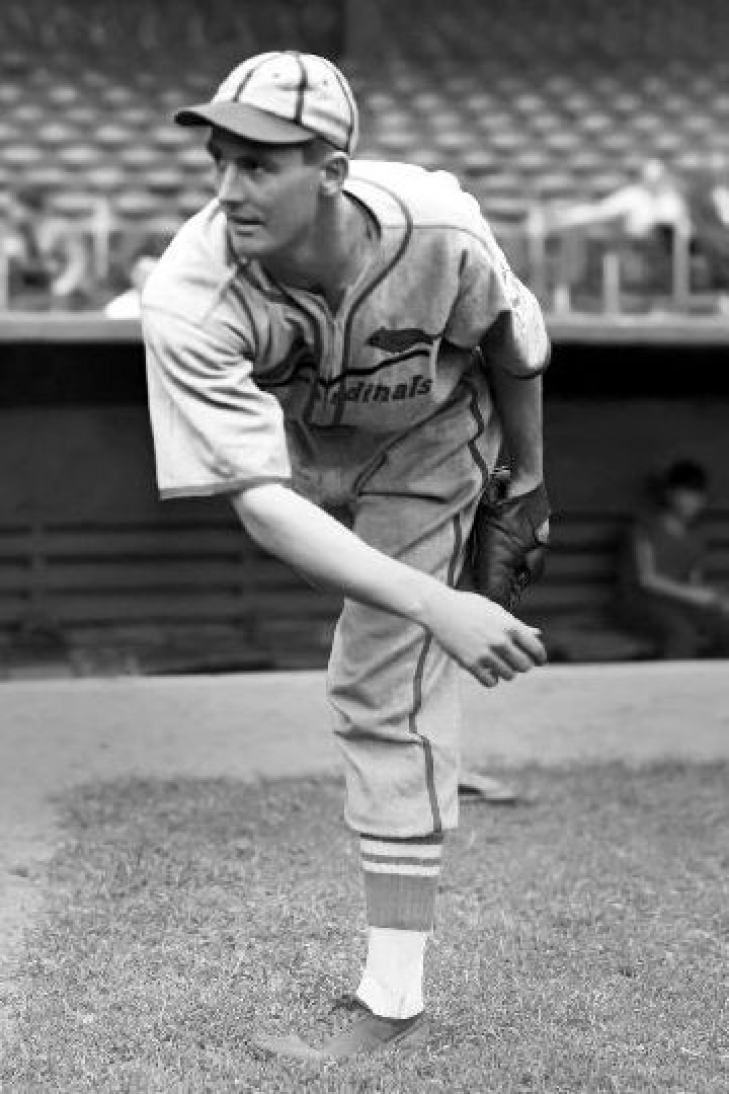
Assessing the baseball legends of the 1940s involves careful consideration, as World War II significantly changed the competitive landscape of major league baseball. Critics often question how much of the era's statistical success is due to real talent versus the impact of wartime depleted rosters, with icons like Ted Williams, Joe DiMaggio, and Hank Greenberg serving in the military. For right-hander Mort Cooper, that caveat is an important part of the discussion. Still, even when recognizing the wartime conditions, Cooper's impressive period of dominance clearly stands out as the key, championship-level foundation of one of the most notable dynasties in St. Louis Cardinals history.
Cooper was signed as an amateur free agent in 1933, and his path to the majors was a gradual ascent through the extensive St. Louis farm system. He finally debuted in the major leagues in 1938 at age 25, spending his initial seasons as a solid, mid-tier starter. Using a strong fastball and a sharp slider, he regularly posted dependable stats, without yet showing the elite potential that was soon to emerge.
The 1942 season marked a significant shift. As many players from both leagues left to serve in the military, Cooper stepped up dramatically, achieving an impressive 22–7 record. He led the senior league with a tiny 1.78 ERA, pitched 10 shutouts, and maintained an exceptional 0.987 WHIP. Alongside his brother, catcher Walker Cooper, he formed a renowned homegrown battery that captivated baseball fans. His outstanding performance on the mound earned him the 1942 National League Most Valuable Player Award, playing a key role in helping the Redbirds achieve a 106-win regular season and securing a World Series victory over the formidable New York Yankees.
Far from a fleeting success, Cooper convincingly confirmed his MVP campaign by achieving consecutive 20-win seasons over the next two summers. In 1943, he posted a 21–8 record with a 2.30 ERA in 1943 and followed with an impressive 22–7 record in 1944, solidifying his role in manager Billy Southworth's rotation. His consistent excellence in 1944 helped lead the team to an all-St. Louis Fall Classic against the local Browns, where he delivered an outstanding performance in Game 5—a complete-game, 12-strikeout shutout—earning his second World Series title in three years.
Cooper’s true skill was ultimately confirmed after a tough contract dispute led to a May 1945 trade to the Boston Braves. Although critics doubted his effectiveness would decline once World War II ended and top hitters returned for the 1946 season, Cooper demonstrated he remained among the best. Despite worsening elbow problems, he pitched well enough in Boston to earn his fourth and last selection to the National League All-Star team, showing his talent extended well beyond the wartime circumstances.
Cooper left Sportsman's Park with a 105–50 record, a 2.77 ERA, and 25 shutouts over eight seasons and was inducted into the Cardinals Hall of Fame in 2019.
19. Keith Hernandez
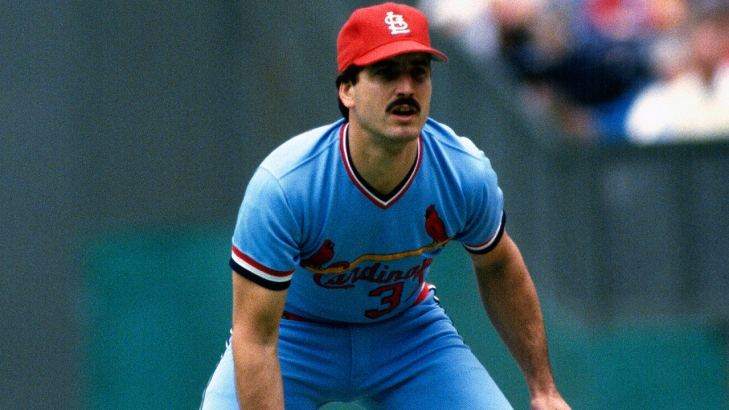
To many modern baseball fans and TV viewers, Keith Hernandez is primarily linked to the New York Mets, especially his key role in the 1986 "Bad Guys" team and his memorable pop-culture appearances. However, a closer look at the stats shows that his peak physical condition and most remarkable individual accomplishments happened when he played for the St. Louis Cardinals. Drafted unexpectedly in the 42nd round of the 1971 amateur draft, Hernandez exceeded all expectations, blending a graceful, disciplined left-handed swing with a revolutionary defensive approach that redefined the role of first base.
His offensive peak was reached during the memorable 1979 season, a summer when he created the highlight of his career. Hernandez completely dominated National League pitchers, winning the batting title with a league-best .344 average. He also led the league in runs scored (116) and doubles (48). Along with his excellent contact skills, he hit 11 home runs and had 105 RBIs, showing a sophisticated, power-focused approach that earned him the 1979 National League Most Valuable Player Award, shared with Pittsburgh’s Willie Stargell. He confirmed this success with strong performances over the next two summers, maintaining a batting average over .300 and leading the league with a remarkable .408 on-base percentage in 1980.
Hernandez’s true talent was on the infield, despite his outstanding offensive statistics. Before his arrival, first base was primarily regarded as a defensive position for slow power hitters. Hernandez redefined this role through aggressive athleticism: positioning himself away from the bag, charging bunts with the agility of a third baseman, reaching groundballs deep in the hole, and throwing across the diamond with remarkable speed. His exceptional lateral movement established him as a leading figure in Total Zone Runs, earning him five consecutive Gold Glove Awards in St. Louis from 1978 to 1982, thereby setting a new standard for defensive excellence. Hernandez’s consistent presence in the heart of the lineup served as a crucial anchor for the 1982 "Whiteyball" team, culminating in a decisive, game-tying two-run single in Game 7 of the World Series that secured the franchise's ninth world championship.
Despite his enormous fame and key role in the 1982 championship season, Hernandez increasingly clashed with legendary manager and GM Whitey Herzog. Herzog, known for his strict discipline, grew very frustrated with Hernandez’s divisive clubhouse behavior and suspected drug use. He ultimately decided that Hernandez was harming the team's long-term culture. In one of the decade’s most shocking trades, Herzog unexpectedly sent Hernandez to the struggling New York Mets in June 1983, receiving pitchers Neil Allen and Rick Ownbey in return—a sudden, unceremonious move at the height of Hernandez's career.
Hernandez closed out his memorable St. Louis tenure having compiled 1,217 hits, 265 doubles, and an exceptional .299/.385/.445 slash line across 1,165 games in a Redbirds uniform. In 2021, Hernandez was finally inducted into the Cardinals Hall of Fame.
14. Ted Simmons
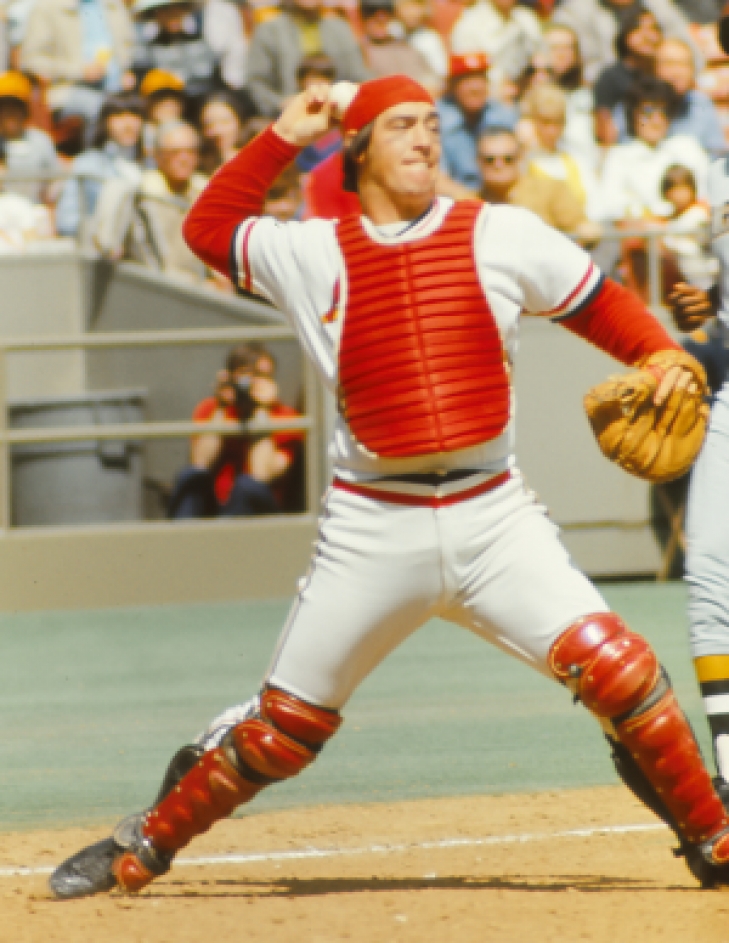
When modern baseball analysts look back at the 1970s, they often realize that traditional metrics overlooked a revolutionary offensive force behind the plate. For decades, Ted Simmons was viewed as an excellent player who shared an era with Johnny Bench and Carlton Fisk. But as sabermetrics changed how we value run production, the baseball world saw that the switch-hitter was one of the most productive offensive catchers ever.
Selected by the front office in the first round of the 1967 draft, "Simba" quickly emerged as a hitting prodigy. He did not merely survive the grueling physical demands of catching; he anchored the middle of the St. Louis batting order for over a decade, turning the batter's box into a personal showcase and rewriting the rules of what a backstop could provide at the plate.
Following a period of scouting work from 1968 to 1970, his initial tenure as the primary starting catcher in 1971 immediately redefined the standard benchmark for National League catchers, as he achieved an impressive batting average of .304. Simmons consistently transformed powerful line drives from both sides of the plate into a rigorous daily routine. He demonstrated an extensive display of contact proficiency and plate discipline, surpassing the .300 batting threshold on six occasions while wearing a Cardinals uniform. Each of these seasons secured a position within the top ten in the National League, notably highlighted by an exceptional 1975 regular season in which he posted a batting average of .332, culminating as the runner-up for the senior circuit batting title.
His value-dense offensive profile represented an exceptional anomaly for his era; Simmons secured a position within the top ten rankings in both on-base percentage and slugging percentage on four occasions, while reliably leveraging his outstanding gap-to-gap power to achieve top-ten rankings in doubles seven times. He combined that exemplary contact ability with authentic middle-of-the-order power, producing five individual seasons with at least 20 home runs for the Redbirds.
Because he was a natural hitter first, traditional pundits frequently contrasted his glove work with that of contemporary elite defenders. Yet, his legendary pitchers—including Bob Gibson—vehemently defended his game-calling and immense physical durability, as Simmons routinely logged heavy workloads, catching over 130 games a year.
His relationship with management grew tense at the end of 1980 when Simmons, in a dispute with Whitey Herzog over contract control, was suddenly traded to the Milwaukee Brewers in a major deal. Over his 13 seasons strictly representing the Cardinals, he accumulated exactly 1,704 hits, 332 doubles, 172 home runs, and 929 runs batted in, entirely validated by a spectacular .298 localized batting average and a robust .366 on-base percentage.
While the baseball writers initially dropped him from the Cooperstown ballot after just one year in 1994, the historical record was beautifully righted decades later. Simmons was triumphantly elected to the St. Louis Cardinals Hall of Fame in 2015, followed by his long-awaited, emotional induction into the National Baseball Hall of Fame via the Modern Baseball Era Committee in 2020. Serving as the final, beautiful punctuation on his immortal legacy, the Cardinals permanently retired his iconic number 23 target behind the plate.
17. Jim Bottomley
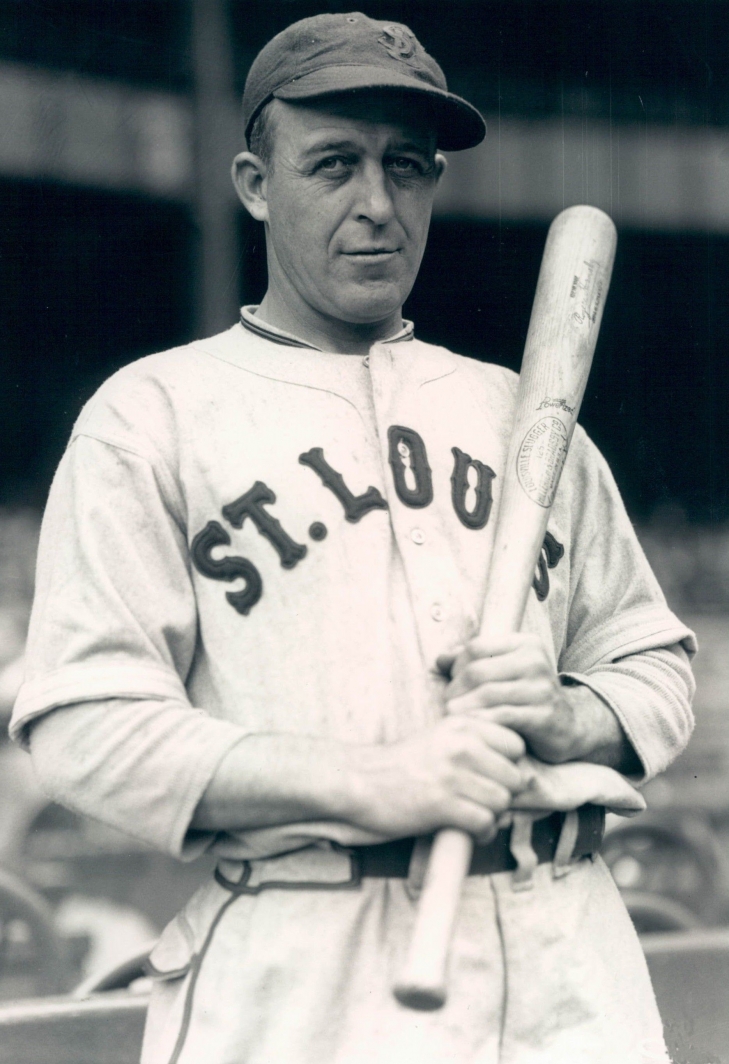
Jim Bottomley entered the scene in eastern Missouri in late 1922, immediately bringing a sense of confidence to the franchise. Fondly known as "Sunny Jim" because of his consistently cheerful demeanor and genuine passion for the sport, he combined this vibrant personality with a powerful, high-volume left-handed batting style. He rapidly became the leading run-scorer for the team's initial generation of modern World Series champions, establishing a period of formidable middle-of-the-order hitting that made a lasting impact on the Senior Circuit.
Becoming a regular in 1923 threw the entire league into an absolute frenzy. Bottomley turned hitting line drives off the wall into a daily routine, batting a blistering, career-high .371 with a stellar .425 on-base percentage during his first full summer in the big leagues.
Rather than peaking early, he simply used that contact foundation to systematically unlock a devastating power and clutch-hitting game as the roster matured around him. Sunny Jim recorded a total of eight .300 batting campaigns during his 11-season tenure with the St. Louis Cardinals, functioning as a consistent RBI producer. He commenced an impressive six-year streak of surpassing the 100-RBI mark beginning in 1924, a sequence initiated by a legendary September afternoon that season when he drove in an extraordinary, major-league record 12 runs in a single game against the Brooklyn Robins.
As his additional-base leverage increased, he led the National League in doubles consecutively in 1925 and 1926, providing the essential offensive foundation that contributed to the franchise's inaugural modern World Series victory over the New York Yankees in 1926. The definitive zenith of his career occurred during an outstanding, award-recognized 1928 regular season. Bottomley overwhelmingly dominated the Senior Circuit, hitting 42 doubles whilst leading the league with 20 triples, 31 home runs, and an impressive 136 runs batted in. This remarkable demonstration of power and speed secured his unanimous selection for the 1928 National League Most Valuable Player Award. He beautifully maintained his frontline baseline through the turn of the decade, driving in 137 runs in 1929 and hitting .348 in 1931 to help pilot the Redbirds to their second world championship banner.
By the conclusion of the 1932 campaign, a sudden transactional crossroads materialized. With the emergence of young star Ripper Collins at first base, management executed a definitive business departure, trading the 32-year-old veteran to the Cincinnati Reds to initiate the late-career chapter of his journey before he eventually wrapped up his playing days with the cross-town St. Louis Browns.
Across his 11 seasons strictly representing the Cardinals, he accumulated exactly 1,727 hits, 344 doubles, 122 triples, 181 home runs, and 1,105 runs batted in, entirely validated by a spectacular .325 batting average and a robust .537 slugging mark. The baseball world beautifully formalized his legacy decades later, as the Veterans Committee officially punched his first-class ticket to Cooperstown in 1974.
Ensuring his cheerful dominance remains permanently etched in team history, the organization added the final, perfect punctuation to his story by triumphantly enshrining Jim Bottomley as a proud member of the inaugural St. Louis Cardinals Hall of Fame class in 2014.
