


Site Admin
29. Jesse Haines
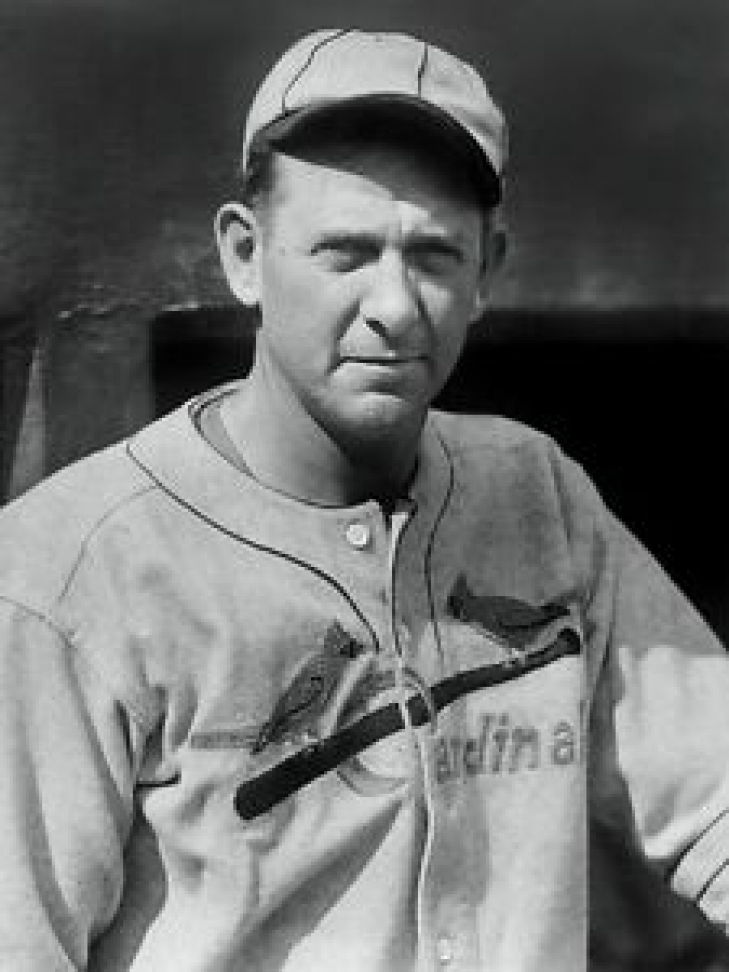
Before the St. Louis Cardinals became a consistent Powerhouse of the National League, they needed a strong, determined leader to elevate their pitching staff from obscurity. Jesse "Pop" Haines offered exactly that endurance as a foundation. Acquired from Kansas City of the American Association in 1920 for $10,000—almost draining the young franchise's funds—the durable right-hander joined the starting rotation. Over 18 seasons, Haines was the organization's reliable workhorse, helping them rise from a struggling second-division team to World Series champions.
Haines’ rise to historical prominence was largely due to his elite, powerful knuckleball, which he threw with much higher velocity than today's versions. Instead of employing it as a slow, fluttering pitch, he grasped it firmly with his knuckles, producing a sharp, downward movement that frequently shattered bats of his era.
His personal breakthrough happened swiftly, but his first major professional masterpiece came on July 17, 1924. Playing against the Boston Braves at Sportsman's Park, Haines completely shut down the opposition to throw a historic 5–0 no-hitter—the first solo no-hit game in the franchise's modern era.
Haines attained his peak as the key player of the "Gashouse Gang" predecessors in the late 1920s. In the notable 1927 season, he delivered an outstanding performance, pitching 300.2 innings and achieving a 24–10 record with a 2.72 ERA and 25 complete games.
Haines didn't merely amass regular-season stats; he excelled on the biggest stages. He was instrumental in leading St. Louis to its first modern world championship in 1926, notably defeating the New York Yankees with two complete-game wins in the Fall Classic, including a vital shutout in Game 3—even while dealing with badly blistered fingers. He later earned two more World Series rings with the team in 1931 and 1934.
As the physical toll of compiling nearly 1,000 career innings caught up to his arm, his availability decreased to a valuable long-relief and spot-starting role in the mid-1930s. He endured his final MLB appearances at age 43 in 1937, ending a nearly two-decade career in a single uniform.
He finished his St. Louis residency with a 210–158 record, 3.64 ERA, and 981 strikeouts in 555 appearances, ranking high on franchise leaderboards with 209 complete games and 24 shutouts. His contributions were validated in 1970 when the Veterans Committee inducted him into the Baseball Hall of Fame, and posthumously in 2014 as part of the Cardinals' first Hall of Fame class.
38. Mark McGwire
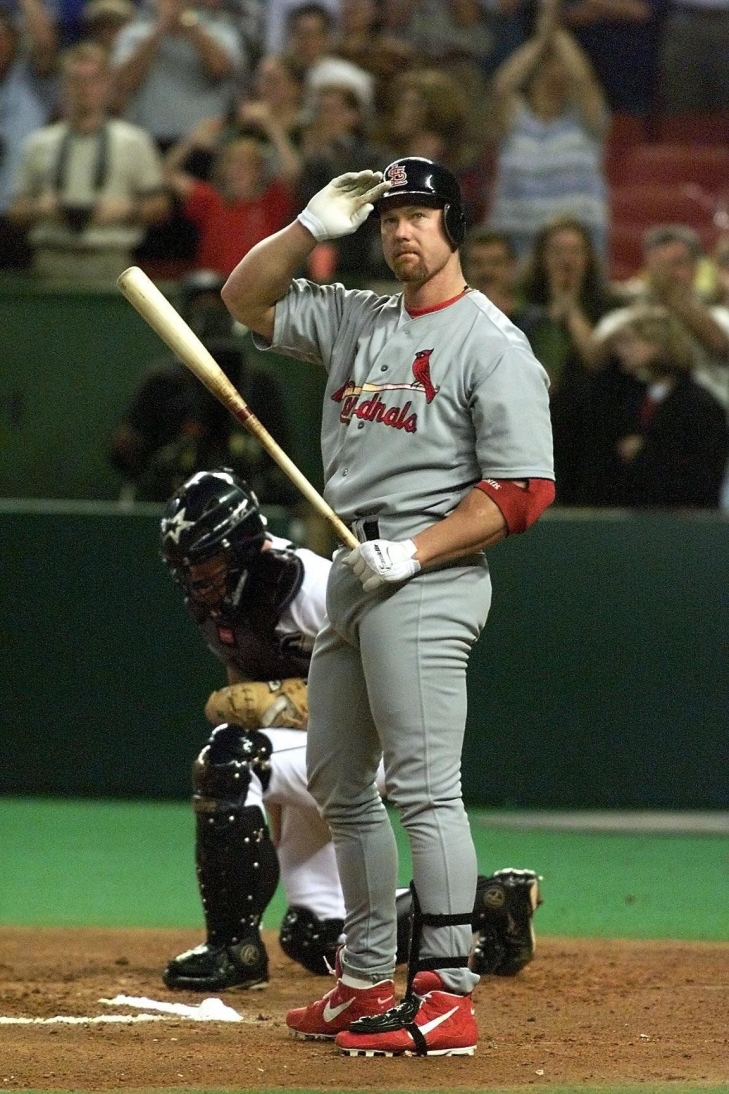
The arrival of Mark McGwire in downtown St. Louis midway through the 1997 season completely shifted the franchise's gravity. Coming over in a trade from Oakland, he brought a cartoonish brand of power that instantly made Busch Stadium a nightly destination. For baseball fans who didn't live through the era, it is difficult to overstate the monoculture McGwire created. In a sport still recovering from the wounds of the 1994 strike, he forced everyone—from diehards to casual evening news viewers—to tune in every time he stepped into the batter's box. He single-handedly made baseball central to the cultural conversation again.
That cultural wave peaked in 1998. In a summer-long chase that captivated the sports world, McGwire shattered Roger Maris’ single-season record by launching an unfathomable 70 home runs. He didn't just clear fences; he paired that historic power with a staggering .299/.470/752 slash line and 147 RBIs. Although he finished as the runner-up for the National League MVP, the season remains a monumental moment in modern sports history. He proved it wasn't a fluke the following year, backing it up with a 1999 campaign in which he bashed another 65 home runs and posted a .278/.424/697 line, earning a fifth-place finish in the MVP voting.
The final two years of his tenure saw a sharp decline as severe knee injuries and age finally caught up to his massive frame, limiting his playing time and efficiency. Yet across his four and a half seasons wearing the birds on the bat, the sheer concentration of his impact was staggering: 220 home runs and a massive .683 slugging percentage.
Evaluating a tenure like McGwire's requires looking beyond traditional longevity templates. For those arguing that performance-enhancing drugs should disqualify him, that is outside the scope of this project; he played in an era of rampant, tacitly permitted use, with leadership looking the other way. Conversely, for those who feel his raw home run totals should elevate him even higher in the franchise ranks, the reality of his overall game serves as a tether. His St. Louis years offered virtually nothing defensively, and the brevity of his peak naturally caps his volume-based value compared to multi-decade franchise icons. He was a short, blinding burst of pure offense—an unforgettable chapter of unmatched peak impact.
The permanent stamp on his legacy in Missouri came later. In 2017, the organization recognized the indelible mark he left on the city by inducting McGwire into the St. Louis Cardinals Hall of Fame.
31. Bill White
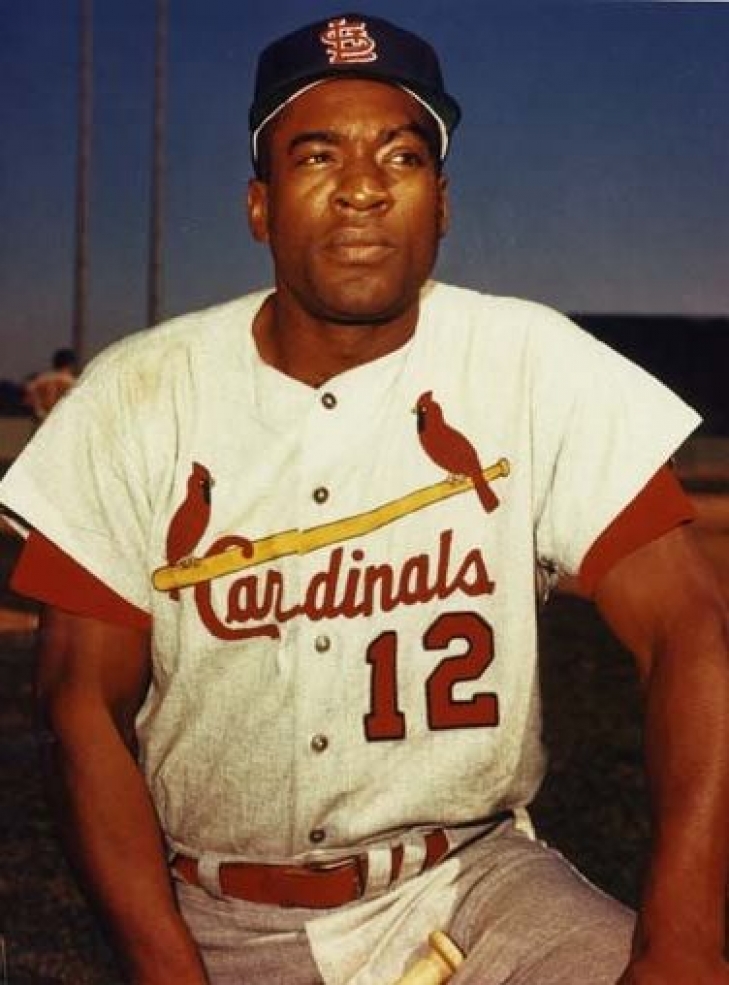
Some of the most meaningful legacies in baseball history are created by men who didn't originally see the sport as their lifelong passion, but rather as an unexpected turn in their journeys. Bill White was a talented pre-med student at Hiram College, aiming for medical school when a simple tryout suddenly changed everything. Leo Durocher, known for knocking down giants, was so captivated by White’s natural athletic skill that he signed him immediately. As one of the first Black players to navigate the highly segregated Carolina League in the early 1950s, White faced significant racial challenges but handled them with remarkable dignity. Even after earning a spot on the major-league team, a period in the U.S. Army and the rise of Willie McCovey made him feel blocked in San Francisco. Recognizing his exceptional talent, the St. Louis Cardinals made their move, trading for White in March 1959 and welcoming him into their main team right away.
Though the Cardinals initially experimented with White in the outfield to accommodate Stan Musial, he permanently seized the first-base bag by 1960 and instantly set a new gold standard for defensive excellence in the National League. For the next six seasons, White put on an absolute clinic at the cold corner, sweeping six consecutive Rawlings Gold Glove Awards in a Redbird uniform. He wasn’t just a defensive vacuum; he was an exceptionally steady metronome at the plate. Across his seven consecutive seasons as a core pillar in St. Louis, White never failed to reach 150 hits in a season, and he cleared the elusive .300 batting average four separate times.
Between 1961 and 1965, he demonstrated excellent power hitting in the middle of the lineup, achieving five consecutive seasons with 20 or more home runs. His most outstanding season was in 1963 when he set personal bests with 200 hits, 27 home runs, and led the league with 109 RBIs, showcasing a remarkable performance.
White’s exceptional production and elite defensive skills were the cornerstone of the legendary 1964 world championship team. During that summer, he earned one of his five All-Star selections as a Cardinal, amassing 191 hits and 102 RBIs. His solid infield defense was vital in leading St. Louis to a dramatic seven-game victory in the Fall Classic against the New York Yankees.
Although his playing career ended after a brief, late-career stint in 1969, White’s influence on baseball grew into groundbreaking and historic realms. Known for his clear, composed style and sharp baseball intellect, he broke racial barriers by becoming the first African-American play-by-play announcer for the Yankees in 1971. He reached the top of the sport's executive ranks in 1989, making history again as the first person of color to serve as President of the National League.
White finished his St. Louis career with 1,241 hits, 140 home runs, 651 RBIs, and a.298 average over 1,046 games. His notable impact was recognized in 2020 when he was inducted into the St. Louis Cardinals Hall of Fame.
39. Larry Jackson
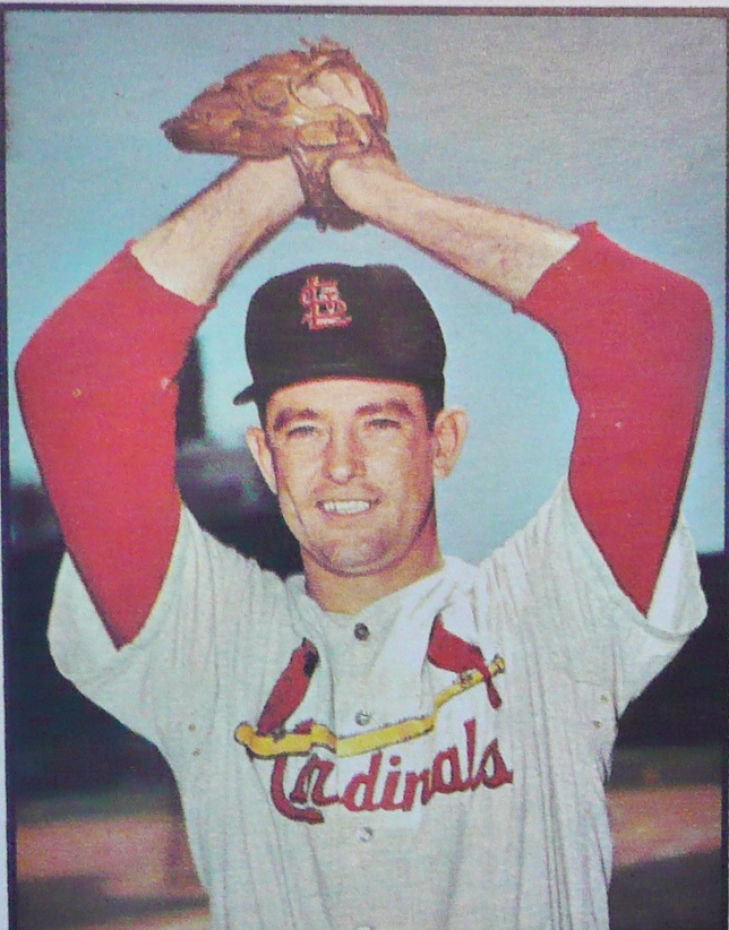
When Mr. Larry Jackson debuted in Major League Baseball with the St. Louis team in 1955, the organization was experiencing ongoing instability. Engulfed in a continual cycle of managerial and executive turnover, the team spent several years attempting to ascertain the true capabilities of this durable right-hander, fluctuating him between the starting rotation and high-leverage bullpen roles. Nonetheless, despite the organizational disorder surrounding him, Jackson maintained focus and established himself as a pillar of dependability for a franchise undergoing a transitional period.
Once he permanently secured his place in the rotation in 1957, Jackson blossomed into the quiet workhorse of the staff. Over his eight seasons in St. Louis, he secured three All-Star selections, including a memorable nod in 1957 when he got to pitch in front of the home crowd at Sportsman's Park. He was a model of steady, volume-heavy production, rolling up a 101–86 record and tossing 70 complete games as a Cardinal.
Paradoxically, his finest hour in a Redbird uniform was completely ignored by the All-Star voters. In 1959, pitching for a seventh-place club that finished twelve games under .500, Jackson turned in a masterpiece that only modern sabermetrics could fully appreciate. On the surface, his 14–13 record and 3.30 ERA looked standard. Under the hood, he was the most dominant pitcher in the National League. Jackson led all senior circuit arms with a whopping 7.3 Baseball-Reference WAR, anchored by league-best marks in both Fielding Independent Pitching (2.87) and home run prevention (0.50). He took the ball for 256 innings and simply refused to let opposing hitters clear the fences.
The outstanding 1959 campaign launched a three-year period during which he pitched an average of 250 innings annually, culminating in a 16-win season in 1962. However, by that time, a new generation of top young pitchers, headed by a rising star named Bob Gibson, was prepared to take over the rotation. To find a power hitter to replace the aging Stan Musial, the front office traded Jackson to Chicago that winter.
Jackson compiled a 101–86 record with a 3.52 ERA over 315 appearances (198 starts). He threw 1,601 innings, racked up 828 strikeouts, recorded 70 complete games, and tossed 14 shutouts while accumulating 23.5 bWAR as a Cardinal.
