


Site Admin
24. Chris Carpenter
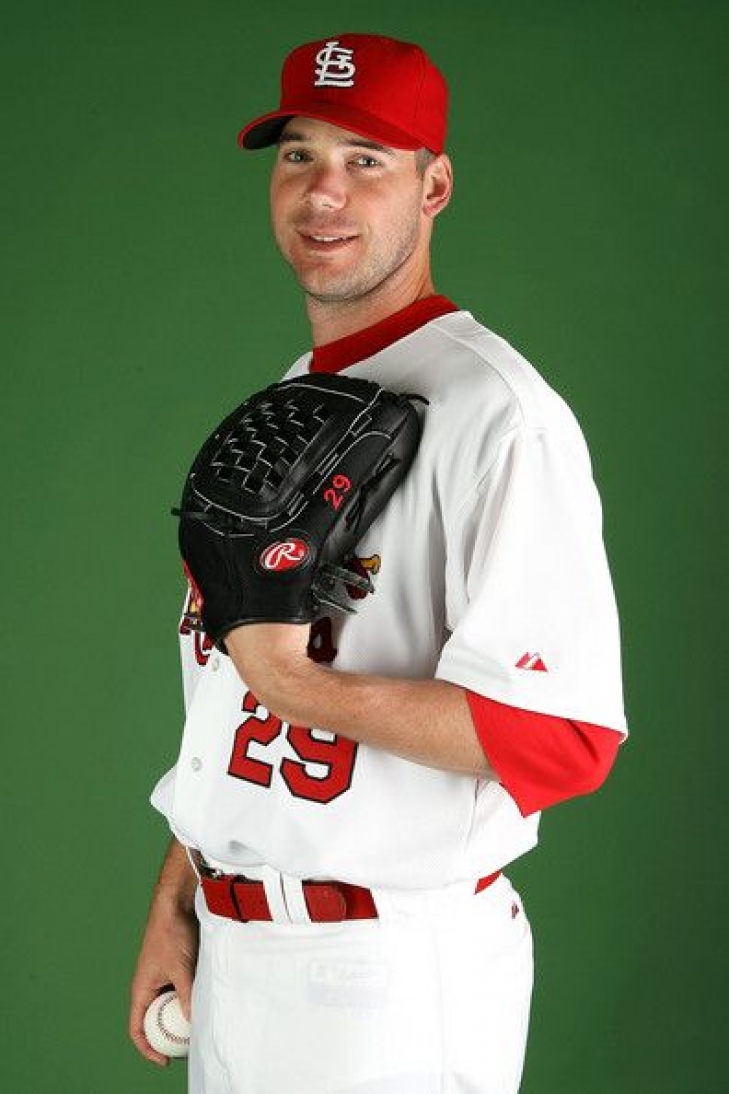
When the Toronto Blue Jays released Chris Carpenter after his 2002 season was cut short by a shoulder injury, they saw him as a typical example of potential unfulfilled due to injuries. They offered him a minor league contract, but he chose to decline and signed with the St. Louis Cardinals instead. He spent all of 2003 in intensive rehab under pitching coach Dave Duncan's supervision. In 2004, the tall right-hander finally took the mound at Busch Stadium. His return was more than just a career comeback; it marked the rise of a fiercely competitive pitcher, one of the most formidable big-game leaders in modern baseball history.
Carpenter announced his arrival with a solid 15–5 record in 2004, but his standout performance came during the legendary 2005 season. With an improved, sharp sinker and a powerful 12–6 curveball, he dominated National League lineups. He achieved a remarkable 21–5 record, with a 2.83 ERA over an extensive 241.2 innings. His frequent complete games, totaling seven, effectively shut down opposing offenses. These feats earned him the 2005 National League Cy Young Award and his first All-Star selection, establishing him as the top starter in the league.
He showcased his elite peak during the historic 2006 season, with 32 high-intensity starts and leading the National League with a mere 1.069 WHIP. His calm, consistent execution under pressure drove manager Tony La Russa's rotation. In October, Carpenter became a postseason menace, culminating in a brilliant three-hit, no-run performance over eight innings in Game 3 of the World Series, helping secure the championship against the Detroit Tigers.
As he established himself as a local icon, the physical strain from his intense playing style finally took a toll. Carpenter faced a tough series of medical procedures, including Tommy John surgery and shoulder reconstruction, which ended his 2007 season and limited him to only four appearances in 2008. For many in baseball, a second comeback appeared unlikely based on the numbers.
Yet, Carpenter engineered an iconic, roaring return during the unforgettable 2009 campaign. In what stands as one of the most resilient displays of grit the sport has ever seen, he captured the National League ERA title with a microscopic 2.24 mark, going 17–4 to easily secure NL Comeback Player of the Year honors and finish as the runner-up for the Cy Young Award. He followed that triumph by leading the league with 35 starts and a massive 235 innings in 2010.
That renowned durability reached its peak during the iconic 2011 championship run. This postseason is best remembered for Carpenter's pivotal high-pressure moment. In a memorable Game 5 winner-takes-all against his close friend Roy Halladay and the formidable Philadelphia Phillies, Carpenter delivered a historic, complete-game 1–0 shutout, securing St. Louis’s spot in the NLCS. He carried that exact momentum through the Fall Classic, starting and winning the epic Game 7 finale against the Texas Rangers to hoist his second World Series trophy. The immense physical strain of that workload ultimately took its final toll, as a severe thoracic outlet syndrome diagnosis limited him to a brief cameo in 2012 and forced his official retirement.
Carpenter finished his nine-year St. Louis stint with a 95–44 record, a 3.06 ERA, and 1,085 strikeouts in 197 games. He was inducted into the Cardinals Hall of Fame in 2016.
20. Red Schoendienst
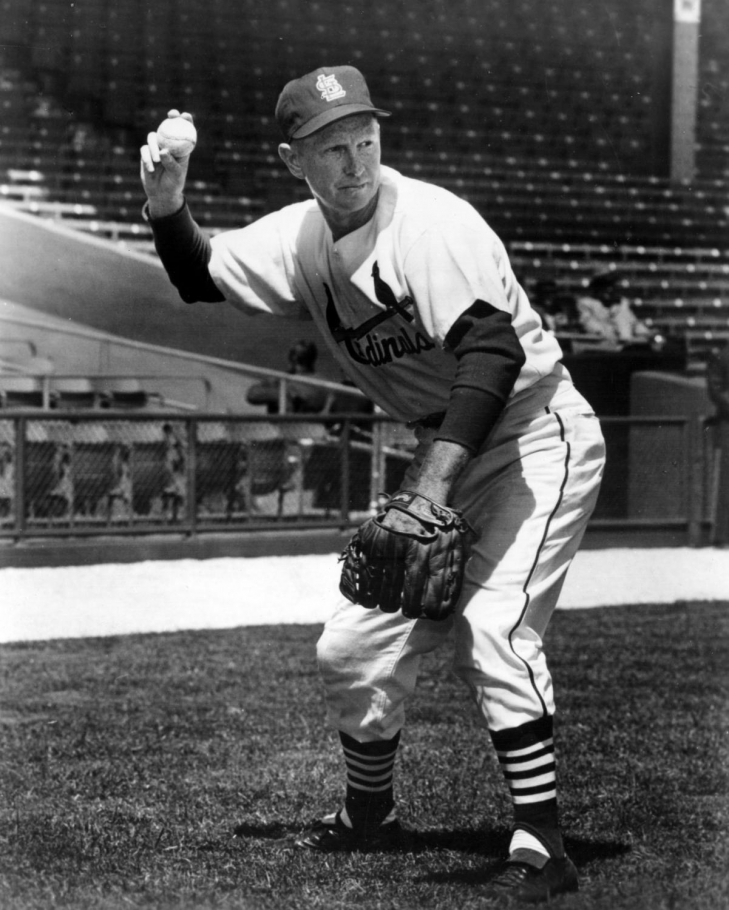
Few players in the long, storied history of the St. Louis Cardinals have ever matched the enduring, cross-generational longevity of Albert Fred "Red" Schoendienst. Originating from the rural farmlands of Illinois, the passionate, red-haired switch-hitter overcame a significant teenage eye injury to make his debut in the Major Leagues in 1945. He directly took the field at Sportsman's Park to fill a roster vacancy caused by wartime enlistments, leading the National League with 26 stolen bases during his rookie season. This marked the beginning of a legendary, multi-decade affiliation with the city of St. Louis, where his consistent performance and quiet dignity set the highest standard of excellence in the post-war period.
Schoendienst’s initial 12 seasons in the Gateway to the West were marked by consistently strong daily offensive output. Though he rarely was an elite power hitter, his skillful, contact-focused swing from both sides of the plate made him a difficult strikeout threat for pitchers. He exceeded 170 hits in a season six times as a Cardinal, playing a steady role at the top of a star-studded lineup that included his close friend and roommate, Stan Musial. His offensive peak came in 1953, when he hit a career-high .342 and nearly won the National League batting title, showcasing his high-efficiency hitting.
While his batting maintained a consistent offensive presence, Schoendienst’s true talent lay in his infield defense. With exceptional lateral mobility, soft hands, and a legendary glove technique he famously broke in with raw bacon fat, he made second base defense a nightly showcase. He ranked in the top ten in the National League in Defensive bWAR eight times as a Cardinal, often leading all second basemen in Range Factor per Game and Fielding Percentage. His defensive skill was a crucial safety net for the Redbirds' pitchers, earning nine straight All-Star selections in St. Louis and cementing his reputation as one of the most respected middle infielders of his era.
After a notable June 1956 trade that sent him to the New York Giants, Schoendienst proved his elite status by later leading the Milwaukee Braves to a World Series victory. He hit .309 and finished third in the 1957 National League MVP voting, acting as the key force that helped Milwaukee triumph over the mighty Yankees. Despite his success away from home, his heart remained deeply connected to Missouri.
Schoendienst returned to St. Louis in 1961 to finish his playing career and later became the franchise's longest-serving manager. He notably led the 1967 "El Birdos" team to a memorable World Series victory over Boston, securing his legacy as the franchise's cherished patriarch until his death in 2018 at age 95. Throughout his 67-year career in Major League Baseball—as a player, coach, manager, and special assistant—45 seasons were spent exclusively with the St. Louis Cardinals.
He finished his career in St. Louis with 1,980 hits, 350 doubles, and a .289 average in 1,795 games. Inducted into the Hall of Fame in 1989, his No. 2 jersey was retired in 1996, and he was part of the inaugural St. Louis Cardinals Hall of Fame class in 2014.
16. Curt Flood
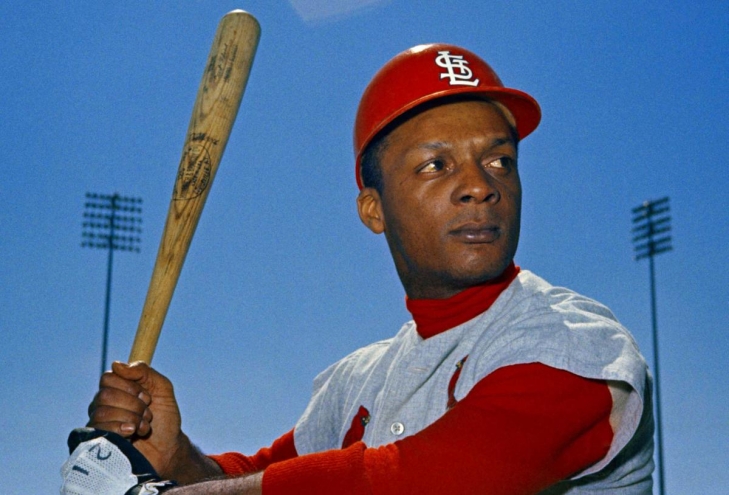
Curt Flood, acquired from the Cincinnati Reds in late 1957, was a remarkable player. At 5’9'' and 165 pounds, he transformed outfield defense on the Senior Circuit by blending impressive lateral speed with perfect timing. During his 12 seasons in eastern Missouri, he did more than catch flies; he defined an era of elite outfield coverage, setting a high standard of durability that earned him seven consecutive National League Gold Glove Awards from 1963 to 1969.
Flood’s masterclass defense on the grass was his signature move, but his offensive game quietly transformed from a low-order afterthought into a top-tier threat. He made contact and worked pitchers into a disciplined routine. His breakout season came during a remarkable 1964 regular season, earning awards. That summer, he showcased an exceptional hitting display, leading the National League with 211 hits and maintaining a strong .311 batting average.
His exceptional skill in setting the table propelled the Cardinals to a remarkable National League pennant and ultimately led to a seven-game victory over the New York Yankees in the Fall Classic, securing his sole career All-Star selection. He consistently upheld that elite contact profile throughout the decade, achieving six separate seasons with a batting average exceeding .300—highlighted by a remarkable .335 average to win another world title in 1967, and an outstanding 1968 season where he finished fourth in the National League MVP voting.
Despite his impressive statistical achievements, his departure from St. Louis marked one of the most dramatic and culture-shifting moments in global sports history. After the 1969 season, the team management suddenly decided to trade their beloved co-captain along with other players to the Philadelphia Phillies. Flood, however, refused to accept the trade. He was deeply upset with a system that treated players as commodities, so he chose to sit out the entire 1970 season. During that time, he also filed a groundbreaking federal antitrust lawsuit against Major League Baseball to challenge the unfair
Although he courageously fought the system all the way to the United States Supreme Court in 1972, the court eventually ruled against him. This decision essentially kept him out of the major leagues for most of his career, except for a brief 13-game appearance with the expansion Washington Senators near the end of his playing days. Flood gave up his prime athletic years and a career filled with honors in pursuit of a strong systemic principle.
Throughout his time in St. Louis, he achieved impressive milestones, with exactly 1,853 hits, 264 doubles, and 834 runs in 1,601 games, supported by a solid 42.3 franchise position bWAR. Though a legal challenge ended his career, his sacrifices sparked a historic ripple effect, opening the door to today's modern free agency and the financial benefits athletes now enjoy. In 2015, the organization proudly set the record straight, and the Red Ribbon Committee honored his significant contributions by inducting Curt Flood into the St. Louis Cardinals Hall of Fame in a heartfelt ceremony.
22. Bob Caruthers
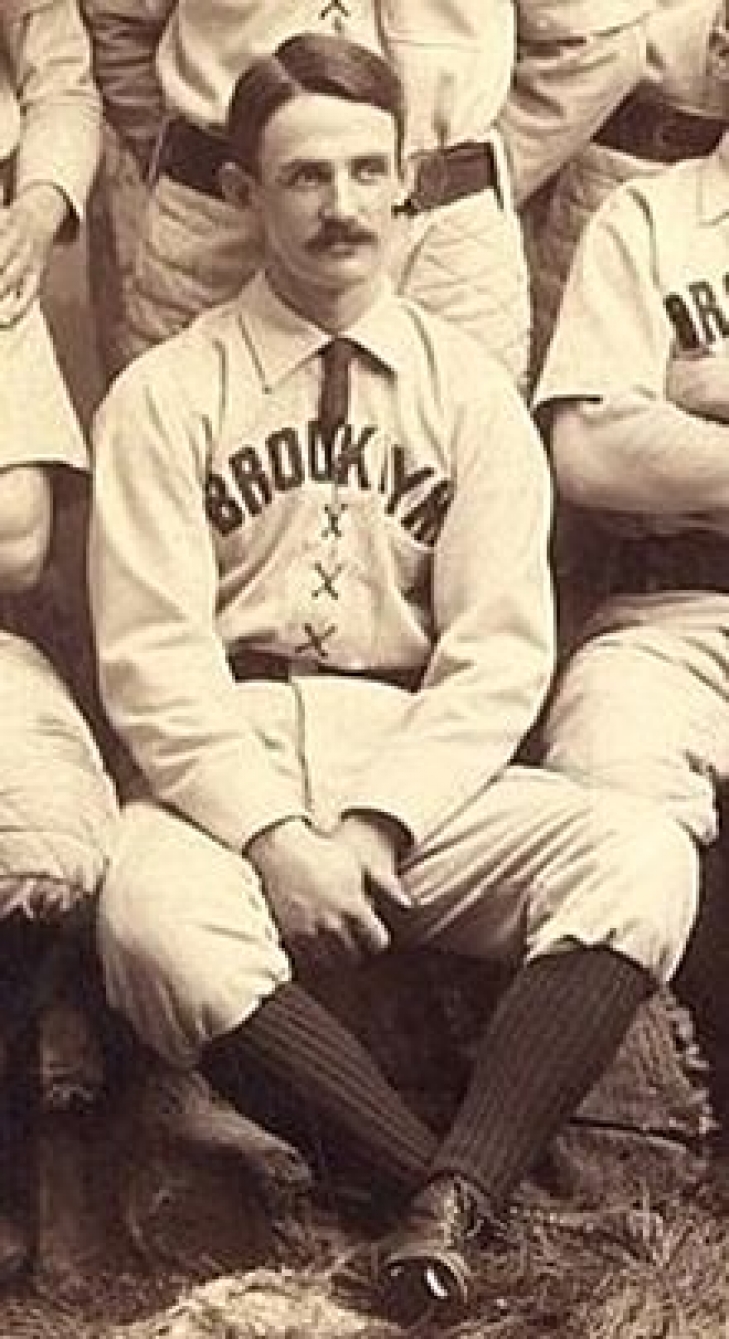
When evaluating the early architecture of professional baseball in St. Louis, it is easy for modern analysts to overlook the 1880s American Association era. However, digging into the historical record reveals that Bob Caruthers was not just a valuable contributor; he was arguably the game's premier two-way superstar long before Shohei Ohtani or Babe Ruth made it a cultural phenomenon. Nicknamed "Parisian Bob" due to his refined tastes and offseason travels, Caruthers provided the St. Louis Browns (who would later evolve into the Cardinals) with an unprecedented competitive advantage, serving as both their undisputed pitching ace and one of the most feared everyday bats in the lineup.
On the mound, Caruthers operated at an absolute tier-one elite echelon, compiling a mind-boggling 108–48 record across his four seasons with the franchise. His absolute individual masterpiece arrived during the spectacular 1885 campaign. He completely paralyzed opposing offenses by leading the American Association in both wins (40) and ERA (2.07), throwing 489 complete-game innings of pure, unadulterated dominance. He beautifully validated that historic performance over the next two summers, racking up an additional 30 wins in 1886 and 29 more in 1887, carrying an immense workload without a single complaint.
Yet, what makes Caruthers an absolute statistical marvel is that on the days he wasn't pitching, manager Charlie Comiskey plugged him right into the starting outfield to leverage his elite bat. Over his St. Louis residency, he posted a spectacular .300/.401/.431 slash line, showcasing a level of spatial awareness and plate discipline that was years ahead of his time.
His two-way mastery reached a thunderous peak during the historic 1886 season, a summer where he led the entire league in both on-base percentage (.448) and OPS (.970) while simultaneously winning 30 games on the mound.
Caruthers' brilliance culminated in a historic, pre-modern World Series showdown against the Chicago White Stockings of the rival National League in 1886. Pitching under immense pressure, he went 2–1 with a microscopic 0.923 WHIP, engineering the defining victory that secured St. Louis its very first world championship banner.
Caruthers concluded his unforgettable run in St. Louis with a stellar 2.75 career ERA on the mound and 402 hits at the plate before moving on to wrap up his successful playing days with the Brooklyn Bridegrooms.
