


Site Admin
13. Johnny Mize
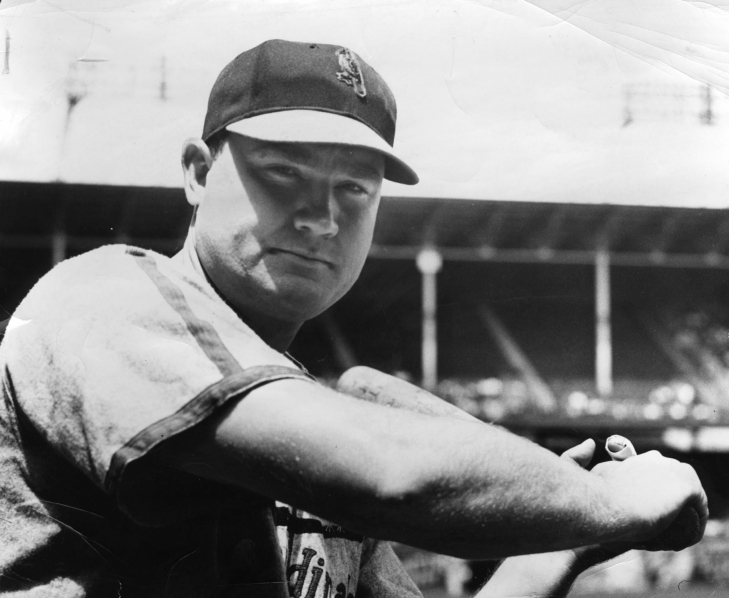
In chronicling the historic, multi-stage career of a baseball player, it is uncommon to encounter a legacy precisely segmented into three definitive acts of excellence. For John Robert Mize, his illustrious journey manifested through three distinct phases: as a structural powerhouse for the St. Louis Cardinals, as a prominent mid-career figure for the New York Giants, and as a distinguished late-career role player who contributed significantly to five consecutive World Series victories with the New York Yankees. However, an exclusive examination of his initial foundational act in eastern Missouri reveals an extraordinary peak of run production that exemplifies exemplary batting mechanics—a legendary apex that nearly diminished before it genuinely commenced.
The entire trajectory nearly shattered during a high-stakes transaction at a pivotal juncture in late 1934. While playing in the minor leagues for Rochester, the young first baseman attracted the interest of the Cincinnati Reds, who agreed to purchase his contract from the Cardinals for an astounding sum of $55,000—an exorbitant amount during the peak of the Great Depression. Nevertheless, Mize sustained a severe, incapacitating injury to his leg and groin, which restricted his mobility. Subsequent medical examinations revealed painful bone spurs, prompting the Reds to annul the agreement and return him to St. Louis. At merely 22 years of age, many commentators believed "The Big Cat" was at the end of his career.
Instead, Cardinals general manager Branch Rickey appointed a specialist to perform surgery, establishing a seminal technical shift. Due to his ongoing recovery, Mize was unable to cope with the routine demands of a minor-league schedule, which resulted in his promotion to the major-league roster in 1936 solely to serve as a part-time pinch hitter. He fundamentally defied expectations by achieving a remarkable .329 batting average over 126 games, thereby securing a regular position in the starting lineup.
By 1937, his iconic, picture-perfect left-handed swing became the most feared weapon in the National League. Mize turned punishing inside fastballs and maintaining supreme plate discipline into a strict daily routine. That summer, he lashed out a .364 batting average with 25 home runs, a .427 on-base percentage, and a commanding .595 slugging mark.
Rather than hitting a ceiling, he systematically unlocked even greater power leverage over the next three seasons, establishing an era of unadulterated dominance. He captured the National League batting title in 1939 with a brilliant .349 average while pacing the Senior Circuit with 28 home runs.
He beautifully backed that up during a magnificent 1940 campaign, hammering a league-high 43 round-trippers and driving in a spectacular 137 runs. His complete dominance is beautifully validated by advanced efficiency metrics; Mize led the National League in slugging percentage and total OPS for three consecutive summers from 1938 to 1940, capturing consecutive MVP runner-up finishes.
The final chapter of his initial run arrived following the 1941 schedule. Eager to transition toward a younger, more flexible roster, ownership executed a sudden business departure, trading their premier first baseman to the New York Giants.
Mize walked away from Sportsman's Park, leaving behind a concentrated statistical fortress that commands profound reverence from modern purists. Across his six seasons strictly representing the Redbirds, he accumulated an astonishing localized slash line of .336/.419/.600, hammering 158 home runs and driving in 531 runs over 854 games.
His immortal contributions were formally immortalized when the Veterans Committee officially punched his first-class ticket to Cooperstown in 1981. Decades later, the organization added the final, beautiful punctuation to his legacy, triumphantly enshrining Johnny Mize as a member of the inaugural St. Louis Cardinals Hall of Fame class in 2014.
10. Joe Medwick
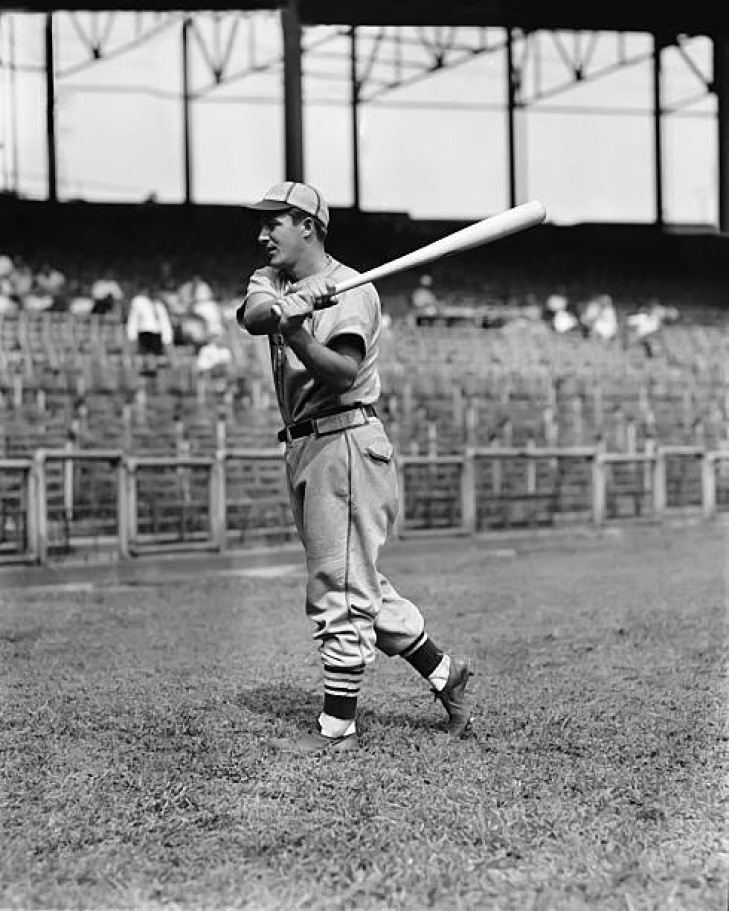
Debuting with the St. Louis Cardinals in 1932, Joe “Ducky” Medwick (thus nicknamed because he apparently walked like that aforementioned bird) would become a major star through the 1930s. Before he was traded midway through the 1940 season he would have seven full seasons where he batted over .300 with four 200 Hit campaigns. While in relative terms, Medwick was not known as an elite power hitter he did blast 152 dingers for St. Louis including a league-leading 31 in 1937. We will get back to that year later. In addition to decent power, he was a doubles leader three times (1936-38) and had seven straight years with 40 Doubles, and was also a Triples champion in 1934.
8. Ken Boyer
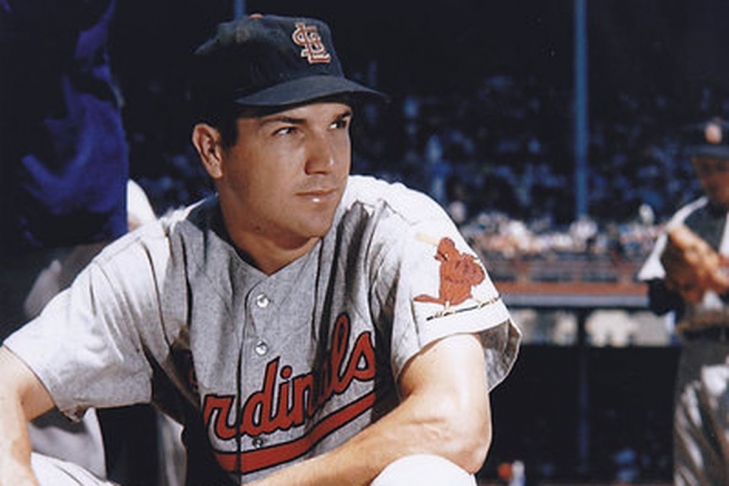
When establishing the definitive benchmark for excellence in the modern hot corner, esteemed baseball historians often scrutinize beyond the most flamboyant personalities to emphasize a player who epitomized durability and possessed an exceptional, middle-of-the-order power. Ken Raymond Boyer was initially signed by the St. Louis Cardinals as a pitcher; however, a swift organizational transition to third base during his second minor league season proved to be an unequivocal strategic success for both the athlete and the franchise. Making his eagerly awaited Major League debut in 1955, the highly athletic and physically commanding native of Missouri not only solidified the left side of the infield but also evolved into the silent yet authoritative cornerstone of the entire team. Throughout a distinguished decade-long tenure, the esteemed team captain set a benchmark for multidimensional consistency, ranking among the most exemplary eras in the extensive history of the St. Louis Cardinals.
7. Dizzy Dean
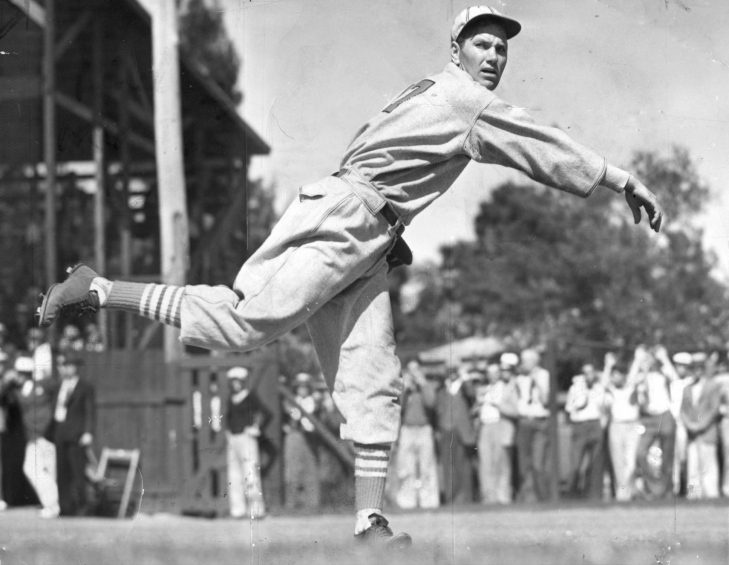
When we declare that Bob Gibson was the preeminent pitcher in the history of the St. Louis Cardinals, we substantiate this assertion; however, longevity and overall career significance constitute separate considerations. If the discussion pertains to the most rapid, overwhelmingly dominant peak performance by a Redbirds pitcher, that accolade unquestionably belongs to another individual. Born Jay Hanna Dean, but widely known as “Dizzy” due to his flamboyant, assertive, and humorously self-assured demeanor, the nation’s prodigious right-hander regarded Major League Baseball as his personal domain. Following a brief debut involving one game in 1930 and a swift stint in the minor leagues for further development, he secured a permanent position in the rotation for the 1932 season. He did not merely take the mound; he became a cultural icon and a high-velocity workhorse who set the pace throughout the National League, leading an enduring multi-era peak that illuminated the sport's history with exceptional brilliance.
His introductory 1932 campaign was a remarkable display of extensive endurance. Dean transformed logging numerous innings into a disciplined daily routine, leading the Cardinals to a competitive record of 18–15 and ranking third among all National League pitchers with a bWAR during his rookie season, owing to his 191 strikeouts and four shutouts over a league-high 286 innings. Advanced analytical metrics strongly substantiate his immediate influence on the team.
He maintained that the frontline trajectory directly into the 1933 schedule, achieving his first 20-win campaign (20–18) and securing another league-leading strikeout crown, thereby paving the way for the historic pinnacle of his career on the mound.
The pinnacle of his hardware-certified legacy was reached during an exceptional 1934 regular-season performance. This period marked the summer when the Cardinals earned the affectionate nickname "Gashouse Gang”, a rugged and dirt-stained assembly of characters, with Dean serving as the unequivocal representative of the franchise. He delivered an exemplary demonstration of defensive mastery, culminating in an impressive 30–7 record, making him the last National League pitcher to achieve 30 wins in a single season. His advanced efficiency metrics dominated the era; he led Major League Baseball with seven shutouts and an outstanding 9.0 bWAR, thereby securing the National League Most Valuable Player award. His prowess in high-stakes games translated directly into world championship titles awarded in October. Dean posted a 2–1 record in the 1934 World Series against Detroit, concluding his performance with a historic, complete-game shutout in Game 7 to definitively secure the championship for St. Louis.
Far from a single-season peak, "Ol' Diz" maintained an unrivaled baseline of elite dominance over the next two summers, finishing as the runner-up for the National League MVP in both 1935 and 1936. He systemically dismantled opposing lineups to win 28 games in 1935 and 24 more in 1936, running his streak of National League strikeout crowns to four consecutive seasons. From 1932 to 1937, he never finished lower than third in pitching bWAR across the Senior Circuit, showcasing a concentrated era of dominance that left opposing managers completely helpless.
A single pitch ultimately led to a sudden, career-altering crossroads during the 1937 All-Star Game. A line drive struck by Earl Averill resulted in Dean sustaining a fractured toe; in an attempt to pitch through the injury prematurely, he modified his mechanics, leading to an immediate arm injury. The organizational departure occurred prior to the 1938 season when the front office traded their declining ace to the Chicago Cubs in exchange for a substantial package of players and cash. Chronic bursitis and a dead arm diminished his effectiveness significantly during his tenure with Chicago, marking a quiet conclusion to his peak years.
Across his 213 appearances as a Cardinal, Dean accumulated exactly 134 wins against just 75 losses, maintaining a brilliant 3.43 ERA, 120 complete games, 23 shutouts, and 924 strikeouts over 1,595.2 innings of work.
Dean would enter the Baseball Hall of Fame in 1953, and 19 years later, his #17 was retired by St. Louis. The franchise also inducted Dean as part of their first Hall of Fame class in 2014.
