


Site Admin
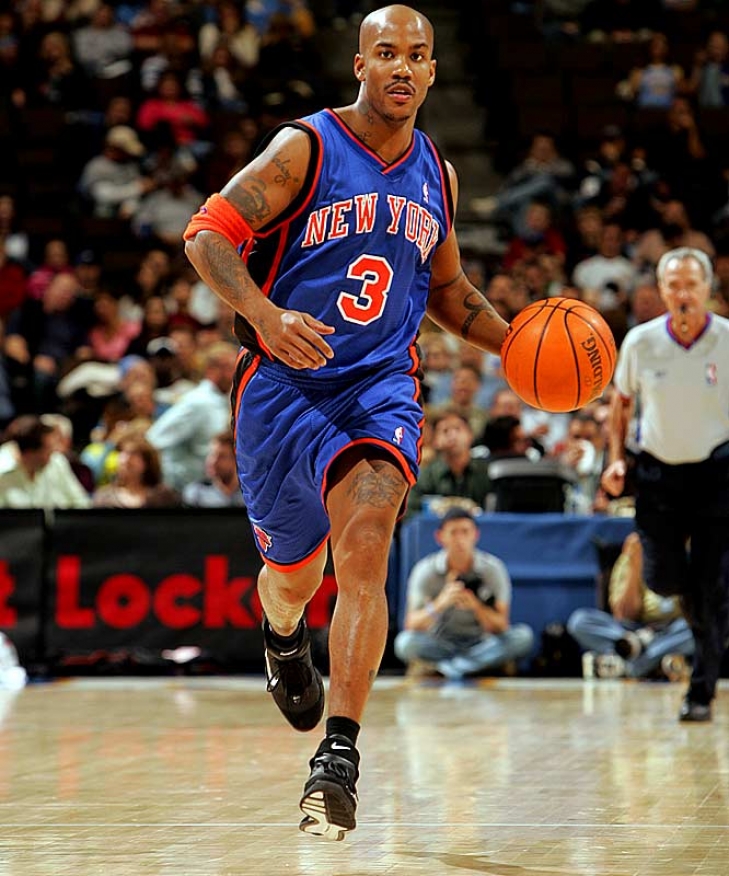
41. Stephon Marbury
32. Howie Pollet
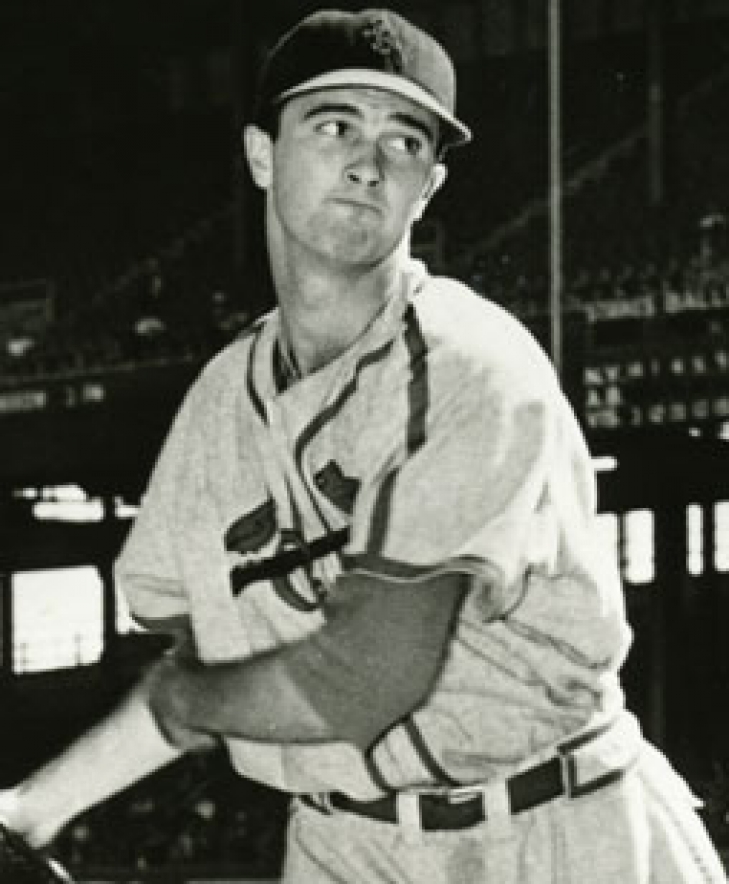
The iconic 1940s baseball timeline is often interrupted by the significant impact of World War II, forcing historians to reconstruct legendary stories from scattered sources. Howie Pollet exemplifies a top-tier frontline pitcher whose career was deeply affected by military service, yet he still achieved some of the era's most efficient peak seasons. Recruited from New Orleans as a valuable talent from Branch Rickey’s renowned St. Louis Cardinals farm system, this slender, analytical southpaw had a lethal sweeping curveball and exceptional control, positioning him as the likely successor to the organization's left-handed pitching tradition.
Pollet was nearing top-tier status in 1943, earning a National League All-Star nod after leading the rotation in July. On the morning of the Midsummer Classic, he enlisted in the U.S. Army Air Forces and reported for duty immediately. Despite his season ending early due to military service, he achieved a remarkable 1.75 ERA over 118 innings, earning the 1943 National League ERA title and showcasing an elite level of performance that made fans wonder what more he could have accomplished with a full summer.
When Pollet removed his military uniform to return to the Gateway to the West in 1946, he didn't just regain his position—he became the team's dominant, ice-cold ace. He led the regular season like a storm, topping the National League in wins (21), ERA (2.10), innings pitched (266), and complete games (22). His extensive workload during the regular season earned him a notable fourth-place finish in the National League MVP voting. More significantly, his consistent performance held the rotation steady throughout a dramatic seven-game World Series victory over the Boston Red Sox, solidifying his legendary status in postseason history despite facing severe shoulder friction late in the season.
The significant toll of that 1946 workload naturally took its toll on his arm, leading to a challenging two-year period during which his efficiency fell below his usual high standards. Nevertheless, Pollet skillfully orchestrated a remarkable final rebound during the 1949 season. Earning his third and final career All-Star selection, he achieved his second 20-win season with a record of 20–9. He also ranked a commendable third in the league in ERA and led all National League pitchers in advanced value by finishing first in Pitching bWAR (6.5).
As arm ailments gradually limited his speed and durability, the front office wisely traded veteran left-hander Pollet to the Pittsburgh Pirates midway through 1951. He ended his nine-year St. Louis career with a 97–65 record, a 3.05 ERA, and 544 strikeouts in 225 appearances.
35. Theodore Breitenstein
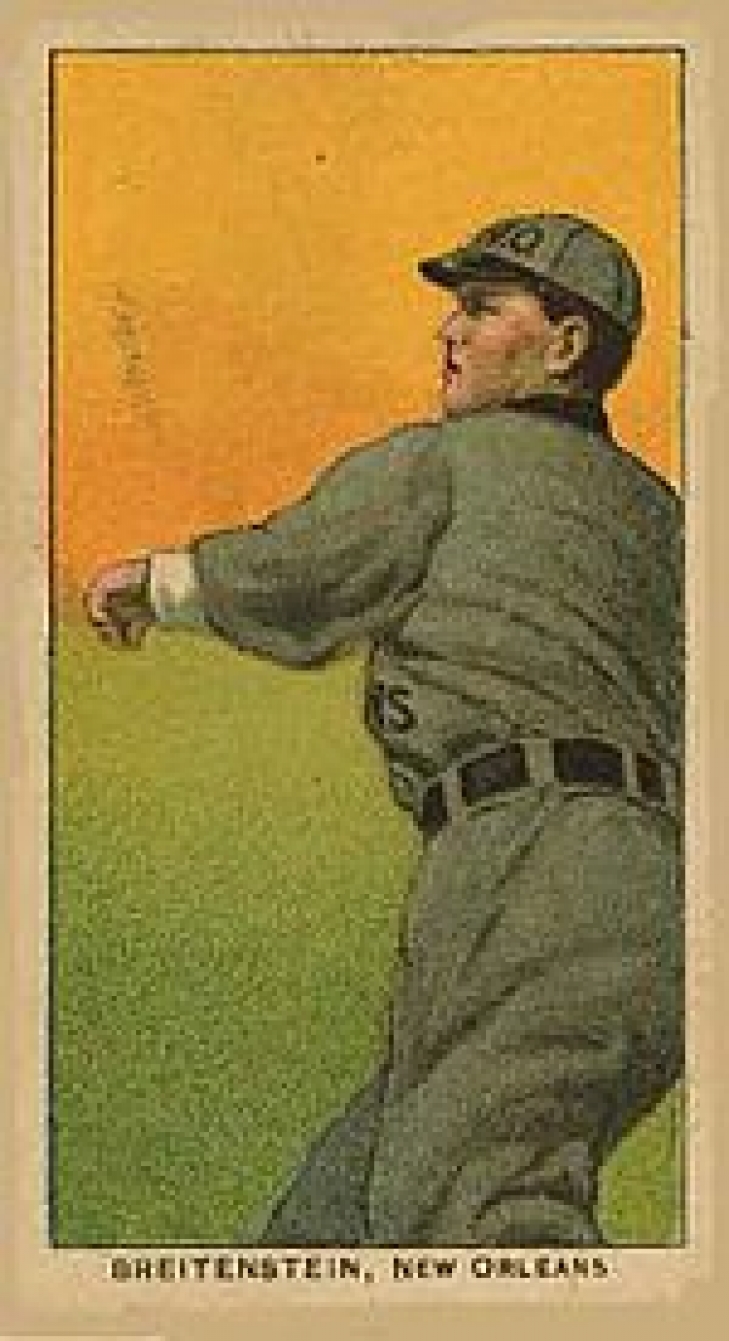
Judging a pitcher from the pre-modern era solely by wins and losses can be misleading, a mistake modern analysts now avoid. Theodore Breitenstein exemplifies this shift in perspective. A native of St. Louis who initially made stoves before debuting for his hometown Browns in 1891, Breitenstein delivered a remarkable performance by throwing a 27-men-up, 27-men-down no-hitter in his very first major-league start. Throughout the 1890s, he pitched for a poorly performing, low-scoring franchise. While his record of 94–125 might seem problematic to the casual observer, it obscures the reality that he was an exceptionally efficient pitcher, often dominating opponents and carrying the entire pitching staff.
Breitenstein’s exceptional talent was clear during the legendary 1893 season. Although he pitched for a tenth-place team that resulted in a seemingly poor 19–24 record, this left-handed ace entirely controlled opposing National League lineups, earning the ERA championship with an impressive 3.18 over 382.2 innings.
When the National League moved the pitcher's rubber back by ten feet before the 1894 season, it sparked intense offensive shifts that changed the game significantly. Breitenstein, however, adapted seamlessly to this change, showcasing his dominance during that era by going 27–23 and leading all of baseball with 447.1 innings pitched and 46 complete games.
He replicated that mind-boggling durability during the 1895 campaign, logging another 46 complete games and a whopping 429.2 frames. While Breitenstein infamously led the National League with 30 losses in 1895, modern advanced quality analysis reveals that the total was entirely a product of historically abysmal defensive support and zero offensive run production. He still finished a stellar fifth overall among all Senior Circuit pitchers in Pitching bWAR that summer, operating with a level of nerve and equilibrium that made him highly coveted by every front office in the country.
After recognizing that Breitenstein accounted for nearly half of the team's total value, the Cincinnati Reds made a significant financial move following the 1896 season by purchasing his contract from struggling St. Louis owner Chris von der Ahe. The southpaw proved his worth in Ohio by recording back-to-back 20-win seasons and pitching a second career no-hitter before returning to St. Louis in 1901 for a brief, late-career stint.
He ended his Cardinals career with 94 wins, a sharp 4.10 ERA, and 626 strikeouts, while throwing an astonishing 197 complete games over 1,920.1 innings.
28. Ray Lankford
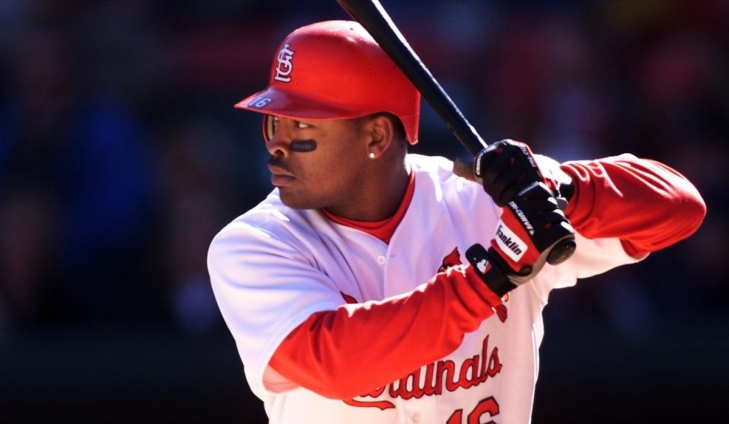
Following a revered world-championship icon is one of the most challenging tasks in professional sports. Yet, Ray Lankford filled the enormous gap left by Willie McGee and established his own unique, dynamic legacy. Drafted in the third round of the 1987 MLB draft by the St. Louis Cardinals, this physically strong outfielder introduced a different build to center field at Busch Memorial Stadium. Unlike his predecessor, who focused on a low-power, high-contact style, Lankford utilized a powerful, left-handed swing combined with exceptional athleticism. His arrival marked the end of the "Whiteyball" era and the beginning of a decade distinguished by a remarkable mix of raw power and exceptional speed.
Lankford established himself as a versatile, top-tier player the moment he secured the everyday center field spot. During his 1991 rookie season, he showcased his elite athleticism by leading the National League with 15 triples and stealing 44 bases. Rather than being limited to a speed-focused player, he quickly demonstrated impressive raw power from the left side of the plate. He then achieved an outstanding stretch of six seasons with at least 20 home runs and 20 stolen bases, becoming a formidable force in the National League throughout the 1990s as a consistent and dangerous middle-of-the-order hitter.
Lankford’s peak as a player was during a remarkable period in the late 1990s. In 1997, he earned a well-deserved spot on the National League All-Star team, a summer where he struck 31 home runs—his career best—and achieved a notable .585 slugging percentage. He reaffirmed this peak with an outstanding 1998 season, hitting 26 home runs, drawing 93 walks, and posting a impressive .915 OPS.
Lankford’s historical profile is marked by contrasting metrics. Traditional analysts focused on his high strikeout count—he exceeded 100 strikeouts 11 times in St. Louis, often lowering his batting average and limiting his raw rank. In contrast, modern advanced metrics regard him as an elite player. His exceptional ability to draw walks resulted in a high .364 on-base percentage, leading to three top-ten finishes in National League Offensive bWAR.
After a June 2001 trade to the Padres, Lankford returned to the Gateway to the West in 2004 for one final chapter. As a veteran off the bench, he offered depth and leadership for a Cardinals team that won the National League pennant before he retired.
Lankford's 13-year St. Louis career included 1,479 hits, 228 homers, 829 RBIs, and 250 stolen bases in 1,580 games. He is the only Cardinals player to hit over 200 home runs and steal over 200 bases. He was Inducted into the team's Hall of Fame in 2018.
