


Site Admin
6. Enos Slaughter
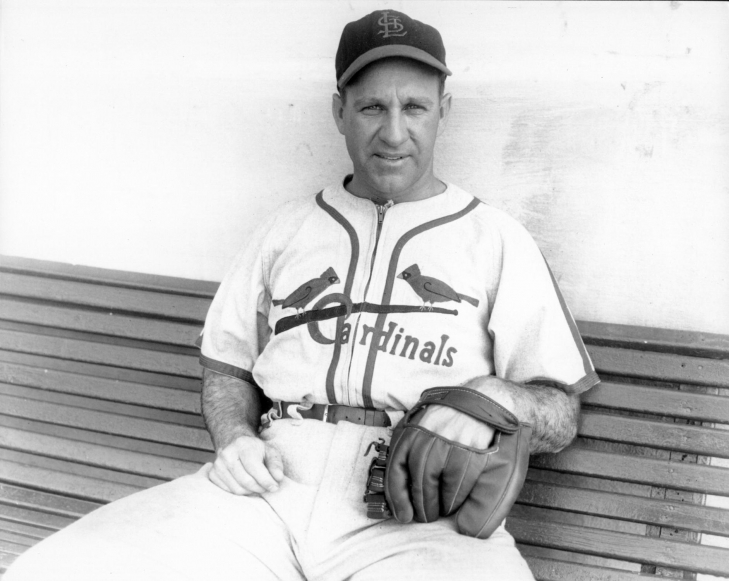
If you are a regular reader of Notinhalloffame.com, you know that the editorial staff is an absolute sucker for great sports names. Enos Slaughter is a fantastic identifier all on its own, but when you inject his timeless, rustic moniker, you get Enos “Country” Slaughter—a combination of words so beautifully evocative of a bygone era that the temptation to artificially elevate him in the historical ledger was immense. We didn't do that, of course, but his performance on the grass didn't require any favoritism anyway.
Emerging from the Redbirds' minor league talent pipeline, the broad-shouldered, highly aggressive right fielder was known for his unwavering refusal to walk, sprinting to first base even after taking a walk. Throughout his notable yet interrupted career in Missouri, he served as the competitive spark and high-energy driver for three pennant-winning teams, consistently delivering solid line-drive production that cemented his legendary status in local lore.
His 1938 debut season served as an impressive introduction, as he posted a .276 batting average over 112 games. Interestingly, this would remain his lowest single-season batting average during his main years with the Cardinals, highlighting his remarkable consistency over the next decade and a half. In 1939, he became a key player, regularly dismantling National League pitching and leading the league with 52 doubles while maintaining a .320 batting average. He sustained that upward trajectory directly into the 1940s, capturing a well-deserved runner-up finish in the 1942 National League Most Valuable Player balloting after pacing the circuit in hits (188) and triples (177) to propel St. Louis to a world championship.
Then, at the absolute evolutionary zenith of his physical peak, the broader geopolitical realities of World War II engineered a sudden, three-year competitive blackout. Slaughter completely stepped away from the sport from 1943 through 1945 to serve his country in the Army Air Forces. Had those three prime summers not been sacrificed, he would have easily compiled eleven individual .300 campaigns for the organization rather than eight.
Demonstrating the legendary grit that defined his entire identity, his 1946 return to civilian life marked a remarkable moment of athletic redemption. Slaughter dominated the Senior Circuit leaderboards by hitting 18 home runs and driving in a league-high 130 runs, finishing just behind in the NL MVP voting. The peak of his baseball achievements occurred in October during Game 7 of the 1946 World Series against the Boston Red Sox. With the game tied at 3–3 in the eighth inning, Slaughter sparked a memorable hit-and-run from first base on a line drive to left-center field by Harry Walker. Bypassing standard strategic caution and charging through a visible stop sign from his third-base coach, he executed "Slaughter's Mad Dash"—a relentless, full-throttle sprint from first base all the way to home plate. Catching the Boston defense entirely off guard and sliding across the plate to score the world-championship-winning run, the iconic play remains one of the most celebrated, high-leverage moments in the history of global sports.
Slaughter remained a frontline fixture through the turn of the decade, recording another spectacular third-place MVP finish in 1949 by leading the league with 13 triples while batting a brilliant .336.
The inevitable business exit materialized in April 1954 when management initiated a youth movement, shocking the local community by trading the aging icon to the New York Yankees, where he would secure two more championship rings as a highly effective utility hand. Over his 1,751 games representing St. Louis, he accumulated exactly 2,064 hits, 366 doubles, 135 triples, 146 home runs, and 1,148 runs batted in, completely validated by an exceptional .305/.384/.463 franchise slash line.
He entered the Baseball Hall of Fame via the Veterans Committee in 1985. Eleven years later, Slaughter's number 9 was retired by the team, and in 2014, he was part of the Cardinals’ inaugural Hall of Fame class.
5. Ozzie Smith
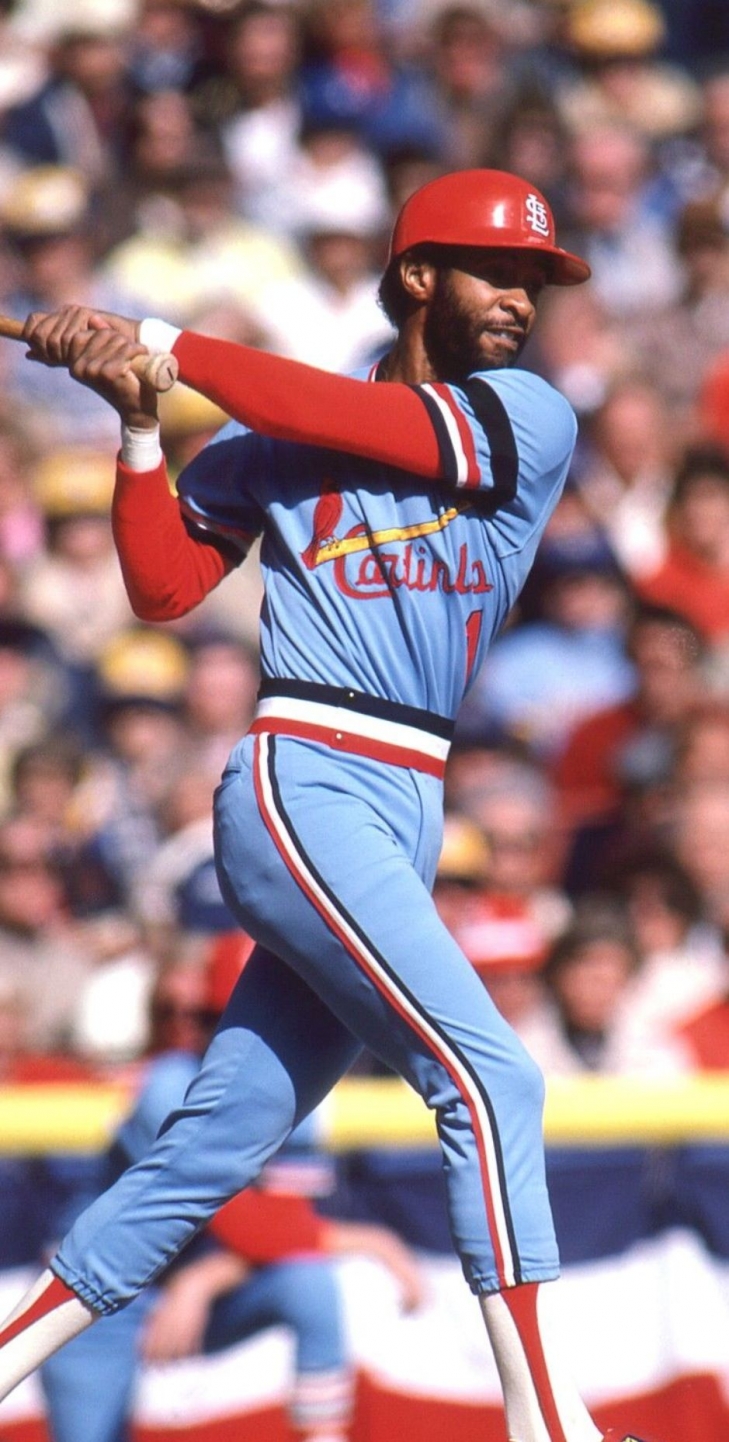
When looking at the most impactful moments in the sport's history, the December 1981 trade that changed the balance of the National League really stands out as a major event. The San Diego Padres gave up their promising young shortstop, thinking he was only good at defense and would never be a strong hitter. They couldn’t have been more mistaken. Ozzie Smith was sent to Missouri in a historic trade for Garry Templeton. He didn’t just step into a spot on the infield; he became the energetic, acrobatic heart of the Redbirds’ exciting resurgence. Over an incredible 15 seasons, "The Wizard" completely transformed how his position was played on defense and gradually developed his offensive skills into a top-tier weapon at the top of the lineup.
His initial phase in St. Louis immediately confirmed Whitey Herzog's vision of emphasizing speed, aggressive defense, and generating runs. Although Smith’s compact swing never suggested a power hitter, he dedicated himself to improving his offensive game, transforming his approach under the Gateway Arch. He made consistently making high-velocity contact a daily habit, accumulating 1,944 of his 2,460 career hits while with the Cardinals. Once on the bases, he leveraged his exceptional acceleration to produce 13 consecutive seasons with at least 20 stolen bases, amassing 433 of his 580 career steals with the team and continually challenging opposing pitchers.
The pinnacle of his evolutionary development as a comprehensive, multidimensional athlete was demonstrated during a remarkable 1987 regular season. Acting as the driving force behind a pennant-winning team, Smith delivered an exceptional offensive performance that exceeded conventional expectations. He achieved a remarkable batting average of .303, his career high, supplemented by 40 doubles and 104 runs scored across 158 games. Most notably, he attained this high level of offensive output without recording a single home run throughout the summer. His exceptional discipline at the plate was unmatched; he drew 89 walks compared to only 36 strikeouts, resulting in an impressive on-base percentage of .392. This performance merited the receipt of a Silver Slugger Award and contributed to a strong second-place finish in the National League Most Valuable Player voting, surpassed only by Andre Dawson.
Nevertheless, while his offensive development solidifies his overall value, it is his extraordinary, gravity-defying defensive prowess that sustains his standing in the sport’s enduring zeitgeist. "The Wizard of Oz" did not merely play shortstop; he did so with a predatory, awe-inspiring artistic flair that transformed routine grounders into a literal human highlight reel, famously executing his iconic pre-game backflip to the utmost delight of the Busch Stadium spectators. He secured 13 of his 15 career Gold Glove Awards while solely representing St. Louis, thereby establishing a standard that remains unparalleled.
His advanced analytical filters strongly affirm his defensive dominance as the greatest to ever wear leather. He led National League shortstops in Total Zone Runs eight times—ranking first all-time at the position—and led the league in fielding percentage seven times. As a Redbird, he was the league leader in defensive bWAR five times, retiring as the sport's all-time top defensive player, conclusively establishing himself as the greatest defensive asset in baseball history.
His steady hand and unmatched instinct directly translated into historic team success, guiding the franchise to three National League pennants and the ultimate world-championship crown during a magical 1982 Fall Classic run, highlighted by his unforgettable, walk-off home run in Game 5 of the 1985 NLCS that triggered Jack Buck's immortal "Go crazy, folks!" broadcast.
Across his 1,990 games representing St. Louis, he accumulated exactly 1,944 hits, 991 runs scored, 876 bases on balls, and 433 stolen bases. Smith would enter the Baseball Hall of Fame in 2002 on his first year of eligibility, and was also named to the inaugural Cardinals Hall of Fame Class in 2014. Smith's #1 was retired in 1996, right after he hung up the cleats.
4. Bob Gibson
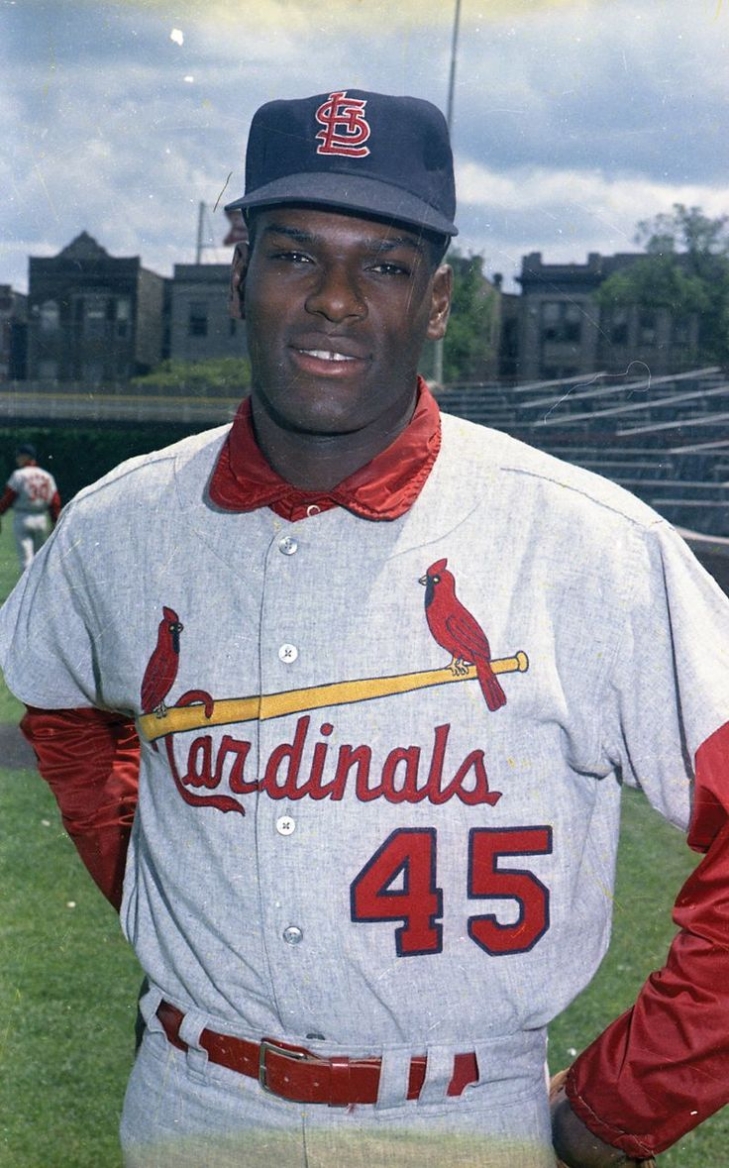
When evaluating a franchise that has spent more than a century accumulating championship banners, debates over the greatest players to ever wear the uniform can linger for decades. Yet when the conversation turns to the mound, it begins and ends with a singular, fiercely competitive presence from Omaha, Nebraska. Bob Gibson did not merely pitch for the St. Louis Cardinals; he commanded the entire diamond through sheer intimidation and unparalleled physical execution. Signed as an amateur free agent ahead of the 1957 season—following a brief, legendary stint showcasing his athleticism with the Harlem Globetrotters—the muscular right-hander became a permanent fixture in the starting rotation by 1961, embarking on a legendary run that remains the gold standard for pitching excellence in Midwestern baseball history.
Calling Gibson the greatest hurler in the club's long history is not a stretch; it is a mathematical certainty. He is the franchise's all-time leader in pitching bWAR (81.7), total wins (251), strikeouts (3,117), and total innings pitched (3,884.1).
While he established himself as a reliable front-line starter during the opening years of the 1960s, his legendary status as a big-game performer was forged in a historic breakthrough during the 1964 World Series against the New York Yankees.
Gibson hoisted the entire team onto his back, enduring a grueling workload of three complete-game starts. He won two of them—including a heroic, nine-inning masterpiece in Game 7 on just two days of rest—to capture the world championship and set a Fall Classic record with 31 strikeouts.
That legendary postseason performance launched a spectacular six-year reign of terror that reshaped the competitive landscape of the Senior Circuit. Gibson earned six consecutive All-Star selections from 1965 to 1970, pairing his blazing fastball with a slider that left hitters helpless.
In October 1967, he recaptured his October magic, guiding St. Louis to another World Series crown with a flawless 3–0 record over 27 complete innings, a microscopic 1.00 ERA, and a 0.704 WHIP against Boston, earning his second World Series MVP trophy.
The pinnacle of his career on the mound occurred during an incredible 1968 regular season. During the famous ‘Year of the Pitcher," Gibson delivered an outstanding performance, showcasing exceptional defensive skill. He skillfully overwhelmed National League lineups, finishing with a 22–9 record and setting a modern major league record with a remarkable 1.12 ERA.
His advanced efficiency filters were unrivaled; he tossed an unbelievable 13 shutouts, paced the circuit with a 1.77 FIP, and posted a 0.853 WHIP over 304.2 innings, culminating in a well-deserved sweep of both the National League Cy Young Award and the league's Most Valuable Player trophy.
That historic summer set the stage for a legendary heavyweight showdown in the 1968 World Series, where Gibson faced American League MVP and Cy Young Award winner Denny McLain of the Detroit Tigers. While the Cardinals ultimately fell short in a grueling seven-game battle, Gibson’s individual performance remained staggering. He authored three more complete-game starts, posting a 1.67 ERA and a 0.815 WHIP, and set an untouchable single-game World Series record by racking up 17 strikeouts in a dominant Game 1 victory.
His absolute dominance, alongside the general supremacy of pitchers across both leagues that summer, sparked localized panic among baseball executives. Fearing that offense was being permanently choked out of the sport, Major League Baseball took the unprecedented step ahead of the 1969 season to lower the pitching rubber by five inches and reduce the strike zone.
Despite structural rule changes designed to curb his effectiveness, Gibson’s elite spatial awareness and deep competitive drive enabled him to make immediate, masterclass adjustments. He maintained his frontline authority into the next decade, capturing a spectacular second career Cy Young Award in 1970 by winning 23 games with a 3.12 ERA and 274 strikeouts.
Furthermore, focusing solely on his legendary pitching tells only part of the story of his incredible, multidimensional legacy. Gibson was a premier, complete athlete who heavily influenced games with his bat and glove. He hit 24 career home runs as a dangerous threat at the bottom of the lineup and revolutionized defensive expectations at his position, using his lightning-fast reflexes to capture nine consecutive National League Gold Glove Awards from 1965 to 1973, providing a steady hand for the entire St. Louis defense.
The 1975 schedule marked his career end, as the physical toll of thousands of high-intensity innings forced his retirement.
Bob Gibson would be chosen for the Baseball Hall of Fame in 1981, which was his first year of eligibility. As for the Cardinals, they retired his number 45 after Gibson retired, and he was inducted into the first class of St. Louis' Hall of Fame in 2014.
3. Rogers Hornsby
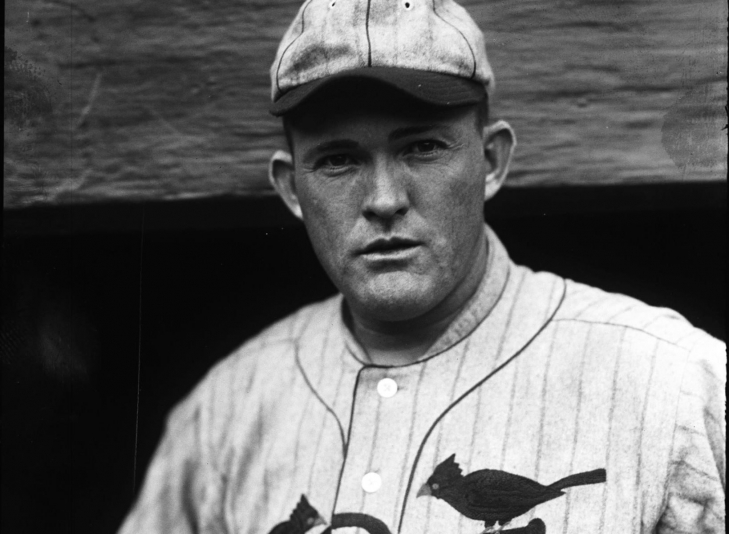
Although debates regarding the definitive placement of contemporary baseball giants relative to historic icons can incite endless discussions across stadium concourses, the sheer mathematical improbability of the accomplishments in the batter's box during the 1920s in St. Louis remains entirely unmatched. Rogers Hornsby not only accumulated hits but also manipulated the physics of right-handed batting to an unparalleled extent in the century since. Upon his arrival in St. Louis in 1915, "Rajah" combined a fierce, resolute personality with a wide, deep-in-the-box batting stance that enabled him to cover the outer half of the plate with formidable leverage. By the advent of the live-ball era, he had established an offensive baseline so overwhelmingly dominant that it fundamentally redefined the scoring ceiling for the entire National League.
His legendary tenure with the Cardinals was characterized by an unprecedented six-year dominance, representing the highest level of sustained offensive output. From 1920 to 1925, Hornsby secured six consecutive National League batting titles, effectively treating the league's pitching staff as a personal testing ground. During this breathtaking stretch, his average mark across more than 3,300 plate appearances was a mind-boggling .402. He systematically commanded every single efficiency filter available, leading the league in on-base percentage and slugging percentage in all six of those magnificent summers.
The crown jewel of this run erupted during a magnificent 1924 regular-season masterpiece, where he terrorized the league to post a spectacular .424 batting average—the highest single-season mark recorded in the modern era of Major League history.
Hornsby was a truly remarkable player, not just a singles hitter who relied on quick, precise hits into the grass. He combined incredible bat control with powerful, high-leverage strength. During his Career, he won two National League home run titles. In the exciting summers of 1922 and 1925, he achieved the prestigious feat of the National League Triple Crown, showcasing his outstanding all-around talent. His 1922 showcase was an unadulterated clinic in run production, as he clobbered 42 home runs and drove in 152 runs while racking up 250 hits.
His advanced analytical anchors are staggering; he finished second all-time in batting average (.358), eighth in on-base percentage (.434), and tenth in slugging (.577), showing unmatched skill in deep counts. Hornsby’s hardware-certified authority directly translated into historic franchise leadership when the front office named him player-manager midway through the 1925 schedule. The following autumn, Hornsby orchestrated the ultimate pinnacle of team success when he guided St. Louis to a World Series Championship.
His combative nature led to a sudden career exit after a contract dispute with Sam Breadon over exhibition games. Traded to the Giants in the offseason, he ended his peak years in St. Louis. He played as a hired gun, earning MVP with the Cubs and excelling with the Giants and Braves, ending as player-manager for the Browns.
Across his 13 active seasons with the franchise, Hornsby accumulated 2,110 hits, 367 doubles, 169 triples, and 143 home runs alongside a spectacular .359 batting average in 1,580 games. He was elected to the Baseball Hall of Fame in 1942, and the Cardinals named him as one of the members of their franchise Hall of Fame in 2014. The Redbirds also honored him on the left field wall in 1997 with a logo and his name.
