


Site Admin
The Buck Stops Here - Pro Football Hall of Fame - Part 3 of 8: AFC East
21. Marty Marion
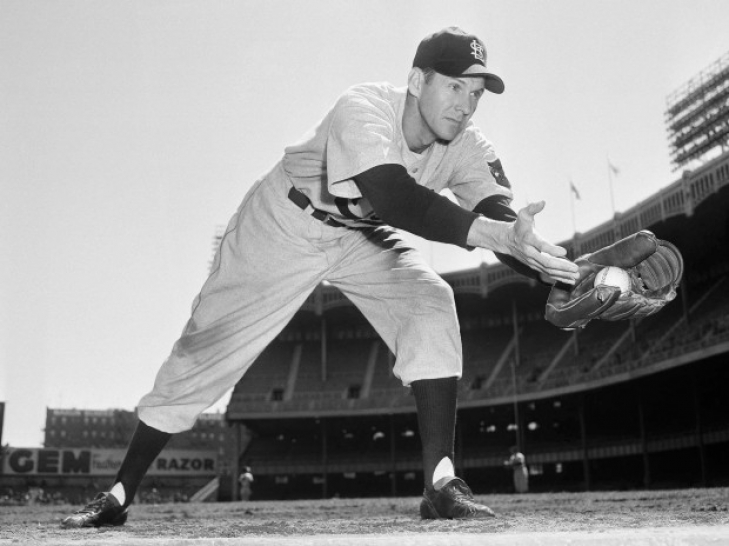
To grasp the extent of the St. Louis Cardinals' dominance in the 1940s, one needs to focus on the heart of their defense—shortstop Marty Marion. Standing at 6-foot-2 and Lanky, Marion redefined defensive play. Unlike most middle infielders of his time, who were stocky, his unusually long arms, broad wingspan, and extensive lateral coverage made him seem more like an inescapable defensive force on the field. It wasn't long before both opposing managers and teammates gave him a fitting nickname: "The Octopus."
While his peers boasted powerful bats, Marion primarily built the St. Louis dynasty through his exceptional glove work. He led the National League in Defensive bWAR three times and was a top contender with five runner-up finishes. Even decades after his final pitch, he ranks consistently in the top twenty all-time for defensive value in major league history. Although his career batting average of .263 and 36 home runs during his time with St. Louis seem modest today, they were quite impressive for a top shortstop of that era. His skill at hitting gaps for doubles and performing situational sacrifices made him a reliable presence in the lineup's lower end.
Marion’s career was profoundly shaped by WWII. A childhood leg fracture left him with a lasting disability, disqualifying him from military service. While many baseball stars headed off to fight, Marion remained a key pre-war figure in the majors. His exceptional fielding peaked in 1944, where he used his remarkable range to dominate offensively and led the team to 105 wins. His outstanding performance earned him the 1944 National League MVP, despite his limited batting. Marion wasn't just a regular-season marvel. He served as the defensive backbone of three World Series championship rosters (1942, 1944, and 1946), making him one of the winningest and most impactful core players in franchise history.
Marion’s impact in St. Louis went beyond his playing years, as he briefly managed the team during the 1951 transition season before ending his career with the St. Louis Browns. Over his impressive 11-year tenure with the Cardinals, he amassed 1,402 hits, 257 doubles, and was selected to the All-Star team eight times.
Marion was inducted into the Cardinals Hall of Fame in the first year of its existence in 2014.
25. Frankie Frisch
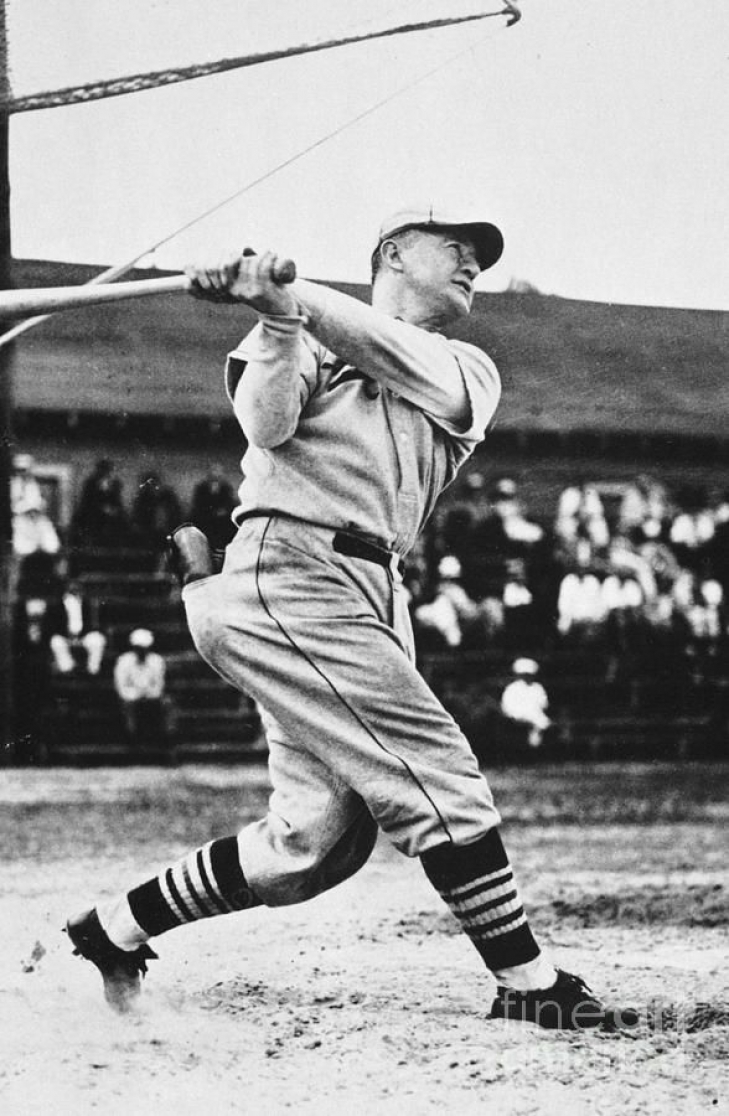
The fiery, dirt-kicking catalyst truly found its shining expression in a lively switch-hitter from the Bronx. Frankie Frisch arrived in St. Louis not just as a star but as a major turning point in the franchise’s history. A versatile athlete at Fordham University whose incredible speed earned him the nickname "The Fordham Flash," Frisch made the jump straight into the majors with the New York Giants in 1919. He quickly became the heart of John McGraw’s successful teams in the early 1920s, helping secure four straight pennants. Yet, a well-known clash of willpower between the talented infielder and his tough-minded manager eventually tore their relationship apart. Before the 1927 season, the front office made a bold move, trading Frisch to the Cardinals in exchange for another legendary player, Rogers Hornsby, who would go on to be a Hall of Famer.
Frisch arrived in St. Louis with plenty of energy left, quickly embedding his aggressive playstyle into the team's core. His debut 1927 season with the Redbirds was a remarkable display of individual talent: he led the Senior Circuit with 48 stolen bases, ranked sixth in batting average at .337, and amassed 208 hits. Defensively, he excelled at second base, leading all National League fielders in Defensive bWAR and setting a major-league record with 641 assists. His dynamic presence transformed a team that had only one pennant before his arrival into a consistent National League contender.
Frisch was more than just a player for the Cardinals; he shaped their entire identity. He served as the emotional core and spiritual symbol of the famous "Gashouse Gang" of the early 1930s—a lively, down-to-earth group of fighters whose tough, fearless attitude matched Frisch's own competitive nature.
His peak in individual hardware came in 1931 when he was named the National League Most Valuable Player, hitting .311 and leading in steals. Although modern stats critics argue that MVP was somewhat inflated, considering his efficiency metrics aligned more with a consistent contributor rather than a league-wide star, his leadership was clear. He guided the team to World Series wins in 1931 and 1934, earning his fourth championship ring.
His responsibilities expanded significantly in July 1933, when he accepted the dual role of player/manager. He beautifully balanced both burdens during the magical 1934 run, hitting .305 over 134 regular-season games while simultaneously managing the club to a dramatic, seven-game Fall Classic victory over the Detroit Tigers. As the physical toll of a grueling 19-year career caught up to him, his regular-season availability naturally diminished, leading to his retirement as an active player in 1937, though he maintained his seat at the top of the dugout steps until late 1938.
With the Cardinals, Frisch collected 1,557 hits, 195 stolen bases, and a .312 batting average. He was inducted into the Baseball Hall of Fame in 1947, and in 2014, Frisch was inducted as part of the Cardinals’ inaugural Hall of Fame Class.
23. Jim Edmonds
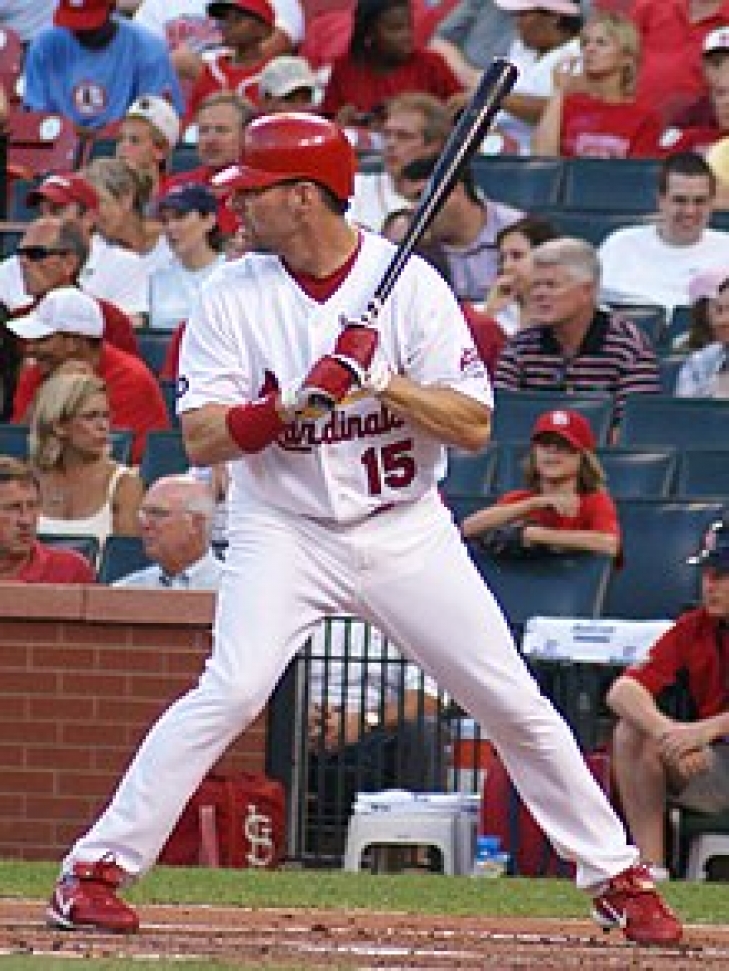
When the St. Louis Cardinals acquired Jim Edmonds from the Anaheim Angels in March 2000, they anticipated receiving a highly dynamic, gold-standard defensive center fielder. What they ultimately obtained was an exceptional, middle-of-the-order force of nature who demonstrated the peak of his professional career, ultimately securing a title. From the instant he took the field at Busch Stadium, "Jimmy Baseball" engaged the local fan base with his remarkable outfield prowess and complemented it with a formidable, left-handed batting stroke, establishing himself as one of the most formidable and analytically esteemed players of the modern era.
Edmonds’ eight-season tenure in St. Louis exemplified excellence in high-efficiency run production. Although he was widely acclaimed for his spectacular, gravity-defying diving catches that earned him six consecutive Gold Glove Awards while with the Redbirds, his offensive contributions were equally impressive. He utilized a dynamic and smoothly fluid swing to hit 241 home runs as a Cardinal, surpassing the 30-homer mark in four separate seasons. Not merely a power hitter, Edmonds also demonstrated an exceptional eye at the plate, drawing walks at an elite rate to sustain a remarkable .393 on-base percentage during his time with the team.
His individual brilliance reached an absolute pinnacle during the renowned 2004 season, a summer when he was a key figure in the formidable "MV3" lineup alongside Albert Pujols and Scott Rolen. Edmonds excelled against National League pitching, posting a .301 batting average, while achieving a career-high of 42 home runs and driving in 111 runs. He was honored with a Silver Slugger Award and placed fifth in the National League Most Valuable Player voting. Edmonds' legacy is permanently enshrined through his crucial postseason performances, most notably his dramatic walk-off home run in the 12th inning of Game 6 in the 2004 National League Championship Series, which prevented elimination and compelled a decisive Game 7.
That high-leverage execution culminated beautifully during the historic 2006 season. Although persistent shoulder and abdominal injuries began to diminish his daily contributions, Edmonds offered invaluable veteran composure and exceptional defense throughout October. He anchored the lineup, assisting Manager Tony La Russa's team in securing the World Series championship over the Detroit Tigers. Edmonds participated in one final summer season in St. Louis in 2007 before concluding his distinguished Major League career with brief tenures with the Padres, Cubs, Brewers, and Reds.
With the Cardinals, Edmonds compiled 905 hits, 190 doubles, and a spectacular .285/.393/.555 slash line. He was inducted into the Cardinals Hall of Fame in 2014 as part of their first Hall of Class when the fans selected him.
