


Site Admin
33. Matt Carpenter
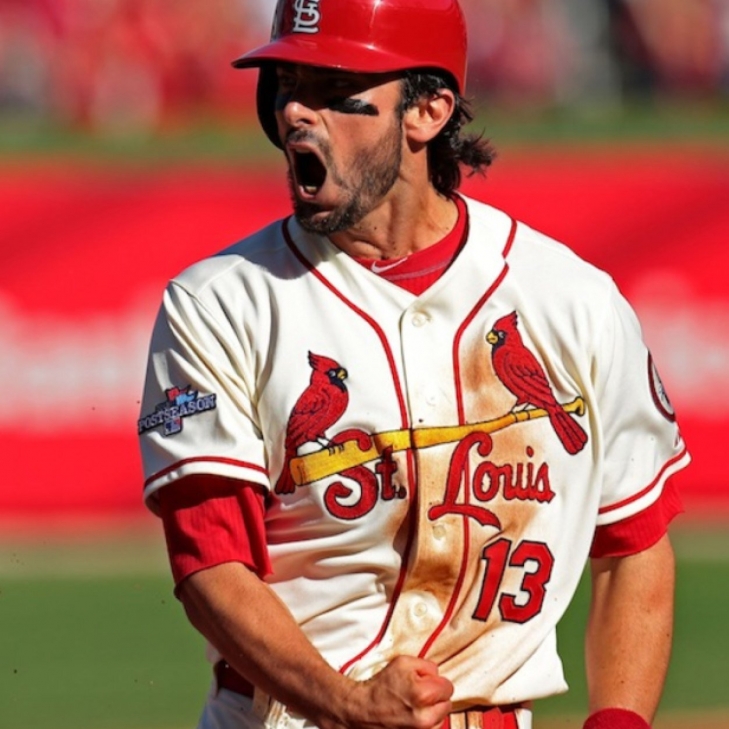
Few trajectories in contemporary baseball history can compare to the compelling self-reinvention of Matt Carpenter. Drafted in the 13th round of the 2009 Major League Baseball draft from Texas Christian University, he was not distinguished by a prestigious prospect pedigree. Rather, he depended on an unwavering, highly efficient plate approach and an indefatigable work ethic to secure a position within the long-term plans of the St. Louis Cardinals. Having made his full-time debut in the major leagues by 2012, Carpenter dedicated the first eleven years of his career to establishing himself as one of the most exceptionally versatile and high-leverage catalysts to grace the batter's box at Busch Stadium.
Initially identified as a premium line-drive contact hitter, Carpenter’s inaugural standout performance came during the historic 2013 season. Transitioning to the second base position, he functioned as the high-velocity catalyst at the top of the lineup, significantly surpassing the league's baseline metrics for a leadoff hitter. Carpenter excelled in challenging opposing pitchers, leading the National League in hits (199), runs scored (126), and doubles (55). Achieving a remarkable batting line of .318/.392/.481, he received the Silver Slugger Award, his first All-Star selection, and finished in an impressive fourth place in the National League MVP voting, while guiding the St. Louis team to a pennant.
As the sport shifted its analytical emphasis toward launch angle and extra-base hits, Carpenter skillfully transformed his playing style from a contact-oriented approach to that of a genuine power hitter in the middle of the lineup. Transitioning across the diamond to both third and first base, he unlocked significant over-the-fence power. He recorded four distinct seasons with a minimum of 20 home runs, refining his mechanics to produce substantial pull-side power. Carpenter reached his power peak during the 2018 campaign. Backed by a legendary, team-wide obsession with his homemade garden salsa, he caught absolute lightning in a bottle. Hammering a career-high 36 home runs and pacing the Senior Circuit with 42 doubles, his scorching era dominance earned him a ninth-place finish in the National League MVP race.
The extreme pull-and-lift approach, combined with natural aging, triggered a sharp drop in his efficiency metrics as the decade closed. His bat-to-ball utility slowed down considerably over his final three summers in Missouri, prompting a level-headed parting of ways. After a brief minor-league stint with the Texas Rangers organization early in 2022, a mid-season signing with the New York Yankees sparked a stunning, short-term power renaissance in the Bronx, followed by subsequent major-league stops in San Diego and a poetic, late-career reserve reunion back in St. Louis.
Carpenter compiled 1,185 hits, 308 doubles, 159 home runs, and 767 runs scored across 1,388 total games with the Redbirds.
36. Scott Rolen
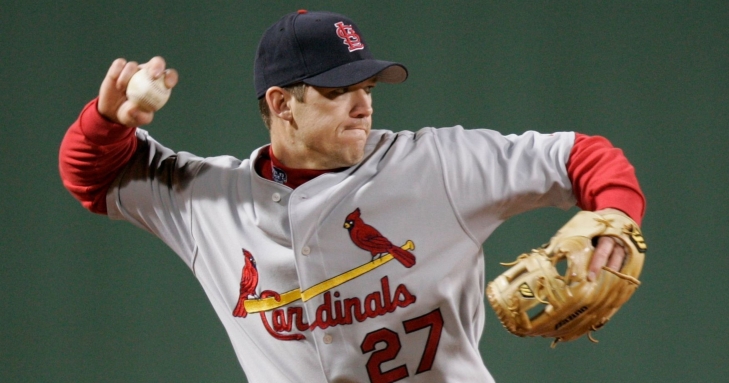
Scott Rolen arrived in St. Louis partway through the 2002 season through a major trade with the Philadelphia Phillies. He quickly took a key spot in the Redbirds' lineup and immediately showcased his exceptional athleticism, elevating his reputation to a new level in baseball history. Rolen had already earned an All-Star nod while with the Phillies in July, but his move to Missouri sparked a multi-year period of exceptional, well-rounded play that forever changed the third base position in the Gateway to the West. He achieved four straight All-Star selections during his first four full summers with the Cardinals, blending a powerful, middle-of-the-order bat with defensive skills that redefined the playing field at Busch Memorial Stadium.
Rolen achieved his career peak during the historic 2004 season, delivering one of the most comprehensive and efficient performances by a modern third baseman. He surpassed his previous metrics with a career-high 34 home runs and 124 RBIs, supported by an impressive .314/.409/598 slash line.
While his offensive performance contributed to a strong fourth-place finish in the National League MVP race, Rolen’s true dominance was in his exceptional defensive range. That summer, he led the entire National League in Defensive bWAR and earned one of his three Rawlings Gold Glove Awards as a Cardinal, constantly stopping extra-base hits along the third-base line with diving plays and a powerful, accurate throwing arm.
His crucial contribution shined brightest during the remarkable 2006 postseason. Overcoming persistent shoulder injuries that had hampered his regular season play, Rolen became an essential, cool-headed force for Tony La Russa's championship team. He crushed AL pitchers with a fierce .421 batting average in the World Series, playing a key role in leading the Cardinals to an exciting victory over the Detroit Tigers.
Persistent physical friction and notable philosophical disagreements with management eventually resulted in an off-season trade to the Toronto Blue Jays before the 2008 season. Rolen would later end his career on a high note with the Cincinnati Reds, winning an eighth Gold Glove award before retiring in 2012.
Rolen’s numbers as a Cardinal would see him belt 150 home runs, record 880 hits, and post a .282 batting average. He entered the Cardinals Hall of Fame in 2019 and, in 2023, received the ultimate accolade when he was chosen for the Baseball Hall of Fame.
37. Joe Torre
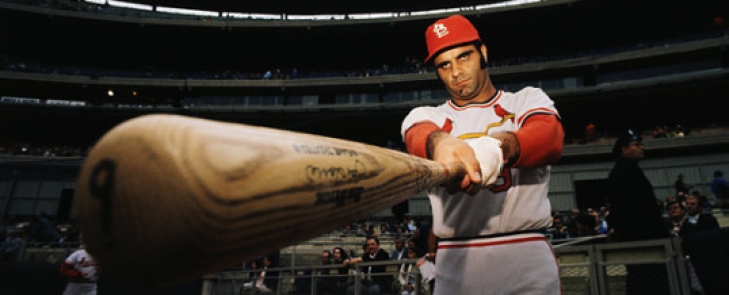
Joe Torre's legacy is forever tied to his role as the calm, stoic manager of the late 1990s Bronx dynasty, leading the Yankees to four world titles from the dugout. However, this iconic chapter often clouds just how formidable he was when wielding a bat himself. Long before he crafted lineups, Torre was a top-tier threat in the National League. As a five-time All-Star catcher with the Braves, a significant March 1969 trade sent him to the St. Louis Cardinals in exchange for Orlando Cepeda. In St. Louis, his exceptional versatility became a key asset for the team. To keep his powerful bat active, he was moved to first base, then to behind the plate after a Tim McCarver trade, and finally across the field to third base—all while maintaining his effective offensive output.
Torre consistently stayed a prominent figure on the national stage, earning All-Star honors in four of his six summers in Missouri. He combined reliable contact with a powerful swing, nearly reaching elite levels in 1970 with 203 hits and a .325 batting average.
Where Torre truly shone was his unforgettable 1971 season. Playing at third base, he challenged and conquered opposing National League pitchers, winning the batting title with a fantastic .363 average, while also topping all of baseball with 230 hits and driving in 137 RBIs. His relentless era dominance in 1971 made him an absolute lock for postseason accolades. Registering a massive .421 on-base percentage and a heavy .552 slugging mark, Torre easily captured the 1971 National League Most Valuable Player Award, cementing his status as the premier offensive engine in the country.
Although his offensive numbers gradually declined to more typical levels in his later summers with St. Louis, his reliable contact-hitting ability stayed an essential constant. Following the 1974 season, the front office traded the veteran star to the New York Mets, where he became a player-manager and embarked on the legendary coaching career that shaped his later years.
In St. Louis, Torre accumulated 1,087 hits, 98 home runs, and 558 RBIs alongside a superb .308 batting average across 920 games. In 2014, he was inducted into the Baseball Hall of Fame for his contributions as a Manager.
40. Whitey Kurowski
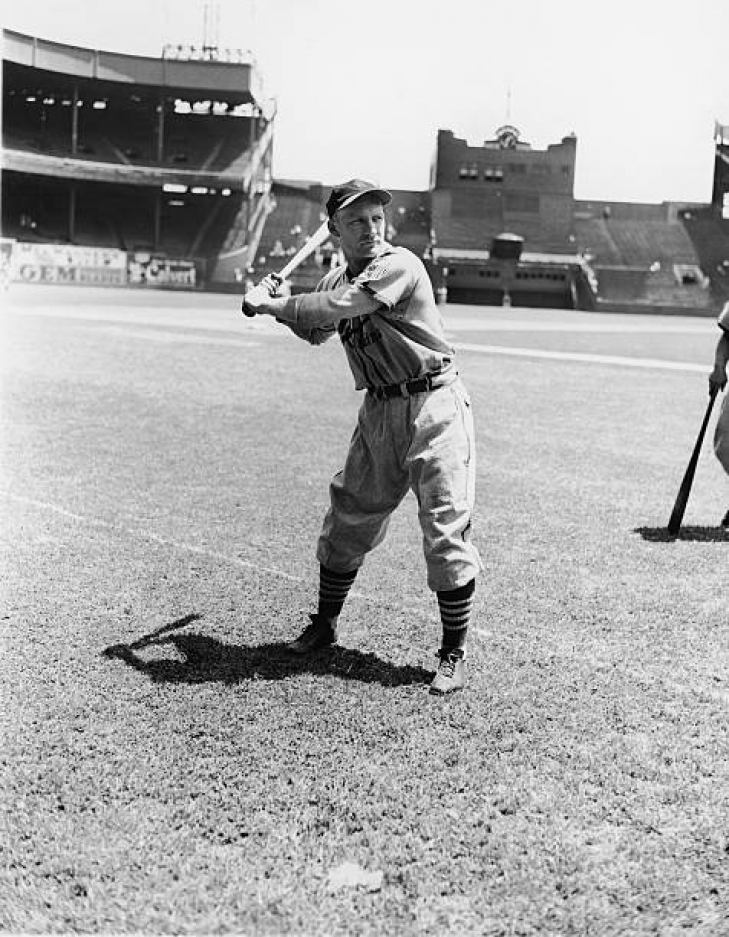
When Whitey Kurowski became the regular third baseman for St. Louis in 1942, he entered a lineup aimed at building a dynasty. Although many note his rise coincided with the talent loss during World War II, Kurowski was more than just a temporary substitute. He played a key role on three pennant-winning teams and was selected as an All-Star five years in a row from 1943 to 1947, thanks to his consistent defense and unexpected power at the plate.
His rise paralleled the swift progression of the "St. Louis Swifties" under Billy Southworth's leadership. Kurowski was not a top-ranked prospect when he joined, but he quickly established himself as a key player on a team that won 106 games in 1942 and surprised the Yankees in the World Series. As a rookie, he capped that memorable season with a dramatic moment by hitting a breaking ball from Red Ruffing over the left-field roof at Yankee Stadium in the ninth inning of Game 5. This game-winning hit secured the title for the Cardinals and made him a favorite among St. Louis fans.
During his prime five-year period, Kurowski demonstrated remarkable consistency, accumulating over 150 hits each summer. Unlike the typical slap hitter of his time, he hit more than 20 home runs three times and posted a batting average above .300 in three seasons. His standout season was in 1945, when he led the offense with 21 homers and a .323 batting average, finishing fifth in the National League MVP voting.
Beyond his hitting, Kurowski’s glove provided the Cardinals with a top-tier defensive presence at third base. He twice led all National League third basemen in fielding percentage and ranked among the top four four other times, anchoring an infield that had to handle the expansive and challenging terrain of Sportsman's Park. What makes this defensive consistency even more impressive is that Kurowski played his entire career with part of his right elbow bone missing due to childhood osteomyelitis. Despite this physical limitation, his arm remained a powerful weapon across the diamond.
Just as he was establishing himself as a top third baseman of the 1940s, shoulder problems hampered his performance. The injury led to an early retirement after 1949, ending his nine-year career. Playing his whole career with the Cardinals, Kurowski amassed 925 hits, a .286 average, and three World Series titles.
