


Site Admin
42. Pepper Martin
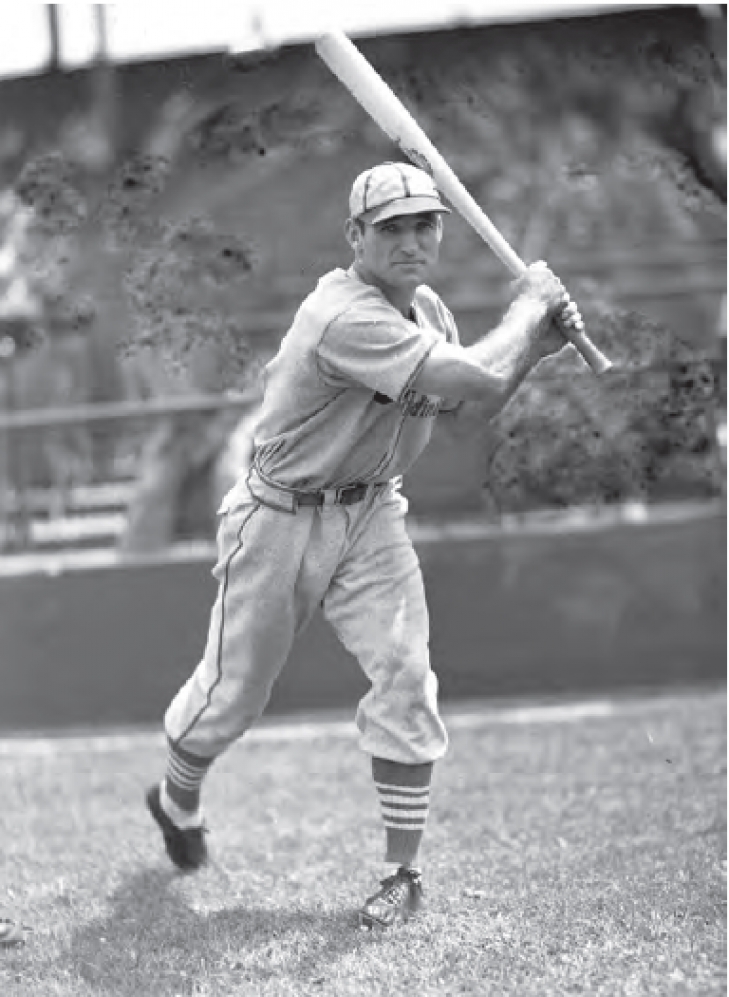
Johnny Leonard Roosevelt Martin went by "Pepper," but the name that captured his essence best was "The Wild Horse of the Osage." When you trace the DNA of the legendary, mud-splattered "Gashouse Gang" teams of the 1930s, it was Martin's unhinged, headfirst style that powered them. He didn't just play baseball; he attacked it, tearing up the basepaths with a reckless abandon that mirrored the gritty, hardscrabble spirit of a Depression-era fan base that absolutely adored him.
A career-long Cardinal, Martin made a couple of fleeting cameos in 1928 and 1930 before permanently kicking the door down in 1931. While he went on to earn four All-Star selections and topped the National League in stolen bases three separate times—pacing the circuit with modest but opportunistic totals of 26, 23, and 23 swipes—his true genius lay in his ability to weaponize his speed when the lights were brightest.
Nowhere was that more evident than in the 1931 World Series against a heavily favored Philadelphia Athletics squad. Martin turned the Fall Classic into a personal playground, torturing legendary catcher Mickey Cochrane by stealing five bases and punishing Philly pitching for a .500 batting average alongside a staggering 1.330 OPS. Reporters covering the series noted that his relentless energy single-handedly shifted the momentum, dragging the Cardinals to a world title. He repeated the October magic in 1934, hitting .355 to help St. Louis capture another championship banner.
While those early October runs made him a legend, 1933 stood out as the absolute peak of his regular-season powers. Rebounding from an injury-plagued sophomore slump, Martin shifted to third base and put together a monster campaign that earned him a starting nod in the inaugural MLB All-Star Game. He terrorized the National League from the leadoff spot, hitting a stellar .316 and pounding out 189 hits—including a May afternoon against the Phillies when he hit for the cycle. He used his lightning speed to lead the league with 122 runs scored and a career-high 26 stolen bases, fueling a top-five finish in the National League MVP race.
Yet, as magnetic as Martin was on the basepaths and at the plate, where he authored a lifetime .298 average, his placement in historical rankings faces a distinct hurdle. This evaluation framework places an uncompromising premium on defense, and that is where Martin’s ledger runs into trouble. He split his career between the outfield and third base, and frankly, he was a liability at both. His hands were rigid, his internal clock was erratic, and his aggressive nature frequently betrayed him, leading to ugly fielding percentages and a persistent defensive deficit that caps his overall value.
The relentless physical toll of his headfirst playing style eventually caught up to him. By 1941, injuries had entirely sapped his mobility, forcing him to step away from the major leagues to transition into a minor league player-manager role. However, the manpower shortage of World War II gave his Cardinals story one final, unexpected chapter. St. Louis called the 40-year-old veteran back up for a 40-game cameo in 1944.
Martin played in 1,189 games, racking up 1,227 hits, 756 runs scored, 59 home runs, and 501 RBIs. He authored a .298/.358/.443 slash line with a 113 OPS+, stole 146 bases
The Cardinals chose Martin for their franchise Hall of Fame in 2017.
44. Bill Sherdel
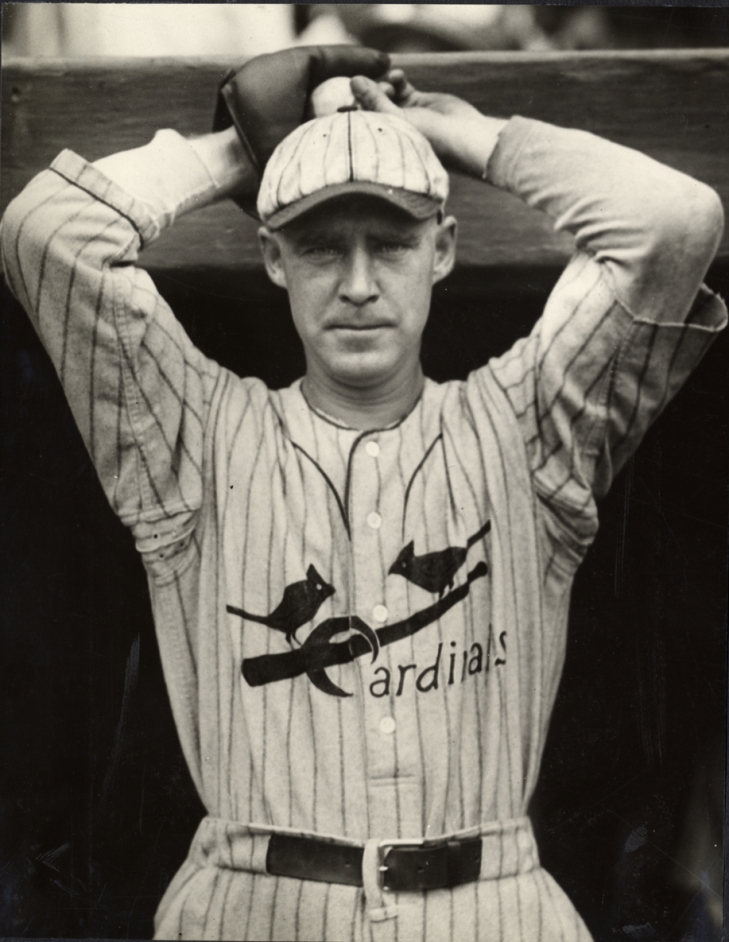
Before the modern bullpen car or specialized late-inning relievers became common, Bill Sherdel was redefining pitching strategies in St. Louis. Joining in 1918, this small left-hander, known as "Wee Willie," had a fourteen-year career characterized by remarkable resilience and adaptability. Although he didn't throw as fast as the league’s top pitchers, his effective slowball and quick delivery allowed him to serve as a versatile pitcher capable of calming rallies in the seventh inning or pitching a complete game just two days later.
Sherdel spent nearly his entire career with the Cardinals, accumulating an impressive statistical record. As a consistent and reliable figure during multiple periods of Redbirds baseball, he quietly built a resume that places him among the franchise’s top pitchers. Today, he ranks in the top five in franchise history for wins (153), games pitched (465), and innings pitched (2,450.2), with his 242 starts just outside that group. His 153 wins still stand as the franchise record for most wins by a left-handed pitcher.
Although he was never the most flashy pitcher in the rotation, his unconventional deployment gave him an advantage that typical starters lacked. Managed by Branch Rickey, Sherdel often served as the team’s go-to reliever in critical moments. He led the National League in saves three times—in 1920, 1927, and 1928. While the official save totals from the 1920s are modest and often single digits, leading the league in this category three times highlights his reliability and trustworthiness in high-pressure, decisive situations.
His dependability was key to the franchise's early success in modern times. Sherdel played a vital role in winning the 1926 World Series, pitching significant innings and delivering two outstanding games in the Fall Classic against the New York Yankees. Despite facing some unlucky losses on the big stage, his readiness to take the mound in any situation helped lead the Cardinals to victory. He wasn't an overpowering star who relied on raw intimidation but a classic, adaptable workhorse whose durability helped build a path to championships.
Sherdel made 465 appearances (242 starts). He compiled a 153–131 record with a 3.64 ERA, throwing 2,450.2 innings over 14 seasons.
46. Chick Hafey
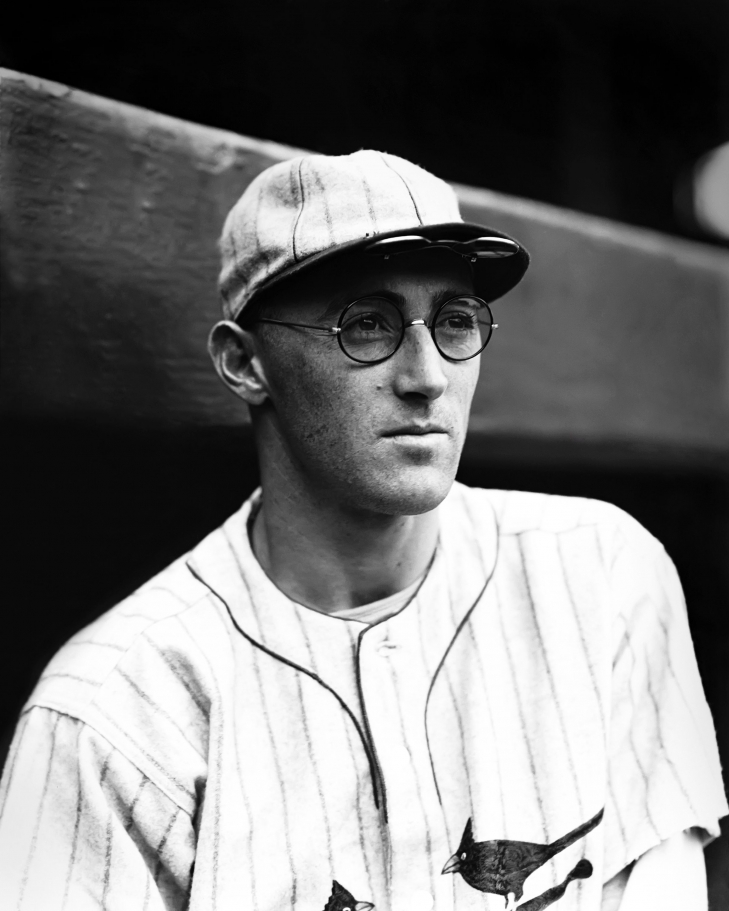
Chick Hafey's story stands out as one of the most distinctive and hard-won tales of the 1920s and 30s. A natural, line-drive hitter, he had an offensive potential rivaling anyone in the National League. Yet, his career was marred by chronic sinus problems and deteriorating eyesight. To adapt, Hafey became one of the earliest major league players to wear glasses while on the field. This change did not hinder his batting; instead, it sparked a period of dominance that struck fear into opposing pitchers for over five years.
Arriving in St. Louis full-time in the mid-1920s, Hafey transformed into an elite offensive threat by 1927. That summer, he captured the National League slugging title with a blistering .590 mark, pairing it with 18 home runs and a .329 batting average. It marked an astonishing five-year stretch during which he simply refused to drop below the .329 threshold in any single season. From 1928 to 1930, he functioned as a middle-of-the-order run producer, delivering three consecutive seasons with at least 26 home runs and over 100 runs batted in.
The peak of his regular-season brilliance arrived in 1931 during one of the most dramatic batting title races in baseball history. Hafey went down to the final day of the schedule alongside teammate Jim Bottomley and New York’s Bill Terry. On the strength of a clutch hit in his very last at-bat, Hafey secured the crown with a magnificent .349 average, edging Terry by a mere .0002. That individual crown served as the catalyst for a team success story, as Hafey helped anchor a Cardinals squad that went on to win the 1931 World Series—the second championship banner he helped bring to St. Louis, alongside the 1926 title.
However, a fierce contract dispute with team executive Branch Rickey ahead of the 1932 season abruptly ended his time in Missouri, resulting in a trade to the Cincinnati Reds. His counting totals in St. Louis remain somewhat compressed because of his constant health setbacks and the brief eight-year window he spent with the team. Consequently, his raw volume doesn't match the standard multi-decade icons on the franchise leaderboard, but the sheer concentration of his peak value remains undeniably historic.
He logged 963 hits, 127 home runs, and 618 RBIs with a .326/.379/.568 slash line as a Cardinal. Hafey was chosen for the Baseball Hall of Fame in 1971 when he was selected by the Veterans Committee, and he was also named to the Cardinals’ inaugural Hall of Fame class in 2014.
45. Matt Holliday
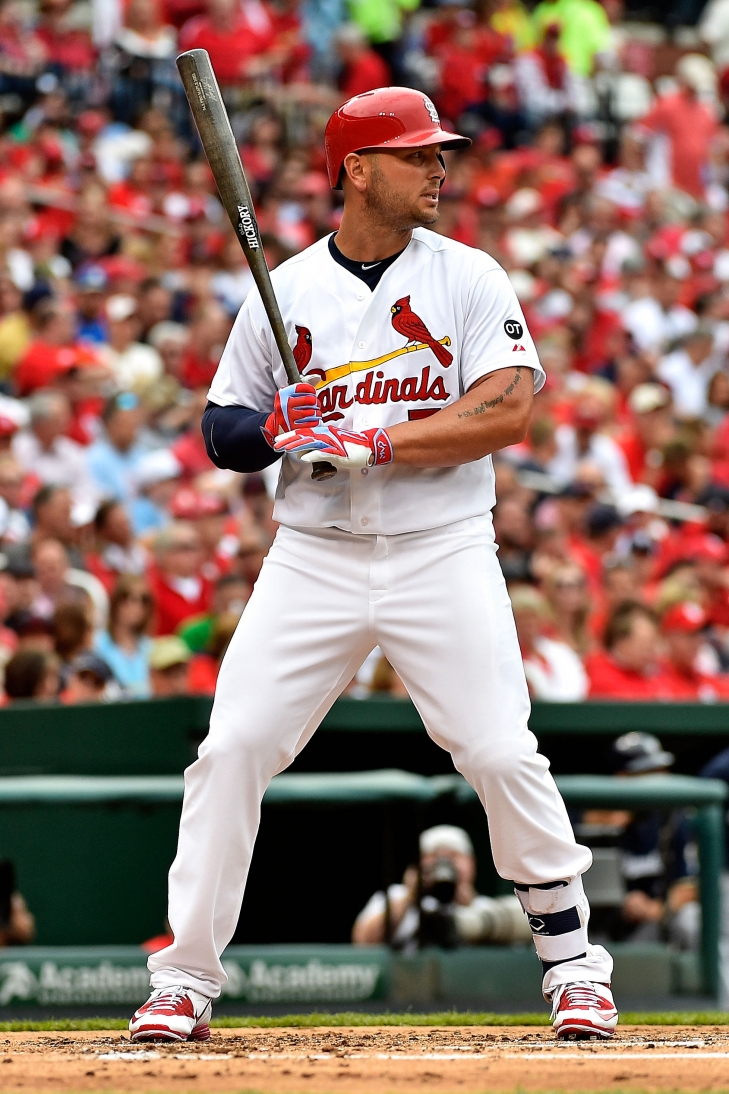
During the zenith of his abilities with the Colorado Rockies, Matt Holliday accomplished a historic 2007 season, securing a batting title and finishing as the close runner-up for the National League Most Valuable Player award. Since this remarkable individual peak occurred in Denver, casual observers often perceive his subsequent transfer to Missouri as a secondary phase. Nonetheless, the reality presents a markedly different narrative. Although he may have concluded his highest single-season MVP performance at Coors Field's altitude, Holliday's career was significantly extended with the St. Louis Cardinals, where he developed a considerably more substantial and statistically dense body of work.
Holliday initially joined the St. Louis team during the 2009 season through a trade with Oakland, and he promptly demonstrated exceptional performance by maintaining a batting average of .353 across his first 63 games in a Redbirds uniform. The management efficiently secured his services by signing him to a substantial seven-year contract during that winter. For the subsequent seven seasons, Holliday functioned as the physical and competitive cornerstone of the St. Louis lineup. He was not characterized by flashiness or high maintenance; instead, he exemplified consistent performance, challenging National League pitchers with a powerful, muscular swing that resulted in six seasons with at least 20 home runs in St. Louis.
While wearing the birds on the bat, Holliday earned four All-Star selections and consistently commanded the respect of the league. He didn't repeat a second-place MVP finish, but he remained a permanent fixture in the conversation, receiving MVP votes in four separate seasons as a Cardinal. His true value lay in his ability to couple that heavy power with elite on-base skills, creating a terrifying middle-of-the-order presence alongside Albert Pujols. Holliday's steady production culminated in a vital contribution to the magical 2011 World Series championship run, cementing his status as a winner on the sport's biggest stage.
By the end of his successful tenure in St. Louis after 2016, Holliday had rewritten his legacy, leaving with 1,048 hits, 156 home runs, and a .293/.380/494 slash line.
