


Site Admin
7. Will Shields
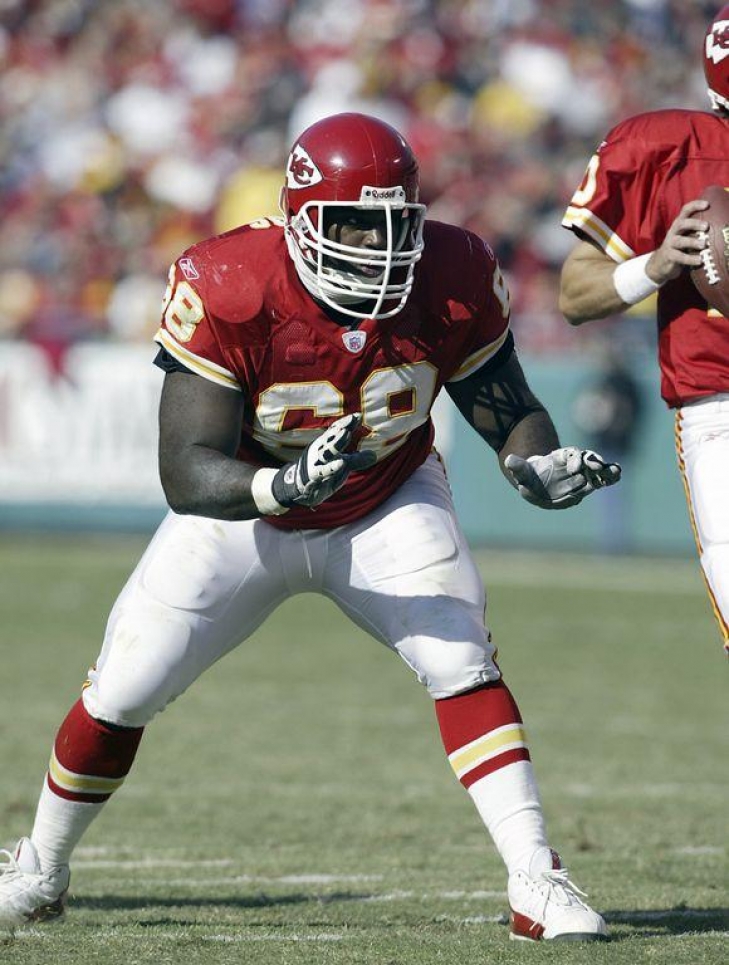
The Kansas City Chiefs boast a rich history of legendary interior linemen, but none ever matched the absolute durability, technical precision, and sustained excellence of Will Shields. Selected in the third round (74th overall) out of Nebraska in the 1993 NFL Draft—where he won the Outland Trophy as the nation's top interior lineman—Shields stepped into the starting lineup in Week 2 of his rookie season and never stepped back out for the next 14 years.
Serving as the unwavering anchor at right guard, Shields constructed one of the most astonishing iron-man streaks in professional sports history. He played in all 224 regular-season games of his NFL career—starting 223 of them—and added another eight postseason starts without ever missing a single game due to injury. That legendary reliability provided the foundation for multiple eras of Chiefs football, bridging the physical offense of Marty Schottenheimer with the explosive high-scoring units of Dick Vermeil.
Mechanically, Shields was an absolute technician whose elite leverage and vice-like hands made him virtually unshakeable in pass protection. Though he had the brute, raw power to root out defensive tackles in tight quarters, his exceptional lateral quickness and football IQ let him pull out in space seamlessly on traps and sweeps.
During the early 2000s, Shields served as the centerpiece of an offensive line widely regarded as one of the greatest ever assembled. Flanked by Willie Roaf, Casey Wiegmann, and Brian Waters, Shields paved the way for tailbacks Marcus Allen, Priest Holmes, and Larry Johnson. His rare combination of explosive power at the point of attack and mobility in space enabled Holmes to set the then-NFL record with 27 rushing touchdowns in 2003, while the offense consistently ranked at the top of the league in total yardage and scoring.
Individual accolades naturally followed his dominant play. Shields earned 12 consecutive Pro Bowl selections from 1995 through 2006, setting a Chiefs franchise record that stands to this day. He earned two First-Team AP All-Pro selections (2002, 2003) and five Second-Team selections, eventually securing a coveted spot on the NFL 2000s All-Decade Team. Off the field, his active commitment to the Kansas City community through his "Will to Succeed" Foundation earned him the prestigious Walter Payton NFL Man of the Year Award in 2003.
Shields retired after 2006, leaving a legacy of durability and leadership. He was inducted into the Kansas City Chiefs Hall of Fame in 2012 and the Pro Football Hall of Fame in 2015. He started all but one of his games.
48. Ripper Collins
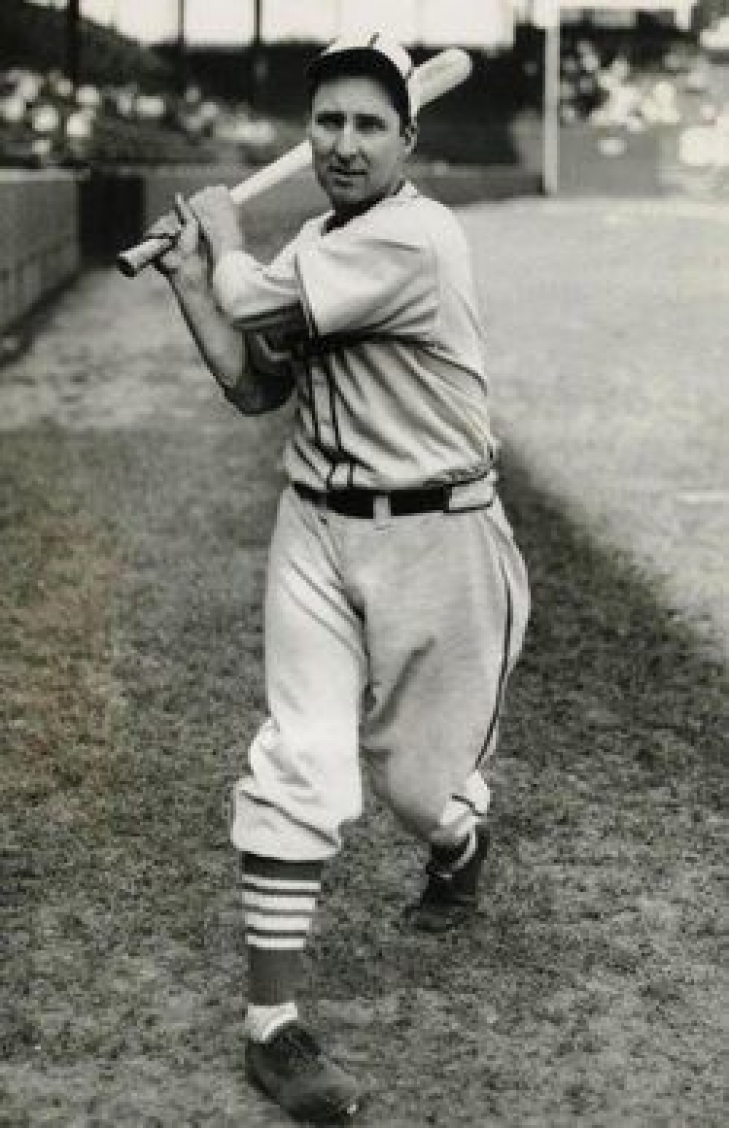
Ripper Collins gained his intimidating nickname as a minor leaguer when a line drive from his bat tore the cover off a baseball. However, when he stepped into the major leagues full-time, fans were taken aback to learn that the powerful hitter was actually a modest 5-foot-9, 165-pound player. Despite his average size, this switch-hitting first baseman compensated with lightning-quick wrist movements and a fierce style of play that perfectly suited the rough and unpolished culture of the 1930s "Gashouse Gang."
His journey to the big leagues officially started with a supporting role, as he appeared in 89 games as a rookie during the Cardinals' 1931 World Series victory. Recognizing his potential, St. Louis management traded veteran Jim Bottomley to make way for Collins. By 1932, he had become the regular first baseman, winning over fans at Sportsman's Park with his energetic play and playful clubhouse antics.
Everything came into a historic alignment during the remarkable 1934 season. Collins assembled an exceptional offensive performance, dominating National League pitching with a .333 batting average, a league-leading .615 slugging percentage, and an OPS of 1.008. He hit 35 home runs, tying Mel Ott for the league lead—making Collins the inaugural switch-hitter in Major League history to surpass 30 home runs in a single season. This extraordinary achievement earned him sixth place in the National League Most Valuable Player voting and propelled the Cardinals to another World Series appearance. In the 1934 World Series against Detroit, he demonstrated unwavering determination, batting .367 and achieving four hits in the decisive Game 7 victory, thereby securing his second world championship ring.
The intensive production persisted throughout the subsequent two summers, resulting in Collins securing a pair of All-Star selections in 1935 and 1936 as he upheld his reputation as a premium run producer. Nevertheless, as Branch Rickey's renowned developmental pipeline began to overflow with younger talent, the management seized the opportunity to leverage Collins' high trade value by trading him to the rival Chicago Cubs prior to the 1937 season. Given that his peak period in St. Louis lasted only six seasons before transferring to Chicago and Pittsburgh, his cumulative totals are somewhat modest compared to those of players with careers spanning multiple decades. Nonetheless, the exceptional and historic peak of his 1934 performance remains one of the most dynamic single-season displays in the extensive history of the franchise.
Across six seasons in St. Louis (1931–1936), Collins played 777 games, with 852 hits, 106 home runs, and 516 RBIs. He posted a .307/.370/517 slash line, with a 134 OPS+.
43. Bob Forsch
47. Ed Konetchy
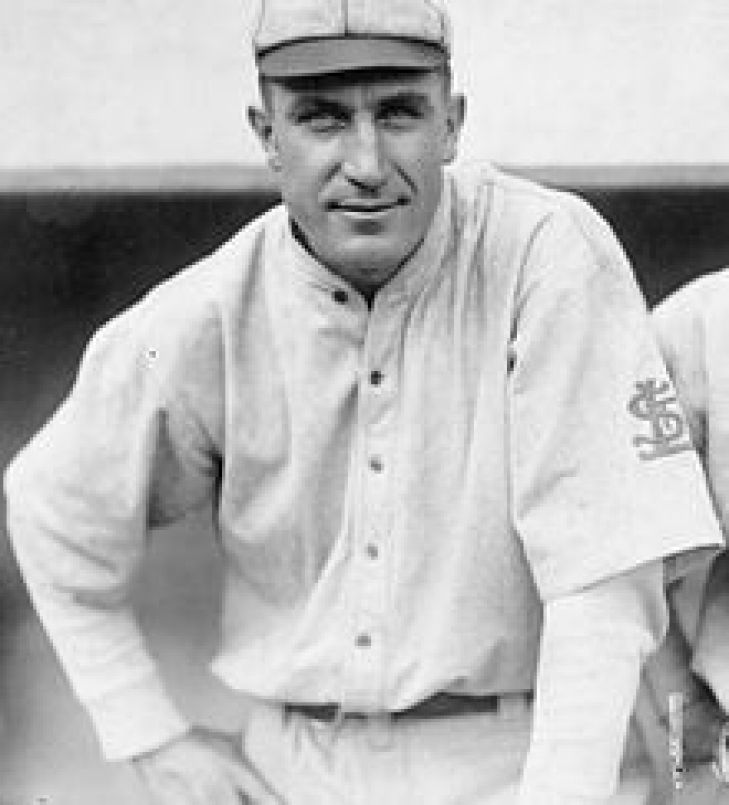
Long before the Cardinals became a regular force in the National League, they struggled to find their identity during the Deadball Era. Amid this challenging period, Edward Joseph "Big Ed" Konetchy arrived to serve as the franchise’s first significant cornerstone. When he became a full-time player in 1908, the strong first baseman rapidly gained admiration from renowned managers like John McGraw, who once said that Konetchy alone was almost worth the entire St. Louis team.
Although the Cardinals often finished near the bottom during his seven seasons, Konetchy quietly established himself as one of the most underrated stars of his time. He consistently appeared on the National League leaderboards, ranking in the top ten in batting average three times and driving in enough runs to achieve four top-ten RBI finishes. His only standout achievement was in 1911 when he led the league with 38 doubles, but his overall offensive contribution was evident, earning him four top-ten finishes in bWAR among position players.
What set Konetchy truly apart and elevated him to elite status was his exceptional defense at the cold corner. Using his impressive 6-foot-2 build, he redefined what was expected from a first baseman's defense. Konetchy was incredibly effective, leading National League first basemen in both fielding percentage and range factor per game four times during his time with the St. Louis Cardinals. His reliable hands and strategic positioning turned what was an otherwise weak infield into a solid defensive unit.
Despite his impressive skills, his departure was sudden. Before the 1914 season, contract disagreements and conflicts resulted in his trade to Pittsburgh, and he eventually moved to the rebellious Federal League. His career, spread across six different teams, often causes his significant achievements in St. Louis to be overlooked, especially when compared to the long-time players who came after him. However, at the time of his departure, Konetchy was the franchise's all-time leader in hits, runs, and total bases—serving as a vital source of elite production during critical moments for the team.
In seven seasons in St. Louis (1907–1913), Konetchy played 982 games, with 1,013 hits, 158 doubles, 94 triples, and 36 home runs. He posted a .283/.353/409 line, a 125 OPS+, and stole 151 bases.
