


Committee Chairman
41. Brickyard Kennedy
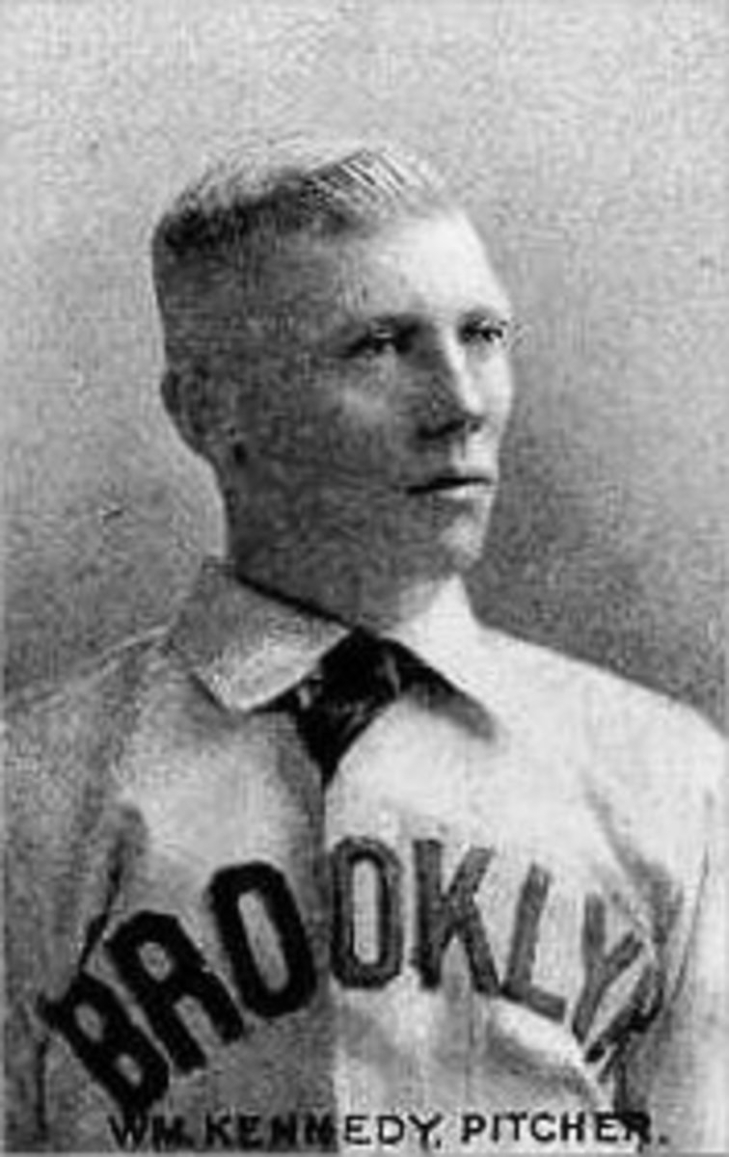
Arriving in Brooklyn in 1892, William “Brickyard” Kennedy was a right-hander with a booming voice and a work ethic forged in the clay pits of his Ohio hometown. While he earned the nickname "Roaring Bill" for his vocal presence on the diamond, it was his off-season labor in a brickyard that gave him the moniker that would stick for over a century
Kennedy hit his peak early, with back-to-back 20-win seasons in 1893 and 1894. He demonstrated exceptional endurance, pitching a career-high 382.2 innings in 1893. Although his career 3.98 ERA in Brooklyn seems modest today, he reached a high value simply by staying on the mound. A key team presence, he remained competitive even in 1895 with a 19-12 record and a spikes to 5.05 ERA, showing teammates’ confidence in his ability to finish.
A key asset for the 1899 and 1900 Brooklyn Superbas, Kennedy helped them win consecutive National League pennants. He posted a 22-9 record with a 2.79 ERA in 1899, showing he still reached elite levels of efficiency. Beyond pitching, he was a skilled hitter, with 306 hits and a .256 average during his Brooklyn years, often contributing significantly during high-stakes battles of the 1890s.
After a decade of service and 177 wins, the organization concluded that his high-velocity years had ended and released Kennedy in 1901. He compiled a 177-148 record, a 3.98 ERA, and 721 strikeouts for Brooklyn.
36. Bob Welch
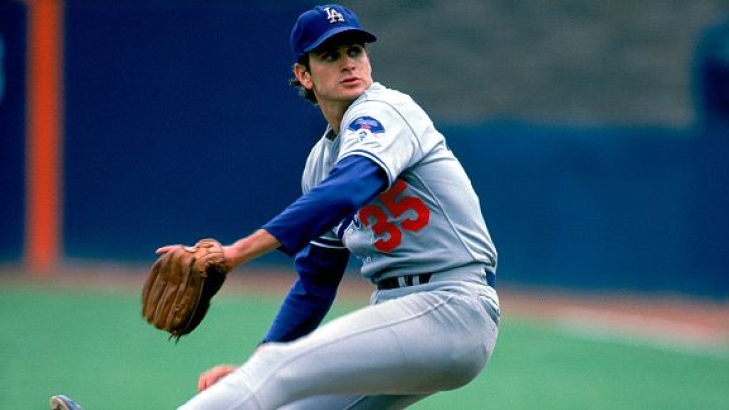
Bob Welch quickly became a well-known name in Southern California. Just a year after being the 20th overall pick in the 1977 draft from Eastern Michigan, the right-hander was pitching in the ninth inning of Game 2 of the 1978 World Series. In a pivotal moment early in his career, the 21-year-old rookie faced off against the legendary Reggie Jackson with two outs and the tying run on third. He ultimately struck out Jackson with a high fastball, sealing the win. This strikeout was more than just the end of a game; it marked the rise of a powerful pitcher who would be a key part of the Los Angeles rotation for the next decade.
While the 1978 highlight reel made him a star, Welch’s true strength was his ability to consistently dismantle National League lineups. By 1980, he received his first All-Star nomination, marking his emergence as a top-tier starter. As a key part of the 1981 staff that finally won the World Series, he provided stability amid the challenges of a split season. Welch demonstrated remarkable durability, achieving a four-year streak starting in 1982 with at least 13 wins each season. His 1983 season was particularly impressive, with 15 wins and a 2.65 ERA, placing him in the top ten for Cy Young voting.
The narrative of Welch's time in Los Angeles is often viewed through the lens of what he did later in Oakland, but his 1987 season with the Blue Jays was arguably the most masterful pitching of his life. Though his 15-9 record was solid, the deeper metrics reveal a monster of a season; he led the entire National League with a 7.1 bWAR, proving he was doing the heavy lifting for a team in transition. He threw a career-high 251.2 innings that year, leaving everything on the mound before the front office decided to move him to the Athletics in a massive three-team trade that winter.
The trade to the American League gave Welch a change of scenery and eventually a Cy Young Award in 1990. Welch compiled a 115-86 record, a 3.14 ERA, and 1,292 strikeouts in Los Angeles.
4 Vacation Destinations for Sports Fans
Barriers exist between most countries; culture, language, politics, and other blockages create walls that are challenging to climb. But one universal element every nation has in common is sports – and sports break those barriers. Whether participating or watching, sport is a language in itself that appeals to the social, competitive side of humans – and it’s an excellent way to understand, get to know, and enjoy the company of anyone from any country around the world.
Sports becomes an incredible experience when combined with a love of traveling; many people explore other lands and cultures through their passion for their game. With that in mind, these destinations with penchants for sports are perfect itinerary items for sporting fanatics.
United Kingdom
England is famed worldwide for its soccer scene. Across the land, local, national, and even international matches take place like regular clockwork. Plus, the crowds are phenomenal; it’s not uncommon for stadiums to sell out, with fans showing up for games in numbers over 40,000.
Furthermore, cricket is another contender that English folks across the pond go nuts for, as is tennis, especially in the season when London becomes the center of the world’s attention each June – when the iconic Wimbledon championship starts. Among other unmissable sporting events in the UK are Epsom Downs and Ascot horse races (along with the Grand National, too), which turn into highly sophisticated formalwear events and sporting shows. However, when it comes to getting rough and dirty, the rugby league is unmissable – especially when Wales is playing; the team’s camaraderie is second to none.
North America
North America is famed globally for many things – but a robust roster of sports is probably one of the biggest. Some destinations are renowned for one or two particular sports (like the UK and its buzzing soccer culture). All across the United States and Canada, though, all sports are rife – right from kids in elementary school taking part in extra-curricular clubs to college sports teams – and, of course, the major leagues at the professional level.
People go wild in the US and Canada for football, basketball, ice hockey, baseball, and even crazier and more dangerous sports like NASCAR. In fact, many Americans and Canadians make their sport of choice their entire reason for a vacation. Take ice hockey, for example; fans often book tailored NHL travel packages designed to get them in on the hockey action, attend matches, and enjoy a trip away. Many travel operators also offer the same services for fans of other sports and leagues, from the NBA to the NFL.
Japan
Think “baseball”, and the USA immediately springs to mind. Granted, the game was birthed in New York – but the Japanese seem to be the biggest baseball fans in the world. In big cities like Tokyo, tourists can enjoy a unique blend of western and Japanese sporting culture, with sumo wrestling and martial arts representing one flavor and the country’s passion for baseball another.
Rio de Janeiro and Sao Paulo, Brazil
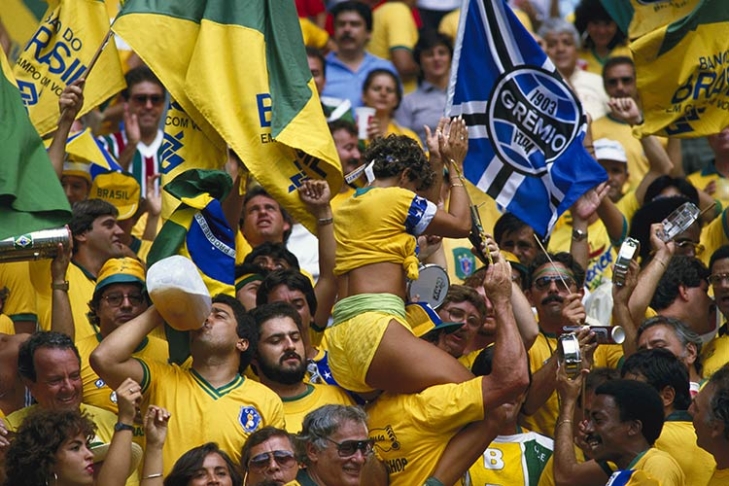
Brazil is the ultimate place for soccer lovers who can’t get enough gorgeous beaches and sports culture simultaneously. Specifically, Sao Paulo and Rio de Janeiro are two top spots for soccer fans; the latter’s home team draws in crowds of over 70,000 at the Macaranã stadium – an atmosphere discerning soccer enthusiasts do not want to miss.
If that’s a little too exciting, sampling the fun street soccer with the locals in Sao Paulo affords an authentic insight into Brazil’s soccer culture at the grassroots level.
The Songwriters HOF name the 2023 Class

The Hall of Fame season continues in full gear as the Songwriters Hall of Fame has announced their seven member Class of 2023.
Here are the inductees:
Glen Ballard: Ballard is best known for his collaboration with Alanis Morissette, and he co-wrote all the hits from her monster 1994 album, “Jagged Little Pill”. He also wrote Michael Jackson’s hit, “Man in the Mirror”, “The Space Between” (Dave Matthews) and “Hold On” (Wilson Phillips).
Gloria Estefan: Estefan penned many of her hits, including “Don’t Wanna Lose You”, “Rhythm Is Gonna Get You” and “Let’s Get Loud”.
Jeff Lynne: Lynne was the mastermind behind E.L.O., the band that generated hit songs like
Teddy Riley: Riley wrote many New Jack Swing standards, such as “My Prerogative” (Bobby Brown) and “Make It Last Forever” (Keith Sweat),
Liz Rose: Rose is best known for collaborating with Taylor Swift early in her career.
Sade: Sade wrote her biggest hits, including “Smooth Operator”, “No Ordinary Love” and “The Sweetest Taboo”.
Snoop Dogg: Snoop is one of the most successful and well-known hip-hop artists of all-time, with his hits, “Drop It Like It’s Hot”, “Nuthin’ But A Thang”, “Gin & Juice” and “Next Episode”.
Additional special awards honorees will be announced at a later date.
Those who were nominated but were not chosen were:
Bryan Adams
Lynn Ahrens/Stephen Flaherty
Blondie (Clem Burke, Debbie Harry & Chris Stein)
Dean Dillon
The Doobie Brothers (Tom Johnston, Michael McDonald & Patrick Simmons)
Vince Gill
Franne Golde
Bobby Hart/Tommy Boyce
Heart (Ann Wilson & Nancy Wilson)
Sandy Linzer/Denny Randell
Roger Nichols
Dan Penn/Spooner Oldham
Dean Pitchford
Patti Smith
Tom Snow
Steve Winwood
We here at Notinhalloffame.com would like to congratulate the impending members of the Songwriters Hall of Fame.
