


Committee Chairman
The Hobbies of Professional Athletes

You’ve got to be pretty special to become a professional athlete. The percentage of athletes that make it to the big leagues is so small that only the best of the best make it through. So, it should perhaps come as no surprise that professional athletes aren’t just handy at their chosen sport, but are just generally talented people. Indeed, take a pro football player, and you’d probably find that they could more than hold their own in any other sport you dropped them into.
And it’s not just on the field that pro athletes perform well. Take a look at some of the hobbies that those famous faces engage in, and you’ll find that they’re more or less good at everything they attempt. Some people have all the luck. Don’t believe us? Let’s explore some common hobbies for professional athletes.
Making Music
There’s always been a big overlap between music and sports. The dressing rooms are alive with music, and many teams celebrate their victories with an anthem. Sometimes those worlds collide in a more direct way, such as when athletes get behind the microphone themselves and record a track or two. The late Kobe Bryant recorded a rap album back in 1999, while Shaquille O’Neal released four albums throughout the same decade. The boxer Manny Pacquiao also released many songs between 2006 and 2013.
Playing Games
You don’t become a pro athlete without being competitive. Sports stars live for competition. Alas, they normally only play one game a week, so what do they do when they’re not on the field? That’s right, they play different types of games. Play a few hands at the best poker sites, and you might just end up playing against an athlete that you normally see on television. Neymar, Boris Becker, and Michael Phelps are all known to be huge poker players.
There are also plenty of athletic video gamers, too. Cam Newton, Paul George, and Eric Berry all say they’re obsessed with video games, especially sporting video games.
The Fashion World
Take a look at many sports stars when they head to a restaurant, and you’ll notice that most of them have a pretty particular fashion sense. They like to stand out. And some athletes are so interested in the fashion world that they even launch their own clothing lines. Some of the biggest sports stars in the world, including Serena Williams, David Beckham, LeBron James, and Cristiano Ronaldo, have created clothing. Who knew that people who are awesome at sports could also live another life as fashion designers? Talent knows no limits!
Traveling the World
Many people love traveling, but not everyone has the time or money to do it. Sports stars usually travel for work purposes when they have to play across the country (or even internationally, during the Olympics), and some athletes even travel for leisure. Floyd Mayweather, LeBron James, Ronda Rousey, and Tom Brady have all expressed a passion for exploring the world. You can only imagine how awesome it must be to travel with their bank balances, too.
NFL Teams That Have Yet to Win a Superbowl
The Super Bowl is the most prestigious event in American football, and every year teams from across the NFL compete for the championship title. However, while some teams have been incredibly successful over the years, a few still have yet to experience victory at this level. From small-market franchises to traditional powerhouses, here's a look at some of the NFL teams that have yet to win a Super Bowl.
Minnesota Vikings
Despite four trips to the Super Bowl in the 1970s, Minnesota's Vikings have yet to earn a championship title. They faced off against Kansas City Chiefs in 1970, Miami Dolphins in 1974, Pittsburgh Steelers in 1975, and Oakland Raiders in 1977, all ending with defeat for the squad. In 2018 they were just one game away from making it back again but unfortunately succumbed 38-7 against Philadelphia Eagles, who went on to claim the victory that year.
Buffalo Bills
The Buffalo Bills experienced a streak of unprecedented dominance from 1990 to 1993, reaching the Super Bowl for four consecutive seasons. Regrettably, their expedition ended in anguish every time - starting with a narrow 20-19 loss against the Giants and then a 37-24 defeat by Washington, followed by back-to-back defeats at the hands of the Dallas Cowboys. The team has not returned since that era but last year made it as far as an AFC Championship game, only to fall again under pressure from Kansas City Chiefs.
Cincinnati Bengals
With three Super Bowl appearances, the Bengals have their sights set on lifting a Lombardi Trophy. Unfortunately, they twice encountered defeat in 1981 and 1988 against San Francisco but were also unfortunate to succumb by a mere 3 points to Los Angeles 23-20 in 2022. But, surely, this is just the beginning of a remarkable journey for Cincinnati, and we eagerly await what's next!
Atlanta Falcons
After 18 years of absence, the Falcons returned to the Super Bowl for a second time in 2017, only to be defeated after an epic comeback from New England. Atlanta had been leading 28-3 in the third quarter before their opponents managed to triumph 34-28 during overtime and secure a historic victory. In 1999, the Broncos were similarly successful as they blew out the Falcons with an impressive 34-19. In addition, according to Super Bowl betting odds, the Atlanta Falcons remain one of the teams most likely to feature in a Super Bowl game.
Carolina Panthers
In 2003, the Panthers came close to claiming their first Super Bowl victory but were ultimately denied by a last-second field goal from Adam Vinatieri that gave the Patriots a 32-29 win. Unfortunately, history repeated itself in 2015 when Denver's defense shut down Carolina's offense and won 24-10 - marking two heartbreaking losses for the franchise during its tenure at the big game.
Arizona Cardinals
In their first Super Bowl appearance in 2009, the Cardinals almost clinched a Lombardi Trophy; unfortunately, they fell to the Steelers 27-23. Despite multiple playoff appearances since then and even making it to the NFC Championship game in 2015, Arizona is still diligently striving for its much sought-after first Super Bowl victory.
Tennessee Titans
In its inaugural year as the Tennessee Titans, the squad made a dramatic run to Super Bowl XXXIV in 1999, only to be thwarted by an agonizingly close 23-16 loss to the Rams. Kevin Dyson's last-second dive for a touchdown proved too little too late, and though they have since reached nine playoff appearances, with two conference championship berths along their way - a return trip to the Big Game has yet eluded them.
Los Angeles Chargers
Even though the Chargers, led by Philip Rivers as their franchise quarterback, never made it to a Super Bowl during his time with them, they could still make history in 1995. Stan Humphries was at the helm of that team and guided them all the way to face off against the 49ers in an epic battle for football supremacy - only to be beaten soundly with a scoreline reading 49-26. Unfortunately, since then, Los Angeles has only been able to reach one AFC Conference Championship game.
Cleveland Browns
The Browns have been deprived of a Super Bowl appearance since the game's inception in 1967. With five conference championship appearances before 1990, they've only made the playoffs three times post-1990 and encountered an abysmal 17-year streak without reaching that level from 2003-2019.
Detroit Lions
Unfortunately, the Detroit Lions are still seeking their first Super Bowl appearance and have had limited success in playoff games. Through 13 postseason appearances since 1991, they have only made it to one conference championship game. Even more disheartening is that despite eight tries since 1992, the team has yet to win a single playoff game.
Jacksonville Jaguars
Despite reaching the conference championship three times in their history, the Jacksonville Jaguars have never quite made it to a Super Bowl. From 2008-2016 was an especially dry spell for them, and when they finally returned to playoff contention in 2017, only be beaten by defending champions New England Patriots 24-20. Since then, Jacksonville has been unable to make playoffs, making fans wonder if this will ever change.
Houston Texans
In two decades as a franchise, the Houston Texans have yet to secure a Super Bowl title or even appear at one - despite making six playoff appearances in their history. Even more dismal is that none of these postseason berths resulted in advancing past the divisional round. To make matters worse, during the first eight seasons since inception, not once did they qualify for playoffs!
48. Kevin Brown

Kevin Brown's arrival in Los Angeles in 1999 marked a historic milestone as the first player in Major League Baseball to be awarded a contract exceeding $100 million. This extensive seven-year agreement, which transitioned him from San Diego to Chavez Ravine, was predicated on the expectation that he would be the pivotal element in securing a championship. Although the period known as the "Kevin Brown Era" is often viewed through the prism of the substantial financial investment and a series of injuries, the right-hander demonstrated a high level of efficiency that, when he was healthy, rendered him one of the most formidable sinkerball pitchers in franchise history.
Back in 1999, Brown hit a peak in his workload, pitching a season with 18 wins and over 250 innings, a true testament of his mastery in the National League. He demonstrated incredible control, striking out 221 batters and finishing sixth in the Cy Young voting. The following year, in 2000, he reached new heights of efficiency, capturing the ERA Title with an impressive 2.58 and leading the league in WHIP at 0.99. Throughout this exciting period, he was a key player, surpassing the 200-strikeout mark in consecutive years and proving once again that he was a formidable force in the game.
Brown faced a tough crossroads mid-contract. Between 2001-2002, injuries like chronic back, elbow, and shoulder problems led to a decline in durability. Once a key player, he only won 10 games in 2001 and just 3 in 2002, with a 4.81 ERA. During this period, focus shifted from his sinker to his salary, and fan expectations grew frustrated as the team missed the postseason.
In 2003, Brown had his final full season with the Blue, posting a 14-9 record with a 2.39 ERA. He was a key part of the rotation, earning his second All-Star selection and finishing in the top ten in ERA. However, that winter, the organization changed direction, and Brown was traded to the Yankees for Jeff Weaver and prospects.
Brown compiled a 58-32 record, a 2.83 ERA, and 784 strikeouts as a Dodger, which, while decent, earns him a spot here, will always be associated with a contract that his body couldn’t live up to.
Notinhalloffame NHL Cup Standings Update (90)
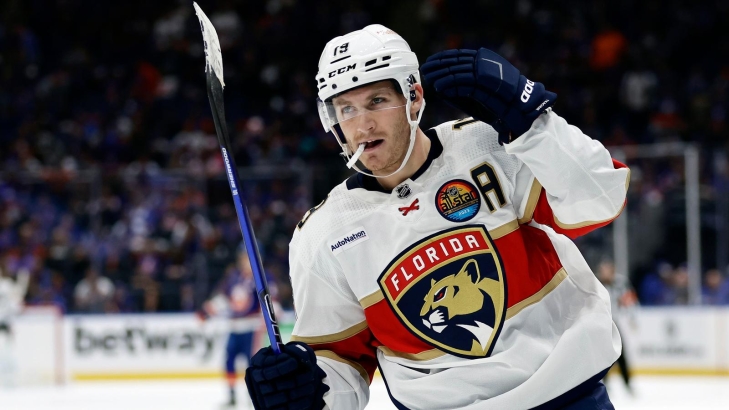
If you are a regular visitor at Notinhalloffame.com, you know that we created the Notinhalloffame NHL Cup, where in every regular season game, we award points (5-4-3-2-1) to the top five performers. This is the second year that we have done this, and Edmonton’s Connor McDavid won the first one.
To keep everyone regularly in the loop this time, we have decided to give regular updates, starting at when the first player cracked 40 Points, and tell all of you the top ten. We will this going forward with every update as the first player breaches the elevated ten-point threshold afterward.
Here is the current top ten, based on the first player to breach 90 Notinhalloffame Cup Points:
1. Connor McDavid, Edmonton Oilers. 90 Cup Points: 47 Games, 39 G, 47 A, 86 P, +2, 9.9 PS. (#1 on last update)
There are a lot of stories at the near-halfway mark of the 2022/23 NHL Season, with one of the top ones being Connor McDavid running away with every major statistical category. Last year’s Notinhalloffame NHL Cup winner is extending his lead and he is currently the league-leader in Goals (39), Assists (47), Points (86) and Point Shares (9.9).
2. David Pastrnak, Boston Bruins. 79 Cup Points: 45 Games, 35 G, 28 A, 63 P, +25, 8.7 PS. (#2 on last update)
The Bruins are one of the NHL’s top teams and Pastrnak is their top scorer. The Bruins star is averaging 1.40 Points per Game, slightly more than his First Team All-Star campaign in 2019-20. He currently is leading the NHL in Shots (217).
3 (Tie). Mikko Rantanen, Colorado Avalanche. 75 Cup Points: 43 Games, 31 G, 25 A, 56 P, +9, 7.0 PS. (#3 on last update)
Rantanen remains at #3, and is also in the top ten in Goals and Points, while leading the NHL in Even Strength Goals (26). The Avs star has 1.28 PPG, the highest of his career.
3 (Tie). Brayden Point, Tampa Bay Lightning. 75 Cup Points: 44 Games, 27 G, 22 A, 49 P, +7, 5.9 PS. (#6 on last update)
Point is having a good year, and is a point-per-game player, there are still quite a few players with higher point tallies than the Tampa Center. Saying that, Point has been the most clutch player for the Lightning, and a reason we love this process!
5. Jason Robertson, Dallas Stars. 71 Cup Points: 47 Games, 31 G, 32 A, 63 P, +29, 8.8 PS. (#4 on last update)
Robertson is on pace to shatter last season’s 41-38-79 output, and the fourth-year player is now the undeniable top dog of the Stars lineup.
6. Jack Hughes, New Jersey Devils. 70 Cup Points, 45 Games, 29 G, 27 A, 56 P, +14, 7.1 PS. (#5 on last update)
Hughes explodes back into the top ten, ranked higher in Cup Point standings than he has ever been. He is already tied with Points total (56) from last season.
7. Auston Matthews, Toronto Maple Leafs. 68 Cup Points: 44 Games, 24 G, 27 A, 51 P, +20, 6.2 PS. (#7 on last update)
Matthews is the defending Hart winner but he is not on the PPG pace he was last year, though when Toronto wins, the odds are that he was the biggest reason why. Is this season a disappointment so far for Matthews?
8. Leon Draisaitl, Edmonton Oilers, 66 Cup Points: 45 Games, 27 G, 45 A, 72 P, +4, 7.7 PS. (Not on last update)
The 2020 Hart Trophy winner returns to the top ten and gives the Oilers two players in the upper-tier.
9. Matthew Tkachuk, Florida Panthers, 63 Cup Points: 44 Games, 24 G, 34 A, 58 P, +9, 6.5 PS. (not on last update)
Matthew’s brother, Brady was once in the top ten, but this his first time here this season.
10 (Tie). Jake Oettinger, Dallas Stars. 62 Cup Points: 34 Games, 20-7-4, 2.26 GAA, .924 Save Percentage, 7.3 PS. (not on last update)
In his third season, Oettinger is playing the best hockey of his life.
10 (Tie). Connor Hellebuyck, Winnipeg Jets. 62 Cup Points: 35 Games, 22-12-1, 2.43 GAA, .923 Save Percentage, 8.1 PS. (not on last update)
A former Vezina winner, Hellebuyck is a contender for that trophy this year.
Minnesota’s Kirill Kaprisov, Boston’s Linus Ullmark, Pittsburgh’s Sdney Crosby and Washington’s Alex Ovechkin fell off the top ten.
Our next update will occur when the first player breaks 100 Cup Points.
