


Committee Chairman
How to Bet on NFL Games at the Casino
Betting is a popular hobby that millions around the globe regularly practice. It’s adventurous and simply lets people enjoy sports more. Every new game is an exciting opportunity not only to cheer for your team but potentially win some money. One of the most popular sports globally is NFL. That’s why you’ll find the sports available on online casinos real money platforms. They are easily accessible from both desktop and mobile devices and offer a wide range of NFL betting features. In this article, we’ll answer the question of how to bet on NFL games at casino. Keep reading to learn a couple of valuable tips.
Pick the Right Platform
The starting step is finding the right platform for NFL betting. There are several things to take in mind. Luckily, you can explore them without even creating an account, which makes things simple. Take a look at the following:
- What’s the welcome bonus? - A good welcome bonus will help you get started with a bonus bet or a deposit match bonus that you could use. Compare bonuses offered by other brands and pick your best bet. Pay attention to playthrough requirements as these show how realistic is that you will withdraw winnings from bonus funds.
- What are the casino NFL odds? - This is a crucial thing when you take a look at the whole picture. Picking a platform with competitive odds will work well for you in the long run. You can potentially win more money if a brand is offering great NFL casino odds. Also, check whether there is any NFL casino sponsorship deal, as it might mean that the casino will offer boosted odds when that team is playing.
- What types of bets are available? - The bigger the range of available bets, the better. It only means that you have more chances to show off your knowledge and potentially make money.
- Are live streaming and betting available? - You can have it all in one platform. While you’ll find that many are offering live betting features, not many support live streaming. This is a great way to watch the game and place in-play bets while watching.
- Is the platform reputable? - Last but not least, you want a platform that will pay out your wins. So pick a reputable online casino that holds licensing from the relevant gambling authorities.
Now, let’s look at things to learn to increase your chances of winning the next bet.
Follow the Latest News
Keeping up with the latest news opens an opportunity for smarter bets. The more information you can gather, the better. This usually refers to any player injuries. If someone important is not able to play the next game for any reason, the team will not be as good as it usually is. That needs to be reflected in the bet you’re placing.
On the other hand, if a player is having some kind of challenges in his life off the pitch, there’s a chance that they might not be able to focus fully on the game. All these little things have a big role in betting. Experienced bettors are well aware of this, and that’s why you’ll find them reading about the lives of the players all the time. They are gathering more information to use when they’re betting next time.
Doing your research regularly will turn a bet into a winning one just because you were able to better predict an outcome.
Casino NFL Betting Types
As mentioned above, you want a platform that has all the popular bet types available. That way, you can combine different bets and establish strategies to increase your chances of winning. The most popular betting markets include:
- Point spreads - With a point spread, you’re placing one team at a disadvantage. So one team has to win against the other by a certain amount of points. If you score this type of bet, the reward is usually high.
- Moneyline - This is the simplest form of betting, you’re simply picking who’s going to be a winner.
- Total - This bet guesses whether the teams will score over or under the number of points proposed by the sportsbook.
- Parlay bet - Parlay bets combine multiple other bets and place them on a single bet slip. While it’s much harder to win, it’s really rewarding.
- Futures bet - This bet lets you guess the outcome of an important event in the future. For example, who’s going to win the Super Bowl, months before it happens.
- Prop bet - Prop bets are more custom, meaning that you can bet what a certain player will do in the game.
The key is to combine the knowledge gathered from the team’s previous games and news and make smarter assumptions when betting. These different bets will allow you to create a compelling strategy that might lead to a higher win chance.
5 Black Lesbians Who Are Rock’n’Roll Hall of Fame Worthy
Rock’n’Roll Hall of Fame is filled with exceptional artists and creatives who made their mark in the music industry. Being inducted into the hall of fame is no mean feat, especially if you are black and a lesbian. The black community has seen multiple artists make their way into the hall of fame thanks to their standout talents that made them hard to ignore. Being a lesbian in today’s world comes with multiple challenges, especially heavy criticism. Many lesbians struggle with coming out of the closet, yet some have already done so.
This article highlights a few notable black Rock’n’Roll artists who have made their mark in history.
1. Rosetta Tharpe
Tharpe will go down in history as arguably the most musically talented black guitar-playing heroines, and rightfully so. Springing from the deep musical traditions of the Pentecostal church, Rosetta Tharpe achieved milestones that no performer in her time did. With her amazing voice, Tharpe took Pentecostal music and presented it to the world. Her amazing soprano and unrivaled guitar-playing techniques made audiences go crazy whenever she performed. Tharpe’s guitar-playing ability was a level higher than most performers in the industry.
Tharpe is respected and loved by many, and for good reasons. Big-name artists like Elvis Presley, among others, have given testimonials on how much Tharpe was a major influence on their careers. While her success never went unnoticed, one thing few people knew was her dating life. On several occasions, she was rumored to be a black lesbian dating lover. At one point, fans even thought that she was dating another popular singer, Rosetta’s standout talents were officially acknowledged by the music industry when she officially became a Hall of Famer.
Regardless, you can still open any dating site for black lesbian dating and meet her true fans seeking someone like-minded there. The best part is that if you are a black lesbian yourself, you can open a dating site and use the topic of music and Rosetta, in particular, as an icebreaker. You’ll be surprised by how many black lesbians find her inspiring and therefore are always happy to meet someone who appreciates great music and outstanding black female heroines.
2. Ma Rainey
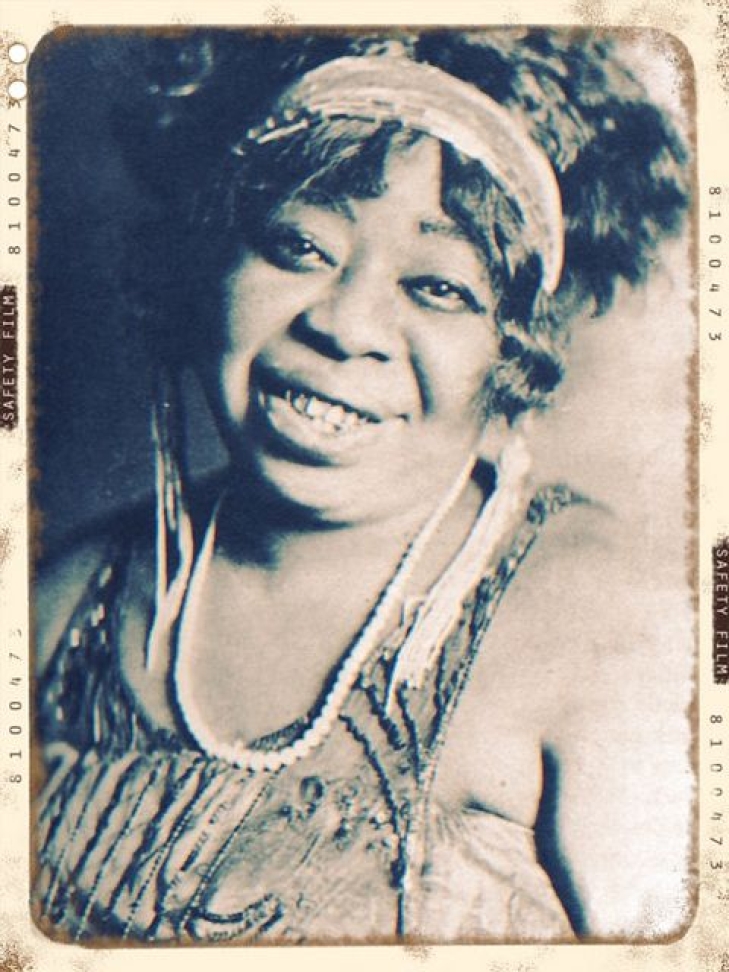
Being regarded as the mother of an entire music genre is no mean feat. Rainey’s impact on the music industry has been quite extensive. Gifted with a deep beautiful voice and notable stage presence, Rainey took over the music industry by storm. She was born in the early 20th century, back when segregation was at extreme levels.
Despite being black, Rainey seemingly drew large crowds of mixed races thanks to her standout talent. She was an inspiration to many singers, including Janis Joplin. Rainey also mentored many people who became stars, like Bessie Smith. She is a current Rock’n’Roll Hall of Famer, and rightfully so. Some of her lyrics highlight her love for women, and one can only assume that she was a lesbian.
3. Janelle Monae
Janelle’s name might be a household name these days, but few people know what it took for her to make it in the music industry. Born to parents who wore a uniform to work day in and out, Monae has had an explosive impact on the music industry. She has released several exceptional albums and won multiple Grammy awards nominations. She’s also featured in several movies.
One of her biggest achievements is coming out in support of the lesbian community and women. Monae advocates for equality and has, on several occasions, come out to speak up against the harassment of women, particularly in workplaces. She has gone on record to state that she is pansexual. While she might not yet be inducted into the hall of fame, the path to achieving that milestone appears to be well-lit.
4. Dana Owens
Widely regarded as an icon by many female artists, Dana Owens, also known as Queen Latifah, embodies grit and awesomeness. She was born in March 1970 and has worn many hats over the years. Apart from being an actor, she is also a rapper, songwriter, and TV personality.
Dana Elaine Owens’ name ought to be engrained in the hall of fame because of the influence that she’s had in the world of entertainment. Not only is Dana a great poet and songwriter, but she’s also arguably the best female entertainer. Owens has reached genres of people from all around the world. She has many different albums that have sold millions of copies. Her songs have motivated people to pursue their passions and even spread awareness of numerous different cultures worldwide. Her work is exceptional and deserves to be recognized among the few top black entertainers.
5. Tracy Chapman
In 1964, an almost angelic-voiced Tracy Chapman was conceived. From an early age, she relished singing, and little did she know that music would change her entire future. Like most women on this list, Tracy had a tough upbringing that motivated her later in life decision to become a feminist.
Chapman has been an inspiration to successful and aspiring singers alike. For years, she’s worked as an activist and gone ahead to speak and perform for countless nonprofit organizations. While there’s so much Chapman has done, one thing she’s yet to do is to talk publicly about her private life. While there have been rumors that she’s a lesbian, there’s no record of her coming out and admitting to anything.
Conclusion
When it comes to sheer talent, the black community has many different top talents. Many talented and influential black artists have impacted their communities and the world. Besides Dana Owens, Sister Tharpe, and more on this list, several other lesbian female stars have been a shining light for many.
Our All-Time Top 50 Los Angeles Dodgers are now up!
Yes, we know that this is taking a while!
As many of you know, we here at Notinhalloffame.com are slowly generating the 50 of each major North American sports team. We have a new one to unveil today, that of the Los Angeles Dodgers.
One of the most celebrated franchises in all sports, the Los Angeles Dodgers were initially the Brooklyn Grays in 1883, but it was a long time before they found an identity.
The organization changed its name multiple times since its origin, the Atlantics (1884), back to the Grays (1885-87), then the Bridegrooms (1888-90), the Grooms (1991-95), the Bridegrooms again (1895-98, the Superbas (1899-1910), the Trolley Dodgers (1911-12), then the Dodgers (1913), the Robins (1914-1931), before settling on the Dodgers again in 1932.
The Brooklyn Dodgers would sign Jackie Robinson to integrate baseball, and in 1955, on their eighth attempt, they finally won their first World Series.
The fans of Brooklyn were not rewarded for their loyalty and patience, and like the crosstown New York Giants, westward the Dodgers went in 1957, where they remain to this day.
In Los Angeles, the Dodgers won three World Series Titles in their first ten years in the new environment, capturing it all in 1959, 1963, and 1965. The 1970s saw them competitive at the decade's end, and they won two more Championships in the 1980s (1981 and 1988).
In recent years, the Dodgers have been a top team, with their last World Series win coming in 2020, giving them seven in total.
Our Top 50 lists in Baseball look at the following:
1. Advanced Statistics.
2. Traditional statistics and how they finished in the National League.
3. Playoff accomplishments.
4. Their overall impact on the team and other intangibles not reflected in a stat sheet.
Remember, this is ONLY based on what a player does on that particular team and not what he accomplished elsewhere and also note that we have placed an increased importance on the first two categories.
This list is updated up until the end of the 2022 Season.
The complete list can be found here, but as always, we announce our top five in this article. They are:
1. Clayton Kershaw
2. Sandy Koufax
4. Duke Snider
5. Dazzy Vance
We will continue our adjustments on our existing lists and will continue developing our new lists.
Look for our more material coming soon!
As always, we thank you for your support.
Our All-Time Top 50 Washington Nationals have been updated to reflect the 2022 Season
Yes, we know that this is taking a while!
As many of you know, we here at Notinhalloffame.com are slowly generating the 50 of each major North American sports team. That being said, we have existing Top 50 lists out and we always consistently look to update them when we can and based on necessity. As such, we are very happy to present our post 2022 revision of our top Washington Nationals.
As for all of our top 50 players in baseball we look at the following:
1. Advanced Statistics.
2. Traditional statistics and how they finished in the National League.
3. Playoff accomplishments.
4. Their overall impact on the team and other intangibles not reflected in a stat sheet.
Last year, Washington was one of the worst teams in baseball, and the only player they had they improved his rank, was traded during the season.
As always, we present our top five, which was not affected by the last season:
1. Gary Carter
2. Tim Raines
3. Max Scherzer
4. Andre Dawson
5. Steve Rogers
You can find the entire list here.
Outfielder, Juan Soto, who was traded to San Diego during the season, moved to #14 from #17.
We welcome your input and comments and as always, we thank you for your support.
