


Committee Chairman
48. Bill Swift
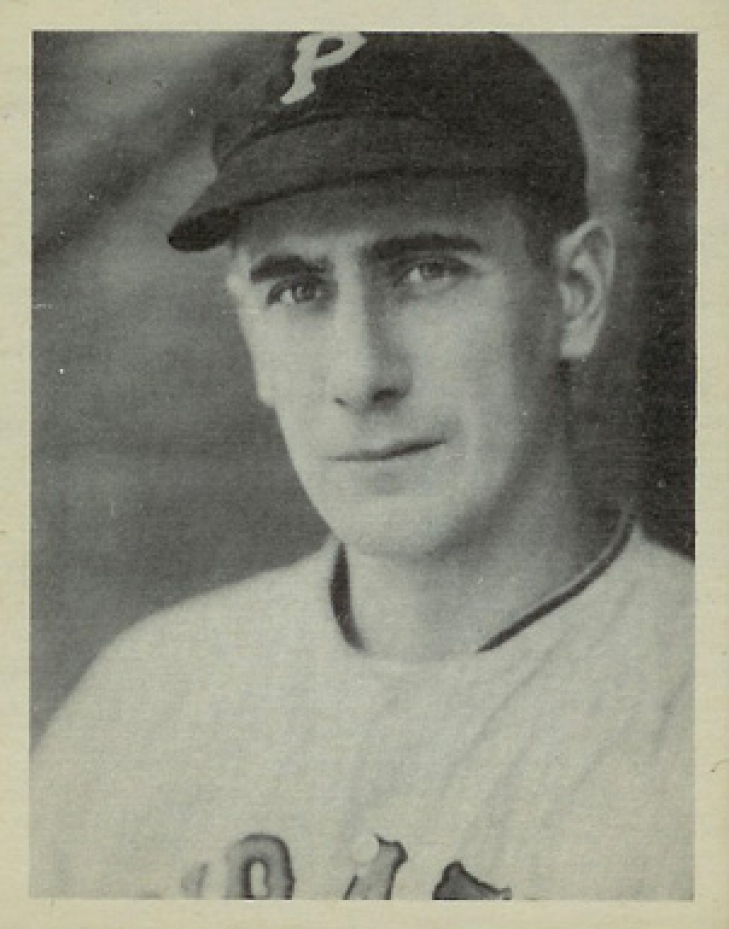
The 1930s National League is often remembered for its powerful offenses, but surviving that era's run-heavy style needed pitchers who could avoid giving up free passes. Bill Swift was the steady pitcher for the Pittsburgh Pirates—a versatile, control-focused thrower who pioneered the modern "swingman" role before it was named. Debuting in 1932, the Pennsylvania native lacked overwhelming stuff but had unshakeable strike zone control. By refusing to grant free passes, Swift became manager Pie Traynor's safety net, pitching whenever needed.
His debut campaign in 1932 immediately demonstrated his precise control. As a 24-year-old rookie entering the major leagues, Swift made consistent, efficient pitching a hallmark of his season, posting a 14–10 record over 194.2 innings. He consistently shut down opposing hitters by limiting walks and forcing them to make contact, finishing the season with the lowest walks per nine innings in the National League at just 1.1 (BB/9).
Although he never secured a permanent spot in the starting rotation, his versatility made him a reliable workhorse. During his first five summers in Pittsburgh, Swift compiled a 70–57 record and consistently crossed the 200-inning mark each year by easily switching between high-leverage starting roles and multi-inning relief duties.
As natural physical deterioration increased into the late 1930s, the coaching staff officially marked a transition by moving the veteran permanently to the bullpen. Despite a reduced role, Swift's consistent low-variance control remained a valuable asset throughout the 1939 season, aiding in maintaining leads and supporting a changing pitching staff.
Beyond relying on his skill with the rubber, Swift demonstrated a highly proficient approach at the batter's box, often saving the weaker Pittsburgh lineup. He was well regarded as one of the top-hitting pitchers of his era, with 132 hits and a solid .230 batting average during his time with the Pirates.
The organization dealt Swift to Boston after the 1939 season. In Pittsburgh, Swift had a 91–79 record, 71 complete games, seven shutouts, and a 3.57 ERA across 1,489 innings pitched.
47. Tony Pena
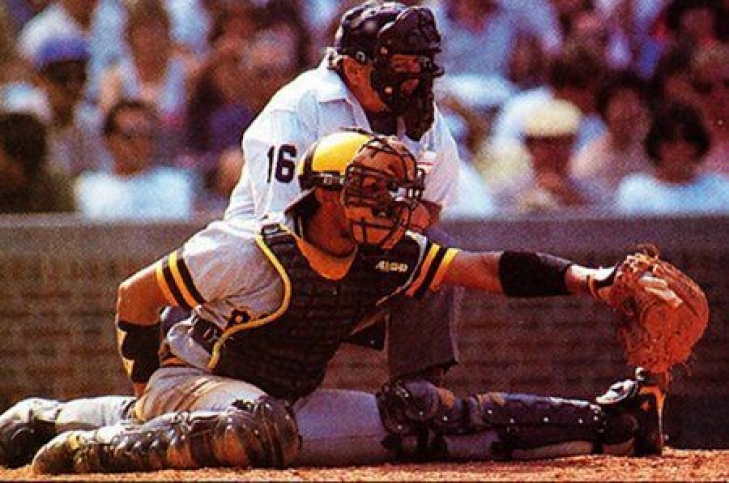
Tony Peña, who signed out of the Dominican Republic as an amateur free agent in 1975, didn't just keep runs from scoring; he revolutionized the catcher role into a showcase of athleticism and charisma. Known for his distinctive crouch, stretching his left leg flat on the dirt with no runners on base, Peña offered pitchers a precise target while maintaining a quick, explosive first step. After steadily advancing through the minor leagues and making his debut with the main team in 1980, this lively catcher revitalized the franchise with a mix of solid contact hitting and dazzling defensive skills, becoming a cherished figure of the 1980s Three Rivers Stadium era.
His true rise to frontline status happened in the 1982 campaign, earning his first National League All-Star invite. He quickly made his offensive volume a routine, using a short, line-drive right-handed stroke to trouble opponents.
The peak of his individual performance and efficiency came in a remarkable 1983 season. Peña showcased his skills at the plate, hitting a career-best .301 with 15 home runs, 153 hits, and 70 RBIs, finishing eleventh in the National League MVP voting—his highest career accolade.
However, concentrating solely on his offensive stats overlooks the exceptional defensive display he showcased behind the plate. Peña utilized a powerful throwing arm, effectively shutting down the running game in the Senior Circuit by leading the National League in baserunners caught stealing in 1984 and 1985.
His exceptional spatial awareness and quick-release skills enabled him to rank in the top ten for defensive bWAR four times as a Pirate, notably leading the league with a 2.5 defensive bWAR in 1984. Recognized for his versatile excellence, he won three straight Gold Glove awards from 1983 to 1985. Not just a fleeting star, this durable catcher was a four-time All-Star and maintained consistent offensive power, hitting double-digit home runs in five consecutive seasons from 1982 to 1986.
As the organization shifted to a complete rebuilding under young Jim Leyland, front-office priorities changed suddenly. In a significant spring trade before 1987, management traded the veteran icon to the St. Louis Cardinals for Andy Van Slyke, Mike LaValliere, and Mike Dunne, a blockbuster that reshaped both teams for the coming decade.
With Pittsburgh, Peña had 821 hits, 126 doubles, 63 home runs, and 340 RBIs alongside a highly respectable .286/.325/.414 slash line across 799 games.
44. Gene Alley
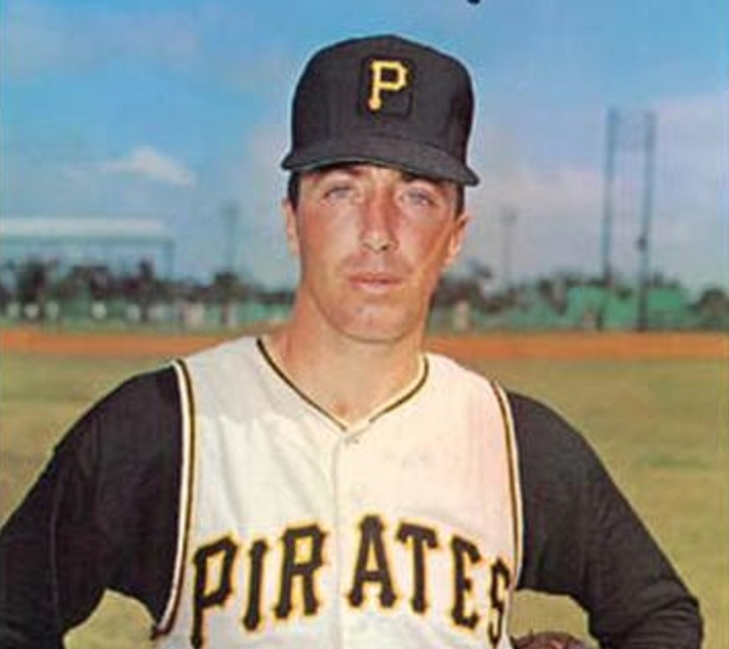
The 1960s and 1970s "Lumber Company" of Pittsburgh is famous for its home runs and offensive pressure, but securing those rosters needed a top defensive anchor. Gene Alley was that anchor, signed in 1959. As a shortstop, he brought sharp instinct and consistent defense, focusing on stopping running games and turning tough grounders into outs, and he became one of the era's top defensive players.
His first appearance was in brief auditions in 1963, but Alley secured the starting shortstop position during the 1965 season. He excelled at run prevention, quickly establishing himself as a defensive force with a leading 2.5 defensive bWAR. His peak as a well-rounded player occurred in 1966, when he showcased a remarkable all-around game. Alley dominated at the plate, surpassing his previous offensive limits with a career-high 173 hits and a strong .299 batting average. He earned his first Gold Glove and finished eleventh in the National League MVP voting, demonstrating that his consistent performance could support a winning team.
While his offensive production normalized to a more modest and low-efficiency level, his defensive excellence continued to be a benchmark across Major League Baseball. Playing alongside second baseman Bill Mazeroski, Alley developed one of the most effective and instinctive double-play pairs in the sport's history. He was selected as an All-Star in the National League in 1967 and 1968, won his second Gold Glove in 1967, and led all of baseball with an impressive 3.4 defensive bWAR in 1968.
Tragically, playing on the harsh artificial turf of Three Rivers Stadium severely impacted his body. Alley suffered from ongoing shoulder and knee issues that significantly decreased his offensive effectiveness and reduced his playing time.
Demonstrating his strong competitive resilience throughout his career, he willingly shifted into a respected veteran reserve role. In this position, he offered vital stability that contributed to guiding the Pirates to an exciting seven-game World Series victory over Baltimore in 1971.
He stood as a steadfast pillar of the organization until his final walk off the diamond, officially retiring at the end of the 1973 season to mark a unique, 11-year career spent entirely in a Pittsburgh uniform.
Alley had 999 career hits with a lifetime defensive bWAR of 14.7.
The Briscoes named as the first inductees to the ROH Hall of Fame

While Ring of Honor has seen better days, having announced they are moving forward without any contracted talents, they are still operating, and have announced they will be having their own Hall of Fame. The first inductees have been announced, Mark and Jay Briscoe, the most successful tag team in the promotion’s history.
The pair were with ROH when the organization started back in 2002. Winning 12 Tag Team Titles with ROH, as well as being the current champs, Jay Briscoe also won the ROH World Championship twice.
There will be inductees revealed over the next three Mondays.
We here at Notinhalloffame.com would like to congratulate the Briscoes for earning this accolade.
